







Executive Overview
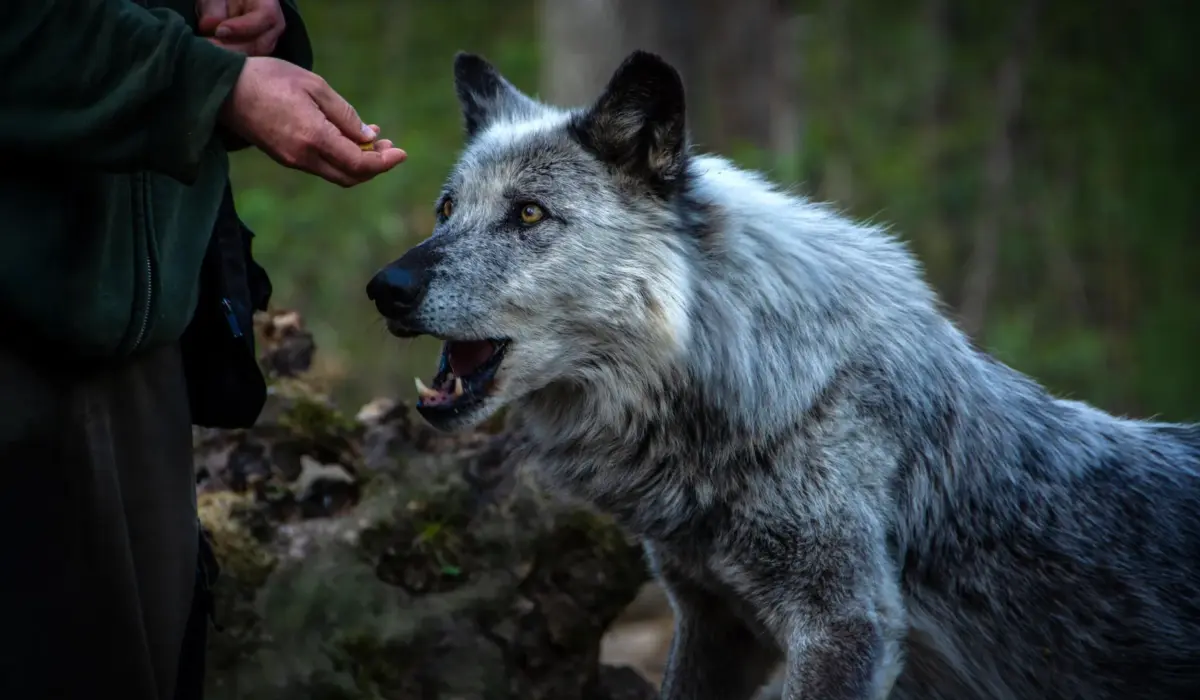
Long before the advent of agriculture, the establishment of permanent settlements, or the written word, humanity entered into a profound biological and cultural partnership with a formidable predator: the gray wolf. Today, the results of this ancient alliance are visible everywhere, from the pocket-sized Chihuahua to the towering Great Dane. Dogs are embedded deeply within human society, acting as working partners, cultural symbols, and family members. However, the prevailing modern narrative—that humans simply captured, tamed, and subjugated wild wolves—oversimplifies a far more complex and collaborative evolutionary journey.
In his groundbreaking book, First Dogs: Hunter-Gatherers and their Canine Companions from Prehistory to the Present, archaeologist Professor Peter Mitchell challenges traditional domestication theories. Drawing on a vast corpus of archaeological discoveries, genetic sequencing, and ethnographic research, Mitchell paints a picture of domestication as a gradual, reciprocal process. Rather than an abrupt human takeover, early humans and wolves appear to have engaged as relatively equal participants in a shared ecological niche.
This deep history is written in the fossil record. Archaeologists have uncovered canine remains interred alongside humans in graves dating back an astonishing 14,000 years. Across nearly every continent, dogs feature prominently in ancient art, mythologies, and religious folklore. As human populations expanded across the globe—from the freezing expanses of the Arctic Circle to the dense canopies of tropical rainforests—canines adapted dynamically to local climates, survival needs, and cultural frameworks.
Yet, this sprawling evolutionary tapestry is not merely a tale of canine adaptation. It is a story of mutual transformation. Dogs influenced human mobility, survival strategies, and even genetic development, while humans fundamentally reshaped the anatomy, physiology, and geographic distribution of the dog. Understanding this relationship requires examining the deep chronology of human-canine history, the environmental pressures that molded distinct breeds, the invisible barriers of disease, and the genetic legacy that modern dogs carry from deep antiquity.
Detailed Chronology: The 15,000-Year Trajectory of Canine Domestication
To understand how a forest-dwelling carnivore transformed into a ubiquitous human companion, scientists must look back tens of thousands of years. The timeline of canine evolution is a mosaic pieced together from ancient DNA, stratified archaeological sites, and isotopic analysis.
The Prehistoric Threshold: From Wolf to Proto-Dog (Circa 30,000 to 15,000 BCE)
The precise timing and location of the initial divergence between domestic dogs (Canis familiaris) and ancestral wolf populations remain subjects of intense academic debate. Genetic evidence suggests that the split occurred deep within the Pleistocene epoch, potentially upwards of 30,000 years ago. Long before dogs were morphological variations of what we see today, proto-dogs likely gravitated toward human hunter-gatherer camps, drawn by the rich caloric bounty of discarded food waste and scraps.
Crucially, Professor Mitchell’s research emphasizes that this was not a top-down management strategy by humans. Early hunter-gatherer communities operated in environments rich in wild plant and animal resources. Wolves that exhibited lower flight distances and reduced aggression toward humans gained access to a steady, reliable food source. In return, these proto-dogs likely provided early human camps with an invaluable early-warning system against competing apex predators and rival human groups. This mutually beneficial proximity initiated a slow, generational tethering of two distinct species.
The Epipaleolithic and Mesolithic Integration (14,000 to 8,000 BCE)
By roughly 14,000 years ago, the bond had graduated from loose ecological commensalism to deep social and spiritual integration. Archaeological excavations of ancient burial sites reveal dogs laid to rest directly beside human companions, signaling that these animals were no longer viewed merely as utilitarian tools or scavengers, but as valued members of the social fabric.
During the Mesolithic period, as post-glacial warming allowed human populations to expand into newly opened northern and temperate landscapes, dogs went everywhere their human counterparts did. They aided in hunting swift-footed game, guarded fragile food caches, and began to develop regional variations in size and build as human groups isolated themselves in disparate geographic niches.
The Age of Regional Specialization (8,000 BCE to 1,500 CE)
As human societies transitioned from nomadic foraging to complex maritime, pastoral, and horticultural lifestyles, the selective pressures acting on dogs intensified. Indigenous cultures across the globe began actively managing canine breeding to amplify specific traits.
- In the Arctic, selective pressures favored immense pulling strength, dense double coats, and metabolic resilience against extreme cold.
- In the tropics, selection favored agility, lean musculature, and specialized scent-tracking to navigate thick undergrowth.
- In coastal and sedentary cultures, dogs were sometimes bred not for work, but for their coats—such as the woolly-coated dogs of the Pacific Northwest whose hair was harvested for ceremonial textiles.
The Colonial Disruption and Modern Breeding (1500 CE to Present)
The global expansion of European powers beginning in the late 15th century fundamentally disrupted ancient canine lineages. European explorers, traders, and colonizers brought their own domestic breeds across oceans, where they frequently interbred with or entirely replaced indigenous dog populations.
Furthermore, the 19th-century Victorian obsession with formal breed standards created closed gene pools, prioritizing cosmetic aesthetics over functional adaptability. Despite this modern bottleneck, the deep genetic and archaeological record preserves the ghosts of ancient lineages, reminding modern observers of the extraordinary evolutionary journey that brought the dog from the prehistoric wilderness into the human living room.
Supporting Context & Metrics: Environment, Genetics, and Disease
The morphological diversity of the modern domestic dog—ranging from the minute Chihuahua to the massive Mastiff—was forged through a combination of environmental pressures, cultural values, and biological constraints.
Climatological Adaptations: From Arctic Frosts to Equatorial Heat
The rule of biological adaptation is clearly visible in the canine skeleton. Northern sled dogs developed compact bodies, broad paws that act as natural snowshoes, and heavily insulated coats to withstand sub-zero temperatures. Their skeletal remains from ancient Arctic sites often display distinct patterns of biomechanical stress along the vertebrae and robust limb bones, direct evidence of the immense physical strain associated with hauling heavy sledges across jagged pack ice.
Conversely, tropical hunting dogs evolved along an entirely different trajectory. In the rainforests of South America and Southeast Asia, survival required high maneuverability through dense foliage rather than raw pulling power. Consequently, tropical breeds retained leaner, smaller, and more agile builds, coupled with short coats designed to dissipate heat efficiently.
High-Altitude Parallels: The Tibetan Plateau Case Study
One of the most fascinating discoveries in modern canine genetics involves the adaptation of dogs to high-altitude environments, such as the Tibetan Plateau. Life at extreme elevations exposes mammals to severe hypoxic (low-oxygen) conditions that can cause fatal physiological stress.
Genetic researchers have identified specific gene variants in Tibetan dogs that mirror the genetic adaptations found in human populations native to the same region. These genes allow Tibetan dogs to thrive in oxygen-depleted atmospheres that would severely compromise the health of lowland breeds. Professor Mitchell notes that while the exact timeline of when dogs joined humans on the high plateau remains undetermined, the rapid acquisition of these hypoxia-resistant genetic variants demonstrates how urgently environmental constraints can drive rapid evolutionary change in canids.
The Invisible Barrier: Disease as an Evolutionary Filter
Environment and human preference were not the only forces shaping the global distribution of dogs. Recent epidemiological research highlights the profound impact of vector-borne diseases in restricting where canine populations could successfully establish themselves.
In sub-Saharan Africa, for instance, endemic diseases such as trypanosomiasis (sleeping sickness, transmitted by tsetse flies) and ehrlichiosis presented lethal barriers to non-adapted canids. Because ancestral dog populations originated in temperate to Arctic zones of the Northern Hemisphere, their initial thrusts into tropical ecosystems were severely hampered by a lack of immunological resistance to local pathogens. This biological constraint explains why dogs arrived in certain tropical regions significantly later, or remained far less numerous, than they were in temperate zones. Disease acted as a rigorous biological filter, ensuring that only resilient lineages could survive the expansion.
Official Statements & Expert Insights
To fully grasp the paradigm shift represented by modern archaeological and genetic findings, one must listen to the leading voices in the field.
Professor Peter Mitchell, summarizing decades of interdisciplinary investigation in First Dogs, emphasizes the egalitarian nature of the early human-wolf dynamic:
"The connections between dogs on the one paw and people dependent on wild plant and animal resources on the other are ancient, diverse, and profound."
Challenging the simplistic notion that humans "domesticated" wolves in a single, decisive historical event, Mitchell elaborates on the protracted, mutualistic nature of the relationship:
"The process whereby grey wolves became dogs is ongoing, not one marked by a single threshold event. It was likely both long and drawn out. The relationship thus constructed has been a joint effort, if one where, especially in the West and over recent centuries, humans have increasingly come to dominate in determining its shape and direction. Nevertheless, the way dogs and humans relate—and have related—to each other has value precisely because of their mutual, complex entwinement with each other."
Isotopic studies of ancient bone chemistry corroborate these insights, revealing that in coastal archaeological sites, human and canine populations shared remarkably similar diets dominated by marine resources. This biochemical signature provides concrete proof that dogs were not peripheral camp followers relegated to starvation diets, but integral members of the household who shared directly in the nutritional spoils of successful foraging and fishing economies.
Future Outlook: What Lies Ahead for Canine Science and Human-Animal Studies?
As we look to the future, the study of human-canine evolution stands at an exciting intersection of archaeology, paleogenomics, and ethnography. The integration of cutting-edge scientific techniques promises to unlock even deeper secrets regarding our oldest animal companions.
The Frontier of Ancient DNA (aDNA)
The rapid advancement of paleogenomics allows scientists to extract and sequence degraded DNA from archaeological canine remains that are thousands of years old. This technology is progressively filling the gaps left by the colonial displacement of native lineages. By mapping the genomes of ancient dogs from the Americas, Africa, and Asia, researchers can trace ancient migration routes, identify lost genetic lineages, and pinpoint the exact temporal windows in which specific physiological adaptations—such as high-altitude tolerance or starch digestion—emerged.
Re-Evaluating Conservation and Ethno-Zoology
Understanding how indigenous communities managed, bred, and revered their dogs offers valuable modern lessons in conservation and animal husbandry. As modern ethnographers collaborate with indigenous elders, traditional knowledge regarding canine behavior, breeding selection, and ecosystem management is being preserved. This synthesis of indigenous wisdom and Western science highlights how deeply human cultural practices can guide the evolutionary trajectory of another species.
The Ongoing Evolution of "Man’s Best Friend"
Ultimately, the story of the dog is not a finished chapter; it is an ongoing biological narrative. As human societies urbanize, industrialize, and face new ecological crises, dogs continue to adapt alongside us. From working as medical alert animals and search-and-rescue specialists to serving as emotional anchors in modern psychological therapy, the modern dog retains the remarkable behavioral flexibility and social intelligence that its wolf ancestors first brought to human campfires 15,000 years ago.
The deep entwinement of human and canine lives reminds us that evolution is rarely a solitary endeavor. In the truest sense, humanity and the dog forged one another—shaping each other’s bodies, minds, and destinies across the vast, unforgiving expanse of time.