







Executive Overview
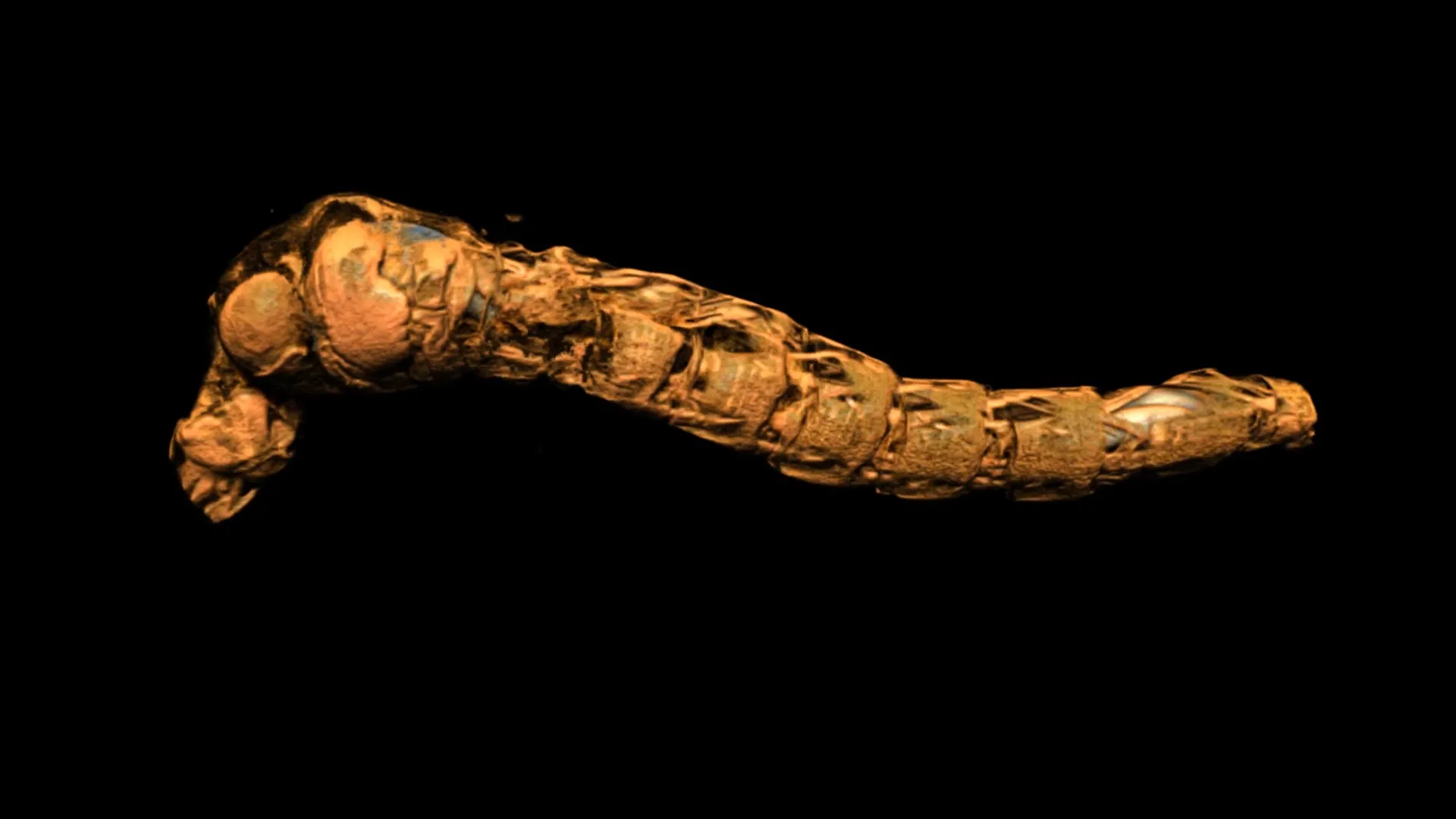
In the sprawling, mineral-rich expanse of East Africa’s Lake Malawi, billions of translucent, millimeter-long organisms are quietly rewriting the textbooks of evolutionary biology and biomechanics. Lake fly larvae (Chaoborus edulis), commonly known as phantom midge larvae, are executing a breathtaking daily vertical migration that plunges them more than 200 meters into hypoxic, high-pressure aquatic trenches. Their secret weapon—an ingenious, pressure-defying respiratory modification functioning as a biological ballast system—has forced scientists to reconsider a foundational hypothesis regarding why insects have successfully conquered terrestrial and freshwater biomes yet remain virtually absent from the open ocean.
For decades, biological oceanographers and entomologists have relied on the "crush hypothesis" to explain the terrestrial-to-marine evolutionary barrier. This prevailing dogma asserted that the intense hydrostatic pressures found in the pelagic marine environment would inevitably collapse the tracheal gas-filled air spaces that insects rely upon for respiration, making the open ocean a lethal wasteland for hexapods. However, new research led by University of British Columbia (UBC) scientists Dr. Philip Matthews and Dr. Evan McKenzie shatters this assumption. By deploying sophisticated underwater sonar and conducting high-pressure laboratory simulations, the research team discovered that Chaoborus edulis larvae possess air sacs capable of withstanding pressures equivalent to depths exceeding 400 meters.
Constructed from resilin—a remarkable biological rubber—and modulated via sophisticated biochemical pH switches, these resilient air sacs do more than just facilitate daily survival in an African rift lake. They challenge long-standing assumptions about the physiological limits of insect morphology, bridge the gap between evolutionary biology and material science, and offer bioengineers a blueprint for the next generation of smart materials, artificial muscles, and dynamic pH-responsive polymers.
Detailed Chronology: Unveiling the Phantom Migration of Lake Malawi
The Quest Beneath the Surface
The journey to this groundbreaking discovery began not in a sterile laboratory, but on the undulating, windswept surface of Lake Malawi—the southernmost lake in the East African Rift system and one of the deepest freshwater bodies on Earth. Known locally as Lake Nyasa, this ancient body of water harbors an astonishing diversity of endemic life, including hundreds of cichlid species. Yet, hovering beneath the pelagic threshold lies an alien world: a permanently stratified water column where the lower layers are severely depleted of oxygen.
Dr. Philip Matthews and Dr. Evan McKenzie of the University of British Columbia sought to understand how the pelagic ecosystem functioned across these dramatic vertical gradients. Specifically, they wanted to track the elusive behavior of Chaoborus edulis, an endemic phantom midge species whose populations number in the billions. These organisms form dense, shifting clouds in the water column that play a pivotal role in the lake’s ecological food web, serving as a critical nutrient bridge between primary producers and pelagic predators like the usipa (Engraulicypris sardella).
To observe this phenomenon without disrupting the natural environment, the research team engineered a specialized sonar monitoring system and anchored it directly to the lake floor. This setup allowed them to map the macro-behavior of the biomass with unprecedented clarity, recording the vast, synchronized migrations of the larvae as they traversed the water column day after day.
The Twilight Descent and Dawn Ascent
The daily routine of Chaoborus edulis is a high-stakes ecological drama dictated by the interplay of light, oxygen, and predation. As dawn breaks over the African rift valley, the larvae begin an arduous descent into the deep, dark, and oxygen-depleted zones of Lake Malawi, plunging downward more than 200 meters.
This deep-water refuge, often characterized as a biological "dead zone" due to its anoxic conditions, provides a sanctuary from visually oriented predators such as pelagic fish. While most organisms would suffocate or perish under such extreme conditions, the phantom midge larvae endure the oxygen debt, waiting out the sunlit hours in suspended animation.
As twilight falls, the dynamics reverse. Driven by hunger and the imperative to forage on microscopic phytoplankton and zooplankton, the larvae initiate a mass ascent toward the surface waters. This journey, however, is fraught with peril. To reach the nutrient-rich surface, the upward-bound swarms must navigate a gauntlet of predatory fish lying in wait. The success of this daily commute depends entirely on precise, split-second hydrodynamic control—a feat made possible by a specialized internal apparatus that researchers were only beginning to understand.
Supporting Context & Metrics: Anatomy of a Biological Submarine
When Matthews and McKenzie captured specimens and subjected them to detailed microscopic and biochemical analyses, they uncovered an evolutionary marvel. The larvae had co-opted and adapted a portion of their ancient respiratory tracheal system, transforming two pairs of lateral air sacs into operational ballast tanks.
The Physics of Biological Buoyancy
In a mechanical submarine, diving and surfacing are achieved by flooding or emptying ballast tanks with surrounding water, thereby altering the vessel’s overall density relative to the water column. Chaoborus edulis achieves an identical hydrodynamic outcome through the manipulation of internal gas volume, but via a far more elegant biochemical mechanism.
The walls of these critical air sacs are woven with resilin, a natural protein polymer renowned for its rubber-like elasticity. Resilin stores mechanical energy with near-perfect efficiency, making it an ideal material for structures that must undergo repeated, high-stress deformation. In the case of the phantom midge larvae, the structural integrity of the air sacs is coupled with a dynamic molecular switch: the insects can actively alter the local pH levels within the sac walls.
When the larvae modulate this internal pH environment, it triggers a conformational shift in the resilin matrix, causing the protein walls to expand or contract. This microscopic structural adjustment directly alters the volume of the internal air spaces. By increasing the volume, the larvae decrease their overall density, causing them to float upward. By contracting the sacs, they increase density and sink. This mechanism grants the organisms exquisite, instantaneous control over their vertical positioning without expending massive amounts of metabolic energy on swimming.
Pushing the Limits: The High-Pressure Chamber Trials
To test the resilience of this biological ballast system, the UBC researchers transported live specimens back to controlled laboratory environments and housed them in custom-built, miniature high-pressure chambers. The objective was clear: determine the exact threshold of hydrostatic pressure the air sacs could endure before suffering catastrophic structural collapse or implosion.
The results stunned the research community. The air sacs routinely survived pressures equivalent to those found at depths exceeding 400 meters—a depth double the maximum migration range experienced by the larvae in Lake Malawi.
This metric carries profound evolutionary implications. For generations, evolutionary biologists have attempted to solve a persistent zoological paradox: why are insects, which dominate nearly every terrestrial ecological niche and flourish in freshwater lakes and rivers, practically non-existent in the open ocean?
The prevailing consensus pointed directly to hydrostatic pressure. As an organism descends into the pelagic marine environment, ambient pressure increases by approximately one atmosphere for every 10 meters of depth. Theoretical models suggested that the gas-filled tracheal tubes and air spaces utilized by insects for respiration would be crushed under this immense physical force, preventing them from surviving, let alone maintaining buoyancy or breathing, at depth.
The discovery that Chaoborus edulis air sacs can withstand 400 meters of equivalent pressure shatters the absolute nature of this hypothesis. It demonstrates that insect respiratory systems possess an inherent structural robustness far exceeding previous biochemical estimates, forcing scientists to look beyond simple mechanical crushing to explain the absence of marine insects. Factors such as ionic regulation, physiological adaptation to salinity, and competitive exclusion by crustaceans like copepods and euphausiids must now be given heavier weight in evolutionary models.
Official Statements & Scientific Insights
The implications of this study extend far beyond limnology and evolutionary theory, bridging the gap between fundamental biological research and advanced engineering materials.
In statements detailing the scope and significance of the findings, Dr. Philip Matthews emphasized the unexpected nature of the discovery:
"We set out simply to understand how these organisms manage their daily vertical migrations in Lake Malawi. Discovering that their respiratory structures could tolerate pressures equivalent to 400 meters of depth completely flipped our perspective. It challenges the long-standing dogma that hydrostatic pressure is an insurmountable physical barrier for insect respiratory architecture."
Co-author Dr. Evan McKenzie highlighted the physiological sophistication of the larvae’s ballast system, noting the intricate partnership between cellular mechanics and structural proteins:
"The integration of resilin into the air sac walls is a masterclass in evolutionary efficiency. By utilizing localized pH shifts to manipulate a biological rubber, these organisms achieve dynamic buoyancy control that rivals human engineering. It proves that nature solved complex hydrodynamic challenges millions of years before the invention of the modern submarine."
Independent biomechanicians and material scientists have similarly praised the work for its interdisciplinary reach. By mapping out how biological systems maintain structural integrity under extreme compressive loads, the study provides foundational data for synthetic material design.
Future Outlook: From African Lakes to Smart Material Engineering
As the scientific community digests the implications of the Lake Malawi research, attention is already turning toward translational applications. The intersection of biology, physics, and materials science is fertile ground for innovation, and the unique properties of resilin-based biological systems are poised to inspire a new generation of technological advancements.
Biomimicry and Smart Materials
Resilin has long fascinated material scientists due to its near-perfect resilience and fatigue lifetime. Unlike synthetic elastomers, which degrade over time when subjected to cyclic stress, natural resilin can endure billions of deformation cycles without losing its elastic properties.
However, translating these biological properties into scalable, man-made applications has proven challenging. The discovery that Chaoborus edulis successfully utilizes pH-triggered conformational changes in a resilin matrix to regulate volume and pressure provides a direct biochemical roadmap for engineers. Researchers are now exploring how to synthesize artificial polymers that mimic this exact behavior.
Applications in Soft Robotics and Medicine
The potential applications for pH-responsive, resilin-inspired smart materials are vast:
- Artificial Muscles: By engineering synthetic actuators that contract or expand in response to localized chemical or pH changes—mirroring the ballast walls of the phantom midge larvae—bioengineers can develop soft robotic limbs that operate with high efficiency and precision.
- Micro-Fluidic Devices: Dynamic, pressure-resistant micro-valves could be integrated into biomedical diagnostic equipment, utilizing microscopic air-sac-like chambers to regulate fluid flow based on chemical triggers.
- Deep-Sea Exploration Technology: Unmanned underwater vehicles (UUVs) could benefit from ballast systems inspired by Chaoborus, reducing mechanical complexity and reliance on power-hungry electric pumps by adopting passive, chemically driven buoyancy modulation.
Ongoing and Future Research
Back in the laboratory and out in the field, Matthews, McKenzie, and their collaborators are continuing to analyze the genetic and proteomic sequences that allow Chaoborus edulis to synthesize such specialized resilin networks. Future expeditions aim to examine other deep-water aquatic insects across different continents to determine whether pressure-resistant respiratory adaptations are an isolated evolutionary anomaly or a more widespread, under-documented phenomenon in limnological ecosystems.
Ultimately, the humble phantom midge larva of Lake Malawi serves as a potent reminder of nature’s boundless adaptability. What began as an inquiry into the nocturnal habits of an African lake fly has unmasked a physiological powerhouse, challenging our understanding of evolutionary limits and offering a glimpse into the future of biomimetic engineering.
This foundational research was made possible through the generous support and partial funding provided by the Natural Sciences and Engineering Research Council of Canada (NSERC) via Discovery and Accelerator grants.