







Executive Overview
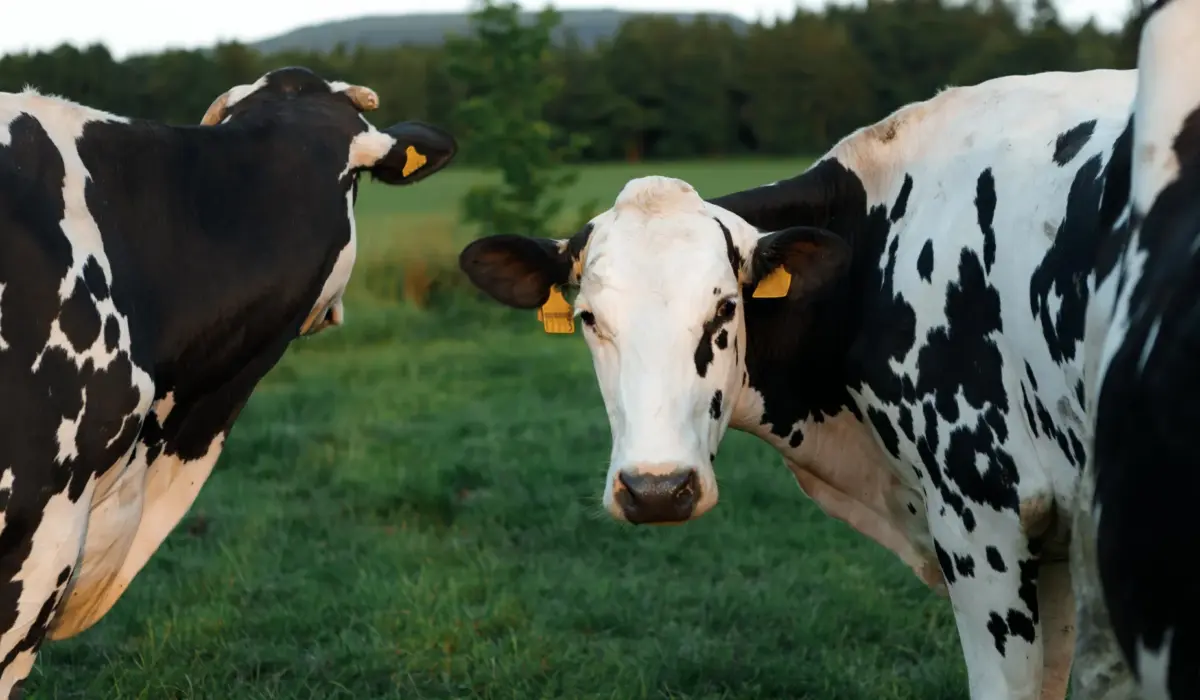
When an unexpected pathogen began felling U.S. dairy cattle in early 2024, it completely defied epidemiological expectations. For decades, the global scientific community understood avian influenza A (H5N1) as a respiratory affliction—a respiratory virus targeting the lungs and upper airways of birds and, on rare occasions, mammals. Yet, when the virus breached dairy herds across the Texas Panhandle and subsequently rippled through multiple states, it bypassed the respiratory tract almost entirely. Instead, it localized with devastating precision in the mammary glands, instigating severe necrotizing mastitis and rendering commercial milk supplies high-risk vectors for viral shedding.
Veterinarians initially chased traditional bacterial culprits, blind-sided by a disease presentation that had no historical precedent in cattle. Now, a landmark study published in Science Advances by researchers at the University of Pittsburgh School of Public Health, in collaboration with Harvard Medical School and other academic institutions, has finally unraveled the molecular blueprint of this anomaly. By deploying cutting-edge glycomics and ultra-high-resolution imaging, the research team discovered that the virus depends on a highly specific molecular architecture—specifically, N-linked sialic acid receptors abundantly expressed in bovine mammary tissue yet virtually absent in the respiratory tract.
This deep dive explores the mechanics of this groundbreaking discovery, the chronological unraveling of the bovine outbreak, the broader implications for agricultural and public health biosecurity, and the strategic roadmap researchers are building to preempt future zoonotic spillovers.
Detailed Chronology: From First Responders’ Confusion to Breakthrough Discovery
The Early 2024 Emergence in the Texas Panhandle
The crisis began quietly in the early months of 2024. Dairy producers in the Texas Panhandle noticed a sudden drop in milk production among older cows, accompanied by a stark change in milk consistency—it grew thick, discolored, and concentrated. Concurrently, animals displayed signs of severe systemic distress, lethargy, and painful inflammation of the udder tissues.
Because mastitis is a routine affliction in high-production dairy herds, field veterinarians immediately initiated standard diagnostic protocols aimed at bacterial pathogens like Staphylococcus or Streptococcus. However, conventional treatments failed, and the illness spread with confounding velocity from herd to herd, moving across state lines via the transport of asymptomatic or mildly symptomatic cattle and contaminated dairy equipment.
When diagnostic panels finally isolated the H5N1 avian influenza virus from milk samples, the agricultural and scientific communities were left reeling. Cattle had never been documented as natural hosts for H5N1. The assumption that influenza viruses restricted their bovine entry points to the upper respiratory system led initial containment strategies down the wrong path.
The Vector of Concern: Milk and Occupational Hazards
As researchers mapped the spread, they realized the virus possessed an unusual transmission route. Infected cows shed staggering quantities of the virus directly into their milk. This revelation immediately raised urgent occupational health alarms for farmworkers handling raw milk, milking equipment, and treating sick animals.
Furthermore, the practice of feeding unpasteurized (raw) milk to domestic pets—such as barn cats—transformed into a lethal vector. Veterinary pathologists documented severe neurological disease and mortality in cats exposed to raw milk from infected herds, a phenomenon that prompted intense collateral study. Dr. Suresh Kuchipudi and his team underscored a vital public health message: while commercial pasteurization effectively neutralizes the pathogen, ensuring the safety of the commercial dairy supply, the consumption of raw milk remains a high-stakes health hazard.
The Turning Point: Bridging Virology and Glycomics
Realizing that existing models of bovine respiratory susceptibility could not explain the clinical reality, Dr. Kuchipudi initiated a multi-institutional collaboration. He partnered with Dr. Lauren E. Pepi of Harvard Medical School, a leading expert in glycomics—the comprehensive study of complex sugar-based molecules (glycans) that line cell surfaces.
Influenza viruses cannot simply breach a host cell at random; they must dock onto specific glycan receptors via a lock-and-key mechanism on their surface proteins. To discover why the virus bypassed the lungs and targeted the udder, the research team had to map out the fine-detailed architecture of these cellular landing pads within bovine tissues using ultra-high-resolution imaging, binding assays, and advanced tissue-staining protocols.
Supporting Context & Metrics: The Science of Glycan Receptors
To understand why H5N1 behaves so differently in cows compared to humans or avian species, one must examine the micro-world of cellular receptors.
The Lock-and-Key Mechanism
All influenza A viruses initiate infection by binding to sialic acid residues attached to glycoproteins or glycolipids on the host cell membrane. Historically, virologists classified these receptors broadly based on the chemical linkage connecting the sialic acid to the underlying sugar chain (e.g., alpha-2,3-linked or alpha-2,6-linked sialic acids).
However, the Pittsburgh-Harvard team discovered that broad classification is insufficient. When they examined the distribution of sialic acid receptors across various bovine tissues, they encountered a paradox: previous studies had noted the presence of flu-related glycan receptors in the noses, tracheas, and lungs of cattle, yet animals exposed to H5N1 were consistently failing to develop the expected respiratory distress.
The Discovery of N-Linked Sialic Acid Specificity
Through their rigorous multi-technique analysis, the researchers determined that H5N1 does not simply bind to any sialic acid receptor; it requires a very specific subtype: N-linked sialic acid receptors.
- The Airway Absence: In the respiratory tract of dairy cattle, these specific N-linked receptors are either structurally unfavorable or present in quantities too low to sustain efficient viral entry. This explains why respiratory shedding and severe pneumonia were largely absent during the outbreak.
- The Udder Abundant Ground: Conversely, when the team analyzed bovine mammary gland tissue, they discovered a dense concentration of these exact N-linked sialic acid receptors. The udder essentially functions as a molecular "hotspot," presenting the exact lock required for the H5N1 key.
This micro-architectural reality transformed the mammary glands into an ideal breeding ground, allowing the virus to replicate explosively, cause localized necrotizing mastitis, and shed massive viral loads directly into the milk supply without ever needing to establish a primary foothold in the lungs.
Official Statements and Expert Insights
The implications of this study extend far beyond the 2024 dairy outbreak, offering a new paradigm for how virologists assess cross-species transmission risks.
Dr. Suresh Kuchipudi, chair of Infectious Diseases and Microbiology at Pitt Public Health and senior author of the study, reflected on the initial days of the outbreak and the subsequent scientific breakthrough:
"Mastitis is a classic disease in milk-production animals, and veterinarians were dutifully looking to all the usual suspects for the source, like bacterial pathogens. When the real culprit turned out to be bird flu, everyone in the field was caught completely by surprise. We hadn’t even remotely considered that cattle could be a host for H5N1."
Addressing the complexity of the virus’s cellular preferences, Kuchipudi explained why conventional assumptions fell short:
"Glycan biology is very complex. We realized that, to understand what was really going on, we would need to use more innovative technologies and map out the fine-detailed architecture that enables the virus to bind to cells."
Highlighting the public health dimensions of the discovery, Kuchipudi reinforced the critical safety margins enforced by modern processing standards:
"If a cow is infected, it sheds a lot of virus into the milk. This raised concerns about occupational risk for farm workers. Also, there is a habit of feeding raw milk to domestic pets, like cats, and there have been instances of cats dying, which we studied previously… Pasteurization effectively destroys the virus, highlighting the importance of avoiding raw milk."
The collaborative nature of the study was underscored by contributions from a diverse team of researchers, including co-authors Surabhi Srinivas, Dr. Shubhada K. Chothe, Dr. Santhamani Ramasamy, Dr. Sougat Misra, Dr. Noel Chandan Nallipogu, and Lindsey LaBella of the University of Pittsburgh; Dr. Yin-Ting Yeh of Pennsylvania State University; May Wang of Harvard University; and Dr. Heidi L. Pecoraro and Dr. Brett T. Webb of North Dakota State University. The research was jointly supported by Pitt Public Health and the U.S. Department of Agriculture’s National Institute of Food and Agriculture.
Future Outlook: Preempting the Next Zoonotic Leap
The successful mapping of N-linked sialic acid receptors in bovine udders marks a crucial turning point in veterinary virology and pandemic preparedness. Rather than reacting reactively to novel zoonotic spillovers after they devastate agricultural or human populations, scientists now possess a blueprint to proactively assess vulnerabilities across the animal kingdom.
Proactive Species and Tissue Screening
The methodology developed by the Pittsburgh and Harvard teams paves the way for comprehensive, predictive surveillance. By applying advanced glycomic mapping to other livestock species, companion animals, and wildlife populations, researchers can determine susceptibility profiles before an outbreak occurs.
As Dr. Kuchipudi noted regarding future defensive strategies:
"We can preemptively screen different species and different tissues within them for susceptibility. For example, would they exhibit respiratory symptoms? Would they show only mastitis, as in cows? Or would they show neurological disease, as our team has shown in cats? The lessons learned could potentially help prevent us from being caught by surprise again."
Implications for Biosecurity and Agriculture
For the dairy industry, these insights reinforce the necessity of rigorous biosecurity measures, stringent monitoring of herd health, and the strict avoidance of unpasteurized milk consumption. As viral evolution continues to test the boundaries between avian and mammalian hosts, understanding the subtle nuances of receptor binding provides the ultimate defense.
By shifting from a posture of retroactive containment to proactive molecular foresight, the scientific community is better equipped to safeguard both agricultural continuity and public health against the unpredictable trajectory of avian influenza.