

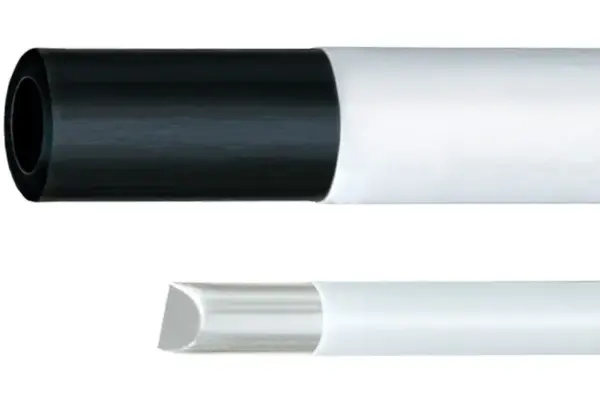





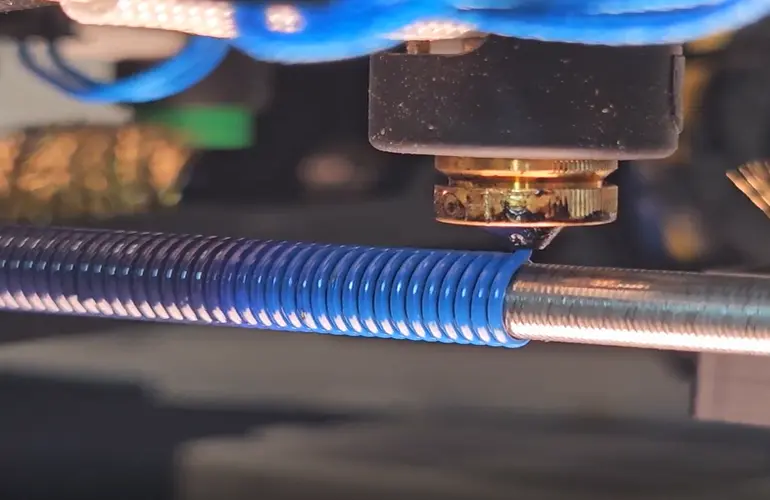
GALWAY, Ireland — In a development poised to reshape the landscape of medical device manufacturing, global technology titan TE Connectivity has officially introduced a pioneering, automated 3D printing process dedicated to the production of catheter shafts. Developed out of the company’s Advanced Technology Group within its Medical business at the state-of-the-art PROPELUS Prototype Center in Galway, Ireland, this breakthrough aims to overhaul an industry segment long reliant on labor-intensive, costly, and predominantly manual assembly methods.
By integrating additive manufacturing directly into the production lifecycle of catheter shafts, TE Connectivity is not merely offering an incremental update to an existing process; it is unlocking entirely new design parameters, accelerating time-to-market metrics for medical device developers, and setting a fresh benchmark for precision in minimally invasive surgical instrumentation.
Executive Overview: A Paradigm Shift in Catheter Engineering
Catheters represent some of the most critical, ubiquitous, and structurally nuanced tools utilized in modern medicine. From cardiovascular diagnostics and neurovascular interventions to targeted oncology therapies, these slender, flexible tubes navigate winding anatomical pathways to deliver life-saving treatments. However, the physical demands placed upon a catheter are intensely contradictory: the proximal end (the portion outside the patient) must possess sufficient pushability and torque transmission to navigate the device, while the distal tip must be remarkably soft, pliable, and atraumatic to prevent vessel perforation.
Historically, achieving these transitioning mechanical profiles—known clinically as varying durometer or flexibility profiles—required fusing multiple distinct polymer jacket sections together. This traditional assembly process is exceptionally intricate, requiring skilled manual labor, tight tolerances, high scrap rates, and significant financial investment.
TE Connectivity’s newly patented automated 3D printing methodology disrupts this paradigm. By precisely applying multiple polymer sections directly onto the catheter shafts during automated production, the technology achieves the exact mechanical performance, material integrity, and visual aesthetics of traditional counterparts while dramatically compressing production timelines.
Industry analysts and company engineers alike suggest that this innovation will serve as a catalyst for a new era of medical device design, empowering engineers to conceptualize geometries and structural architectures previously deemed impossible—or commercially unviable—under legacy manufacturing constraints.
Detailed Chronology: From Concept to Commercialization in Galway
The journey toward additive-manufactured catheter shafts did not happen overnight; it is the culmination of years of targeted research and development driven by TE Connectivity’s specialized engineering teams.
The Genesis at the PROPELUS Prototype Center
The groundwork for this technological leap was laid within TE Connectivity’s PROPELUS Prototype Center, located in the medical technology hub of Galway, Ireland. Galway has long functioned as a global epicenter for cardiovascular and medical device R&D, hosting a dense ecosystem of research talent, multinational device manufacturers, and clinical partners.
Within this environment, TE’s Advanced Technology Group set out to solve a fundamental bottleneck in catheter manufacturing: the friction between design flexibility and production scalability. Traditional prototyping for custom catheter designs often involves weeks of manual hand-building, thermal reflow bonding, and rigorous quality checks. Recognizing that traditional techniques were hitting a ceiling regarding how quickly engineers could iterate, the team turned their attention to additive manufacturing (AM).
Overcoming Material and Mechanical Hurdles
While 3D printing has revolutionized prototyping across aerospace, automotive, and consumer goods, its application in medical-grade micro-extrusions and flexible tubing has historically faced steep technical barriers. Medical polymers—such as various grades of Pebax, polyurethane, and nylon—require exact thermal management to retain their tensile strength, elongation properties, and biocompatibility.
The engineering team in Galway focused on developing proprietary print-head technologies and software automation that could deposit polymer jackets with micron-level precision directly onto underlying wire braids or inner liners. Through iterative testing, the team successfully matched—and in some cases exceeded—the mechanical bonding strength achieved through traditional thermal reflow processes.
The Automation Milestone
Moving from a benchtop additive concept to an automated manufacturing process was the critical final hurdle. By eliminating the human variability inherent in manual catheter assembly, the new automated system ensures absolute repeatability across every production run. This milestone transitions 3D printing from a purely rapid-prototyping tool into a scalable, production-grade manufacturing solution capable of meeting stringent medical regulatory demands.
Supporting Context & Metrics: The Economics and Mechanics of Modern Catheters
To fully appreciate the significance of TE Connectivity’s announcement, one must examine the broader economic and operational realities of the catheter manufacturing sector.
The Complex Anatomy of a Modern Catheter
A standard diagnostic or therapeutic catheter is rarely made of a single material. Manufacturers typically construct the device using three primary layers:

- The Inner Liner: Usually composed of low-friction fluoropolymers (like PTFE) to ensure smooth passage of guidewires, diagnostic sensors, or therapeutic devices.
- The Reinforcement Layer: A stainless steel or nitinol braid or coil embedded between layers to provide torsional stiffness and kink resistance.
- The Outer Jacket: A polymer matrix that varies in hardness (durometer) from the proximal to the distal end, dictating the overall flexibility and handling characteristics of the catheter.
Under traditional manufacturing models, creating these varying jacket segments involved cutting multiple segments of polymer tubing of differing durometers, lining them up end-to-end over a reinforced core, heat-shrinking a fluoropolymer sleeve over the assembly, and applying thermal energy via laser or reflow oven to melt the segments together. The sleeve is then peeled away and discarded.
This multi-step workflow generates considerable material waste, demands extensive manual alignment, and introduces potential points of structural weakness or surface irregularity.
Efficiency, Waste Reduction, and Supply Chain Resilience
By shifting to an automated additive process, TE Connectivity addresses several chronic pain points for device manufacturers:
- Reduced Scrap and Waste: Traditional thermal reflow and trimming processes generate significant polymer scrap. Direct deposition 3D printing applies only the necessary volume of material precisely where it is required, drastically improving material utilization efficiency.
- Streamlined Supply Chains: Consolidating multiple sub-assembly steps into a single automated digital workflow reduces reliance on complex, multi-tiered component sourcing and labor-intensive manual steps.
- Capital and Operational Cost Savings: While the initial investment in advanced additive machinery is substantial, the long-term reduction in labor costs, scrap rates, and production downtime translates into a lower total cost of ownership for device developers.
Official Statements: Leadership Perspectives on the Future of Manufacturing
The announcement has drawn widespread attention across the medical technology sector, with executive leadership emphasizing the strategic importance of the innovation.
Pat Duane, senior vice president and general manager of TE Connectivity’s Medical business, underscored the company’s ongoing commitment to pushing the boundaries of medical manufacturing:
"This work reflects TE’s continued focus on advancing manufacturing innovation to help our customers develop increasingly sophisticated minimally invasive medical devices," said Pat Duane. "We believe additive manufacturing technologies have the potential to expand design possibilities, accelerate development and support the future of catheter manufacturing."
Echoing these sentiments, Bernard McDermott, a Medical Engineering Fellow at TE Connectivity, highlighted the profound industry-wide implications of the breakthrough, pointing toward a fundamental transformation in how medical devices will be conceived and built:
"This process, along with complementary disruptive processes in development, will result in a paradigm shift in catheter manufacturing for our customers," noted Bernard McDermott. "It has the potential to significantly reduce product costs, simplify supply chains and have a positive environmental impact."
Future Outlook: Unlocking Uncharted Territory in Minimally Invasive Surgery
As minimally invasive medicine continues to push into more complex anatomical regions—such as tortuous neurovascular networks and delicate peripheral vascular beds—the demand for hyper-specialized, highly responsive catheters will only intensify.
Enabling Next-Generation Device Geometries
The true promise of TE Connectivity’s new process lies not just in making existing catheters cheaper or faster, but in making possible designs that were previously unmanufacturable. Traditional extrusion and reflow techniques are bound by linear geometries and uniform cross-sections. In contrast, additive manufacturing opens the door to:
- Graduated, Non-Linear Flexibility Transitions: Creating infinitely variable durometer gradients along a micro-length scale, allowing for ultra-smooth bending behavior without hinge points.
- Integrated Functional Channels: Embedding micro-sensors, conductive traces, or complex fluidic channels directly within the catheter wall during the printing process.
- Patient-Specific Customization: Laying the groundwork for bespoke catheter geometries tailored to unique patient anatomies pre-identified via advanced medical imaging.
Environmental and Sustainability Goals
In an era where medical device manufacturers face mounting pressure to reduce their carbon footprint and address single-use medical waste, TE Connectivity’s automated additive process offers a compelling sustainability narrative. By minimizing raw material waste, lowering energy consumption associated with multi-stage thermal processing, and optimizing supply chain logistics, the technology aligns directly with global corporate sustainability objectives.
About TE Connectivity
With a global workforce exceeding 90,000 employees—including over 10,000 engineers—operating across approximately 130 countries, TE Connectivity plc (NYSE: TEL) continues to cement its reputation as an industrial technology powerhouse. Providing foundational connectivity and sensor solutions that enable the secure distribution of power, signals, and data, TE touches nearly every major high-tech sector, from next-generation transportation and renewable energy grids to automated smart factories and artificial intelligence-enabling data centers.
Through innovations like the new automated 3D printing catheter manufacturing process in Galway, TE Connectivity demonstrates that in a world racing toward an interconnected and technologically advanced future, every connection counts.
Disclaimer: The opinions and perspectives expressed in this feature article are based on corporate releases and industry analysis. They do not necessarily reflect the editorial positions or formal endorsements of independent medical device industry publications or their respective staff.