





Executive Overview
If you were to play the classic parlor game "20 Questions" with the opening query, "Animal, vegetable, or mineral?" the natural world usually plays along nicely. Biological organisms—flesh, bone, scales, and cellulose—fall squarely into the first two categories. Minerals, meanwhile, belong to the geological realm of rocks, ores, and crystal lattices.
However, nature routinely blurs these rigid boundaries, forcing science to update its lexicon. Consider Perinereis cultrifera, an ancient species of predatory marine bristle worm that has prowled the oceans for millions of years and survives to this day. When scientists examine the creature’s formidable jaws, the traditional tripartite classification system begins to fracture. These are not merely organic mouthparts, nor are they simply chunks of stone or metal ore. Instead, they represent a stunning evolutionary fusion of both: biological structures infused with metallic ions that perform with the mechanical integrity of high-grade engineering alloys.
In a landmark study published in Biophysics Reviews, by AIP Publishing, an interdisciplinary team of researchers from the Vienna University of Technology (TU Wien) and the University of Vienna took a deep dive into the extraordinary mechanics of these sea worm jaws. Their findings have formalized a revolutionary scientific concept: bio-metals.
This emerging field of biophysical research does not merely study how nature borrows from the periodic table; it redefines the very criteria by which we judge material strength, elasticity, and strain response. By decoding how an unpretentious marine worm concentrates metallic ions to forge microscopic armor, scientists are unlocking blueprints for a new generation of synthetic materials. From aerospace engineering to biomedical implants, the evolutionary innovations of Perinereis cultrifera could soon reshape human technology.
Detailed Chronology: Unraveling the Science of Bio-Metals
To understand how bio-metals transitioned from a casual observation into a formalized pillar of biophysics, it is necessary to trace the trajectory of recent materials research and the meticulous methodologies deployed by the Vienna research team.
Phase One: Recognizing the Anomaly
For decades, marine biologists and materials scientists have known that certain organisms—ranging from the teeth of chitons and limpets to the jaws of marine worms—possess unusual skeletal and feeding structures. These biological appendages can bite through hard substrates, drill into rocks, or endure relentless mechanical stress without shattering.
Previously, researchers used broad, somewhat ambiguous catch-all phrases to describe these phenomena. Terms like "metallike biomaterials" or "biomaterials with metallike properties" were tossed around in academic literature to denote biological substances that exhibited high tensile strength, wear resistance, or electrical conductivity reminiscent of transition metals.
However, ambiguity hinders rigorous scientific progress. Without a precise definition, it remained difficult to distinguish a genuinely metal-infused biological structure from a heavily mineralized tissue, such as standard bone or mollusk shell. The scientific community required a strict taxonomy. Enter the concept of "bio-metals"—a classification anchored in three definitive, measurable pillars:
- Extreme hardness.
- A specific, quantifiable response to physical strain.
- A unique hybrid architecture formed by interlocking ions and structural proteins.
Phase Two: Microscopic Interrogation
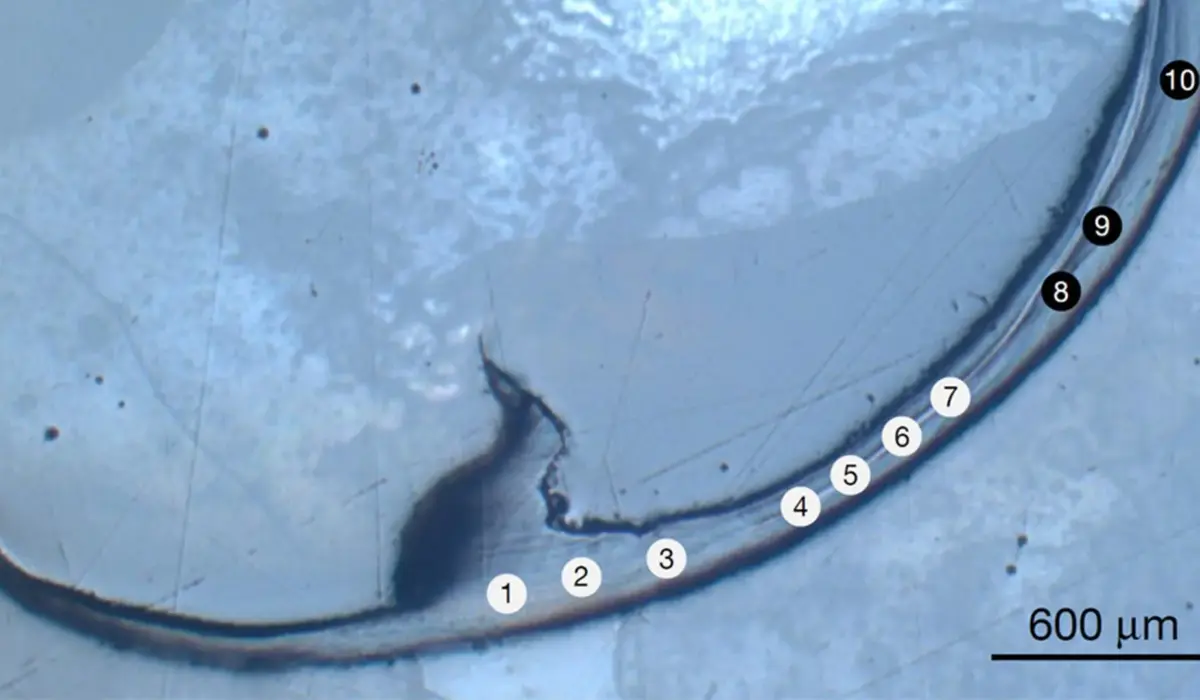
To test and refine this theoretical framework, the TU Wien and University of Vienna research collaborative turned their focus to Perinereis cultrifera. Armed with advanced analytical equipment, the team sought to map the physical and chemical topography of the worm’s jaws down to the nanometer scale.
The investigation began with nanoindentation—a state-of-the-art testing technique that involves pressing a microscopic diamond tip into a material with extreme precision to measure hardness and elasticity. By combining nanoindentation tests with high-resolution chemical assays and detailed electron microscopy, the researchers confirmed and expanded upon earlier, preliminary findings.
The data revealed a striking spatial distribution of elements. Metal ions—primarily zinc and copper, bound to complex organic matrices—were not evenly distributed throughout the jaw. Instead, they were heavily concentrated at the razor-sharp tips of the mouthparts, while the basal regions closer to the worm’s soft tissue remained comparatively softer and more flexible. This gradient design prevents the jaw from snapping under heavy loads; the hard, metal-rich tips act as cutting edges, while the resilient base absorbs and dissipates the shock of biting.
Phase Three: Uncovering the Nix-Gao Effect
Perhaps the most surprising discovery came when the research team tested the jaws at varying indentation depths. They observed an anomalous mechanical reaction that had never before been documented so clearly in a non-synthetic, non-pure metallic biological tissue.
When they pressed into smaller areas of the jaw, the material exhibited significantly higher resistance to deformation. This phenomenon is well-known in metallurgy and is formally known as the Nix-Gao nanoindentation size effect. In traditional crystalline metals like silver and copper, this size-dependent hardening occurs because smaller volumes of material contain fewer pre-existing defects. When deformed at a micro-scale, the rapid generation and interlocking of atomic structural defects (dislocations) make the material progressively harder to dent.
In Perinereis cultrifera, sharper changes in mechanical strain across tiny spatial regions appear to trigger an analogous dislocation-interlocking mechanism within the protein-ion matrix. The worm’s biological components were effectively mimicking the strain-hardening behaviors of refined metallurgy.
Phase Four: Divergence from Classical Metallurgy
Yet, science is rarely a story of direct carbon copies. While the sea worm’s jaws shared striking behavioral traits with familiar transition metals, deeper mathematical and physical modeling revealed critical departures from traditional metallurgy.
The researchers discovered that bristle worm jaws exhibit size-dependent elasticity—a distinct mechanical signature that separates them entirely from standard crystalline metals such as copper, silver, or iron. Pure metals do not exhibit this specific form of size-dependent elastic behavior under identical conditions.
Using sophisticated mathematical models, the team attempted to map how these unusual elastic properties emerge at the atomic and molecular levels. The calculations underscored a humbling reality for human science: despite our advanced laboratories and supercomputers, we are only scratching the surface of how biological organisms manipulate matter at the nanoscale.
Supporting Context & Metrics
To appreciate the gravity of this research, one must examine the quantitative parameters that separate bio-metals from both traditional engineering materials and standard biological tissues.
Comparative Metrics of Material Resilience
| Material Category | Primary Components | Key Mechanical Advantage | Limitation / Vulnerability |
|---|---|---|---|
| Traditional Metals (e.g., Copper, Silver) | Crystalline atomic lattices, free electrons | High electrical conductivity, predictable size-dependent hardness | Prone to fatigue, corrosion, and heavy weight |
| Standard Biomaterials (e.g., Bone, Collagen) | Calcium phosphate, organic protein fibers | Lightweight, self-healing, adaptive growth | Lower absolute hardness; susceptible to wear under high-friction tasks |
| Bio-Metals (e.g., Perinereis Jaws) | Transition metal ions (Zinc, Copper) + Structural proteins | Exceptional hardness gradient, size-dependent elasticity, corrosion resistance | Complex multi-scale architecture makes synthetic replication difficult |
The Mechanics of the Gradient
In engineering, joining two vastly different materials—such as a brittle ceramic cutting edge to a flexible polymer base—creates a weak stress-concentration point where delamination and failure typically occur. Nature solves this engineering nightmare through continuous gradient material design.
In Perinereis cultrifera, the transition from the soft, protein-dominant base to the hard, metal-ion-saturated tip is seamless. Metrics from nanoindentation maps demonstrate a graduated increase in hardness that spans several orders of magnitude over a distance of just a few hundred micrometers. This gradient architecture distributes mechanical stress evenly throughout the jaw structure, eliminating catastrophic shear failure when the worm bites down on hard, abrasive marine substrates.
Energetic and Environmental Efficiency
From an evolutionary standpoint, bio-metals represent a masterclass in resource efficiency. Human metallurgy requires massive, energy-intensive industrial smelters, extreme heat (often exceeding 1,000°C), and toxic chemical solvents to extract and refine metals like copper and zinc.
By contrast, marine worms synthesize their metallic mouthparts at ambient ocean temperatures, using biological catalysis driven by metabolic energy. They harvest trace metal ions directly from seawater and sediment, integrating them into structural proteins with atomic-level precision and zero industrial waste. This biochemical pathway offers a tantalizing model for "green chemistry" and sustainable manufacturing in the 21st century.
Official Statements & Expert Perspectives
The publication of this study in Biophysics Reviews has generated considerable excitement within the global materials science and biophysics communities. The researchers themselves view this milestone not as an endpoint, but as the opening salvo in a much larger scientific campaign.
Lead author Christian Hellmich, a prominent researcher at TU Wien, emphasized the profound distinctions that set these natural systems apart from human-engineered counterparts during commentary on the study:
"Bristle worm jaws also showed size-dependent elasticity. This is a distinguishing feature of bio-metals when compared to standard crystalline metals like copper or silver," Hellmich explained.
While mathematical models have provided initial insights into how these bizarre elastic effects manifest at the atomic scale, Hellmich is quick to acknowledge the vast horizon of unknowns that still lie ahead for the scientific community:
"We are only beginning to understand these natural materials," he noted, highlighting the immense complexity hidden within seemingly simple marine organisms.
Looking toward the future, Hellmich and his colleagues are already drafting the next phases of their investigative roadmap. Their ambitions extend far beyond the laboratory bench, aiming to bridge the gap between genetics, molecular structure, and macroscopic material performance:
"We plan to extend the experimental database by investigating additional species to refine the theoretical concept and perform dedicated computations, and perhaps most interestingly, to explore the link between genetic interventions and the corresponding material design space," Hellmich elaborated.
Underpinning this rigorous academic ambition is a deep, foundational appreciation for the elegance of the natural world—a sentiment that often drives the most transformative scientific breakthroughs:
"All this comes with true excitement about the beauty, elegance, and refinement found in and produced by nature."
Future Outlook: Bio-Metals and the Next Industrial Revolution
What does the formalization of "bio-metals" mean for the future of human technology? The implications stretch across multiple high-tech industries, promising a paradigm shift in how we design synthetic materials.
1. Revolutionizing Aerospace and Automotive Engineering
Modern engineering relies heavily on homogenous alloys. Whether it is an aluminum fuselage or a titanium turbine blade, materials are generally manufactured to possess uniform properties throughout. However, this uniformity often forces compromises—engineers must choose between flexibility (to absorb shock) and hardness (to resist wear).
By adopting bio-metal design principles, materials scientists can engineer synthetic composites that feature localized hardening and graded elasticity. Imagine a jet turbine blade whose leading edge is hyper-hardened via ion-infusion to resist particulate erosion, while its root remains flexible and tough to withstand vibrational fatigue. Such components could drastically extend operational lifespans while reducing total weight.
2. Transforming Biomedical Implants
One of the most immediate and promising applications lies in biomedicine. Traditional metal orthopedic implants (such as titanium hip replacements or stainless-steel bone plates) often suffer from a phenomenon known as stress shielding. Because titanium is significantly stiffer and harder than living human bone, the implant bears the vast majority of the mechanical load, causing the surrounding natural bone to weaken and resorb over time.
Bio-metal research opens the door to biomimetic implants that match the exact mechanical gradient of human bone or cartilage. An implant could possess a hard, wear-resistant surface for joint articulation, while transitioning smoothly into an elastic modulus that matches living bone tissue. This would encourage proper load transfer, stimulate natural bone growth, and eliminate the risk of implant loosening.
3. Sustainable, Low-Temperature Manufacturing
As global industries face mounting pressure to decarbonize, the energy-intensive nature of traditional metallurgy becomes increasingly unsustainable. The discovery that marine organisms can synthesize metal-infused structures at room temperature using ambient biological precursors offers a radical new roadmap for green manufacturing.
Researchers are already exploring bio-inspired synthesis techniques—methods that use biological proteins, peptides, or synthetic analogues to direct the self-assembly of metal-ion matrices. If successfully scaled, this could give rise to low-temperature, water-based manufacturing processes that grow high-performance structural materials rather than smelting them.
Conclusion: A New Answer to an Old Question
Returning to our opening thought experiment: Animal, vegetable, or mineral?
For Perinereis cultrifera, the correct answer is a testament to evolution’s boundless creativity. It is an animal that builds its tools from a sophisticated marriage of organic proteins and inorganic mineral ions, bridging two worlds that human science has historically kept separated.
As researchers at TU Wien and the University of Vienna continue to chart the uncharted waters of bio-physics, they are proving that nature remains the ultimate engineer. By learning the language of bio-metals, humanity is not merely discovering new facts about ancient sea worms; we are acquiring the vocabulary to write the next chapter of materials science.