







Executive Overview
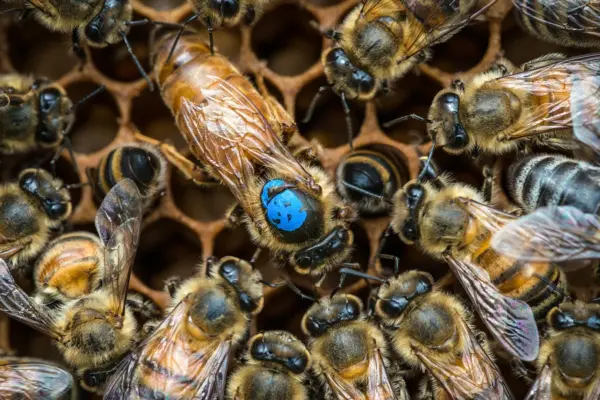
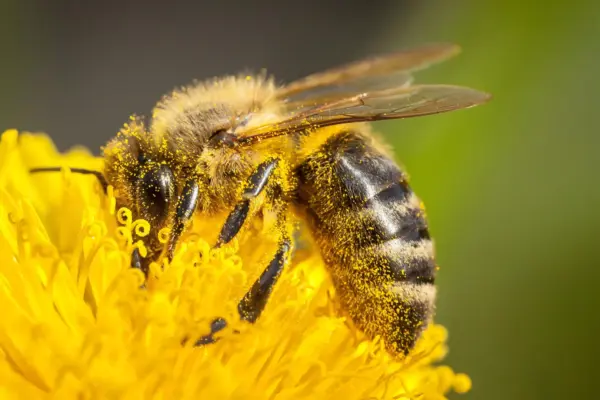
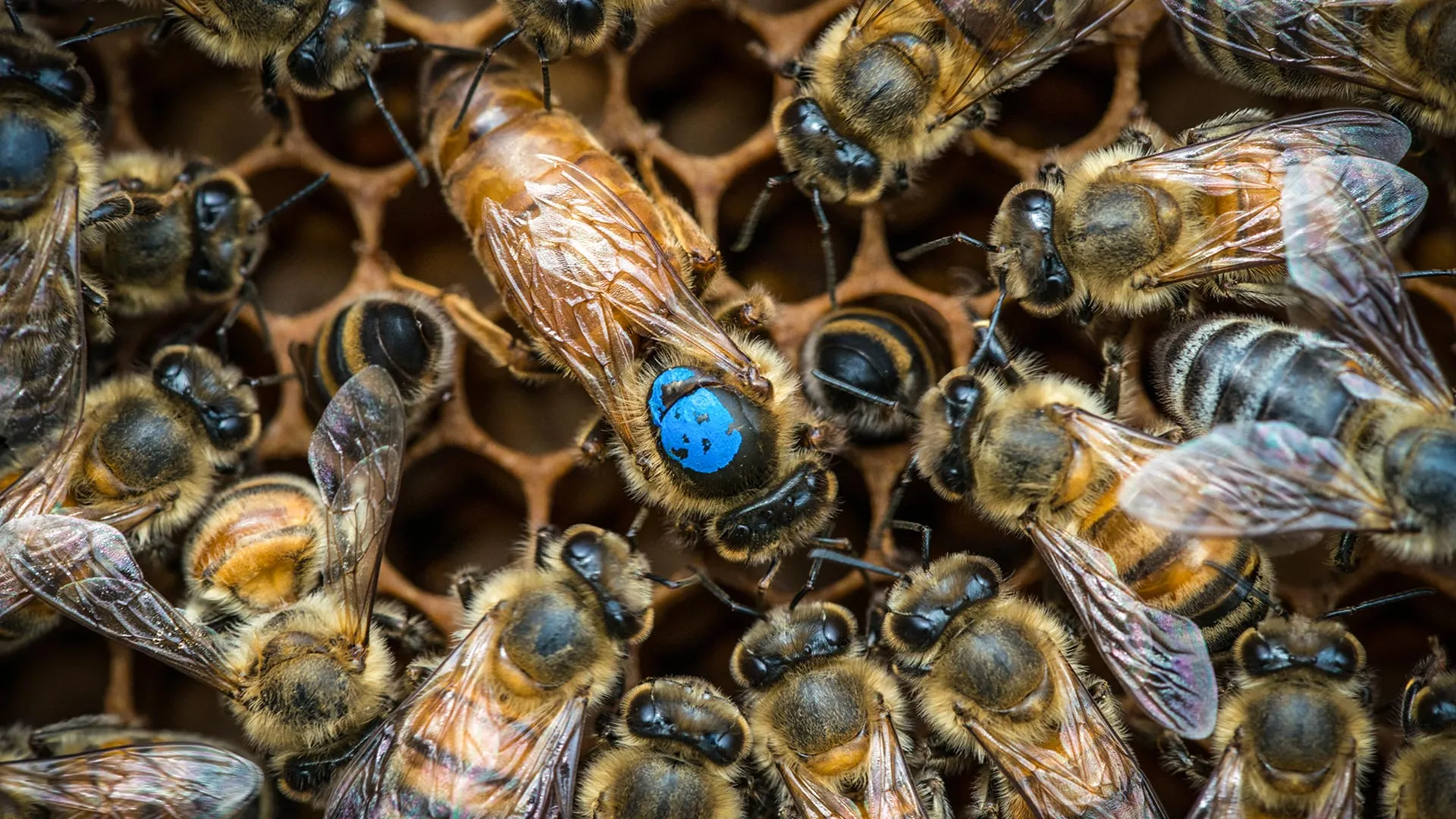
In the intricate, bustling metropolis of a honeybee (Apis mellifera) colony, survival hinges on absolute, flawless coordination. Thousands of individual organisms operate with a singular, collective efficiency that rivals the most sophisticated human supply chains. Yet, this complex society functions entirely without a central authority. There is no manager, no royal decree, and no blueprint handed down from above. Instead, labor is divided with mathematical precision: young bees tend to the brood and the queen, mid-life workers construct and defend the combs, and elder foragers brave the dangers of the outside world to gather nectar and pollen.
For decades, the mechanics behind this seamless self-organization have captivated evolutionary biologists and neuroscientists alike. How do individual brains orchestrate such a predictable, age-dependent shift in societal roles?
Now, a collaborative team of European researchers from Heinrich Heine University Düsseldorf (HHU), alongside partner institutions in Cologne and Frankfurt/Main, has pierced the veil of this biological mystery. In a landmark study published in the prestigious journal Proceedings of the National Academy of Sciences (PNAS), the research team revealed that they have successfully identified and manipulated the specific brain circuits responsible for governing worker bee task allocation.
By targeting a single, pivotal gene—doublesex—and selectively dampening neural activity within precise pathways, the researchers achieved something previously thought impossible: they reversed the aging clock of the bee brain, causing older foragers to abandon their outdoor duties and regress into the nursing behaviors typical of newborn hive-mates. This breakthrough not only sheds light on the neurological underpinnings of insect social structures, but it also opens unprecedented avenues for exploring how innate behavioral diversity and complex social cooperation evolve across the animal kingdom.
Detailed Chronology of the Breakthrough
Tracing the Puzzle of Avian and Insect Sociality
The journey toward this neurological revelation began years prior to the recent PNAS publication. Scientists had long established that a worker bee’s life follows a strictly chronological trajectory, known scientifically as temporal polyethism. As a honeybee ages, its physiological profile shifts in tandem with its neural chemistry, transitioning it smoothly through a series of distinct occupational epochs.
However, correlating broad behavioral shifts with the roughly one million interconnected neurons housed inside a honeybee’s minuscule brain felt akin to deciphering a complex computer program by looking only at its outer casing. Researchers knew that gene expression played a role in guiding these developmental shifts, but pinning down the exact causal link between genetic switches, neural wiring, and macroscopic social behavior remained an elusive holy grail.
The Doublesex Discovery at Heinrich Heine University
A crucial turning point materialized during earlier investigations led by Professor Dr. Martin Beye and his research group at HHU’s Institute of Evolutionary Genetics. While mapping and analyzing various genetic markers associated with development and sexual differentiation, the team focused their attention on a well-known gene: doublesex.
Traditionally recognized for its role in determining sexual dimorphism across many species, doublesex unexpectedly revealed a behavioral footprint in adult worker bees. When Professor Beye’s team experimentally deactivated or disrupted the doublesex gene in older worker bees, an extraordinary phenomenon occurred. Instead of performing the high-risk foraging tasks designated for their age group, the treated bees reversed their behavioral trajectory. They actively returned to the core of the hive to nurse and care for the reigning queen—a foundational responsibility normally reserved exclusively for the youngest members of the colony.
This behavioral U-turn suggested that doublesex was not merely a developmental relic, but a master regulator actively involved in suppressing or activating age-related work programs within the adult brain. Because the doublesex gene is expressed exclusively within specific, localized neural circuits, it provided the researchers with a microscopic handle to manipulate targeted regions of the bee brain without causing widespread neurological disruption.
Engineering Behavioral Regression: The Intervention Strategy
Armed with this genetic clue, Professor Beye’s team joined forces with neurobiologists and behavioral geneticists in Cologne and Frankfurt/Main to design an intervention experiment. Their goal was to isolate the neural circuits linked to doublesex and test whether deliberately suppressing their activity could predictably alter the colony’s division of labor.
To achieve this cellular-level control, the researchers deployed an innovative molecular technique. They utilized the doublesex gene expression pathway to prompt the targeted neurons to manufacture a specialized synthetic protein. This engineered protein acted as an internal molecular brake, capable of dampening or completely suppressing electrical and chemical signaling within those specific neural pathways.
To control when these brakes were applied, the scientists introduced a chemical trigger into the bees’ diet. By feeding the insects a specific substance that activated the engineered protein, the researchers could selectively dial down neural activity only in the circuits governed by doublesex.
The results were immediate and striking. When the targeted neural circuits were chemically inhibited, the older worker bees systematically abandoned their foraging duties. They crawled back into the brood nest and resumed nursing and tending to the queen—acting, for all intents and purposes, like newborn workers. When the chemical substance was withheld and the circuits were allowed to fire normally, the bees immediately reverted to their age-appropriate foraging behaviors. By flipping a pharmacological switch, the scientists had effectively taken the steering wheel of the honeybee’s social instincts.
Supporting Context & Metrics: Inside the Honeybee Neural Architecture
To truly appreciate the magnitude of this breakthrough, one must examine the staggering scale and complexity of the biological hardware involved.
| Biological Metric / Feature | Specification | Functional Implication |
|---|---|---|
| Total Neuronal Count | ~1,000,000 neurons | Compact processing power capable of managing complex spatial mapping, chemical communication, and social hierarchy. |
| Colony Population | 20,000 to 60,000 workers | A superorganism requiring decentralized, efficient task partitioning to survive environmental pressures. |
| Temporal Polyethism Span | 6 weeks (Average worker lifespan) | Rapid physiological and neural maturation moving from nurse to builder, guard, and finally forager. |
| Targeted Gene | Doublesex ($dsx$) | Acts as a genetic anchor, expressing itself in specific neural circuits to modulate age-based social tasks. |
| Intervention Mechanism | Pharmacogenetically induced neural silencing | Allows reversible, precise inhibition of localized brain circuits to observe direct behavioral output. |
The Mechanics of Decentralized Workforces
Human organizations typically rely on top-down hierarchies: managers evaluate workloads, delegate tasks, and adjust personnel based on output requirements. In stark contrast, a honeybee colony operates on the principle of self-organization through local interactions—a decentralized network where individual agents make autonomous decisions based on immediate local feedback.
For instance, a nurse bee does not receive an order from the queen to feed a newly hatched larva; rather, the physical presence and pheromonal output of hungry larvae stimulate the nurse’s sensory receptors, triggering feeding behavior. As the bee matures, changes in its internal neurochemistry—now proven to be regulated by specific circuits like those involving doublesex—alter its threshold for responding to different stimuli. An older bee becomes less sensitive to brood pheromones and far more responsive to the sights, sounds, and scents of the outside world, transforming it organically from a nurse into a forager.
By demonstrating that the manipulation of a single genetic-neural circuit can override this natural progression, the HHU-led research team has provided empirical evidence that the entire structural rhythm of the hive is anchored in hardwired, plastic neural pathways.
Official Statements & Expert Insights
The publication of this study in PNAS has sent ripples through the international scientific community, eliciting commentary from leading researchers in evolutionary genetics and neurobiology.
Dr. Jana Seiler, the lead author of the study from Heinrich Heine University Düsseldorf, emphasized the precision of the behavioral reversal during a press statement discussing the findings:
"The older worker bees then resumed caring for the queen, which only younger bees would do otherwise," Dr. Seiler explained. "When the circuits were not inhibited, the bees exhibited their normal, age-dependent behavior. In this way, we were able to control which tasks the worker bees performed at will."
This level of control marks a departure from earlier behavioral studies, which often relied on environmental stressors or broad chemical treatments that altered the entire physiology of the insect. By isolating specific neural circuits, Seiler and her colleagues have established a direct causal bridge between molecular genetics and complex social sociology.
Professor Dr. Martin Beye, who spearheaded the overarching research initiative at the Institute of Evolutionary Genetics, contextualized the broader philosophical and evolutionary implications of the discovery:
"The ability to control the social behavior of bees offers us new opportunities to explore the fundamentals of innate behavioral diversity and social cooperation," Professor Beye stated. "The solution to the secret of how bees and other animals cooperate so well without a blueprint for work is likely hidden deep within the brain’s interconnected neural circuits."
Beye noted that while social insects like honeybees, ants, and termites have long been studied for their eusocial structures, understanding the exact neurobiological mechanisms that translate genes into societal harmony has remained an elusive frontier. This study provides the methodological framework required to decode similar behavioral architectures across other species.
Future Outlook: Horizons in Neurobiology and Evolutionary Science
As the dust settles on this milestone publication, the research consortium is already casting its gaze toward the horizon, mapping out the next phases of inquiry. The implications of this research extend far beyond the confines of a single beehive, promising to illuminate core principles of neurodevelopment, behavioral plasticity, and evolutionary biology.
Mapping the Complete Social Connectome
One of the primary goals for future research is to expand beyond the doublesex circuits and map the broader network of neural pathways that govern other specialized hive tasks. While nursing and foraging represent two major poles of the worker bee’s life cycle, intermediate roles—such as comb construction, food processing, hive ventilation, and guarding the entrance against intruders—are equally vital.
By identifying the distinct neural circuits associated with each of these occupations, scientists hope to construct a comprehensive "social connectome" of the honeybee brain. This map would detail how different neural centers communicate, compete, and suppress one another to maintain the delicate balance of labor within the colony.
Comparative Studies Across Eusocial Species
Beyond Apis mellifera, researchers are eager to investigate whether similar genetic and neural mechanisms regulate division of labor in other eusocial organisms. Ants, wasps, and termites have evolved complex societies independently through convergent evolution. Determining whether they utilize similar ancestral genetic toolkits—such as variations of the doublesex gene—to wire their neural circuits will provide profound insights into how nature invents and reinvents complex social structures.
Biomedical and Biotechnological Implications
While the immediate applications of this research remain firmly rooted in fundamental science, understanding how localized neural silencing can radically alter behavior opens up fascinating long-term perspectives. In human medicine, psychiatric and neurodevelopmental disorders are frequently characterized by dysfunctions in specific neural circuits rather than uniform brain damage. By advancing our understanding of how precise genetic interventions can safely modulate neural network activity and plasticity, studies on model organisms like the honeybee contribute foundational knowledge to the broader fields of neuropharmacology and circuit-based therapeutics.
Safeguarding Pollinators in a Changing World
On a more immediate, ecological level, unlocking the secrets of the honeybee brain arrives at a critical juncture in history. Honeybees are indispensable pollinators responsible for the reproduction of a vast array of global agricultural crops. As colonies face unprecedented pressures from habitat loss, chemical pesticides, pathogens, and climate change, maintaining healthy, balanced workforces is more critical than ever.
By gaining a granular, mechanistic understanding of how bees organize their societies, researchers and conservationists may eventually develop better diagnostic tools to monitor colony health, resilience, and behavioral adaptability in the face of environmental stressors.
Conclusion
The collaborative endeavor led by Heinrich Heine University Düsseldorf, alongside their colleagues in Cologne and Frankfurt/Main, has fundamentally advanced our comprehension of the social insect mind. By successfully linking the doublesex gene to specific neural circuits and proving that their activity dictates the chronological division of labor, these researchers have demystified one of nature’s most elegant examples of decentralized cooperation.
As science continues to map the intricate pathways connecting genes to neural circuits, and neural circuits to collective behavior, the honeybee remains a golden key to unlocking the mysteries of the brain—proving that even within a brain containing a mere million neurons lies a universe of sophisticated social design.