










Executive Overview
The architecture of global clinical research is undergoing a structural realignment. For decades, the Asia-Pacific (APAC) region was primarily viewed by Western pharmaceutical giants as a cost-efficient destination for patient recruitment—a place to offload late-stage trials to capitalize on vast populations and lower overhead costs. Today, that paradigm has fundamentally shifted. Driven by deliberate government intervention, aggressive regulatory modernization, and maturing domestic biotech ecosystems, China, Japan, and South Korea have transformed from regional subcontractors into primary engines of global pharmaceutical innovation.
Collectively, the APAC region now accounts for an estimated 43% of the world’s innovative drug pipeline. This growth is particularly pronounced in metabolic and cardiovascular therapeutics, where localized epidemiological insights—such as the manifestation of metabolic risk factors at lower body mass indexes (BMIs) among Asian populations—have catalyzed advanced screening methodologies and early-intervention protocols. With clinical trial activity in the region expanding at a rate two to three times faster than in Europe, the triumvirate of China, Japan, and South Korea is no longer merely participating in global drug development; they are setting its pace.
This article examines the distinct policy frameworks, economic trajectories, and scientific milestones that have propelled these three nations to the forefront of global clinical research, offering a blueprint for other regions seeking to build competitive innovation economies.
Detailed Chronology: The Rise of APAC’s Clinical Powerhouses
To understand how China, Japan, and South Korea reached their current preeminence, one must trace the deliberate policy shifts and regulatory overhauls that occurred over the past two decades.

- The Early 2000s (Foundation Building): Governments across the region recognized that relying solely on generic manufacturing was an economic dead-end. South Korea initiated targeted investments in biotechnology infrastructure, while China and Japan began upgrading their clinical trial site standards to align with International Council for Harmonisation of Technical Requirements for Pharmaceuticals for Human Use (ICH) guidelines.
- The Mid-2010s (Regulatory Streamlining): Recognizing bottlenecks in drug approvals, national regulators implemented fast-track frameworks. Japan introduced the Sakigake designation system in 2015 to accelerate reviews for breakthrough therapies. Concurrently, China’s National Medical Products Administration (NMPA) initiated sweeping reforms in 2017, welcoming overseas clinical trial data and establishing priority review pathways for innovative medicines.
- The Post-Pandemic Acceleration (2020–2023): The disruption of global supply chains and traditional clinical trial sites during the COVID-19 pandemic highlighted the resilience and agility of APAC research hubs. During this window, China emerged as a dominant force in out-licensing deals, while South Korea cemented its reputation as a leader in antibody-drug conjugates (ADCs) and cell and gene therapies (CGTs). Between 2015 and 2023, Japan captured the highest number of US Food and Drug Administration (FDA) novel drug approvals in Asia, including 24 new molecular entities (NMEs).
- The Present Era (2025–2026 and Beyond): Today, the region is characterized by unprecedented commercial integration. South Korea established the National Bio Committee with a multi-trillion-won mandate to secure a top-five global ranking in the bio-industry by 2035. Meanwhile, China’s drug sales forecast is projected to surge to unprecedented heights, cementing its status as the world’s second-largest pharmaceutical market.
Country-by-Country Analysis: Pillars of Innovation
China: From Fast Followers to Fast Innovators
China’s ascent within the global pharmaceutical landscape is defined by sheer velocity and scale. As the world’s second-largest pharmaceutical market, the country offers a uniquely fertile environment for both early-discovery translation and large-scale commercialization.
The structural advantages in China are stark. The transition from early discovery to Investigational New Drug (IND) submission cycles is typically 50% to 70% faster than in Western jurisdictions. Furthermore, late-stage trial recruitment can be executed two to five times faster than in the United States or the European Union. This speed is underpinned by a supportive policy ecosystem that accepts foreign clinical trial data and relies on conditional approval pathways to fast-track medicines to patients.
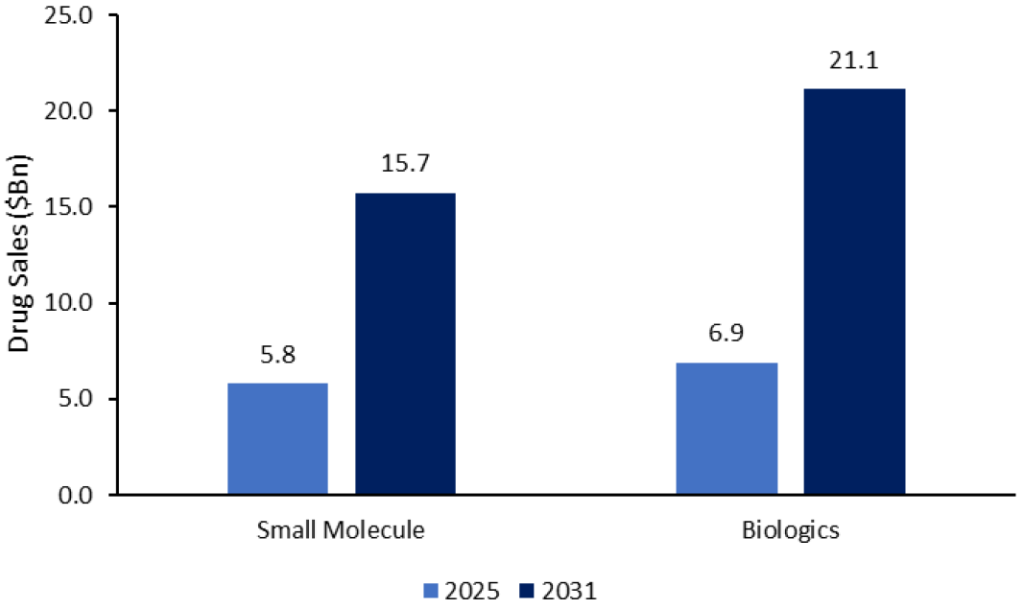
The commercial and financial indicators are equally striking. Since 2019, China has accounted for over 75% of private equity and venture capital funding within the broader APAC region, while leading the world in cross-border out-licensing deals. According to GlobalData forecasts, China-headquartered pharmaceutical sales are projected to expand dramatically, growing from US$12.6 billion in 2025 to US$36.8 billion by 2031, powered largely by surging demand for biologics and advanced therapies.
Beyond oncology and rare diseases, China’s extensive patient demographics have made it an indispensable geography for cardiovascular and metabolic research. Large-scale real-world studies focusing on heart failure, atrial fibrillation, and related cardiovascular comorbidities provide deep pools of evidence that inform global safety monitoring and outcomes research.

Japan: First for First-in-Class Excellence
As the world’s third-largest pharmaceutical market—valued at over US$85 billion in 2025—Japan occupies a distinct niche in global drug development. Rather than competing purely on volume, Japan has positioned itself as a global leader in first-in-class innovations and novel molecular entities.
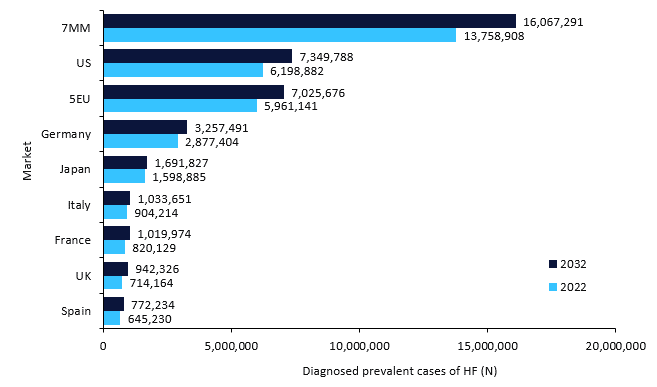
Japan’s clinical research landscape is profoundly shaped by its demographic reality: an rapidly aging population that creates an urgent demand for age-related therapeutic interventions. For example, GlobalData estimates that diagnosed prevalent cases of heart failure in Japan will reach approximately 1.69 million by 2032. This sustained disease burden has galvanized domestic research into cardiovascular diseases and regenerative medicine.
Government backing remains a cornerstone of Japan’s success. The Agency for Medical Research and Development (AMED) provides robust financial and strategic support for biotech and pharmaceutical ventures. Furthermore, the Sakigake designation system—administered jointly by the Ministry of Health, Labour and Welfare (MHLW) and the Pharmaceuticals and Medical Devices Agency (PMDA)—offers prioritized consultations, accelerated reviews, and potential premium pricing upon reimbursement. Between its inception in 2015 and August 2020, the Sakigake scheme yielded seven first-in-world approvals.
Supported by ongoing government incentives, Japan ranked among the top five global markets for clinical trial growth between Q2 2024 and Q2 2025. Coupled with heavy investments in advanced biomanufacturing and cell and gene therapy capacity, Japan remains an essential anchor for high-complexity clinical trials.
South Korea: A Global Hub for Advanced Biologics
South Korea has leveraged its advanced healthcare infrastructure and digitalized medical ecosystem to carve out a dominant reputation for biopharmaceutical innovation.
The nation’s universal, single-payer healthcare system covers 97% of the population, providing researchers with centralized, high-fidelity healthcare data and streamlined access to diverse patient cohorts. Like its neighbors, South Korea manages a significant cardiometabolic disease burden; GlobalData estimated the diagnosed prevalence of Type 2 diabetes in the country at 6.98% in 2025, driving ongoing research into metabolic disorders.
However, South Korea’s primary global differentiator lies in its specialization in cutting-edge modalities. The country has emerged as a powerhouse in the development of antibody-drug conjugates (ADCs) and cell and gene therapies. Between 2023 and the first half of 2025, an impressive 36% of South Korea’s pipeline approvals were classified as first-in-class medicines.
This scientific prowess has translated directly into commercial validation. Innovator drug licensing agreements involving South Korean companies reached US$7.86 billion in the first half of 2025 alone—representing a staggering 113% increase over the previous year. To maintain this momentum, the South Korean government established the National Bio Committee in 2025, backed by a 1-trillion-won fund designed to catalyze private investment in vaccines and biopharmaceuticals and propel the nation into the global top five bio-industries by 2035.
Supporting Context & Metrics
The transformation of APAC’s clinical research sector is quantifiable across several key dimensions:
- Pipeline Contribution: The region generates approximately 43% of the global innovative treatment pipeline.
- Cardiovascular and Metabolic Scale: The APAC cardiovascular drug market has reached an estimated USD 12.60 billion, while metabolic therapeutics are expanding at a compound annual growth rate (CAGR) exceeding 8%.
- China’s Financial Dominance: China accounts for more than 75% of all private equity and venture capital funding within the APAC region since 2019. Chinese domestic pharmaceutical sales are projected to triple, rising from US$12.6 billion in 2025 to US$36.8 billion by 2031.
- South Korean Licensing Surge: Total licensing agreement values for South Korean innovator drugs surged by 113% in the first half of 2025 compared to the previous year, hitting US$7.86 billion.
- Trial Velocity: Clinical trial activity across APAC is expanding at a pace two to three times faster than in Europe, a trend projected to accelerate over the next decade.
Future Outlook and Strategic Considerations
As clinical trial activity in the Asia-Pacific region continues to outpace Western markets, global pharmaceutical sponsors are presented with both extraordinary opportunities and distinct operational challenges. While the region offers unmatched patient recruitment speeds, deep scientific expertise, and sophisticated regulatory pathways, sponsors must also navigate fragmented local regulations, varying budgetary structures, and complex start-up logistics.
The evolutionary trajectories of China, Japan, and South Korea offer a clear lesson: building a globally competitive clinical research ecosystem requires long-term strategic vision, sustained public-private investment, and continuous regulatory adaptation.
For biopharmaceutical companies looking to harness the potential of this dynamic region, success depends heavily on collaboration with experienced partners who possess deep operational, regulatory, and cultural fluency across APAC. Organizations with decades of localized footprint—such as ICON, which operates across 13 countries in the region—provide the comprehensive infrastructure needed to bridge local complexities with global standards. By offering end-to-end services ranging from multi-regional trial design and regulatory strategy to advanced data management and decentralized trial delivery, such strategic partners enable sponsors to accelerate development timelines and bring life-changing therapies to patients faster than ever before.