











Executive Overview
The landscape of haematological oncology has been fundamentally reshaped by groundbreaking immunotherapies, specifically chimeric antigen receptor (CAR) T-cell therapies and T-cell engaging bispecific antibodies (BsAbs). Approved extensively by regulatory authorities such as the European Medicines Agency (EMA) and the U.S. Food and Drug Administration (FDA) for conditions like myeloma, lymphoma, and leukaemia, these interventions offer unprecedented survival trajectories. However, they also introduce profound toxicity profiles, complex administration hurdles, and significant lifestyle disruptions.
Despite regulatory encouragement to integrate patient-focused clinical outcomes into clinical trial designs, a critical gap persists. Standardised patient-reported outcome measures (PROMs)—the primary instruments used to quantify a patient’s lived experience, physical functioning, and quality of life (QoL)—are failing to capture the true, holistic burden of these advanced therapies.
A landmark multi-stakeholder qualitative project involving 38 international participants—including patients, carers, clinical trialists, academic researchers, pharmaceutical representatives, and regulators from the FDA, EMA, and health technology assessment (HTA) bodies—has exposed severe systemic flaws in current PROM frameworks. The study reveals that legacy tools frequently miss critical treatment-specific toxicities, neglect psychological distress and "time toxicity," and fail to accommodate the rapid, dramatic physiological shifts characteristic of CAR-T and BsAb regimens.
To bridge this chasm between clinical metrics and human experiences, experts are demanding an urgent overhaul of PROM implementation. Key recommendations include adopting a dual-baseline assessment strategy, mandating high-frequency evaluations during the acute post-infusion window, systematically capturing patient-important domains currently omitted from legacy tools, extending tracking well beyond clinical disease progression, and ensuring transparent public reporting of findings.
Detailed Chronology and Methodological Insights
The initiative began as a response to a glaring paradox: while the cost and clinical impact of CAR-T and BsAbs dominate oncology debates, PROM data is systematically captured in only a fraction of clinical trials—with some literature indicating their presence in as little as 27% of CAR-T studies.
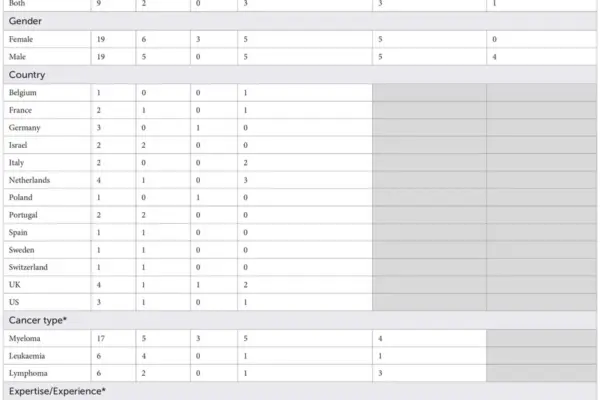
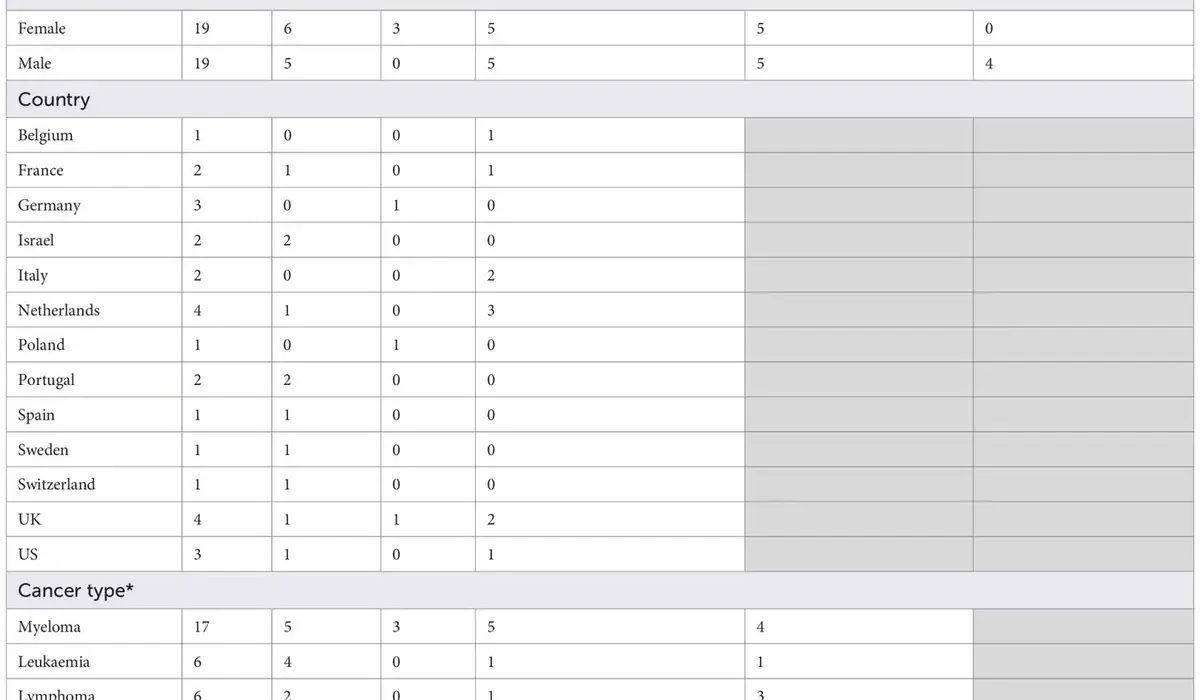
Between March and mid-2024, researchers executed a rigorous qualitative study designed to untangle the operational, methodological, and conceptual challenges of measuring QoL in this space. Using purposive and snowball sampling, the project convened 38 experts and community members across Europe, the United States, and Israel. The cohort featured 11 patients, 3 informal family carers, 10 academic researchers/clinicians/trialists, 10 pharmaceutical representatives, and 4 regulatory and HTA delegates.
The investigation utilised a mixed deductive-inductive thematic analysis approach. Data was harvested via 14 semi-structured interviews (involving 16 participants) and two intensive, two-hour focus groups (engaging 31 unique individuals). Transcripts were coded independently by dual researchers using ATLAS.ti software, ensuring high methodological rigour and robust triangulation of data.
Four critical thematic pillars emerged from the qualitative data:
- Distinctive Operational and Clinical Challenges: The unique geography of care—such as patients travelling over 100 kilometres to specialized tertiary centres only to receive local follow-up care—creates high rates of missing data. Furthermore, acute toxicities like immune effector cell-associated neurotoxicity syndrome (ICANS) and cytokine release syndrome (CRS) often render patients cognitively impaired or too physically ill to complete standard questionnaires.
- Ambiguity in What to Measure: Legacy instruments fail to reflect the wide spectrum of side effects, ranging from the debilitating gastrointestinal and dermatological toxicities of specific BsAbs (e.g., talquetamab-induced nail loss and dysgeusia) to the heavy emotional strain of manufacturing delays and financial toxicities.
- Uncertainty in When to Measure: Traditional single-baseline designs fail when patients experience rapid disease progression or intense psychological stress during the weeks-long manufacturing window between apheresis and infusion.
- Divergent Stakeholder Pressures: While regulators like the FDA push for frequent, granular symptom tracking, HTA bodies demand ultra-long-term data spanning several years and extending past disease progression. Meanwhile, industry sponsors face immense operational hurdles balancing these demands against the risk of survey fatigue among vulnerable cancer patients.
Supporting Context and Metrics: The Disconnect Between Tools and Reality
To understand why current trials present an incomplete picture of immunotherapy toxicity, one must examine the specific clinical hurdles posed by CAR-T and BsAbs, and map them against prevailing measurement tools.
The Clinical Realities of CAR-T and Bispecific Antibodies
CAR-T therapy is characterised by a heavy initial preparation burden (lymphodepletion), followed by a high-intensity, fixed-duration therapeutic window. Data shows that CRS occurs in up to 87% of CAR-T recipients and 67% of those receiving BsAbs, while neurotoxicity affects 40% to 64% of CAR-T patients (with 27% requiring intensive care unit admission). Bispecific antibodies, conversely, involve continuous dosing schedules and step-up administration protocols, putting patients at ongoing, cumulative risk of infection, time toxicity, and rolling side-effect profiles.
Mapping Gaps in Existing Instruments
A comparative mapping exercise conducted during the study evaluated three prominent tools against patient-identified domains: the generic EORTC QLQ-C30, the symptom-specific MDASI-CAR, and the adverse-event-focused PRO-CTCAE. The findings laid bare structural deficiencies across all three:
| Patient-Identified Domain | EORTC QLQ-C30 | MDASI-CAR | PRO-CTCAE |
|---|---|---|---|
| Emotional distress (fear, uncertainty, anxiety) | Yes (Scale) | Yes (General) | Yes (Anxiety/Sadness) |
| Waiting anxiety & anticipatory fear during hospitalisation | No | No | No |
| Taste changes / dysgeusia | No | No | Yes |
| Dermatologic toxicity (dry skin, rashes, nail changes) | No | No | Yes |
| ICANS-related cognitive effects | Yes (Scale) | Yes | Yes (Concentration/Memory) |
| Time toxicity & clinic visit frequency burden | No | No | No |
| Logistical & financial burden | Partial | No | No |
| Burden of treatment on informal/family carers | No | No | No |
| Long-term survivorship & immune reconstitution worries | No | No | No |
| Treatment-free survival evaluation | No | No | No |
Crucially, qualitative interviews revealed that patients with advanced malignancies—many of whom view CAR-T as a literal last-chance therapy—often consciously minimise reporting toxicities because they are determined to stay on treatment "at any cost." Furthermore, the immense psychological toll of survivorship, social isolation, and caregiver disruption remains virtually invisible in standard trial metrics.
Official Statements and Multi-Stakeholder Perspectives
The inclusion of diverse industry, regulatory, and patient voices in the study provided a panoramic view of the systemic friction preventing optimal PROM utilisation.
-
On the Burden of Data Collection:
An industry representative (IN150427) highlighted the competing demands placed on sponsors:“[…] There are so many stakeholders that we need to consider, and they don’t have the same focus points. The FDA has a lot of strong recommendations for more frequent capturing of PROs. Whereas the patient voices… if you’re in such a condition of cancer, it’s hard to ask them to keep filling in all these questions, and we also have the HTA bodies who are requesting long-term or post-disease progression data as well, so it’s a lot for a company to really get everyone’s alignment.”
-
On the Oversight of Mental Health:
A patient participant (PT735078) underscored the clinical community’s narrow fixation on physical biomarkers at the expense of psychological survival:“The doctors and nurses were more interested in the physical side effects more than my mental health… they were just asking me about how my physical health worked, and if I can walk or run… but never about the mental part about it, which was the most difficult part. And my doctor basically told me that we can help you with your body and your cancer, but the mental part you’re gonna have to do by yourself.”
-
On Defining Realistic Baselines:
An academic trialist and clinician (ACT02902) addressed the unique temporal anatomy of CAR-T therapy:“I really feel that all the analysis for the next couple of years should have two baselines. One that’s right before lymphodepletion and one that’s at the time of the CAR-T concept or apheresis.”
-
On the Long-Term Mandate of HTA Bodies:
A health technology assessment representative (HT110231) stressed the necessity of capturing the complete patient journey:“In order to get a full picture of the mental health or emotional health or emotional burden that a treatment poses, you need to measure really from start to finish… and with finish we mean end of study, not end of treatment, but end of study… as long as possible. In any case, beyond progression or end of treatment.”
Future Outlook: Five Pillars for Reform
To resolve these methodological deadlocks and honour the sacrifices made by clinical trial participants, the multi-stakeholder panel established five definitive recommendations for future clinical trial guidelines and regulatory frameworks:
- Dual-Baseline Strategy: Implement a dual-baseline assessment protocol—capturing initial status pre-apheresis to document the pre-treatment disease state, and a secondary baseline immediately prior to lymphodepletion—to accurately map rapid physiological and emotional shifts during the manufacturing window.
- Mandated Early High-Frequency Assessments: Institute frequent, weekly PROM assessments during the first four weeks post-infusion (or following step-up BsAb dosing schedules) to capture acute toxicities like CRS and ICANS without losing critical early data due to patient incapacitation.
- Systematic Inclusion of Omitted Domains: Expand instrument item libraries to routinely incorporate patient-prioritised concepts currently omitted from legacy tools, specifically psychological distress, waiting anxiety, financial toxicity, logistical barriers, and carer burden.
- Post-Progression Long-Term Surveillance: Extend PROM data collection beyond clinical disease progression and terminal treatment termination to capture long-term survivorship realities, immune reconstitution worries, and the unique benefits of treatment-free survival intervals.
- Transparent Public Reporting: Treat the non-reporting of collected PROM data as an unethical waste of patient effort. Sponsors and researchers must mandate comprehensive, plain-language public reporting of patient-reported findings to ensure data directly informs clinical practice and health economic reimbursement decisions.
By implementing these structural reforms, the haematology community can move beyond generic toxicity scoring, ensuring that the true human narrative of survival, resilience, and recovery remains at the heart of immunotherapy innovation.