Breaking the Fluoropolymer Mold: Zeus Secures World’s First PFAS-Free Certification for PFX Flex Catheter Liners
Executive Overview
The medtech landscape is undergoing a silent yet seismic shift. For nearly sixty years, fluoropolymers have reigned supreme as the gold standard for high-performance medical components, prized for their unmatched lubricity, chemical inertness, and durability. Chief among them is polytetrafluoroethylene (PTFE), the omnipresent material forming the structural backbone of catheter liners worldwide. However, this material dominance comes with a formidable ecological and toxicological shadow: per- and polyfluoroalkyl substances (PFAS), colloquially known as "forever chemicals."
In a landmark development for the medical device industry, polymer extrusion specialist Zeus has achieved what no other component manufacturer has done before. Its PFX Flex Sub-Lite-Wall catheter liners have officially been certified by Intertek as entirely free of per- and polyfluoroalkyl substances (PFAS). This achievement makes the PFX Flex portfolio the very first medical device components in history to secure independent, third-party validation confirming the complete absence of targeted PFAS and maintaining total organic fluorine levels well below stringent thresholds.
This milestone arrives at a critical juncture. Medical device manufacturers globally are facing unprecedented pressure to phase out forever chemicals from their product pipelines. Driven by tightening regulatory horizons, particularly in the European Union, and proactive risk-mitigation strategies from risk-conscious device developers, the demand for high-performance, non-fluorinated alternatives has skyrocketed. By successfully engineering a non-fluorinated polymer resin alternative that matches the performance profile of traditional PTFE—and backing it up with rigorous independent verification—Zeus has positioned itself at the vanguard of a new, sustainable era in medical manufacturing.
Detailed Chronology: From R&D Breakthrough to Intertek Certification
The path to achieving the world’s first PFAS-free medical component certification was neither swift nor straightforward. It represents the culmination of years of dedicated research, material science innovation, and rigorous testing protocols executed by Zeus’s engineering and R&D teams.
The Innovation Pipeline (Pre-2026)
For decades, the engineering consensus dictated that replacing PTFE in tight-tolerance, thin-walled catheter liners was a near-impossible engineering feat. The physical and mechanical properties required—low friction, high tensile strength, and minute wall thicknesses—were thought to be uniquely tied to fluoropolymer chemistry.
Recognizing the impending regulatory and environmental storms surrounding forever chemicals, Zeus’s executive and technical leadership initiated a multi-year R&D effort to look beyond traditional fluoropolymers. Led by Chief Technology Officer Suresh Sainath, the team dedicated its resources to discovering and synthesizing a non-fluorinated polymer resin capable of matching the exacting standards of PTFE.
The Commercial Launch (January 2026)
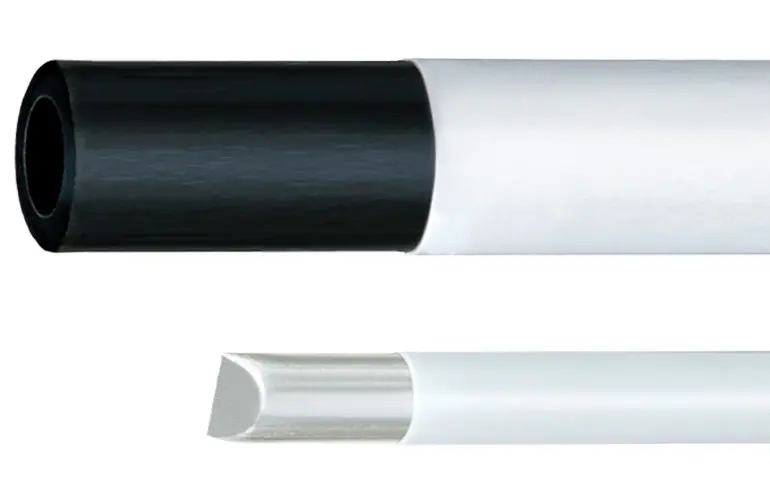
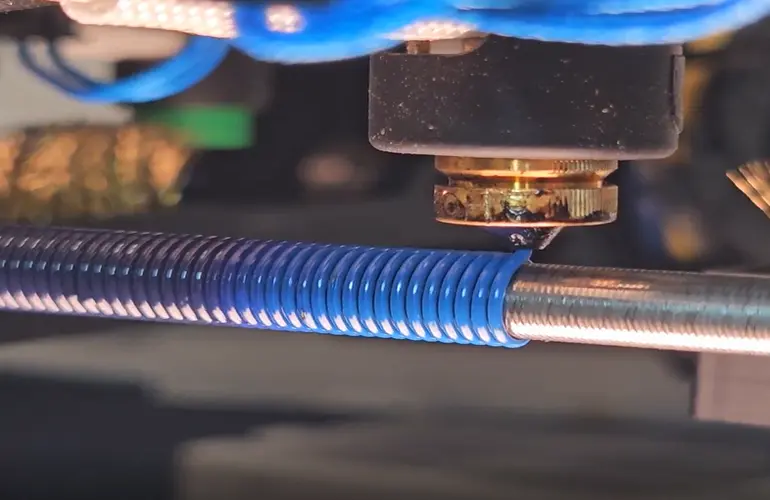
The breakthrough bore fruit in January 2026, when Zeus officially unveiled its PFX Flex polymer platform and catheter liner portfolio. Engineered without the intentional addition of any per- or polyfluoroalkyl substances, these innovative liners were designed to be manufactured over either PEEK (Polyether ether ketone) or silver-plated copper (SPC) mandrels. The resulting components were purposefully built to replicate the clinical and mechanical efficacy of traditional PTFE in a completely non-fluorinated structural design, solving a longstanding paradox in medical device engineering.
Independent Verification and Intertek Certification (Mid-2026)
Recognizing that market adoption of a revolutionary material requires absolute trust, Zeus sought objective validation rather than relying on self-certification. The company submitted its PFX Flex Sub-Lite-Wall catheter liners to Intertek, a global leader in Total Quality Assurance.
Intertek’s evaluation process was comprehensive, combining rigorous laboratory testing, comprehensive material documentation, and ongoing quality oversight. The testing verified that Zeus’s PFX Flex liners met Intertek’s rigorous published criteria for PFAS-free certification:
Total Organic Fluorine: Measured well below the strict threshold of 20 parts per million (ppm).
Targeted PFAS: Confirmed to be below 25 parts per billion (ppb).
Following this rigorous multi-step evaluation, Intertek officially granted the certification, with validity secured through June 21, 2027, at which point scheduled renewals and audits will take place. This milestone establishes a formal benchmark for the entire medical component supply chain, proving that verified, science-based PFAS-free claims are achievable in high-stakes medical device manufacturing.
Supporting Context & Metrics: The Anatomy of the "Forever Chemical" Crisis
To fully appreciate the gravity of Zeus’s achievement, one must understand the complex scientific, regulatory, and commercial forces reshaping the medical device sector regarding PFAS.
What are PFAS and Why Are They Under Scrutiny?
Per- and polyfluoroalkyl substances (PFAS) are a massive family of synthetic chemicals characterized by strong carbon-fluorine bonds. This chemical architecture makes them extraordinarily resilient, resisting heat, oil, stains, grease, and water. While these traits make them indispensable in industrial and medical applications, they also mean these compounds do not naturally break down in the environment—earning them the moniker "forever chemicals."
In human health and environmental toxicology, the accumulation of PFAS is a growing crisis. Exposure to certain legacy PFAS has been scientifically linked to a alarming array of chronic health effects, including:
Various forms of cancer (such as kidney and testicular cancer)
Liver and thyroid damage
Immune system suppression
Reduced birth weights and developmental complications in children
Elevated cholesterol levels and metabolic disruptions
The Regulatory Landscape: US vs. EU
The regulatory framework governing PFAS in medical devices is currently in a state of flux, characterized by regional divergence and shifting political landscapes:
The United States & The FDA: To date, the U.S. Food and Drug Administration (FDA) has maintained a measured stance, declining to issue sweeping, blanket restrictions on the use of PFAS in medical devices. The agency has historically recognized that certain life-saving technologies rely heavily on the unique chemical properties of fluoropolymers where no viable alternative exists. However, industry insiders note this posture is fragile. With the conclusion of the Biden administration and the transition into new political leadership under the Trump presidency, agency priorities are subject to rapid transformation. A change in EPA or FDA leadership could trigger a harsher federal crackdown on industrial fluoropolymer usage.
The European Union: The regulatory climate in Europe is significantly more aggressive. European authorities are advancing broad restrictions under chemical management frameworks (such as the REACH restriction proposals). A comprehensive ban on PFAS is increasingly viewed as an inevitability across the EU, particularly for commercial applications where suitable, certified non-fluorinated alternatives are commercially available.
Material Performance vs. Clinical Necessity
For decades, medical device engineers faced an agonizing compromise: choose patient safety and environmental stewardship at the cost of device performance, or stick with gold-standard fluoropolymers and risk future regulatory obsolescence.
In intravascular applications—such as guiding catheters, microcatheters, and diagnostic or therapeutic delivery systems—the internal liner must exhibit ultra-low friction coefficients to allow smooth passage of guidewires, stents, and other life-saving hardware. PTFE achieved this effortlessly. Zeus’s achievement with PFX Flex shatters this false dichotomy, proving that medical engineers no longer need to sacrifice mechanical integrity to achieve environmental compliance.
Official Statements & Industry Perspectives
The announcement of the world’s first PFAS-free medical liner certification has drawn reactions from top executives at Zeus and validation from certification authorities.
Jim O’Connell, Chief Commercial Officer at Zeus
Highlighting the market-driven urgency behind the transition, Zeus CCO Jim O’Connell emphasized that customers are no longer waiting for regulators to force their hands:
"Even if there’s no regulatory ban on the use of PFAS-based materials in medical devices today, our customers are already evaluating alternatives rather than waiting for one. Our aim is to give them options that perform, backed by testing and certification, no matter where regulations may land."
O’Connell’s perspective underscores a profound commercial truth: medical device OEMs (Original Equipment Manufacturers) operate on long product development lifecycles. Designing a device with a material that might face a regulatory ban halfway through its clinical trial or commercialization phase is a catastrophic financial risk. By securing proactive certification today, Zeus gives device manufacturers a ready-to-deploy, de-risked alternative.
Paddy O’Brien, Chief Executive Officer at Zeus
Reflecting on the company’s nearly sixty-year history as an innovator in fluoropolymer technology, Zeus CEO Paddy O’Brien emphasized the critical need for absolute transparency and objective validation:
"For nearly sixty years, Zeus has built its reputation on fluoropolymer innovation. As the medical device industry evaluates new material alternatives, we believe customers deserve objective, independent validation of the claims behind those technologies. That’s why third-party certification matters. It gives engineers confidence that they can make critical material decisions based on verified data."
O’Brien’s comments address a growing industry concern: "greenwashing" or unsubstantiated marketing claims regarding chemical compositions. In a market as strictly regulated and quality-obsessed as medical technology, vague manufacturer promises are insufficient. Intertek’s stamp of approval provides the rigorous scientific backing that quality assurance and regulatory affairs (RA/QA) teams demand.
Suresh Sainath, Chief Technology Officer at Zeus
Delving into the grueling technical hurdles of replacing the un-replaceable, CTO Suresh Sainath detailed the depth of the engineering challenge:
"The challenge was finding a non-fluorinated material capable of matching the performance that has made PTFE the gold standard for catheter liners for decades. That required years of research and development, and independent verification through Intertek provides an objective validation of the technology we’ve developed."
Developing a polymer compound that mimics PTFE’s low surface energy and lubricity without incorporating fluorine atoms required deep molecular-level re-engineering. Sainath’s team successfully engineered a matrix that performs reliably under the tight tolerance demands of micro-catheter manufacturing while remaining entirely free of targeted PFAS compounds.
Offering an independent quality assurance perspective, Intertek’s Sustainability Certification Manager Faye Ricker detailed the robustness of the certification framework:
"Manufacturers and their customers confidence that PFAS-free claims are supported by a rigorous, science-based evaluation."
Ricker noted that Intertek’s ongoing oversight and testing protocols ensure that certification is not merely a one-time marketing badge, but a continuous, verified guarantee of product purity.
Future Outlook: The Dawn of PFAS-Free Medtech Engineering
The awarding of Intertek’s PFAS-free certification to Zeus’s PFX Flex catheter liners is far more than a corporate milestone for a single component manufacturer—it marks a watershed moment for the global medical device supply chain.
As the regulatory noose tightens around forever chemicals across North America and Europe, medical device designers are entering a transitional era. The luxury of complacency is gone. Component manufacturers who fail to invest in rigorous, third-party-verified non-fluorinated alternatives risk finding themselves locked out of key international markets as policy shifts take hold.
Conversely, pioneers like Zeus are charting a sustainable roadmap forward. By proving that advanced polymer science can successfully replicate—and in some cases surpass—the clinical performance of legacy materials without relying on persistent environmental toxins, the medtech industry is demonstrating its capacity to innovate responsibly.
Moving forward into late 2026 and toward the 2027 certification renewal cycle, all eyes will be on how rapidly device OEMs adopt the PFX Flex platform. If early industry reception is any indicator, Zeus has not only answered an urgent market demand—it has permanently raised the bar for what engineers, regulators, and patients should expect from the materials inside modern medical devices.