




Executive Overview
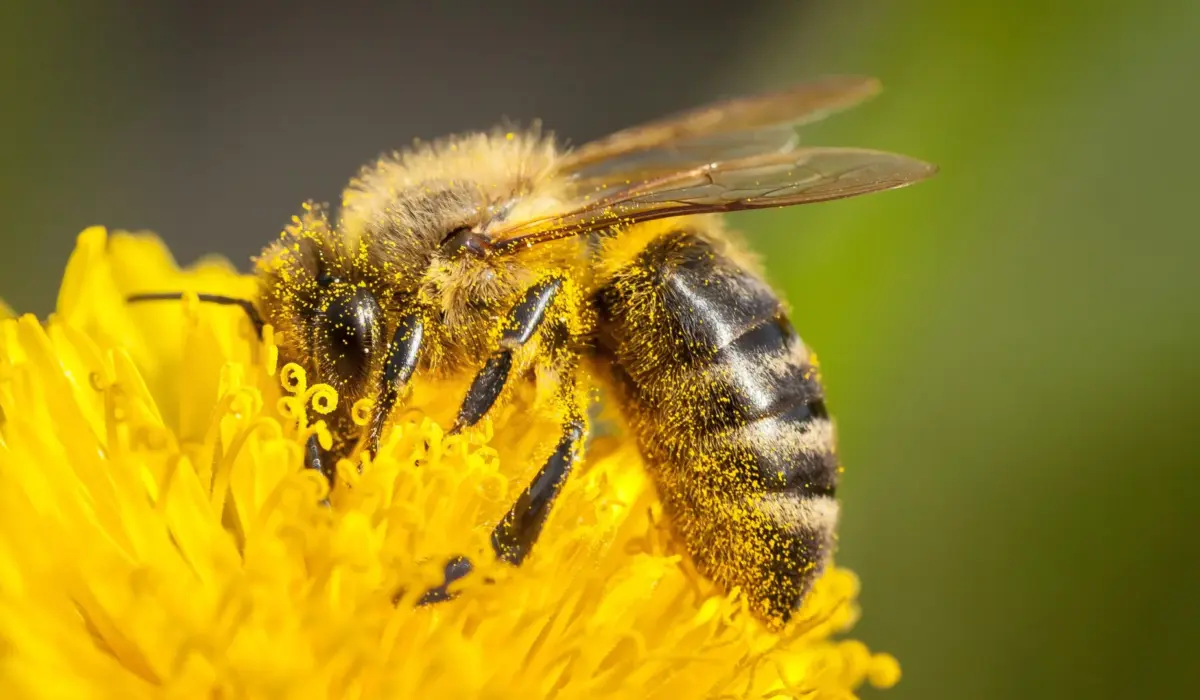
A groundbreaking study led by the University of Oxford has shattered long-held assumptions regarding the dietary perfection of pollen, revealing a sophisticated and unexpected regulatory mechanism in bees. Published in the esteemed journal Current Biology, the research demonstrates that bees possess the innate ability to dynamically modulate their food intake based on the precise balance of essential amino acids present in their diet. This behavioral adaptation acts as a critical metabolic safeguard, preventing pollinators from consuming toxic or unbalanced excesses of specific amino acids when available flora fails to provide an optimal nutritional profile.
For decades, ecological conservation efforts and agricultural planning have relied on the general premise that pollen serves as a universally rich, well-balanced superfood for bees. However, this new investigation highlights an inherent evolutionary conflict: pollen is, fundamentally, the male gamete of plants—a mechanism for reproduction, not a bespoke evolutionary offering designed exclusively to nourish pollinators. Consequently, the amino acid profiles of pollens gathered from diverse botanical sources frequently fail to align with the physiological requirements of bees.
By analyzing the nutritional composition of pollen across 99 distinct UK flowering plant species and conducting controlled laboratory feeding trials with honeybees, the international research team—featuring scientists from the University of Southampton, Lancaster University, Newcastle University, and The Hebrew University of Jerusalem—has mapped out how bees navigate this nutritional tightrope. The findings reveal that a single amino acid, histidine, acts as a primary neurological and behavioral brake, curbing overeating when imbalances occur. Furthermore, the study illuminates how social honeybees bypass these nutritional deficits through hive-level processing, contrasting sharply with the precarious reality faced by solitary and wild bee species in monoculture-dominated landscapes. Ultimately, these insights demand a paradigm shift in global conservation strategies, proving that successful pollinator-friendly planting requires an emphasis on botanical diversity and pollen quality rather than mere floral abundance.
Detailed Chronology: Unraveling the Nutritional Mismatch
The Evolution of a Nutritional Conflict
To understand the genesis of this research, one must examine the evolutionary history of flowering plants (angiosperms) and their relationships with insects. Nectar evolved primarily as an enticing, low-cost metabolic bribe—a sweet reward engineered specifically to encourage animals to transport pollen from one flower to another. Pollen, conversely, carries the genetic blueprint of the plant. While plants must invest significant resources into its production, their evolutionary imperative is reproductive success, not maximizing the dietary health of the consumer.
Because of this divergent evolutionary path, the chemical composition of pollen varies wildly across plant families. Essential amino acids—the fundamental building blocks of proteins that animals cannot synthesize endogenously and must acquire directly through diet—are frequently found in pollen in ratios that starkly contrast with the physiological needs of consuming insects. Recognizing this silent dietary mismatch, Professor Geraldine Wright and her colleagues at the University of Oxford set out to determine how bees detect and respond to these nutritional imbalances.
Mapping the Botanical Landscape
The first phase of the project involved an exhaustive biochemical survey. The research team collected pollen samples from 99 unique UK flowering plant species, spanning 26 distinct plant families. Using advanced biochemical quantification techniques, they mapped the essential amino acid composition of these pollens and compared them directly against the tissue composition of honeybees (Apis mellifera).
The results were striking: the vast majority of pollen samples were relatively poor matches for the nutritional architecture of bee tissues. To test how bees react to these discrepancies, the researchers engineered artificial diets designed to mimic either the skewed amino acid profiles of various pollens or the balanced composition of honeybee tissue. Newly emerged worker honeybees were then introduced to these controlled diets in rigorous laboratory experiments.
The behavioral and physiological responses were immediate and pronounced. Bees supplied with the artificial diet that closely matched their own tissue composition exhibited vastly superior metrics: they consumed significantly more food, gained considerably more body mass, and actively selected diets containing a greater proportion of protein. Conversely, when confronted with diets mimicking poorly balanced pollens, their growth and intake stalled.
The Histidine Brake: How Bees Control Their Appetite
Delving deeper into the physiological mechanisms driving these dietary choices, the researchers hypothesized that specific amino acids might act as internal regulatory triggers. Their attention focused on histidine, an essential amino acid required by bees only in relatively small, tightly regulated quantities.
To test this hypothesis, the team formulated artificial diets containing varying ratios of histidine relative to branched-chain amino acids—such as leucine and isoleucine—which are vital for normal bee growth and development. The results provided a clear window into insect neurobiology: when the relative concentration of histidine in the food was high, the bees dramatically curtailed their overall food intake. They consumed less protein and fewer carbohydrates alike.
This behavioral moderation points directly to a sophisticated post-digestive feedback mechanism. Rather than blindly overeating sub-optimal pollen in a desperate attempt to gather scarce, missing nutrients, bees possess a physiological safety valve. When an amino acid like histidine becomes disproportionately abundant, internal signaling pathways activate to suppress appetite. The researchers note striking parallels in vertebrate biology; in rats, for instance, an excess of dietary histidine is metabolized into histamine, a neurotransmitter that directly stimulates brain receptors involved in suppressing food intake. This cross-kingdom similarity underscores the fundamental evolutionary challenges of managing amino acid toxicity.
Supporting Context & Metrics
The quantitative data gathered during the Oxford-led study provide a stark picture of the dietary hurdles facing contemporary insect populations. Below is a breakdown of the key parameters, methodologies, and comparative metrics established by the research:
- Botanical Scope: Pollen samples were harvested from 99 UK flowering plant species representing 26 distinct plant families, ensuring broad ecological and taxonomic representation.
- Tissue Matching Discrepancy: Laboratory analyses revealed that most individual pollen sources exhibited a poor stoichiometric match relative to the essential amino acid proportions found in honeybee somatic tissues.
- Growth and Biomass Impact: Honeybees fed diets tailored to mirror their internal tissue composition demonstrated higher overall food consumption, accelerated body mass accumulation, and a preferential selection for higher-protein formulations.
- The Histidine Threshold: Elevated relative concentrations of histidine—an essential amino acid required in minute quantities—triggered an immediate down-regulation in appetite, reducing both protein and carbohydrate intake across test subjects.
- Colony-Level Processing: Hive-stored "bee bread" and specialized glandular secretions (royal jelly) demonstrated significantly higher amino acid balance, successfully mitigating the nutritional deficits inherent in raw, single-source pollens.
The Social Solution: How Honeybees Engineer Superior Nutrition
While solitary insects must contend directly with the nutritional limitations of the flora they visit, social honeybees have evolved a remarkable collective processing system to overcome these biochemical hurdles.
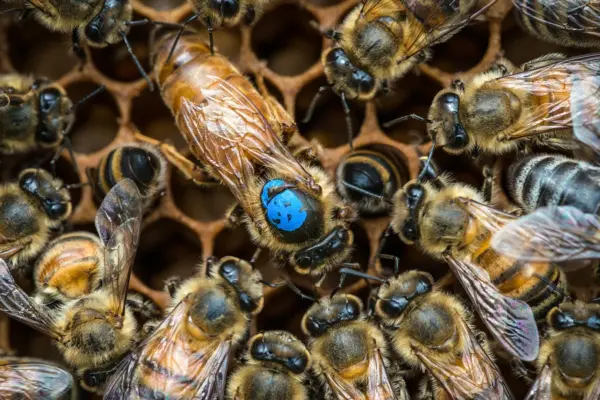
Worker bees forage across a wide radius, gathering pollen from an expansive array of flowering plants. Upon returning to the hive, this diverse collection is packed into honeycomb cells and mixed with honey and microbial secretions to create what apiarists call "bee bread." Nurse bees consume this fermented mixture and subsequently synthesize highly refined glandular secretions—most notably royal jelly—which is then fed directly to developing larvae.
Upon biochemical analysis, the research team discovered that bee bread already exhibits a far more balanced essential amino acid profile than most individual, raw pollen sources. Royal jelly, however, provided an almost flawless match to the amino acid composition of growing bee tissues. This multi-step biological refining process allows honeybee colonies to smooth over the rough edges of individual plant nutritional profiles, guaranteeing their brood an optimized diet designed to maximize growth, immune function, and longevity.
Official Statements & Expert Analysis
The implications of the study extend far beyond theoretical entomology, touching directly upon agricultural policy, commercial beekeeping, and landscape conservation.
Lead author Professor Geraldine Wright of the Department of Biology at the University of Oxford emphasized the fundamental disconnect between plants and their visitors:
"Although pollen is often assumed to be a near-perfect food for bees, it is the male gamete of plants and, unlike nectar, it is rarely produced solely as a reward for pollinators. This creates a conflict of interest between the plant and the pollinator."
Addressing the evolutionary triumph of honeybee brood-rearing strategies, Professor Wright added:
"We predict that honeybees have evolved to create glandular secretions which are the perfect food for their larvae, providing them with the ratios of essential amino acids that maximize growth."
Turning her attention to the broader implications for conservation and environmental management, Professor Wright highlighted the shortcomings of current "pollinator-friendly" initiatives:
"Our results suggest that planting for pollinators should not only focus on providing flowers throughout the season, but also on ensuring a diversity of pollen sources. A varied diet may be essential for bees to obtain the right balance of nutrients."
Future Outlook: Rethinking Conservation and Land Management
The revelation that bees actively regulate their feeding behavior to avoid amino acid imbalances—coupled with the reality that many single plant species offer suboptimal nutrition—fundamentally alters how scientists and land managers must approach pollinator conservation.
The Vulnerability of Wild Pollinators
Crucially, the sophisticated nutritional safety net enjoyed by social honeybees—processing diverse pollens into bee bread and royal jelly—is entirely unavailable to the vast majority of wild bee species. Bumblebees, mason bees, leafcutter bees, and thousands of other solitary species provision their offspring directly with raw pollen loads collected from local flora.
In modern agricultural landscapes dominated by monocultures, urban sprawl, or fragmented habitats with low floral diversity, wild bees face an invisible crisis. Even when flowers appear abundant, a lack of botanical diversity means these insects may struggle to acquire the precise balance of essential amino acids required for survival. Unable to mix and match across a wide spectrum of plant families, wild bee larvae may suffer from developmental stunting, weakened immune systems, and reduced reproductive viability.
Transforming Agri-Environment Schemes and Gardening
These findings carry immediate, actionable directives for farmers, landowners, conservationists, and home gardeners:
- Move Beyond Simple Flower Counts: Traditional pollinator seed mixes often focus solely on maximizing floral volume or extending bloom duration across seasons. Conservation frameworks must now prioritize botanical diversity, incorporating plant species from a wide array of families to ensure a broad spectrum of pollen amino acid profiles is available within a given habitat.
- Targeted Hedgerow and Margin Restoration: Agricultural policies should incentivize the restoration of complex, multi-species hedgerows and wildflower margins that support year-round dietary variety for wild pollinators.
- Urban Greening Initiatives: Urban planners and municipal green-space managers must transition from uniform ornamental plantings toward ecologically complex, biodiverse landscapes that provide bees with the nutritional toolkit necessary to self-regulate and thrive.
As global insect populations continue to face unprecedented pressures from habitat loss, pesticide use, and climate change, understanding the subtle biochemical relationships between bees and their food sources offers a vital roadmap for recovery. By designing landscapes that respect the complex nutritional needs of pollinators, humanity can take a scientifically grounded step toward securing the future of these indispensable ecological architects.