









Executive Overview
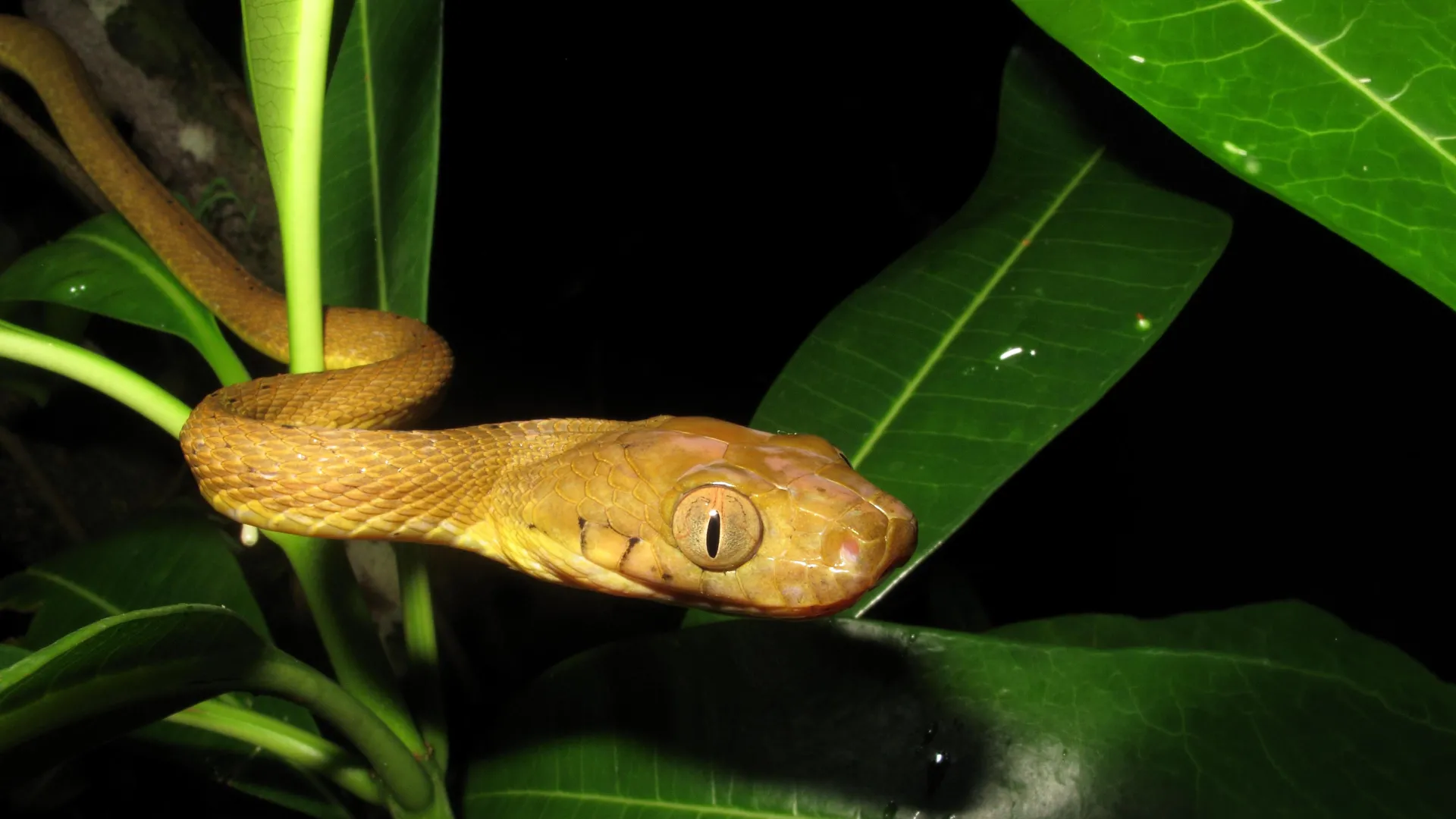
For decades, the ecological devastation wrought by the brown tree (Boiga irregularis) on the tropical island of Guam has stood as a textbook warning of the catastrophic perils posed by invasive species. Believed to have hitchhiked to the U.S. territory aboard military cargo planes in the aftermath of World War II, these nocturnal predators found an island paradise entirely devoid of natural checks and balances. The consequences were swift and unsparing: native forest birds were driven to local extinction, silence fell over canopies that had hummed with endemic wildlife, and infrastructure was repeatedly compromised as snakes scaled utility poles, triggering widespread electrical outages. In certain pockets of the island, populations reached an astonishing density of 30,000 snakes per square mile.
Yet, beneath the visible wreckage of Guam’s ecosystems lies a fundamental biological mystery that has long baffled evolutionary biologists and conservation geneticists alike. Standard demographic models dictate that Guam’s explosive population must have originated from a minuscule founding group—perhaps just a handful of individuals. According to the foundational laws of population genetics, such an extreme bottleneck should have triggered a severe genetic bottleneck. Inbreeding depression, a reduction in fitness driven by the accumulation of deleterious recessive mutations and a paucity of genetic variation, should have crippled the colonizers, eroding their capacity to adapt to novel environments and halting rapid population expansion in its tracks.
Instead, the brown tree snake flourished, exhibiting a terrifying resilience that mocked conventional scientific theory.
Now, a groundbreaking study led by researchers at the University at Buffalo (UB) in collaboration with the U.S. Geological Survey (USGS)—published on July 24 in the journal Science Advances—has blown the lid off this evolutionary riddle. Utilizing cutting-edge long-read DNA sequencing technologies, the research team peered past traditional genetic metrics to uncover a vast, hidden reservoir of structural genetic variation within the brown tree snake genome. Rather than being genetically impoverished, these invasive reptiles harbor tens of thousands of structural DNA variants, particularly concentrated in genes governing immunity and olfaction.
This startling discovery not only rewrites our understanding of how invasive species overcome severe demographic bottlenecks but also carries profound, dual-edged implications: while complicating eradication efforts on Guam by proving the snake is far more genetically flexible than previously assumed, it simultaneously offers a glimmer of hope to conservationists striving to rescue endangered, highly inbred native species on the brink of extinction.
Detailed Chronology: From Accidental Stowaway to Genetic Revelation
To fully grasp the magnitude of the recent UB-USGS findings, one must retrace the timeline of the brown tree snake’s invasion and the parallel evolution of the genomic tools used to study it.
The Post-War Arrival and Ecological Collapse
- Late 1940s to Early 1950s: Sometime in the wake of the Second World War, the brown tree snake—native to the coastal regions of Australia, Indonesia, and Papua New Guinea—was accidentally introduced to Guam, likely secreted within the cargo holds of military transport aircraft.
- 1960s–1980s: Released from the pressures of native predators, disease, and competition, the snake population underwent a silent, exponential explosion. By the 1980s, the impacts became starkly apparent. Ten of Guam’s eleven native forest bird species, along with several lizard and bat populations, were entirely eradicated or reduced to non-viable remnants. Concurrently, the snakes developed a costly habit of bridging electrical transformers, plunging the island into darkness through frequent, widespread power outages.
- 1990s–2010s: As densities peaked at staggering levels—up to 30,000 snakes per square mile in localized areas—federal agencies, including the USGS Brown Tree Snake Rapid Response Team (RRT), mobilized containment strategies. Aerial drops of acetaminophen-laced mice and rigorous cargo inspections at ports of departure were deployed to prevent the snakes from metastasizing to other vulnerable Pacific islands, such as Hawaii or the Commonwealth of the Northern Mariana Islands. Despite these efforts, the core population on Guam remained an intractable ecological titan.
The Technological Turning Point
- Early DNA Sequencing Era: For decades, geneticists evaluated the brown tree snake using standard sequencing methodologies. These early platforms were optimized to detect single nucleotide polymorphisms (SNPs)—subtle alterations involving individual DNA base pairs, such as an adenine (A) mutating to a guanine (G), or a thymine (T) shifting to a cytosine (C). When applied to Guam’s snakes, these assays confirmed low levels of traditional genetic diversity, reinforcing the hypothesis that the population was dangerously inbred and setting up the long-standing paradox of their evolutionary success.
- The Advent of Long-Read Sequencing: Recognizing the limitations of viewing genomes strictly through the lens of single-base pair changes, geneticists began adopting long-read sequencing platforms. Unlike legacy technologies that chop DNA into microscopic fragments, reading only short reads, long-read sequencing allows scientists to scan extensive, continuous stretches of a genome. This technological leap unlocked the ability to detect major structural variants—large-scale chromosomal alterations spanning 50 base pairs or more, including inversions, translocations, deletions, and duplications.
- July 24, 2025: The publication of the UB-USGS study in Science Advances formally shatters past assumptions. By analyzing tissue samples obtained through close collaboration with the USGS Rapid Response Team, the research team identified more than 19,000 structural variants within the brown tree snake genome, forever altering how scientists conceptualize genetic diversity in invasive and inbred lineages.
Supporting Context & Metrics: Unpacking the Invisible Genome
The core revelation of the new study hinges on a stark contrast between traditional metrics of genetic diversity and the newly visible landscape of structural variation.
To visualize this paradigm shift, consider the metaphor articulated by Dr. Levi Gray, a postdoctoral researcher in the Krabbenhoft lab and former USGS researcher who worked directly on Guam’s snake crisis:
"It’s like looking at portions of two books letter by letter with a magnifying glass and thinking they’re the same, but not realizing entire paragraphs have been moved around or duplicated. Older sequencing technology didn’t allow us to easily see that DNA in one individual might be in a completely different place on the chromosome than in another. How we define genetic diversity and how we actually measure it is shaped largely by the technology of the day."
The Numbers Behind the Mutation
When the research team processed the brown tree snake samples in the laboratory, the metrics laid bare an astonishing genetic architecture:
- Over 19,000 Structural Variants: The team documented precisely upward of 19,000 distinct structural modifications across the genome, representing locations where large chunks of DNA had been copied, deleted, or flipped in orientation.
- Magnified Genomic Footprint: Structural variants are not minor edits; taken together, they alter nearly eight times more of the genome than traditional single-base pair changes (SNPs). This massive footprint explains how a population can appear uniform on the surface of standard genetic tests while harboring deep, functional reservoirs of biological adaptability underneath.
- Hotspots of Immunity and Smell: These structural shifts were far from randomly scattered. Statistical mapping revealed a heavy concentration of variants within genes linked to two critical biological systems: immune function and olfaction (the sense of smell).
The Olfactory Advantage and a Behavioral Mystery
The heavy concentration of structural variants in olfactory genes sheds light on both the snake’s predatory prowess and a peculiar behavioral observation on Guam.
Brown tree snakes rely profoundly on their sense of smell to navigate forest floors and hunt prey. By repeatedly flicking their forked tongues, they gather airborne chemical cues and deliver them to Jacobson’s organ, allowing them to track victims with surgical precision. The hyper-diversification of these sensory genes may grant the snakes an enhanced capacity to detect prey in novel ecosystems.
Furthermore, this olfactory specialization helps resolve a fascinating behavioral puzzle. In their native ranges across Australia and the South Pacific, brown tree snakes are known to occasionally engage in cannibalism, preying upon one another. Yet, on Guam—despite population densities that force thousands of snakes into close physical proximity—intra-species predation is remarkably rare.
According to the researchers, the unique configuration of their olfactory structural variants may allow the snakes to chemically recognize neighboring individuals as kin (siblings or close relatives, a direct consequence of high inbreeding) rather than as nutritional targets. This built-in chemical restraint likely prevented the population from collapsing inward through aggressive cannibalism during its initial, overcrowded population explosion.
Official Statements and Expert Insights
The implications of the Science Advances study span multiple disciplines of conservation biology, threatening to rewrite pest management protocols while simultaneously offering a beacon of hope for endangered species recovery programs.
Dr. Trevor Krabbenhoft, associate professor in the UB Department of Biological Sciences and corresponding author of the study, emphasized that the scientific community has historically underestimated the complexity of invasive genomes:
"The brown tree snake is maybe not wildly diverse, but it has important sources of genetic diversity that have been underappreciated. Our findings show that genomic resilience can manifest in structural modifications that standard assays completely miss."
Dr. Christopher Osborne, formerly a PhD student in Krabbenhoft’s lab and now an aquatic biologist at SUNY Oswego, pointed out the uplifting flip side of the coin for conservation biology. While the discovery spells trouble for island managers combating the snake, it suggests that endangered species with low conventional genetic counts may possess hidden evolutionary safety nets:
"It’s possible that endangered species may have more flexibility in their genes than we realize. We’re now getting a better understanding of unappreciated sources of genetic diversity that may explain how some inbred species can still respond to their environment."
Reflecting on the collaborative genesis of the research, Dr. Levi Gray underscored the value of bridging field conservation work with advanced genomic platforms:
"Through our collaboration with the USGS Brown Tree Snake Rapid Response Team, we were able to secure samples that directly tie frontline ecological management to state-of-the-art laboratory sequencing. It highlights how vital interdisciplinary partnerships are in tackling modern conservation crises."
The research collective also included key co-authors from the U.S. Geological Survey—M. Renee Bellinger, PhD, and Melia Nafus, PhD—alongside UB research scientist Brian Foote, postdoctoral researcher Steven Fleck, PhD, and PhD students Sarah Chang and Hannah Waterman.
Future Outlook: Unanswered Questions and Next Steps
As federal agencies, local governments, and international conservation bodies digest the findings of the UB-USGS study, the horizon of invasive species management and evolutionary biology enters a new frontier. Several critical avenues of inquiry remain open, demanding urgent attention from the scientific community.
1. The Origin Question: Native vs. Invasive Genomes
A pivotal mystery that persists is the chronological origin of the 19,000 structural variants. Scientists remain uncertain whether this rich tapestry of genomic rearrangement was already carried by the original founding snakes that arrived on Guam post-World War II, or whether the extreme stress of the population bottleneck itself acted as a catalyst, accelerating the formation of structural variants in real time.
Addressing this question will require expansive comparative genomic studies. To know for sure, researchers must travel to the snake’s native habitats in Australia, Indonesia, and Papua New Guinea to sequence wild populations there. If native populations lack these structural variants, it would suggest that population bottlenecks can actively induce genomic restructuring as an evolutionary survival mechanism. If native populations already possess them, it confirms that the snakes won an evolutionary lottery by packing the right genetic pre-adaptations into their cargo-plane hideout.
2. Rethinking Island Biosecurity and Containment
For the USGS Rapid Response Team and territorial authorities in places like Hawaii and Saipan, the revelation that brown tree snakes possess deep, hidden genetic flexibility is a sobering reality check. Greater resilience means the species may be even more adaptable to novel climates, shifting prey bases, and eradication pressures than previously assumed. Consequently, biosecurity protocols at ports, airports, and military installations across the Pacific must remain hyper-vigilant, treating the brown tree snake not merely as an inbred, fragile pest, but as a genetically fortified ecological juggernaut.
3. Rewriting Conservation Playbooks for Endangered Taxa
Conversely, the study serves as a conceptual lifeline for conservationists attempting to pull critically endangered, bottlenecked species back from the brink of extinction—such as the Florida panther, the black-footed ferret, or isolated island bird populations. For decades, conservation models have sounded alarm bells over low single-base pair diversity, often writing off inbred populations as evolutionary dead ends.
If long-read sequencing reveals that structural variants are widely distributed across the animal kingdom, many endangered species might possess hidden genetic cushions capable of absorbing environmental shocks and mitigating the dangers of inbreeding depression. Armed with this technology, conservation geneticists can now screen vulnerable species for structural variants, identifying hidden reservoirs of resilience and refining breeding programs with unprecedented precision.
Ultimately, the brown tree snake’s reign of terror on Guam serves as a grim reminder of the fragility of isolated ecosystems. Yet, by decoding the intricate architectural secrets hidden within its genome, science has transformed an ecological nightmare into an invaluable lesson in evolutionary survival—proving once again that nature’s most formidable survivors often operate far beneath the surface of what our instruments can see.