






Executive Overview
Most modern pandemics do not begin in clinical trials or urban centers; they are born in the shadows of the natural world, crossing the invisible boundary between wildlife and humanity through a process known as zoonotic spillover. This evolutionary leap is widely believed to be the catalyst for the COVID-19 pandemic, driven by SARS-CoV-2—a coronavirus genetically intertwined with strains circulating within wild bat populations.
For years, virologists and immunologists have raced to answer a fundamental question: What specific molecular mechanisms allow an innocuous animal virus to morph into a pathogen capable of destabilizing global societies, crippling healthcare infrastructure, and claiming millions of lives?
Now, a monumental collaborative study published in the prestigious journal Cell Host & Microbe has brought humanity a step closer to solving this biological riddle. A multi-institutional team of researchers—comprising leading minds from the Quantitative Biosciences Institute (QBI) at the University of California, San Francisco (UCSF), the Icahn School of Medicine at Mount Sinai, the Institut Pasteur, and the Fred Hutchinson Cancer Center—has uncovered a remarkably small genetic divergence that may explain how certain animal coronaviruses adapt to human hosts and unleash severe disease.
By performing a granular, protein-level analysis comparing SARS-CoV-2 with RaTG13—a closely related bat coronavirus historically incapable of infecting humans—the research team discovered that altering just a single amino acid within a critical viral protein is enough to fundamentally rewire how the pathogen interacts with the immune systems of bats versus humans. This microscopic shift dictates divergent infection pathways, allowing the virus to either be neutralized by a host’s natural defenses or to systematically dismantle human immune alarms and replicate unchecked.
This breakthrough does more than deepen our understanding of viral evolution; it lays the foundation for an advanced early warning paradigm. By charting these molecular signatures, the scientific community is building the surveillance and predictive tools necessary to identify high-risk zoonotic threats before they spill over into human populations, potentially averting the next global health catastrophe.
Detailed Chronology: Unraveling the Mechanics of Zoonotic Spillover
To understand the magnitude of the recent discovery, one must trace the step-by-step scientific journey undertaken by the multi-institutional research collective. The investigation represents a triumph of modern molecular biology, combining virology, structural biology, and innovative cell-line engineering to dissect host-pathogen interactions at the microscopic level.
Phase 1: Establishing the Comparative Framework
At the heart of the study was a deliberate comparative strategy. Researchers sought to evaluate the molecular differences between SARS-CoV-2—the human-adapted pathogen responsible for COVID-19—and RaTG13, a coronavirus discovered in bats that shares roughly 96% genomic sequence identity with SARS-CoV-2. Despite this striking genetic similarity, RaTG13 does not infect humans and remains restricted to its natural reservoir.
Why do two viruses with such overlapping genetic blueprints exhibit radically different host tropisms? To answer this, the team focused on how each virus engaged with the cellular machinery and immune defenses of their respective hosts.
Phase 2: Overcoming Experimental Hurdles with Novel Cell Lines
A major historical bottleneck in virological research has been the scarcity of authentic, laboratory-grown cell models derived from wildlife species. Traditional studies often rely on immortalized cell lines from standard laboratory animals or modified human cells, which fail to accurately mirror the unique physiological and immunological environments found in natural reservoirs like bats.
To circumvent this limitation, the research team utilized a breakthrough tool: the first-ever laboratory-grown lung cell line derived from the greater horseshoe bat (Rhinolophus ferrumequinum). This biological asset provided an unprecedented window into the bat immune system, allowing scientists to observe, in real-time, how bat cells respond to both native bat coronaviruses and zoonotic invaders.
Phase 3: Zeroing in on OrfB9
Through systematic screening of the viral proteomes, the researchers isolated a specific viral protein known as OrfB9. While many structural proteins—such as the spike protein—receive significant attention for their role in viral entry, internal accessory proteins like OrfB9 play pivotal, yet often underappreciated, roles in modulating host immune responses.
When the team aligned the OrfB9 proteins from SARS-CoV-2 and RaTG13, they found them to be nearly identical. Out of approximately 100 amino acids comprising the protein, the two versions differed by just one amino acid.
Phase 4: Divergent Cellular Fates
Despite this minute discrepancy, the functional consequences of this single amino acid variation were profound.
When introduced into human lung cell cultures, the SARS-CoV-2 version of OrfB9 acted as a molecular saboteur. It successfully shut down a vital human immune alarm system, blinding the host cell to the viral presence and clearing the path for runaway viral replication.
Conversely, when the RaTG13 version was tested in the greater horseshoe bat lung cells, it triggered a robust defense mechanism. The bat immune proteins recognized the signal and activated pathways that successfully kept the viral activity under control.
This functional dichotomy demonstrated that the barrier between a localized wildlife infection and a pandemic-level event can be dictated by a single chemical substitution within a single protein.
Supporting Context & Metrics: The Scale of Zoonotic Threats
To fully appreciate the urgency of the QBI-led study, one must view it within the broader landscape of viral epidemiology and evolutionary biology.
The Reservoir Challenge
Mammals, particularly bats, rodents, and non-human primates, harbor an estimated hundreds of thousands of undiscovered viruses capable of zoonotic transmission. Bats, in particular, are recognized as premier natural reservoirs for coronaviruses, filoviruses (such as Ebola), and paramyxoviruses. Their unique immunological adaptations—honed by the energetic demands of flight and a long evolutionary history with pathogens—allow them to host high viral loads without exhibiting clinical signs of disease.
When these viruses encounter mammalian species that lack co-evolved tolerance mechanisms, the results can be catastrophic. The table below outlines key parameters of the recent study and its broader context:
| Metric / Parameter | Detail / Value |
|---|---|
| Genomic Similarity (SARS-CoV-2 vs. RaTG13) | ~96% overall sequence identity |
| Protein Focus | OrfB9 accessory protein (~100 amino acids) |
| The Core Difference | A single amino acid variation |
| Human Cell Impact (SARS-CoV-2 OrfB9) | Suppresses key immune alarms, enabling rapid replication |
| Bat Cell Impact (RaTG13 OrfB9) | Activates defensive proteins, keeping viral activity constrained |
| Key Participating Institutions | UCSF (QBI), Mount Sinai, Institut Pasteur, Fred Hutchinson Cancer Center |
The Mechanics of Immune Evasion
Viruses do not possess independent metabolic machinery; they rely entirely on hijacking host cell ribosomes and regulatory networks. To establish an infection, a zoonotic virus must overcome host restriction factors—innate immune proteins designed to block viral replication.
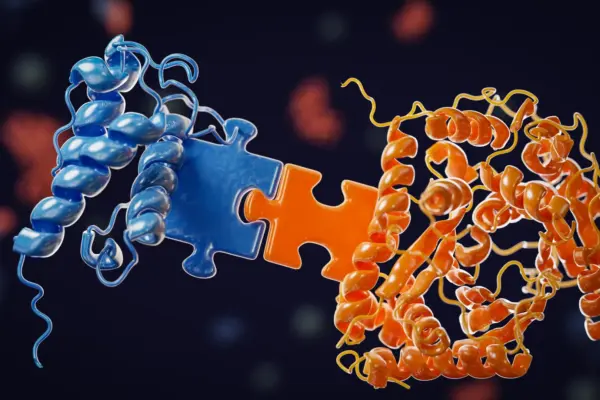
The discovery regarding OrfB9 highlights how small mutations can alter protein-protein interfaces. A single amino acid change can shift the electrostatic charge, steric conformation, or binding affinity of a viral protein, allowing it to lock onto human regulatory proteins that it previously could not bind. By neutralizing human immune sensors while failing to outmaneuver bat defenses, the virus achieves species-jump capability.
Official Statements and Expert Perspectives
The implications of this research extend far beyond academic virology, offering a new conceptual framework for global biosecurity. Principal investigators and institutional leaders have emphasized both the elegance of the science and its practical urgency.
"The difference between a virus that stays in bats and one that spills over into humans and causes catastrophic disease can come down to remarkably small genetic changes," stated Nevan J. Krogan, PhD, director of the Quantitative Biosciences Institute (QBI) at UCSF and senior author of the study.
Krogan underscored the translational value of mapping these interactions at atomic and molecular resolutions:
"By mapping these interactions at the protein level—across two viruses and two species—we can read the molecular signatures that predict spillover risk. It’s the kind of early warning system the world needs."
The collaborative nature of the project was essential to its success, drawing on specialized expertise from virologists, immunologists, computational biologists, and structural chemists across multiple continents. Co-authors and institutional partners noted that unlocking the secrets of bat immunology required breaking decades-long technical barriers. By successfully cultivating primary lung cell lines from Rhinolophus ferrumequinum, the team established a new gold standard for studying wildlife pathogens in vitro, moving away from flawed cross-species extrapolations.
Future Outlook: Building an Advanced Global Early Warning System
As the global scientific community reflects on the lessons of the COVID-19 pandemic, the paradigm of infectious disease management is shifting from reactive containment to proactive anticipation. Discoveries like the one published in Cell Host & Microbe represent the vanguard of this new era.
1. High-Throughput Spillover Surveillance
Historically, virus discovery efforts have focused on sequencing viral genomes extracted from wildlife feces, blood, or tissue samples. While sequencing is vital, a sequence alone cannot reliably predict whether a newly discovered virus poses an immediate threat to humans.
Integrating functional assays—such as those developed by the QBI team—allows researchers to test viral proteins against human cellular machinery in high-throughput formats. By screening newly identified wildlife coronaviruses for specific "gain-of-function" protein signatures (such as human immune evasion capabilities via modified accessory proteins), public health agencies can triage surveillance efforts, focusing containment and countermeasures on the highest-risk strains.
2. Broad-Spectrum Therapeutics and Pan-Coronavirus Vaccines
Understanding the exact mechanisms by which proteins like OrfB9 manipulate human immunity opens up novel targets for pharmaceutical intervention. Rather than designing vaccines and therapeutics tailored exclusively to neutralizing the spike protein of a single circulating strain, drug developers can target conserved accessory proteins or host-pathogen interaction interfaces. If a drug can block OrfB9 from suppressing human immune alarms, the host’s innate defenses can neutralize the pathogen regardless of minor mutations in surface antigens.
3. Strengthening Interdisciplinary Infrastructure
The research was made possible through a robust coalition of funding bodies and research institutions, including major investments from the National Institutes of Health (NIH), the Howard Hughes Medical Institute, the Roddenberry Foundation, and philanthropic initiatives like Fast Grants and the Chan Zuckerberg Biohub. Sustaining and expanding this level of interdisciplinary support will be critical as scientists work to catalogue the vast, hidden biodiversity of viral pathogens before another spillover event occurs.
Conclusion
The revelation that a single amino acid alteration can dictate the trajectory of a global pandemic serves as a humbling reminder of nature’s complexity. Yet, it also highlights the extraordinary power of human ingenuity. By peering deep into the molecular choreography between viruses and their hosts, researchers are transforming our vulnerability into vigilance—turning the microscopic fingerprints of viral evolution into a roadmap for planetary health and safety.