








Executive Overview
In agricultural heartlands, suburban pollinator gardens, and manicured residential landscapes, a quiet coexistence has long been assumed between modern weed management and vital insect pollinators. Honeybees (Apis mellifera), traversing these shared environments to collect nectar and pollen, routinely encounter surfaces treated with herbicides. For decades, the dominant scientific consensus—supported largely by the chemical’s specific mechanism of action—held that these weedkillers presented minimal risk to beneficial insects. Because glyphosate, the active ingredient in the world’s most ubiquitous herbicides, targets an enzyme strictly essential for plant photosynthesis, toxicologists traditionally categorized the chemical as benign to fauna lacking that specific biochemical pathway.
However, a landmark study conducted by researchers at Virginia Tech upends this long-standing paradigm. Published in the prestigious Journal of Experimental Biology, the research demonstrates that glyphosate exposure—even at levels well below those required to cause direct mortality—wreaks subtle, insidious havoc on honeybee neurobiology and behavioral execution. Led by Associate Professor Margaret Couvillon and then-Ph.D. student Laura McHenry within the College of Agriculture and Life Sciences’ Department of Entomology, the study reveals a troubling 13 percent decline in foraging activity among bees exposed to the herbicide over a brief, three-day window.
This reduction in labor output, paired with detected shifts in core brain chemistry, suggests that the chemical operates much like a neurological depressant. While it may not kill the bee outright, it compromises its functional capacity. Scaled across an entire superorganism like a honeybee colony—where labor is specialized, resource margins are tight, and survival depends on the relentless efficiency of thousands of foragers—a 13 percent drop in productivity is far from trivial. It represents an existential drag on food acquisition, brood rearing, honey production, and overall hive resilience.
Supported by grants from the National Institute of Food and Agriculture (NIFA) and the Virginia Tech Department of Entomology, this investigation bridges a critical knowledge gap in environmental toxicology. As regulatory bodies worldwide reevaluate pesticide safety frameworks, the findings underscore an urgent need to look beyond acute mortality assays and examine the chronic, sublethal, and neurobehavioral tolls that modern agrochemicals exact on the ecological fabric.
Detailed Chronology: Unraveling the Invisible Impact
To understand how a chemical designed to dismantle plant enzyme pathways could alter the behavior of a flying insect, the Virginia Tech research team had to meticulously reconstruct the day-to-day foraging reality of a honeybee. The project’s genesis lay in a fundamental ecological question: What happens when the globe’s most heavily applied herbicide intersects with one of its most critical terrestrial pollinators?
Phase 1: Conceptualization and Experimental Design
The investigation began in the Department of Entomology laboratories at Virginia Tech, driven by Associate Professor Margaret Couvillon’s interest in behavioral ecology and pesticide toxicology. While much of the scientific community was intensely focused on insecticides—particularly neonicotinoids and their acute neurotoxic effects—herbicides like glyphosate were frequently overlooked in pollinator health assessments.
Couvillon and McHenry recognized a blind spot in the literature. While honeybees do not possess the shikimate pathway—the enzymatic chain responsible for plant growth that glyphosate directly blocks—they are inevitably bathed in, walk upon, and ingest the chemical during routine foraging operations on agricultural edges and weed-laden fields.
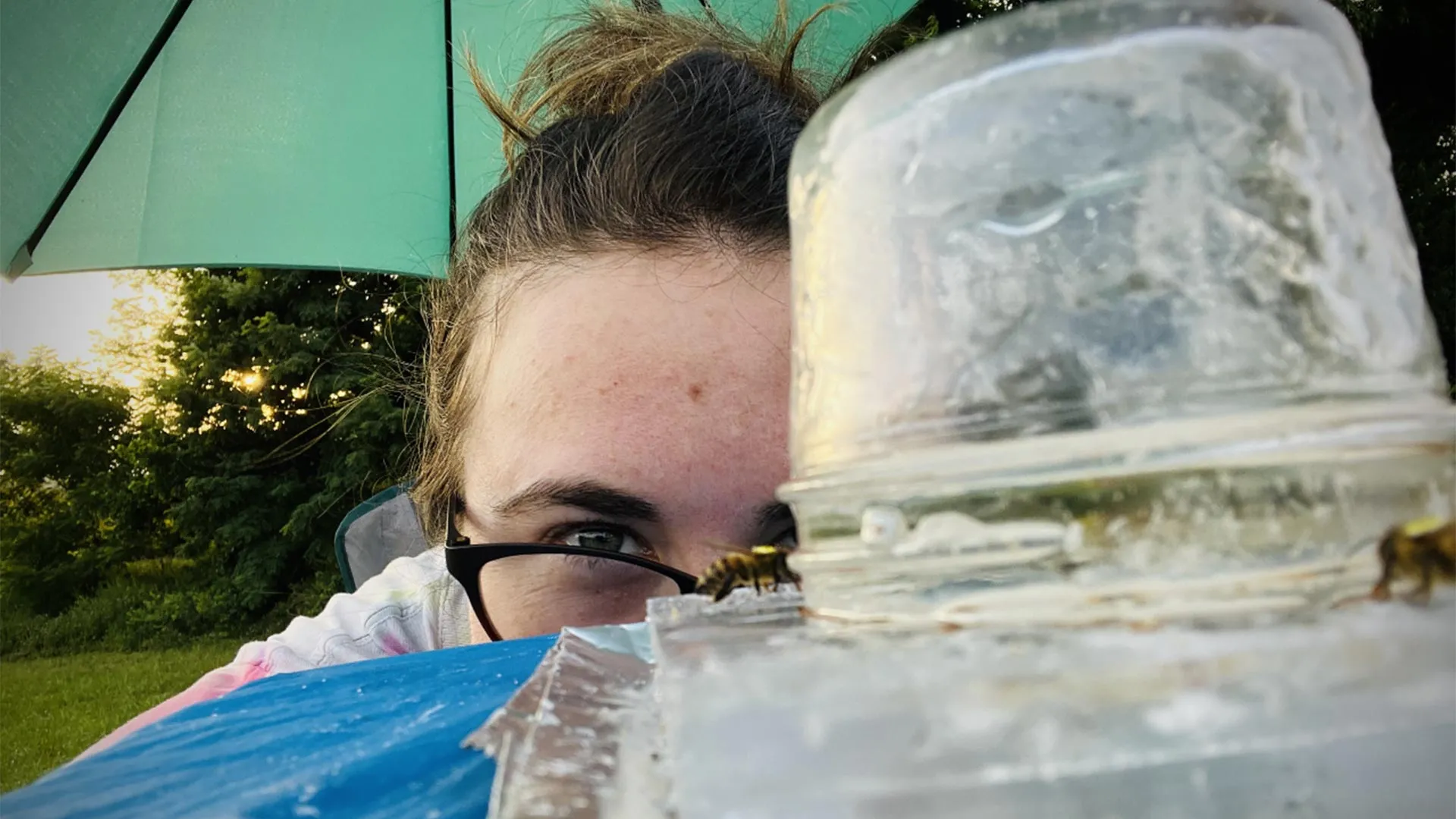
To test their hypothesis, the researchers needed an experimental setup that could isolate behavioral changes without introducing confounding variables from the field. They designed a controlled observational study centered on artificial feeding stations. Two distinct stations were established: one infused with a controlled concentration of glyphosate mirroring realistic environmental exposure, and a control station containing untreated sucrose solution.
Phase 2: Training and Behavioral Tracking
Honeybees from managed colonies were trained to visit these artificial feeders, establishing a baseline of normal, unhindered foraging rhythm. Once the bees were reliably visiting the stations, the researchers introduced the glyphosate treatment to one cohort while maintaining the control group on clean syrup.
The team monitored the test subjects across multiple consecutive days, tracking metrics such as flight frequency, time spent at the feeder, recruitment signaling (the famous "waggle dance"), and overall foraging persistence.
The results emerged with stark clarity after just 72 hours. By day three, the bees exposed to glyphosate exhibited a statistically significant 13 percent decline in foraging activity compared to their unexposed counterparts. They were slower to initiate foraging trips, spent more time resting or disoriented, and failed to maintain the rigorous, clockwork efficiency that characterizes a healthy honeybee workforce.
Phase 3: Neurochemical Examination
Observing a behavioral deficit was only half the battle; the researchers needed to know why the bees were slowing down. Following the behavioral trials, Couvillon’s lab initiated a comprehensive biochemical analysis of the bees’ brains, focusing specifically on amino acids and key neurotransmitters—the biochemical messengers responsible for learning, memory, motor control, and navigation.
The neurochemical assays revealed undeniable anomalies. Exposed bees showed distinct, measurable shifts in their neurotransmitter profiles and amino acid concentrations compared to the control groups. These internal biochemical disruptions served as the missing link, providing a physiological explanation for the external behavioral decline. The chemical balance required to sustain complex foraging tasks had been compromised.
Phase 4: Publication and Peer Review
With both behavioral and biochemical data secured, the findings were compiled, peer-reviewed, and accepted into the Journal of Experimental Biology. The publication immediately resonated within the academic and environmental communities, shifting the conversation from simple acute toxicity metrics toward the complex, cumulative realities of sublethal chemical exposure in integrated agricultural landscapes.
Supporting Context & Metrics: The Toxicology of Sublethal Exposure
To grasp the true significance of the Virginia Tech findings, one must contextualize glyphosate within modern agricultural practices and evaluate the mechanics of sublethal toxicity.
The Scale of Glyphosate Utilization
First introduced to the market in the 1970s, glyphosate rapidly ascended to become the cornerstone of global weed management. Its broad-spectrum efficacy, coupled with the advent of genetically modified "Roundup Ready" crops, cemented its status as the most heavily applied pesticide in human history. It is sprayed across millions of acres of row crops, orchards, and industrial rights-of-way, and is frequently applied in urban and suburban environments by groundskeepers and homeowners alike.
Because weeds frequently flower—dandelions, clover, and wild mustard being prime examples—they attract foraging honeybees seeking early-season or supplemental nectar and pollen. Consequently, bees routinely forage on plants that have been recently treated with glyphosate or drift-contaminated by neighboring applications.
The "Antihistamine" Analogy of Sublethal Effects
In toxicology, regulatory testing has historically relied heavily on acute toxicity assays—specifically, determining the Lethal Dose 50 ($LD_50$), which measures the concentration required to kill 50 percent of a test population within a set timeframe. Under these crude metrics, glyphosate often clears regulatory hurdles because it does not instantly kill bees in droves.
However, Associate Professor Couvillon compares glyphosate’s actual impact to a common human pharmaceutical experience:
"Glyphosate exposure is not usually fatal to honeybees, but… these sublethal effects can be compared to the way an over-the-counter antihistamine may relieve allergy symptoms while also causing drowsiness. The treatment works, but it can still produce an unintended effect."
In the context of an insect whose entire life cycle depends on instantaneous communication, spatial mapping, rapid flight dynamics, and tireless labor, "drowsiness" or neurochemical fog is catastrophic. A 13 percent reduction in foraging efficiency translates directly to:
- Diminished caloric intake for the hive, forcing the colony to dip into emergency honey reserves.
- Reduced brood rearing, as nurse bees receive fewer incoming proteins and sugars to feed developing larvae.
- Sub-optimal pollination services, impacting wild plant populations and agricultural crop yields that rely on dense, sustained insect visitation.
- Accelerated colony stress, compounding existing pressures from Varroa mites, viral pathogens, habitat fragmentation, and poor nutrition.
Official Statements and Expert Perspectives
The implications of the Virginia Tech study have drawn commentary from key figures in entomology, highlighting the need for a philosophical shift in how humanity manages agricultural chemistry and pollinator health.
Associate Professor Margaret Couvillon, Lead Researcher:
"We were interested in investigating the impact of glyphosate, the most widely used pesticide in the world, on the behavior and brains of honeybees, important pollinators that might encounter the weedkiller as they forage in the landscape… For a colony, a 13 percent reduction in foraging can be consequential. If the entire colony was exposed, this could lead to decreased pollination effectiveness and reduced honey production, risking colony survival and long-term stability."
Laura McHenry, Postdoctoral Researcher at Penn State (Lead Author during her Ph.D. studies at Virginia Tech):
"Understanding how weedkillers affect beneficial insects like pollinators will help us make more strategic regulatory choices about when and where to use them for maximum benefit and minimum harm."
McHenry emphasizes that while farmers and land managers must control weeds to maintain agricultural productivity, the assumption that non-insecticidal chemicals are automatically safe for beneficial insects is scientifically obsolete. The intersection of bee biology and chemical application is far more intricate than previously acknowledged.
Future Outlook: Navigating Toward Safe Coexistence
As the scientific community digests the revelations from Virginia Tech, the path forward demands a concerted pivot across research, regulation, and field-level application strategies.
1. Reforming Regulatory Frameworks
Current pesticide registration processes must evolve to incorporate mandatory, standardized sublethal behavioral assays. Testing if a chemical kills a bee in 48 hours is no longer an adequate baseline for environmental safety. Regulatory bodies such as the U.S. Environmental Protection Agency (EPA) and international counterparts must integrate neurochemical and behavioral endpoints into their risk assessment models.
2. Refining Application Practices
Farmers, land managers, and residential gardeners can adopt precision agriculture techniques and integrated pest management (IPM) protocols to minimize unnecessary herbicide drift and direct exposure. Key strategies include:
- Timing applications: Spraying herbicides during late evening or night hours when honeybees are safely inside the hive and flowers are less active.
- Targeted weed management: Utilizing precision spot-spraying rather than blanket broadcast applications, thereby preserving flowering weeds in non-crop field margins that serve as crucial fallback nutrition for hungry pollinators.
- Buffer zones: Establishing untreated wildflower strips around agricultural fields to provide clean, uncontested foraging grounds.
3. The Horizon of Future Research
While the Virginia Tech study provides definitive proof of glyphosate’s neurobehavioral toll under controlled conditions, researchers stress that more work is urgently required. Future studies must examine how these sublethal effects interact with real-world variables, such as multi-chemical exposure (tank mixes of herbicides, fungicides, and insecticides), varying nutritional stress, and seasonal temperature fluctuations.
Ultimately, honeybees remain indispensable architects of global ecosystems and agricultural economies. By illuminating the hidden, subtle costs that everyday weedkillers impose on these delicate pollinators, the Virginia Tech research sounds a vital alarm—reminding us that in the interconnected web of the natural world, no chemical action occurs in isolation.