









Executive Overview
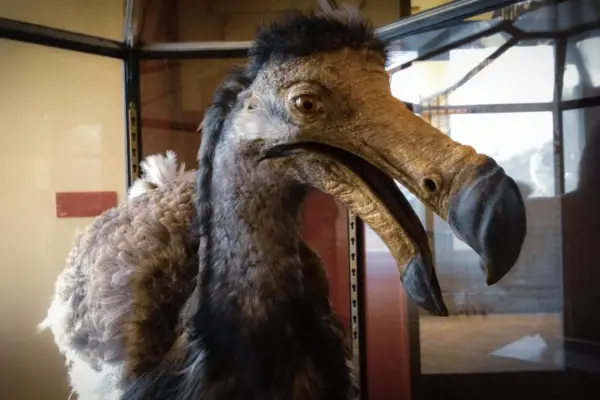
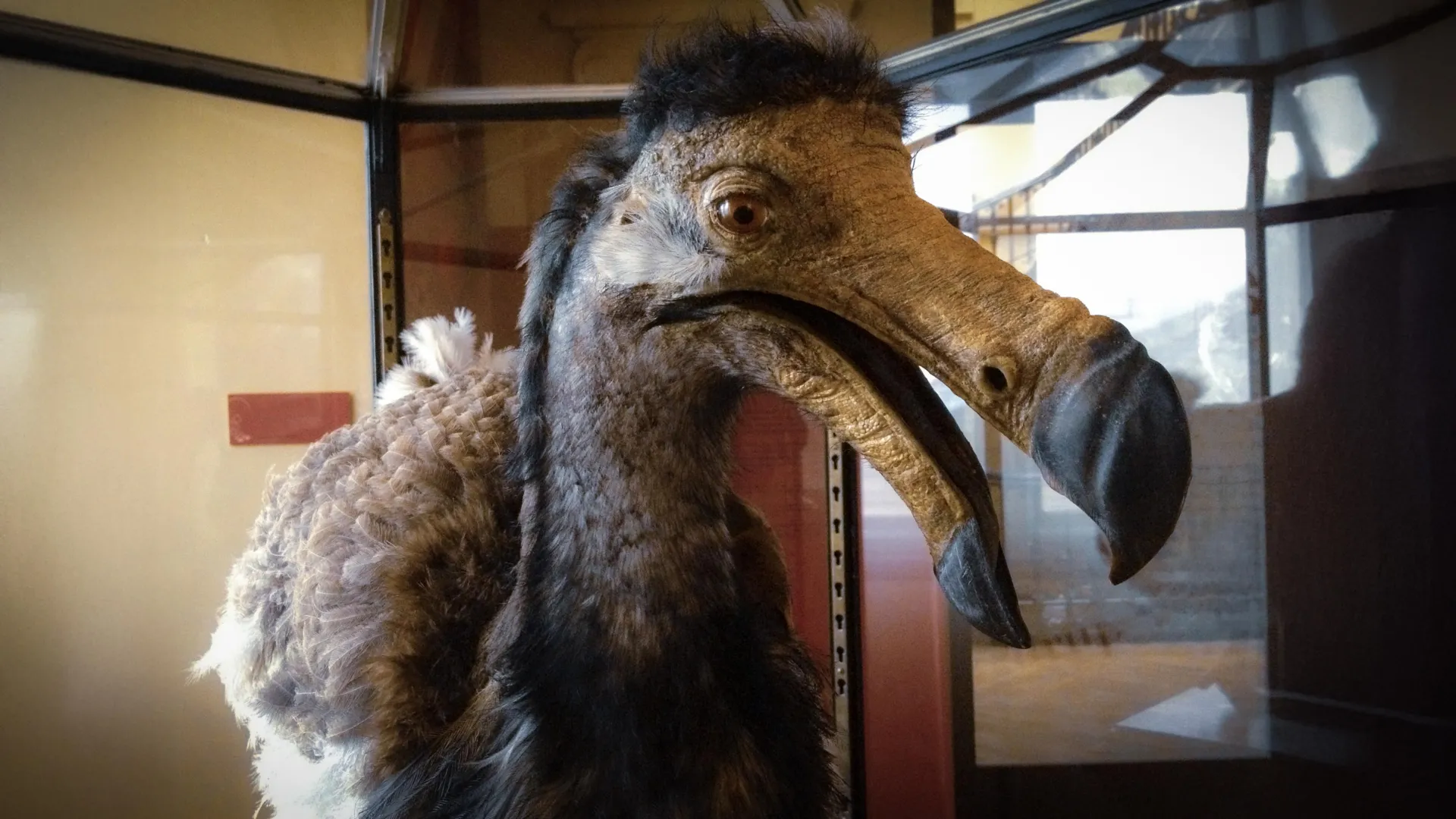
Centuries after its extinction on the remote island of Mauritius in the late 17th century, the dodo (Raphus cucullatus) remains one of history’s most enduring icons. Yet, despite its cultural ubiquity as a symbol of human-induced extinction and evolutionary vulnerability, the bird’s actual biology, behavior, and ecology have remained shrouded in myth. For generations, popular culture and early, often sensationalized accounts painted the dodo as a clumsy, dim-witted creature whose biological deficiencies practically guaranteed its demise.
Now, an international team of researchers—led by scientists at the University of Lethbridge in Canada, in close collaboration with the Natural History Museum Denmark and the Oxford University Museum of Natural History—has shattered these long-standing caricatures. Utilizing cutting-edge technology, including high-resolution computed tomography (CT) scanning of the world’s only two complete dodo skulls, researchers have peered inside the cranium to reconstruct the bird’s neurological and sensory architecture.
The findings, published in the Zoological Journal of the Linnean Society, present a radically revised portrait of the dodo. Rather than a sluggish, cognitively impoverished animal, the dodo possessed a specialized, sophisticated suite of sensory adaptations. Digital endocasts—three-dimensional reconstructions of the brain cavities—reveal that the dodo likely operated on a more flexible daily schedule than its modern relatives, potentially foraging into the dim light of dawn and dusk. Furthermore, anatomical evidence suggests the bird relied significantly more on a heightened sense of smell and tactile mechanoreception via its massive, hooked upper beak than modern pigeons and doves do.
This comprehensive study bridges a profound gap in evolutionary history, trading centuries of unscientific speculation for rigorous, evidence-based paleontology. By leveraging the preservation of rare museum specimens, science is finally beginning to understand how the dodo truly navigated, perceived, and interacted with its island home before vanishing forever.
Detailed Chronology: Unlocking the Cryptic Anatomy of a Century-Old Mystery
To understand how scientists achieved this breakthrough, one must trace the timeline of the specimens themselves and the technological evolution that made the study possible.
The Rarity of the Surviving Material
Complete dodo skeletal material is exceptionally scarce. Following the bird’s rapid extinction—wiped out by sailors, invasive species, and habitat destruction within less than a century of its Western discovery by Dutch explorers in 1598—few complete remains were preserved in the cabinets of European naturalists. Over time, bones were scattered, lost, or misidentified.
Today, only two complete, intact dodo skulls exist anywhere on Earth. One is permanently housed in the collections of the Oxford University Museum of Natural History, while the other has resided for centuries within the Natural History Museum Denmark in Copenhagen.
The Catalyst: Museum Expansion and Technological Opportunity
For generations, the Copenhagen specimen remained a static fixture of the museum’s historical holdings—admired by visitors, studied superficially by comparative anatomists, but ultimately limited by the destructive or invasive analytical techniques of the past.
The turning point for the Copenhagen skull arrived due to a logistical milestone: preparations for an entirely new museum building and permanent galleries scheduled to open to the public in 2027. This institutional overhaul prompted curators and researchers to audit, preserve, and thoroughly analyze foundational items in their collections. Recognizing the unprecedented potential of non-invasive modern imaging, the museum cleared the way for high-resolution CT scanning of its prized dodo specimen.
Digital Reconstruction and Comparative Analysis
Using advanced high-resolution CT scanners, researchers generated thousands of X-ray cross-sections of the fragile bone without inflicting a single microscopic fracture. These digital slices were subsequently processed using specialized 3D-modeling software to build an ultra-precise digital twin of the skull, both inside and out.
Crucially, the team focused on the endocranium—the internal cavity that once housed the living brain. During an animal’s growth, the soft tissues of the brain press against the interior walls of the cranium, leaving delicate impressions, grooves, and volumetric shapes in the bone. By digitally extracting these internal spaces, scientists created precise endocasts.
To validate their findings, the research team did not rely on the Copenhagen skull in isolation. They incorporated CT data from three dodo skulls in total, including the second complete specimen from Oxford, alongside comparative datasets from living birds. By evaluating multiple specimens, the researchers could successfully differentiate between individual anatomical variations and traits that were genuinely characteristic of the species as a whole, establishing a rigorous comparative baseline against the dodo’s closest living biological relatives: modern pigeons and doves (Columbidae).
Supporting Context & Metrics: Decoding the Dodo’s Sensory Apparatus
The transition from popular myth to empirical science requires unpacking the specific anatomical metrics that informed the study’s conclusions. By comparing the dodo’s neurological and sensory cavities with those of extant pigeons and doves, the research team uncovered several critical functional adaptations.
| Sensory / Behavioral Trait | Popular Myth / Historical Assumption | New Findings via CT Endocast Analysis | Evolutionary Implications |
|---|---|---|---|
| Cognitive Capacity | Clumsy, unintelligent, and cognitively inferior. | No evidence of reduced relative brain volume or diminished cognitive faculties compared to living Columbidae. | The dodo was neurologically well-adapted to its evolutionary niche, possessing standard intelligence for a large, flightless island bird. |
| Daily Activity Cycle | Diurnal (active exclusively during broad daylight). | Enlarged optic and neurological correlates suggest potential activity extending into crepuscular hours (dawn and dusk). | Greater behavioral flexibility, possibly allowing the bird to avoid peak tropical heat or forage under different ecological conditions. |
| Olfactory Sense (Smell) | Negligible or poorly developed, relying primarily on sight. | Expanded regions associated with the olfactory system indicate a stronger sense of smell than modern pigeons. | Enhanced ability to detect volatile organic compounds, potentially aiding in the location of fallen fruits, seeds, or animal prey on the forest floor. |
| Tactile Reception (Touch) | Standard beak functionality with little specialized sensory input. | Distinct morphological structures within the large upper beak suggest heightened mechanoreception (touch sensitivity). | Capability to probe dense leaf litter, mud, or vegetation for subterranean food sources using tactile feedback. |
Dismantling the "Stupid Dodo" Paradigm
One of the most pervasive cultural tropes surrounding the dodo is encapsulated in its very name—derived colloquially from the Portuguese word doido, meaning "fool" or "crazy." Early sailors and settlers interpreted the bird’s lack of fear toward humans (a natural consequence of evolving on an isolated island devoid of apex mammalian predators) as sheer stupidity. This behavioral adaptation, combined with a heavy, flightless morphology, led to centuries of literature characterizing the bird as an evolutionary dead end.
The new CT data strongly challenge this assumption. When analyzing the proportional volume and structural layout of the dodo’s brain cavity relative to its body size, researchers found no structural deficits when benchmarked against its closest living relatives, the pigeons and doves. While the dodo evolved flightlessness—a common island phenomenon known as island gigantism—its neurological architecture was not degenerate. It was simply specialized.
Foraging Ecology on Mauritius
The discovery of a potentially enhanced sense of smell and specialized tactile abilities in the upper beak paints a vivid picture of how the dodo interacted with the Mauritian ecosystem. Mauritius during the Holocene was a dense, tropical paradise characterized by rich rainforests, seasonal fluctuations, and unique flora (such as the famous "dodo tree," Sideroxylon grandiflorum, whose seeds were once thought to exclusively require passage through a dodo’s gizzard to germinate).
A bird equipped with:
- Crepuscular vision capabilities, allowing it to forage during cooler dawn and dusk hours;
- An enhanced olfactory system, enabling it to sniff out ripened fruits, nuts, and fallen seeds hidden beneath thick tropical undergrowth; and
- A highly sensitive upper beak, capable of detecting tactile pressure changes in leaf litter or soil,
would have been a remarkably competent ecological actor. Far from a helpless creature stumbling blindly through the brush, the dodo was finely tuned to exploit the complex trophic layers of its island habitat.
Official Statements and Expert Insights
The implications of this international study extend far beyond a single extinct species, offering a new methodological framework for how paleontologists interrogate the fossil record.
Dr. Peter Andrew Hosner, Associate Professor and Curator of Birds at the Natural History Museum Denmark and co-author of the study, emphasized the profound shift in perspective enabled by the research:
"The dodo is one of the world’s most recognizable extinct animals, yet surprisingly little is known about how it actually lived. Its behavior and foraging ecology have been debated for centuries. Having access to one of only two complete dodo skulls has given us a unique opportunity to compare the dodo with its closest living relatives and gain new insights into how it experienced and interacted with its environment."
Hosner notes that while the study does not answer every remaining question regarding the bird’s natural history, it provides an invaluable empirical foundation:
"The dodo has become a symbol of extinction, but in many ways it remains surprisingly mysterious. Every new piece of evidence helps us move beyond myths and build a more accurate picture of how this extraordinary bird lived before it disappeared."
Dr. Christy Anna Hipsley, Associate Professor at the Natural History Museum Denmark and co-author of the study, drew attention to the detective-like nature of modern paleontology and the power of non-destructive digital imaging:
"Studying extinct animals is a bit like detective work. Although the dodo’s brain disappeared centuries ago, it left an imprint on the inside of the skull. By digitally reconstructing those spaces and comparing them with the brains of living birds, we can begin to piece together how the dodo sensed, behaved, and interacted with the world around it."
Highlighting the unique morphology of the specimen, Hipsley added:
"The dodo’s skull is unlike that of any living bird, which makes it both fascinating and difficult to interpret. By comparing digital reconstructions of the world’s only two complete dodo skulls, we now have a much stronger foundation for identifying which features are truly characteristic of the species and what they can tell us about how the dodo lived."
Future Outlook: The Next Frontier in Extinct Animal Research
The publication of this study in the Zoological Journal of the Linnean Society marks not a conclusion, but a beginning. The integration of high-resolution CT scanning, 3D digital endocasts, and comparative phylogenetics has opened new avenues for investigating other long-lost species whose physical remains are too fragile or rare for traditional, invasive analysis.
Methodological Expansion
Museums around the world house countless historical specimens that have sat unexamined in archival drawers due to the risks associated with dissection or mechanical preparation. The workflow established by the University of Lethbridge and the Natural History Museum Denmark demonstrates that digital preservation and non-destructive internal analysis can yield unprecedented biological data. Future research will likely apply similar protocols to other island endemics wiped out during the early waves of human exploration, such as the Rodrigues solitaire (Pezophaps solitaria), a close relative of the dodo.
Preparing for 2027: A New Era of Public Engagement
For the general public, the breakthroughs achieved through this research will soon be translated into immersive educational experiences. As the Natural History Museum Denmark prepares for the grand opening of its new permanent galleries in 2027, these digital reconstructions will allow visitors to move past outdated caricatures. Instead of viewing the dodo as a static, comical artifact of human failure, museum-goers will encounter a scientifically accurate depiction of a highly specialized, sensory-driven survivor shaped by millions of years of isolated evolution.
Ultimately, this study serves as a poignant reminder of what was lost. By stripping away centuries of myth and replacing them with hard, empirical data, scientists are restoring dignity to the dodo. In understanding how the bird truly lived, humanity gains a deeper appreciation for the complex, irreplaceable biodiversity that vanished from Mauritius—and a stark reminder of the urgent need to protect the vulnerable ecosystems that remain today.