









Executive Overview
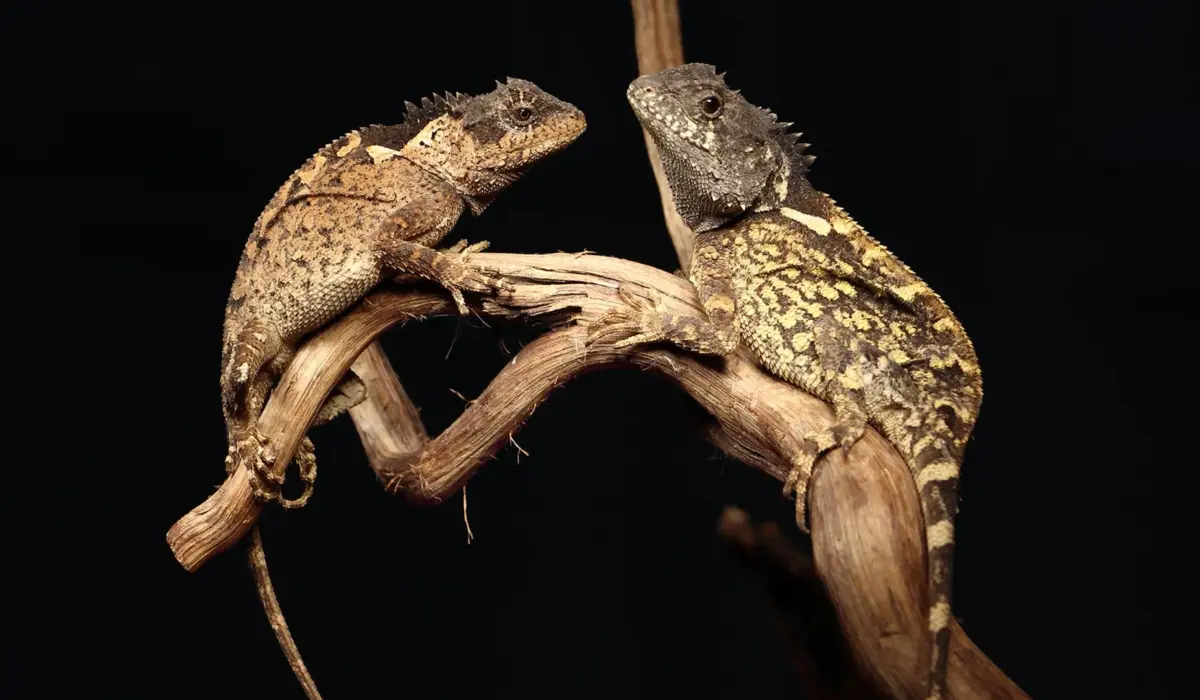
In the misty, emerald-hued canopies of western Thailand’s high-altitude mountain forests, a team of dedicated herpetologists has brought a piece of cinematic fantasy into reality. Scientists have officially identified and described a striking new species of agamid lizard: Acanthosaura syrax. Commonly dubbed the Syrax mountain horned dragon, this elusive reptile has captured the global scientific and cultural imagination alike. Its taxonomic name pays direct homage to Syrax, the fierce, yellow-scaled dragon famously ridden by Queen Rhaenyra Targaryen in the HBO fantasy epic House of the Dragon.
This newly documented creature does more than bridge the gap between pop culture and zoological nomenclature; it underscores the staggering, yet frequently threatened, biodiversity hidden within Southeast Asia’s montane ecosystems. Discovered within the rugged confines of Mae Wong National Park, Acanthosaura syrax distinguishes itself not merely through its cinematic moniker, but through a unique suite of morphological traits and genetic markers. Measuring smaller than many of its congeneric relatives, featuring uniquely miniature dorsal crest scales, and boasting a vibrant yellowish-green coat, the lizard represents a textbook example of evolutionary adaptation to high-elevation forest environments.
However, the debut of Acanthosaura syrax to the scientific community—published in the open-access journal ZooKeys—is tempered by urgent conservation warnings. Restricted to a narrow altitudinal band above 1,300 meters, the species’ fragmented populations face severe ecological vulnerabilities. Led by researcher Poramad Trivalairat alongside colleagues from the Chulabhorn Royal Academy and Kasetsart University, the research team is championing this charismatic reptile as a new flagship species. They argue that protecting the Syrax mountain horned dragon could serve as an essential catalyst for broader habitat preservation efforts, shielding an irreplaceable sanctuary shared by rare creatures such as the Indochinese tiger and the Asian forest tortoise.
Detailed Chronology of the Discovery
The discovery of Acanthosaura syrax is the culmination of meticulous field expeditions, rigorous morphological examinations, and cutting-edge genetic analyses. While the formal introduction of the species to the global scientific community occurred with its 2024 publication in ZooKeys, the groundwork for this monumental finding spans years of dedicated exploration across Thailand’s most inhospitable terrain.
Phase One: The Expedition into Mae Wong’s Mist
The narrative of discovery began deep within the dense, evergreen forests of Mae Wong National Park, situated along the mountainous borderlands of Tak and Kamphaeng Phet provinces in western Thailand. Herpetologists, led by Poramad Trivalairat, targeted these high-elevation zones—specifically areas scaling above 1,300 meters—driven by the hypothesis that the rugged, isolated peaks of the Dawna Range harbored cryptic reptile lineages.
High-altitude tropical and subtropical evergreen forests are notoriously difficult to survey. The terrain is precipitous, weather patterns shift rapidly from scorching humidity to torrential downpours, and the dense undergrowth reduces visibility to mere yards. It was within this challenging landscape that the research team first encountered specimens of the unfamiliar agamid lizard. Initially recognized as a member of the genus Acanthosaura—commonly referred to as mountain horned dragons due to the prominent, spiny crests extending along their necks and backs—the researchers immediately noticed distinct physical deviations from known species inhabiting lower elevations or neighboring mountain chains.
Phase Two: Morphological and Laboratory Analysis
Upon capturing and examining the specimens, the team initiated a comprehensive morphological assessment. In herpetology, differentiating species within the genus Acanthosaura relies heavily on scale counts, body proportions, color patterns, and specific anatomical landmarks, such as post-orbital spines and gular pouches.
Laboratory analysis revealed that the specimens possessed an unusual combination of features:
- Miniaturized Crests: The lizard exhibited the smallest neck and back crest scales documented across the entire genus.
- Absence of Facial Markings: Unlike several closely related species that display a stark black patch or band radiating from the eye socket, A. syrax completely lacked this feature, instead sporting a distinctive dark collar marking wrapping around the neck.
- Compact Stature: The individuals measured notably smaller than the average size of most congenerics.
Recognizing that physical variations alone do not definitively establish a new species—given the high degree of intraspecific morphological plasticity in reptiles—the team escalated their investigation to molecular biology.
Phase Three: DNA Sequencing and Taxonomic Confirmation
To confirm whether the physical differences translated to evolutionary divergence, the researchers extracted DNA from the collected specimens. They performed a phylogenetic analysis targeting specific gene sequences.
The genetic data provided undeniable confirmation. Molecular comparisons of two distinct genes proved that Acanthosaura syrax is genetically distinct not only from its morphologically closest known relative, Acanthosaura lepidogaster, but also from all other 22 recognized species within the genus. This genetic barrier confirmed that the population had been evolutionarily isolated for a significant geological timeframe, adapting to the specialized microclimate of Mae Wong’s high-altitude ridges. With both morphological and genetic evidence secured, the species was officially named, described, and prepared for presentation to the global scientific community.
Supporting Context & Metrics
To fully appreciate the significance of the discovery of Acanthosaura syrax, one must examine the taxonomic framework of its genus, the ecological nuances of its habitat, and the specific biological metrics that separate it from its peers.
Taxonomic Placement and Diversity Metrics
The genus Acanthosaura currently comprises a diverse assembly of arboreal and semi-arboreal lizards distributed primarily across Southeast Asia, stretching from the foothills of the Himalayas through Indochina and down into the Malay Peninsula. Prior to this discovery, the genus recognized 23 distinct species. The formal description of Acanthosaura syrax increases this count to 24 recognized species globally (though individual regional taxonomies frequently debate shifting subspecies statuses).
| Metric / Feature | Acanthosaura syrax Data | Comparative Context within Genus |
|---|---|---|
| Elevation Range | > 1,300 meters above sea level | Higher than many lowland Acanthosaura species, indicating montane specialization. |
| Total Genus Count | Becomes a member of a 24-species clade | Expands known biodiversity metrics for mainland Southeast Asian reptiles. |
| Crest Scale Size | Smallest yet documented in the genus | Serves as a primary diagnostic morphological identifier. |
| Clutch Size to Body Ratio | Unusually high egg production for body size | Mirrors the biological traits of its namesake fictional dragon. |
| Primary Coloration | Striking yellowish-green base | Differs from the duller browns and grays seen in several forest-floor agamids. |
The Inspiration Behind the Name: Fiction Meets Science
The decision by Trivalairat and his colleagues to name the lizard after Syrax—a fictional dragon from George R.R. Martin’s universe, popularized by the television adaptation House of the Dragon—was far from arbitrary. In scientific nomenclature, eponyms and pop-culture references are occasionally utilized to spark public interest in conservation, provided the names reflect genuine biological traits.
In the lore of the fantasy series, Syrax is characterized by three distinct attributes:
- Striking Yellow Coloration: Syrax’s scales gleam with a brilliant, golden-yellow hue. Acanthosaura syrax mirrors this with a vibrant yellowish-green body tone that provides effective camouflage among sun-dappled high-altitude canopy leaves.
- Relatively Compact Size: Compared to massive, ancient beasts like Vhagar or Balerion, Syrax is relatively nimble and moderate in stature. Similarly, A. syrax is among the smallest species within its genus.
- High Reproductive Output: Syrax is noted in the lore for laying unusually large clutches of eggs. Biometric data gathered during the study revealed that female A. syrax specimens produce remarkably large clutches relative to their diminutive body dimensions.
Ecological Context of Mae Wong National Park
Mae Wong National Park is a critical ecological nexus. Spanning over 1,300 square kilometers across the Dawna Range, the park serves as a bridge between the Huai Kha Khaeng Wildlife Sanctuary and other protected areas, forming one of the largest contiguous wilderness complexes in mainland Southeast Asia.
The high-altitude evergreen forests where A. syrax lives are characterized by persistent cloud cover, high humidity, and lower ambient temperatures than the sweltering lowlands of central Thailand. These conditions support an endemic-rich micro-ecosystem. However, these zones are fragile. Because A. syrax appears restricted to this narrow, high-elevation band, its population is naturally fragmented by the deep valleys and ridges that separate mountain peaks—a phenomenon known as "sky island" biogeography.
Official Statements and Research Insights
The discovery and naming of Acanthosaura syrax have generated considerable dialogue within the academic community, particularly regarding the intersection of modern taxonomy, science communication, and conservation advocacy.
Lead researcher Poramad Trivalairat, speaking on behalf of the research team from the Chulabhorn Royal Academy and Kasetsart University, emphasized the deliberate strategy behind blending pop culture with rigorous taxonomy:
"When we analyzed the physiological and behavioral data of this newly discovered lizard, the parallels with the fictional dragon Syrax were striking. From its distinct yellowish-green pigmentation and compact physical build to its surprising reproductive capacity, nature had seemingly written the script for us. By adopting this name, we hope to bridge the often-wide gap between arcane scientific literature and public enthusiasm for wildlife conservation."
Trivalairat’s sentiments reflect a growing movement in modern conservation science: leveraging pop culture touchstones to make obscure taxonomic discoveries accessible to younger generations and the general public. In an era where biodiversity loss frequently fails to capture mainstream headlines, a "real-life dragon" acts as a powerful hook.
Co-researchers involved in the genetic and ecological mapping phases underscored the conservation urgency that underpins the publication. Dr. Apichat Termwijtkool, a collaborator on the study, noted the precarious nature of sky island ecosystems:
"Discovering a new species in an isolated high-altitude zone is both a triumph and a warning. Animals adapted strictly to cool, mist-shrouded mountain peaks have nowhere to go if their environment changes. They cannot simply migrate across the hot valleys below. Acanthosaura syrax is living on an ecological island, and its survival is inextricably linked to the absolute preservation of Mae Wong’s upper forest canopy."
Furthermore, peer reviewers at the open-access journal ZooKeys lauded the study for its methodological rigor, praising the seamless integration of classical morphology with robust mitochondrial and nuclear DNA sequencing, which ensures the taxonomic validity of the new species beyond any doubt.
Future Outlook & Conservation Implications
The introduction of Acanthosaura syrax to the global catalog of life is more than an academic milestone; it represents an urgent call to action for the preservation of Thailand’s montane landscapes. As global climate change accelerates and anthropogenic pressures encroach upon protected borders, species with restricted distributions like the Syrax mountain horned dragon find themselves on the front lines of ecological vulnerability.
Threats to the "Sky Island" Habitat
The primary threat facing Acanthosaura syrax is habitat degradation and climate disruption. Because the species is thus far endemic exclusively to the high-elevation evergreen forests above 1,300 meters in Mae Wong National Park, its geographic range is severely restricted.
- Climate Change and Thermal Squeezing: As global temperatures rise, montane species are typically forced to migrate to higher elevations to find their preferred thermal niches ("range shifting"). For species already living near the highest peaks of a mountain range, there is literally nowhere higher to climb—a phenomenon ecologists call the "escalator to extinction."
- Edge Effects and Deforestation: While Mae Wong National Park enjoys legal protection, the park’s boundaries are frequently pressured by agricultural expansion, illegal logging, and infrastructure development in adjacent zones. Forest fragmentation isolates sub-populations of A. syrax, reducing genetic diversity and increasing susceptibility to disease or stochastic environmental events.
- The Pet Trade Risk: Newly described, charismatic reptiles—particularly those with catchy names or striking appearances—frequently become targets for illegal wildlife trafficking and the exotic pet trade. Ensuring the exact coordinates and localized microhabitats of Acanthosaura syrax remain shielded from poachers is an immediate priority for park rangers and wildlife enforcement agencies.
The Flagship Species Strategy
To combat these threats, the research team is actively lobbying for enhanced, targeted protections for the high-elevation zones of Mae Wong. Their core proposal is to elevate Acanthosaura syrax to the status of a flagship conservation species.
Flagship species are charismatic organisms used by environmental organizations to build public support and secure funding for broader conservation goals. While the Indochinese tiger (Panthera tigris corbetti) and the Asian forest tortoise (Manouria emys) are already recognized flagship and umbrella species for the region, large mammals often overshadow the critical microfauna that drive forest health.
By utilizing the "Syrax mountain horned dragon" as a cultural icon, conservationists aim to:
- Secure Increased Research Funding: Attract grants focused on high-altitude herpetological monitoring and baseline population censuses.
- Boost Ecotourism Awareness: Educate visitors to Mae Wong National Park about the value of micro-habitats, encouraging responsible tourism that respects fragile undergrowth and canopy environments.
- Strengthen Corridor Protections: Advocate for policy measures that connect isolated high-altitude forest patches across the Dawna Range, allowing species like A. syrax to maintain genetic connectivity across generations.
Conclusion
The discovery of Acanthosaura syrax reminds humanity of the vast, uncharted mysteries still lingering within our planet’s vanishing wild places. It proves that fairy tales and cinematic fantasies can occasionally find their reflections in the natural world. However, the legacy of the Syrax mountain horned dragon will not be determined solely by its evocative name or its striking yellowish-green scales. Its survival depends entirely on our collective willingness to protect the misty, ancient mountain forests it calls home—ensuring that this real-life dragon continues to reign over the peaks of western Thailand for generations to come.