







Executive Overview
Nearly two centuries after the HMS Beagle dropped anchor in the volcanic waters of the Galápagos Islands, Charles Darwin’s sprawling natural laboratory continues to yield paradigm-shifting insights into the mechanics of life on Earth. While the world has long celebrated the iconic finches whose varied beak shapes helped inspire the theory of evolution by natural selection, an equally radical evolutionary drama has been quietly unfolding in the island’s botanical kingdom.
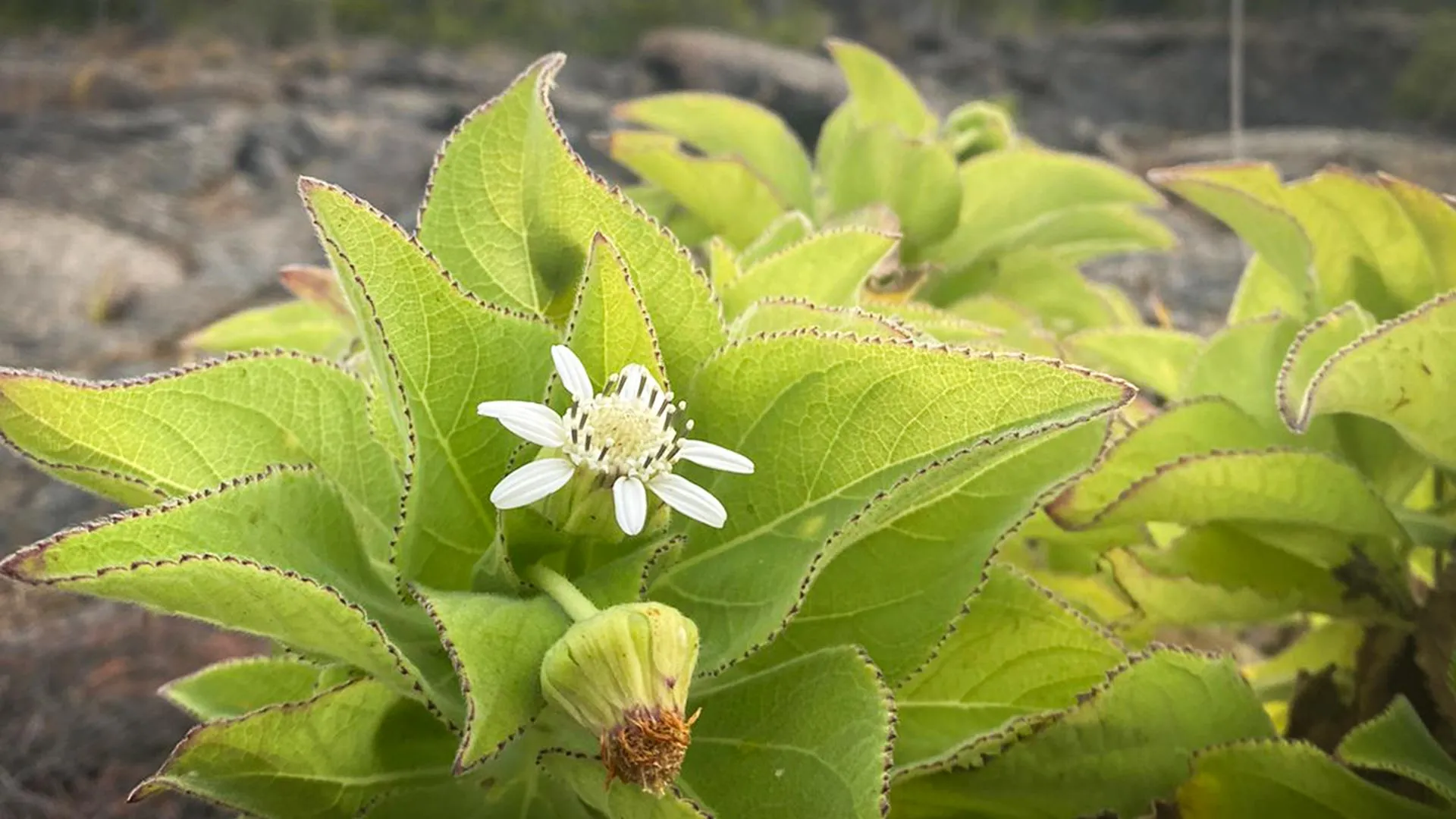
A comprehensive, large-scale international study published in the journal Nature Communications has shed brilliant new light on Scalesia—a genus of endemic plants universally known as the Galápagos giant daisies. Spearheaded by an interdisciplinary coalition of researchers from the Norwegian University of Science and Technology’s (NTNU) University Museum, the Royal Botanic Gardens, Kew, the University of California, Davis, the University of Copenhagen, the Charles Darwin Foundation, the University of Georgia, and the University of British Columbia, the research project provides an unprecedented look at rapid adaptive radiation and parallel evolution.
By sequencing the complete genomes of every known Scalesia species, the scientific team uncovered a stunning biological reality: these plants diversified at a breakneck speed over the past million years, evolving into forms that range from low-slung shrubs to towering forest trees. Most remarkably, the researchers discovered that physically identical traits—such as intricately lobed leaves designed to combat arid, sun-baked environments—arose independently across separate branches of the family tree. Crucially, nature achieved these parallel physical outcomes not by tweaking a single "master gene," but by manipulating an entire interactive network of different genes.
This groundbreaking revelation not only deepens our fundamental understanding of how complex biological traits emerge, but it also carries urgent implications for local conservation efforts. The genomic data reveals that many isolated Scalesia populations are so genetically distinct that they may represent undiscovered, nascent species currently in the making. Consequently, conservation scientists are now calling for a sweeping overhaul of how these fragile ecosystems and their individual lineages are protected.
Detailed Chronology
1835: The Genesis of Evolutionary Thought
In September 1835, natural history was forever altered when a young naturalist named Charles Darwin stepped ashore on the remote, volcanic archipelago of the Galápagos. Aboard the HMS Beagle, Darwin methodically collected geological and biological specimens, gathering an assortment of birds and plants that he would meticulously pack and ship back to Victorian England.
Among those collections were botanical specimens that would later puzzle taxonomists. While history largely immortalized his mistaken initial classifications of Galápagos finches—which he variously mistook for sparrows, warblers, and grosbeaks—Darwin also systematically collected plant life. Hidden within those historic bundles were seventy-eight botanical specimens that would later be identified as entirely new to science, including four distinct species of Scalesia.
The Modern Genomic Era: Unlocking the Botanical Code
For generations, evolutionary biologists viewed Scalesia primarily as the botanical counterpart to Darwin’s finches—a classic, textbook example of "adaptive radiation," the rapid diversification of a single ancestral lineage into a multitude of species filling diverse ecological niches. However, the precise genetic architectures driving this explosive diversification remained shrouded in mystery.
To bridge this historical knowledge gap, an international consortium of geneticists, botanists, and evolutionary biologists launched an exhaustive genomic investigation. The team captured and sequenced the complete genomes of every recognized Scalesia species. By comparing these genetic blueprints side-by-side, the researchers sought to trace how a mainland South American plant ancestor managed to colonize the isolated islands and rapidly morph into an astonishing array of ecological specialists over the span of roughly one million years.
Unraveling the Mechanics of Parallel Evolution
As the research team mapped the genetic lineages of the various Scalesia species, they noticed a striking pattern in the physical evolution of the plants. The genus occupies wildly contrasting microclimates across the archipelago, ranging from damp, mist-shrouded highland forests to blistering, arid lowlands.
To survive the punishing heat and intense solar radiation of the lowlands, many Scalesia species developed deeply lobed, serrated leaves. Scientists theorize that these complex leaf margins maximize heat dissipation and minimize lethal water loss.
When the researchers ran phylogenetic trees and genomic analyses, they discovered a profound twist: these deeply lobed leaves did not evolve just once from a single ancestral adaptation. Instead, the exact same physical leaf architecture evolved independently multiple times across entirely separate branches of the Scalesia family tree. Nature was repeating itself, arriving at the identical morphological solution to an environmental hurdle across different evolutionary lineages.
Supporting Context & Metrics
The Scale of the Scalesia Radiation
To truly appreciate the magnitude of the recent findings, it is helpful to examine the biological metrics and ecological diversity housed within the Scalesia genus:
- Chronological Age: The entire genus of Scalesia is evolutionarily young, with every extant species having emerged within the last 1 million years.
- Morphological Variance: Species span dramatic physical extremes, transitioning from low-growing shrubs to canopy-forming trees reaching heights of 15 to 20 meters.
- Leaf Architecture Range: Leaf structures vary wildly across the genus, stretching from massive, unbroken, entire leaves to highly dissected, intricate, and deeply lobed forms.
- Historical Collections: Darwin’s 1835 expedition yielded 78 plant specimens that were subsequently classified as species completely new to science, a tally that included foundational Scalesia type specimens.
- Global Institutional Collaboration: The current genomic study unites researchers from dozens of leading academic and conservation institutions worldwide, pooling resources from Norway, the United Kingdom, Denmark, the United States, Canada, and Ecuador.
Demystifying the Genetic Network
The most revolutionary takeaway from the Nature Communications study lies in how parallel evolution operates at a microscopic level. For decades, evolutionary theory frequently looked for simple genetic levers—such as a single master regulatory gene—that could explain dramatic physical transformations.
The Scalesia genome sequencing shattered this simplistic paradigm. The research demonstrated that when different plant branches evolved deeply lobed leaves, they did not use the same genetic pathway. Each lineage activated completely different sets of genes.
Despite utilizing distinct underlying genetic machinery, all of these invoked genes belonged to the same broader developmental system governing leaf morphology. Evolution, it turns out, acts less like a simple binary switch and more like a master conductor orchestrating a vast symphony. By tweaking different components within a complex, interconnected genetic network, nature can arrive at the exact same physical phenotype through entirely disparate molecular routes. This discovery illuminates the staggering flexibility and creative capacity of evolutionary processes.
Official Statements
The profound implications of the research have drawn high praise and contemplative commentary from leading figures in the international scientific community:
"More than 150 years after Darwin’s work on the Galápagos transformed our understanding of life on Earth, these islands continue to reveal new biology."
— Professor Michael D. Martin, Norwegian University of Science and Technology (NTNU) University Museum
Professor Martin emphasizes that the Galápagos remain an irreplaceable crucible for evolutionary discovery, proving that even after centuries of rigorous scientific inquiry, the archipelago’s flora still harbors deep, untapped evolutionary secrets.
"Just like Darwin’s famous finches, these plants evolved rapidly after arriving on the Galápagos from mainland South America."
— Dr. Vanessa Bieker, Researcher at the Royal Botanic Gardens, Kew, and First Author of the Study
Dr. Bieker highlights the striking parallels between the rapid radiation of vertebrate fauna (the finches) and botanical flora (Scalesia) upon arriving in a pristine, unexploited island ecosystem.
Elaborating on the study’s core genetic revelations, Dr. Bieker added:
"Even more surprising was that each time this trait evolved, it did so through different genes—even though all of them belong to the same biological system controlling leaf development. This provides a clear example of parallel evolution: nature arriving at the same solution multiple times, but through different genetic pathways. Instead of being controlled by a single ‘master gene’, evolution appears to draw on an entire network of interacting genes, tweaking different components to produce similar outcomes."
Reflecting on the overarching adaptability observed in the plant genus, Dr. Bieker concluded:
"Our findings highlight the flexibility and creativity of evolution."
Future Outlook
Implications for Conservation Biology
Beyond rewriting theoretical models of molecular evolution, the genomic mapping of Scalesia carries urgent, real-world consequences for conservation policy in the Galápagos National Park and across fragile island ecosystems globally.
The DNA sequencing revealed deep genetic divides within officially recognized species. Isolated populations of Scalesia living on different volcanic slopes or separated by ancient lava flows have been functionally cut off from one another for thousands or millions of years. This long-term geographical isolation means that many populations are quietly speciation-in-action—evolving along entirely independent trajectories that have not yet been formally recognized by taxonomists.
Consequently, the study’s authors argue that current conservation frameworks are fundamentally inadequate. Traditional conservation strategies often manage endangered species at the broad species level. However, the new genomic data demands a paradigm shift toward managing individual populations as distinct conservation units. If conservationists treat isolated, genetically distinct plant populations as interchangeable components of a single species, unique evolutionary lineages could be inadvertently wiped out before science even formally identifies them.
The Ongoing Evolution of the Galápagos
Ultimately, the story of Scalesia serves as a humbling reminder that evolution is not a historical artifact confined to dusty museum archives; it is an active, ongoing, and endlessly creative process. As climate pressures mount, invasive species encroach, and human impacts ripple across the globe, the resilient plant networks of the Galápagos continue to adapt, mutate, and forge new paths forward.
As modern genetic tools continue to mature, researchers are poised to unlock even deeper layers of the Galápagos’ living library. The giant daisies of Ecuador’s volcanic archipelago have proven that Darwin’s legendary islands still hold the power to astonish the scientific world, offering vital lessons about biodiversity, genetic resilience, and the fragile, magnificent mechanics of life on our changing planet.