





Executive Overview
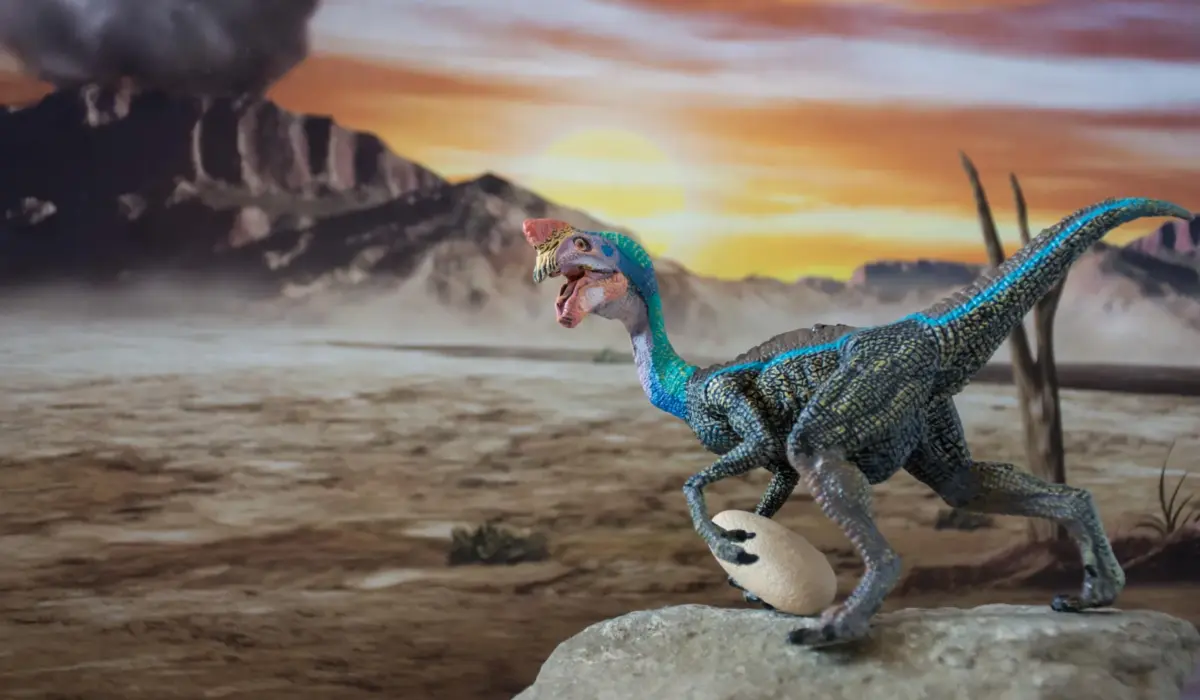
For decades, paleontologists have debated how feathered, non-avian dinosaurs brought their young into the world. Did creatures like the oviraptor sit on their clutches like modern brooding hens, or did they rely more heavily on environmental heat sources, much like modern crocodiles and turtles?
A groundbreaking study published in Frontiers in Ecology and Evolution has cast new light on this enduring evolutionary puzzle. A research team based in Taiwan successfully bridged the gap between the fossil record and modern biomechanics by combining physical experiments with advanced computer simulations. Constructing a life-sized replica of an oviraptor alongside artificial nests, the researchers discovered that these Late Cretaceous dinosaurs employed a hybrid brooding strategy. Working alongside the sun, the adult dinosaur acted as a co-incubator—a system vastly different, though not necessarily inferior, to the direct contact incubation practiced by modern birds.
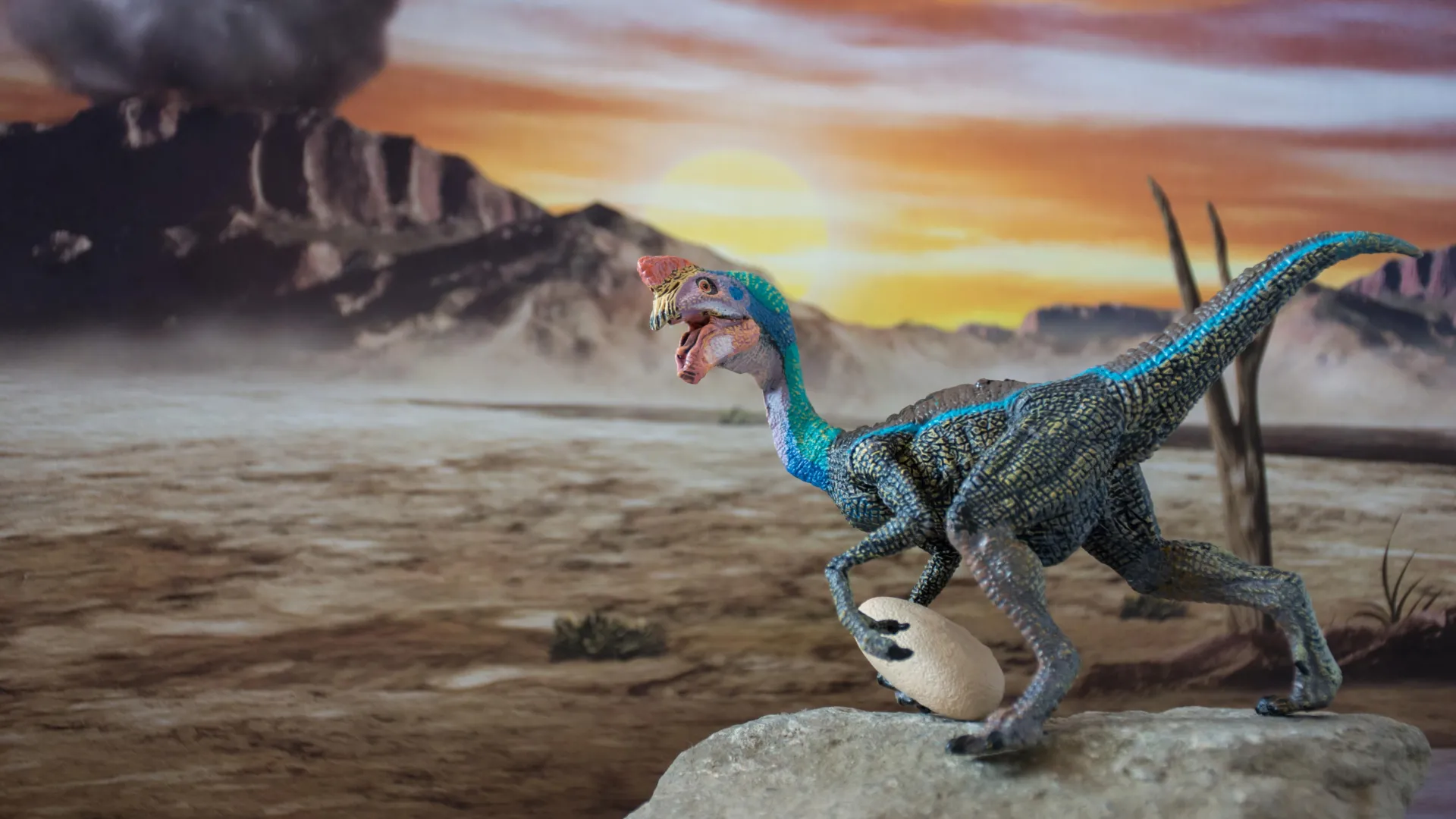
This comprehensive investigation centers on Heyuannia huangi, an oviraptor species that roamed what is now China between 70 and 66 million years ago. By mapping heat transfer across multi-layered egg clutches under varying environmental conditions, the study highlights how evolutionary milestones in parental care shifted long before the first true birds took flight. Far from being a clumsy or inefficient attempt at mothering, the oviraptor’s reproductive strategy represents a fascinating half-step in the transition from buried reptile nests to the warm, feathered cradles of modern avian life.
Detailed Chronology of the Study
Reconstructing the Past: Building the Oviraptor Model
The path to understanding ancient parenting began with meticulous craftsmanship. The research team, featuring lead author Chun-Yu Su—who was a student at Washington High School in Taichung when the research was conducted—and senior author Dr. Tzu-Ruei Yang, associate curator of vertebrate paleontology at Taiwan’s National Museum of Natural Science, targeted the anatomy of Heyuannia huangi. This medium-sized oviraptor measured approximately 1.5 meters in length and weighed roughly 20 kilograms. Crucially, its fossilized remains are frequently found associated with semi-open nests containing distinctive, double-ringed clutches of elongated eggs.
Recreating the physical reality of a 70-million-year-old brooding session presented immense logistical hurdles. Because oviraptor eggs possess unique shapes and structural properties entirely unlike those of any living species, standard biological proxies were insufficient. The team manufactured custom resin eggs to approximate the thermal mass and geometry of real oviraptor specimens.
To simulate the adult dinosaur, the researchers built a life-sized physical model. The torso was constructed using a sturdy wooden framework and lightweight polystyrene foam, layered with cotton, cloth, and bubble paper to accurately mimic the soft tissues and insulation of a living, breathing theropod.
Experimental Design and Thermal Trials
Once the model and artificial nest were assembled, the team subjected the setup to controlled environmental testing. The core objective was to monitor how heat transferred from the brooding adult to the eggs across the inner and outer rings of the clutch under varying ambient temperatures.
Under cooler environmental conditions, the physical experiment yielded striking temperature discrepancies. Eggs positioned in the outer ring of the nest—further away from the immediate contact of the brooding adult—exhibited temperature variances of up to 6°C compared to the inner ring. In biological terms, such a wide thermal gap would likely have induced asynchronous hatching, meaning that some dinosaur chicks would have emerged days or even weeks before their clutch-mates.
However, when the researchers simulated warmer environmental conditions, the dynamic shifted dramatically. The temperature gap between the inner and outer rings collapsed to a mere 0.6°C. This discovery signaled that ambient sunlight was not merely an incidental background factor; it was a primary driver in thermal regulation. Because oviraptor nests were open to the air rather than buried beneath soil or decaying vegetation, solar radiation acted as a vital co-heating mechanism, evening out thermal distribution across the clutch when outdoor temperatures were high.
Supporting Context & Metrics: Oviraptors in the Fossil Record
The Legacy of the "Egg Thief"
To fully appreciate the significance of this thermal study, one must understand the complicated taxonomic history of oviraptors. Living during the Late Cretaceous Period, roughly 100 to 66 million years ago, oviraptors were relatively small- to medium-sized theropod dinosaurs characterized by beak-like jaws, long, graceful necks, and elaborate cranial crests.
Their common name translates directly to "egg thief," a misnomer born from early fossil discoveries. When the first oviraptor skeleton was unearthed directly on top of a cluster of fossilized eggs in Mongolia, researchers naturally assumed the animal had been caught in the act of raiding a nest belonging to another dinosaur species. It took decades of subsequent fossil finds across Asia—many revealing adult skeletons frozen in brooding postures directly over their own clutches—to rehabilitate the dinosaur’s reputation. Scientists now recognize that oviraptors were fiercely dedicated parents, protecting and tending to their own offspring.
Oviraptors vs. Modern Birds: Mechanics of Incubation
The new study provides a quantitative framework for comparing dinosaurian reproduction with modern avian biology. Modern birds rely on what scientists call Thermoregulatory Contact Incubation (TCI). TCI requires three strict criteria to be met:
- The parent must make direct physical contact with every single egg in the clutch.
- The parent must serve as the primary, dominant source of heat.
- The parent must maintain all eggs within a tight, highly regulated thermal window.
Oviraptors, as demonstrated by the physical models and simulations, failed to meet these criteria. Due to the physical geometry of their bodies and the expansive, semi-open layout of their multi-ringed nests, adult oviraptors could not achieve direct skin-to-shell contact with every egg simultaneously.
Consequently, the researchers calculated that oviraptor incubation efficiency is significantly lower than that of modern birds. While a modern pigeon or eagle rapidly transfers and maintains body heat uniformly across a compact clutch, the oviraptor relied on a collaborative thermal network. The dinosaur provided baseline body heat, while ambient sunlight supplied the supplementary thermal energy needed to warm the outer perimeter of the nest.
Official Statements & Expert Analysis
The implications of this research extend far beyond mere thermodynamics, offering a profound philosophical shift in how paleontologists view evolutionary milestones.
Reflecting on the challenges of reconstructing an extinct reproductive strategy, Chun-Yu Su noted the unique obstacles faced by the team:
"Part of the difficulty lies in reconstructing oviraptor incubation realistically. For example, their eggs are unlike those of any living species, so we invented the resin eggs to approximate real oviraptor eggs as best as we could."
Addressing the core findings regarding efficiency, Su added:
"Moreover, we obtained an estimate of the incubation efficiency of oviraptors, which is much lower than that of modern birds."
Dr. Tzu-Ruei Yang elaborated on the symbiotic relationship between the brooding adult and the ancient environment:
"We show the difference in oviraptor hatching patterns was induced by the relative position of the incubating adult to the eggs."
Yang further contrasted the oviraptor’s methodology with both reptiles and modern avians, noting:
"It’s unlikely that large dinosaurs sat atop their clutches. Supposedly, they used the heat of the sun or soil to hatch their eggs, like turtles. Since oviraptor clutches are open to the air, heat from the sun likely mattered much more than heat from the soil."
Rather than viewing the oviraptor’s lower incubation efficiency as an evolutionary failure, Yang urged caution against teleological judgments in the fossil record. He emphasized that evolutionary adaptations must be evaluated within their specific ecological contexts:
"Modern birds aren’t ‘better’ at hatching eggs. Instead, birds living today and oviraptors have a very different way of incubation or, more specifically, brooding. Nothing is better or worse. It just depends on the environment."
Future Outlook & Methodological Implications
While the study offers unprecedented clarity on oviraptor parenting, the authors are careful to outline its limitations. The physical models and simulations were calibrated against a specific nest architecture belonging to Heyuannia huangi. Furthermore, Earth’s global climate during the Late Cretaceous was markedly warmer and more stable than today’s environment, factors that would have directly influenced ambient solar radiation and soil temperatures. Oviraptors are also believed to have sustained significantly longer incubation periods than their modern avian descendants.
Nonetheless, this research establishes a powerful new paradigm for paleobiological investigation. By successfully merging physical reconstructions—complete with foam, cloth, and resin—with computational heat-transfer modeling, the team demonstrated that complex behavioral traits can be probed even when soft tissues and direct physiological data are lost to time.
In his concluding remarks, Dr. Yang highlighted the broader inspirational impact of the project, proving that geographic location is no barrier to world-class scientific inquiry:
"It also truly is an encouragement for all students, especially in Taiwan. There are no dinosaur fossils in Taiwan, but that does not mean that we cannot do dinosaur studies."
As researchers continue to refine computational modeling and expand our understanding of prehistoric microclimates, the once-silent nests of the Cretaceous are beginning to reveal how life sustained itself at the dawn of the avian age.