










Executive Overview
The landscape of modern digital surgery has experienced a profound structural evolution. Following a coveted de novo authorization by the United States Food and Drug Administration (FDA), Johnson & Johnson MedTech has officially unveiled its long-anticipated Ottava surgical robotics system. Representing a monumental milestone years in the making, Ottava introduces the world’s first table-integrated soft-tissue robotics system, fundamentally reshaping how operating rooms (ORs) are engineered, managed, and utilized.
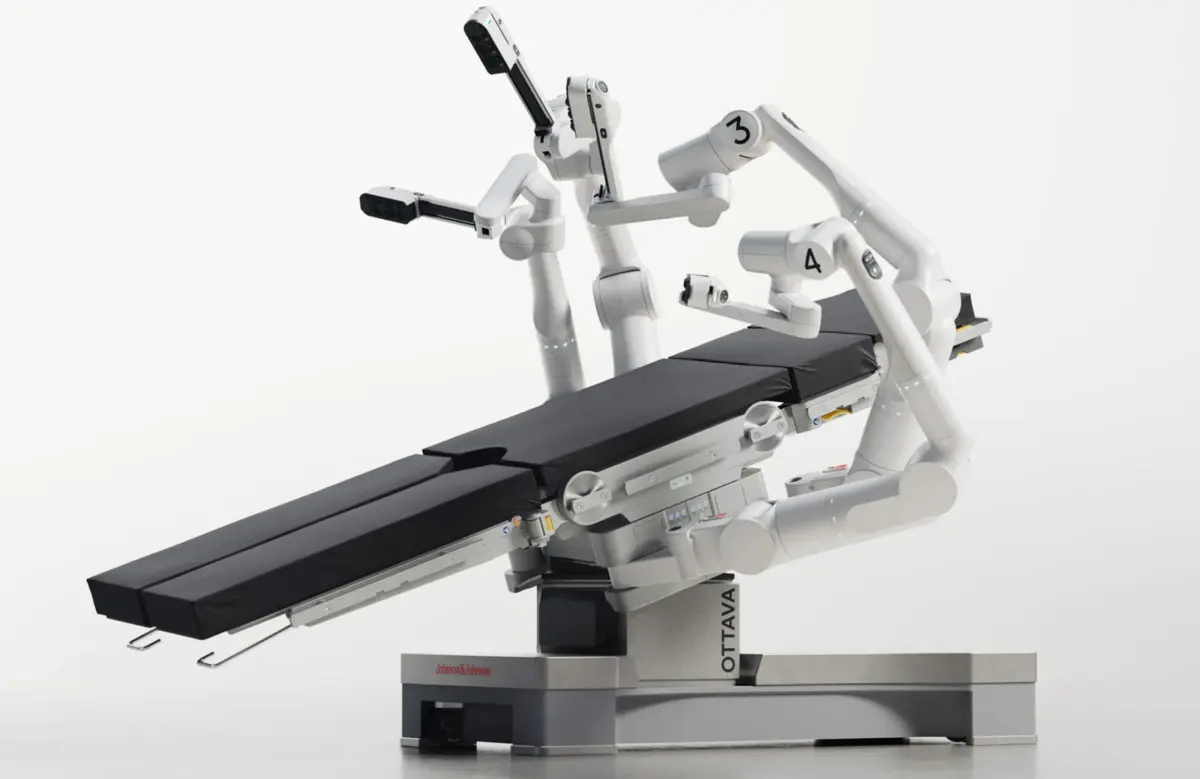
Traditional robotic-assisted surgery (RAS) systems typically rely on sprawling boom-and-cart architectures that demand substantial floor space, require complex maneuvering during clinical workflows, and present logistical challenges within already cramped surgical environments. Ottava radically departs from this paradigm. By engineering its four robotic arms directly into the operating room table itself—allowing them to be completely tucked away beneath the surface when not in use—Johnson & Johnson MedTech has successfully eliminated the traditional physical footprint barriers of soft-tissue robotics.
According to company specifications, this novel robot-in-table architecture occupies 30% to 50% less operational footprint than legacy boom-and-cart competitors. Beyond mere space-saving metrics, Ottava has been holistically designed to alleviate common clinical friction points. From its advanced, automated multi-axis positioning mechanics to completely reimagined instrumentation—including purpose-built two-in-one needle drivers and high-precision monopolar scissors—Ottava seeks to standardize surgical precision, elevate procedural efficiency, and integrate seamlessly into the broader digital health ecosystem via J&J’s proprietary Polyphonic platform.

Detailed Chronology and Engineering Evolution
The journey of Johnson & Johnson MedTech toward the commercialization of Ottava has been defined by persistent technological ambition, strategic adaptation, and engineering resilience.
- The Vision for Table Integration: For years, industry analysts recognized that the physical constraints of cart-based robotic systems were a primary bottleneck for hospital adoption. Operating rooms are high-density hubs where anesthesiology equipment, imaging machinery, surgical staff, and multiple device carts vie for precious square footage. J&J’s foundational concept for Ottava was to solve this spatial dilemma by hiding the technology in plain sight—integrating the core robotics directly into the surgical table architecture.
- Overcoming Engineering Hurdles: Designing a table-integrated system that maintains the dexterity, payload capacity, and precision required for delicate soft-tissue procedures required overcoming massive mechanical hurdles. The system’s four robotic arms had to be powerful enough to execute complex internal maneuvers while remaining compact enough to stow entirely underneath the surgical mattress without interfering with standard table articulations, patient positioning, or imaging equipment access.
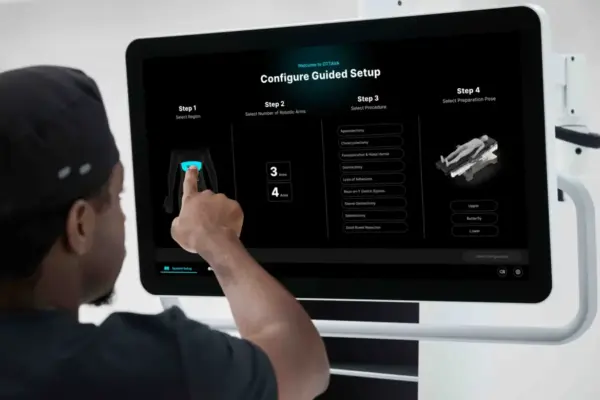
- The Software-Driven Infrastructure: To bring this vision to life, J&J deployed sophisticated software, high-torque micro-motors, and an array of intelligent sensors. These components work in absolute synchronization. At the push of a button, the system’s four arms fluidly transition from their stowed positions beneath the table into predefined, precise procedural configurations. This automation drastically curtails setup and breakdown times, removing variability between cases.
- Regulatory Clearance and Public Unveiling: Following exhaustive preclinical validation and rigorous clinical evaluation, the FDA granted de novo authorization to the platform. Capitalizing on this regulatory green light, J&J MedTech formally pulled back the curtain on Ottava, presenting a fully realized clinical platform ready to challenge legacy systems in real-world hospital environments.
Supporting Context & Metrics: Reimagining Instrumentation and Ergonomics
Johnson & Johnson MedTech’s approach to the Ottava system extended far beyond the structural table design. Recognizing that the success of any robotic platform relies heavily on the tactile experience of the operating surgeon, the company undertook an extensive data-gathering initiative, surveying surgeons regarding the most persistent pain points in traditional robotic operations. The resulting innovations address two of the most pervasive frustrations in soft-tissue surgery: suture management and sharp dissection.
1. Solving the Inadvertent Suture Cut Dilemma
Data gathered by J&J revealed a staggering statistic: 83% of surveyed surgeons reported experiencing at least one inadvertent suture cut per month during their robotic-assisted procedures. This common error can cause procedural delays, compromise stitch integrity, and increase intraoperative stress.

In response, J&J engineered a proprietary two-in-one needle driver. This advanced instrument features a surgeon-activated dual-mode functionality, offering distinct "cut only" and "suture only" operational states. By separating these functions natively within the digital controls, the system effectively mitigates the risk of accidental suture transection, protecting surgical momentum and patient outcomes.
2. Eliminating Blade Dullness in Monopolar Scissors
Sharp dissection efficiency is another critical factor in soft-tissue procedures. J&J’s baseline surveys uncovered an even more widespread issue: 98% of surveyed surgeons reported encountering dull or poorly cutting monopolar scissors, with 30% experiencing this impairment "all or most of the time" during conventional procedures.
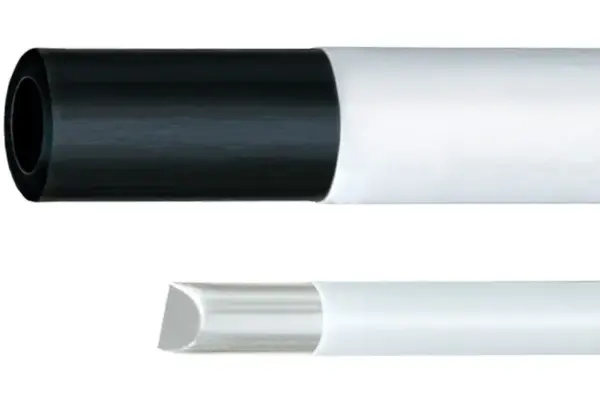
To resolve this, Ottava features a patented scissor architecture engineered to maintain absolute blade alignment. Even when surgeons execute delicate, high-precision maneuvers—such as taking minute tissue bites using the distal one-third of the jaw—the blades deliver a consistent, complete, and reliable cut throughout the entire lifecycle of the instrument.

3. Ergonomic Mastery at the Surgeon Console
Surgeon fatigue is a silent adversary in lengthy, complex laparoscopic and robotic interventions. The Ottava surgeon console was designed from the ground up to prioritize human factors engineering:
- Upright Posture Maintenance: Unlike legacy consoles that require hunched postures, Ottava allows surgeons to sit fully upright while maintaining unobstructed access to the complete digital workspace.
- Strain Reduction: The optical and physical controls were meticulously calibrated to minimize chronic eye, neck, and shoulder strain during multi-hour operations.
- Personalized Profiles: Surgeons can save their exact ergonomic preferences, camera settings, and instrument sensitivities to a cloud-linked profile. Upon logging into any Ottava console, the system automatically reconfigures to match the individual physician’s specifications.
4. Digital Integration via the Polyphonic Ecosystem
Ottava does not operate in a vacuum. Mirroring the connectivity seen in J&J’s Monarch platform for robotic-assisted bronchoscopy, Ottava integrates directly with the Polyphonic digital ecosystem. This cloud-enabled software layer facilitates comprehensive procedure data collection, institutional training modules, remote clinical collaboration, and advanced clinical research initiatives, empowering hospital networks to analyze performance metrics and continually refine surgical protocols.
Official Statements and Industry Perspective
The commercial rollout of Ottava represents a defining moment for Johnson & Johnson MedTech and validates the company’s long-term strategic investments in digital surgery.

Reflecting on the development cycle and the circuitous path of medtech innovation, leadership emphasized that technological breakthroughs rarely follow a linear trajectory. Crafting a completely novel table-integrated architecture required defying conventional industry wisdom and pushing the boundaries of electromechanical engineering. Company executives noted that the platform’s launch is a testament to the perseverance of engineering teams who spent years refining the balance between mechanical sturdiness, spatial minimalism, and clinical intuition.
Furthermore, industry analysts have pointed out that Ottava enters the market at a fascinating inflection point for soft-tissue surgical robotics. With competitors continually rolling out updated architectures—such as Intuitive’s latest-generation da Vinci 5 featuring advanced force-feedback haptics, and Medtronic’s Hugo robotic system positioning itself as a modular alternative—healthcare providers now have access to a rich, highly differentiated spectrum of robotic technologies.
By targeting general surgical procedures out of the gate—including complex interventions like Roux-en-Y gastric bypass, gastrectomy, cholecystectomy, splenectomy, gastric sleeve, small bowel resection, appendectomy, lysis of adhesions, fundoplication, and hiatal hernia repair—Ottava positions itself directly within the highest-volume service lines in modern hospitals.

Future Outlook: The Operating Room of the Future
As Johnson & Johnson MedTech prepares for the widespread commercial deployment of Ottava, the broader implications for hospital capital expenditure and OR design are profound.
The spatial efficiency offered by Ottava’s table-integrated architecture addresses one of the most acute financial and operational challenges facing healthcare systems today: operating room utilization and square-footage monetization. By reclaiming 30% to 50% of the space traditionally dominated by robotic equipment carts, hospitals can maintain cleaner, less congested sterile fields, streamline staff movement, and potentially accommodate additional specialized equipment without expanding physical infrastructure.
Moreover, as smart OR initiatives gather momentum, platforms like Ottava—interconnected through ecosystems like Polyphonic and complemented by advanced energy systems such as J&J’s Dualto Energy System—point unmistakably toward the future of data-driven surgery. In this future state, robotics will no longer be viewed merely as mechanical extensions of the surgeon’s hands, but as intelligent, data-gathering nodes that actively assist in decision-making, reduce variability, and enhance patient safety across every phase of care.

The arrival of Ottava is not just the introduction of a new medical device; it is a clear signal that the next era of surgical robotics has officially begun.