









Executive Overview
For millennia, the oceans, seas, and rivers of the world have served as the lifeblood of human civilization, facilitating trade, cultural exchange, and exploration. Yet, the vessels that braved these unpredictable waters faced a relentless enemy: the marine environment. From destructive microorganisms and voracious shipworms to the corrosive, erosive properties of salt water, wooden hulls were subjected to constant degradation.
To combat these destructive forces, ancient shipwrights developed sophisticated waterproofing and protective technologies. Ironically, despite the profound historical significance of these naval innovations, researchers until recently paid comparatively little attention to the non-wood organic materials utilized in ancient shipbuilding. Waterproofing compounds, in particular, remained notably understudied within maritime archaeology, leaving a significant gap in our understanding of ancient seafaring capabilities.
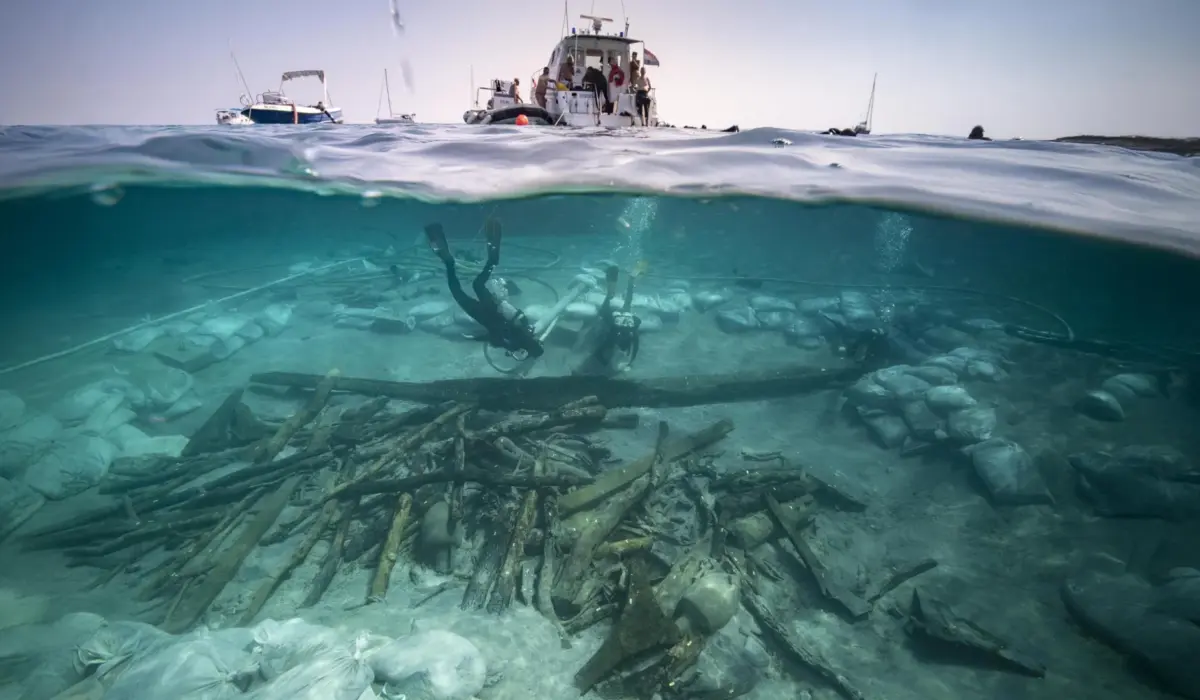
This long-standing knowledge gap is now being systematically addressed by a groundbreaking international study published in the journal Frontiers in Materials. An interdisciplinary team of researchers from France and Croatia successfully analyzed the protective chemical coatings of the Ilovik-Paržine 1, a Roman Republic shipwreck that sank approximately 2,200 years ago off the modern-day coast of Croatia.
By combining cutting-edge molecular fingerprinting with palynology (the study of fossilized pollen), the research team mapped out not only the exact chemical recipes used to preserve the ship’s hull, but also reconstructed the surrounding ancient environments where these materials were manufactured and applied. The findings reveal a complex history of construction, maintenance, and repeated repairs across the Adriatic and Mediterranean basins, offering a rare, microscopic look into the sophisticated operational logistics of ancient navies and merchant fleets.
Detailed Chronology & Investigative Methodology
The Discovery of Ilovik-Paržine 1
The journey of this scientific revelation began beneath the waves in 2016, with the discovery of the Ilovik-Paržine 1 shipwreck. Resting off the coast of Croatia, the ancient vessel quickly became a focal point for underwater archaeologists. Since its initial discovery, both the structural remains of the ship and its diverse cargo have been subjected to rigorous, multi-faceted scientific investigations.
However, the 2016–present investigations achieved a historic milestone by becoming the first study of its kind to integrate advanced molecular analysis with high-resolution pollen tracking on ancient ship coatings. This synergy of chemistry and botany bridged a critical divide between the macro-architecture of the ship and its micro-environmental history.
The Collaborative Effort
The scope and complexity of the Ilovik-Paržine 1 investigation demanded a high degree of international and institutional collaboration. The research was spearheaded by a partnership between:
- The Department for Underwater Archaeology of the Croatian Conservation Institute, which provided regional expertise, artifact recovery, and foundational archaeological context.
- The ‘ADRIBOATS’ program of the Centre Camille Jullian at Aix-Marseille University (France), an initiative dedicated to unravelling the maritime trade networks and shipbuilding traditions of the Adriatic Sea.
- The Laboratory of Mass Spectrometry of Interactions and Systems in Strasbourg (France), which deployed advanced analytical machinery to decode the molecular architecture of centuries-old organic residues.
Analytical Breakdown: From Mass Spectrometry to Palynology
To uncover the secrets locked inside the ship’s adhesive coatings, the research team implemented a rigorous, multi-tiered testing protocol on 10 distinct coating samples harvested from various sections of the hull.
- Structural and Molecular Screening: The team utilized mass spectrometry—a powerful analytical technique capable of identifying and quantifying unknown chemical substances within complex organic mixtures. By vaporizing and ionizing the sample components, the researchers could read their unique mass-to-charge "fingerprints."
- Molecular Fingerprinting of Resins: The mass spectrometry results revealed that every single sample was overwhelmingly dominated by heated coniferous resin or coniferous tar, universally recognized in antiquity as "pitch." This sticky, hydrophobic substance formed the baseline shield of the Roman hull.
- The Zopissa Discovery: Among the 10 samples, one exhibited a distinctly unique formulation. Rather than pure pine pitch, it contained a calculated, homogeneous blend of pine tar and beeswax. This specific mixture aligns with historical descriptions recorded by classical writers of a substance known to Greek and Roman shipbuilders as zopissa.
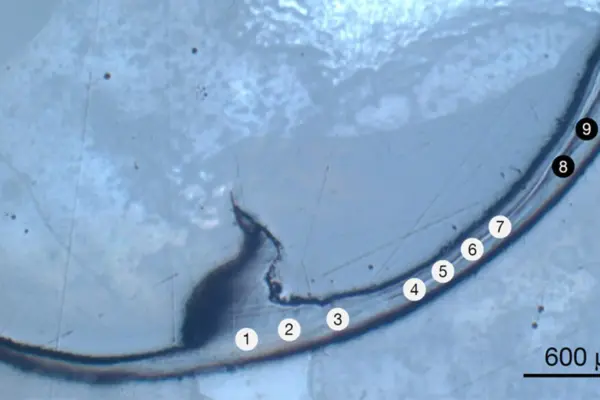
- Palynological Extraction (Pollen Analysis): Because raw and heated pitch is inherently sticky, it acts as a passive ecological trap. As the tar was boiled, prepared, and applied in coastal shipyards, it naturally captured airborne pollen grains from the immediate vicinity. These microscopic botanical fossils were trapped and hermetically sealed within the viscous matrix for over two millennia. By isolating this pollen and measuring relative taxa abundance, the researchers essentially unlocked a geographic and environmental snapshot of the shipyards where the vessel was built or repaired.
Supporting Context & Metrics: Decoding the Organic Matrix
The Chemistry of Ancient Seaworthiness
Wood alone cannot survive the relentless attack of marine borers like Teredo navalis (the naval shipworm) or the rotting effects of constant moisture. Ancient shipwrights combated this through the heavy application of wood tars, pitches, and bitumens.
Coniferous pitch—derived by the destructive distillation or burning of pine wood—creates a thick, water-repellent barrier that seals the wooden planks (strakes) and prevents water infiltration. However, pure pitch can become brittle when exposed to cold water or excessive structural flexing.
The identification of zopissa (the tar-and-beeswax mixture) on the Ilovik-Paržine 1 highlights advanced technological nuance in Roman-era shipbuilding. According to classical maritime accounts, beeswax served as a vital plasticizer. When integrated into pine pitch, beeswax significantly improved the adhesive’s flexibility, lowered its melting point for easier hot-application, and enhanced its overall resistance to salt-water degradation.
The Ecological Map: Pollen as a Geographic GPS
The extraction of fossilized pollen grains from the sticky pitch samples provided an unexpected geographical tracking system. The variety of pollen discovered in the coatings pointed to a surprisingly diverse array of micro-climates and floral zones:
- Mediterranean and Adriatic Lowlands: Researchers identified significant concentrations of pollen from holly oak (Quercus ilex), pine trees, and matorral—a classic Mediterranean shrubland biome characterized by the presence of olive (Olea) and hazel (Corylus) trees.
- Riverbanks and Seashores: The presence of alder (Alnus) and ash (Fraxinus) pollen signaled vegetation typical of damp riparian zones, river deltas, and seashores, matching the geography of coastal shipbuilding hubs.
- Mountainous Terrain: Small, yet critical, amounts of fir (Abies) and beech (Fagus) pollen were recovered. These species thrive exclusively in high-altitude, mountainous environments. Their presence within the pitch provided a smoking gun for researchers, as these specific mountain ranges lie in close proximity to the north-eastern Adriatic coast—specifically the rugged terrain of Istria and Dalmatia, where the dramatic Dinaric Alps drop sharply into the sea.
Official Statements & Expert Insights
The scientific significance of the findings has reverberated throughout the international archaeological community, offering fresh perspectives on ancient craft production and logistics.
Dr. Armelle Charrié, an archaeometrist at the Laboratory of Mass Spectrometry of Interactions and Systems in Strasbourg and lead author of the study, emphasized the historical oversight regarding organic materials in archaeology:
"In archaeology, little attention is paid to organic waterproofing materials. Yet they are essential for navigation at sea or on rivers and are true witnesses of past naval technologies," Dr. Charrié stated. "Studying the coatings, we found two different kinds on this vessel: one made of pine tar, also called pitch, and the other of a mixture of pine tar and beeswax. Analysis of pollen in the coating made it possible to identify the plant taxa present in the immediate environment during the construction or repairs of the ship."
Dr. Charrié further elaborated on how these organic signatures reflect deeply rooted regional traditions that survived across generations:
"Some regions throughout the Adriatic have particular characteristics that led local populations to develop a specific shipbuilding style. Only studies like ours offer an overview of these traditions which bear witness to genuine know-how and diverse traditions."
Addressing the logistical realities of maintaining an ancient fleet across open waters, Dr. Charrié noted the elegance of combining chemical and botanical methodologies:
"While it seems obvious that ships sailing long distances need repairs, it’s simply not easy to demonstrate this. Pollen has been very useful in identifying different coatings where the molecular profiles were identical."
Technical Deep-Dive: Evidence of Repeated Repairs Across the Adriatic
Beyond identifying the chemical makeup of the coatings, the detailed mapping of the 10 samples yielded structural proof of a complex maintenance lifecycle.
A Patchwork of Maintenance
When the researchers compared the molecular profiles and batch distributions of the coatings across different sections of the hull, a distinct spatial pattern emerged:
- The stern and central sections of the vessel were covered with a uniform, homogenous batch of material, suggesting a single major application phase.
- In stark contrast, the bow (front) of the ship exhibited three distinct coating batches applied sequentially over time.
This uneven distribution of coatings provides definitive archaeological evidence that the Ilovik-Paržine 1 was subjected to repeated, localized repairs throughout its operational life. Because the bow of a ship bears the brunt of hydrodynamic resistance, wave impact, and collision risks in shallow, rocky harbors, it naturally required more frequent maintenance than the protected midsection.
Tracing the Ship’s Itinerary
By correlating these multi-phase coating batches with the pollen signatures embedded within them, researchers began to reconstruct the geographic itinerary of the ship’s maintenance cycle:
- Initial Construction in Southern Italy: Previous petrographic and typological research conducted on the ship’s ballast stones pointed compellingly toward Brundisium (modern-day Brindisi) on the south-eastern coast of Italy as the original birthplace of the vessel. The new pollen evidence corroborates this, indicating that some of the initial coating batches share botanical affinities with southern Italian flora.
- Subsequent Repairs Along the Adriatic Coast: As the ship continued its commercial voyages northward into the Adriatic Sea, it inevitably suffered wear and tear. The detection of distinct high-altitude pollen signatures (such as fir and beech) indicates that later maintenance work was conducted along the north-eastern Adriatic coast—precisely in the geographic region where the shipwreck ultimately met its end.
Future Outlook & Broader Implications
The publication of this study in Frontiers in Materials marks a pivotal turning point for maritime archaeology. By demonstrating that organic residues like pitch and beeswax can be systematically "read" like historical documents, the research opens exciting new avenues for future investigation.
1. Re-evaluating Museum Collections
Thousands of ancient ship timbers recovered over the past century sit in museum basements and conservation tanks worldwide. Many of these artifacts still retain trace amounts of dark, pitchy coatings that were previously ignored due to the analytical limitations of past decades. The success of the Ilovik-Paržine 1 study provides a mandate for researchers to revisit these collections, applying mass spectrometry and palynology to unearth hidden trade routes and manufacturing techniques.
2. Mapping Ancient Supply Chains
The ability to trace the geographic origin of waterproofing pitch offers a revolutionary tool for tracking ancient commercial networks. While amphorae (wine and oil jars) and metal ingots have traditionally been used to map trade routes, these inorganic goods often represent only the cargo, not the ship itself. By analyzing the pitch on the hull, archaeologists can now track the economic networks of the shipbuilders, revealing where navies and merchants sourced critical industrial supplies like timber, resin, and tar.
3. Broadening Interdisciplinary Horizons
As analytical chemistry, botany, and underwater archaeology continue to converge, our understanding of antiquity grows increasingly sophisticated. The silent testimony of microscopic pollen grains trapped in 2,200-year-old sticky pitch proves that even the most mundane, utilitarian aspects of ancient technology can yield profound historical insights. As researchers apply these advanced protocols to other wrecks across the Mediterranean, Black Sea, and beyond, the full scope of ancient maritime engineering is finally stepping out of the shadows of history and into the clear light of scientific precision.