









Executive Overview
The evolutionary history of Australia’s iconic marsupials has long been viewed through a relatively straightforward lens: a solitary foundational lineage traversed the ancient southern supercontinent of Gondwana, crossed from South America through Antarctica, and arrived in Australia some 55 million years ago. Once isolated on the drifting continent, this single ancestral stock supposedly radiated outward, giving rise to the astonishing modern diversity of over 160 species that populate the continent today—from alpine, thumb-sized mountain pygmy-possums to subterranean, blind marsupial moles that navigate the red sands of the interior.
However, a groundbreaking paleontological discovery is shattering this tidy narrative. In a newly published study in the Journal of Paleontology, researchers from the University of New South Wales (UNSW) have unveiled three newly identified extinct mammal species. These ancient creatures belong to a completely unrecognized, long-lost branch of the marsupial family tree.
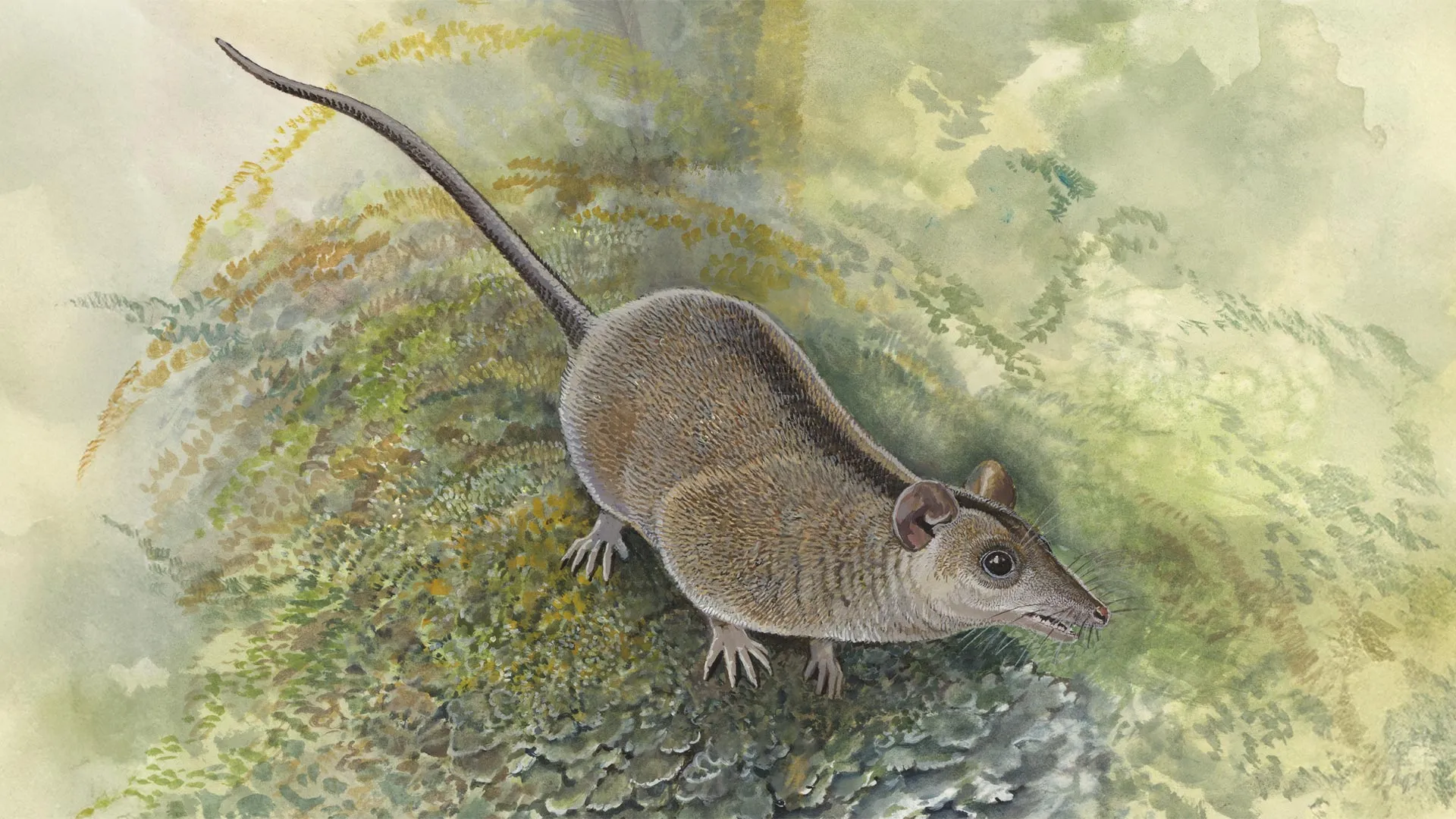
Led by UNSW paleontologist Dr. Tim Churchill, the research team proposes the establishment of an entirely new mammalian order: Keeunamorphia. Spanning a staggering 35-million-year timeline, these tiny, insect-eating forest dwellers persisted across northern Queensland before vanishing roughly 15 million years ago. More significantly, Dr. Churchill’s phylogenetic analysis suggests that Keeunamorphia may represent the most ancient lineage of all Australian marsupials, potentially serving as the early ancestor of all modern Australian carnivorous marsupials.
This revelation fundamentally challenges the prevailing consensus regarding how Australian mammals evolved. Rather than a singular lineage dominating the continent’s early stages, Australia’s prehistoric ecosystems appear to have been swarming with diverse, bizarre, and primitive marsupial-like lineages long before modern groups established dominance. As researchers pore over minute fossilized teeth extracted from the world-renowned Riversleigh deposits, they are forced to confront an intricate, messy, and infinitely more fascinating evolutionary puzzle.
Detailed Chronology
To understand the magnitude of the Keeunamorphia discovery, scientists must trace a timeline spanning tens of millions of years, navigating massive geological shifts, climatic transformations, and vast gaps in the fossil record.
1. The Gondwanan Transit (~55 Million Years Ago)
Following the Cretaceous-Paleogene extinction event that wiped out the non-avian dinosaurs, mammalian evolution accelerated globally. Around 55 million years ago, early marsupials made a pivotal geographic leap. Tracing a pathway through the cool, temperate forests of what is now the Antarctic landbridge—which was still physically connected to South America and Australia as part of the Gondwana supercontinent—these primitive mammals stepped foot onto the Australian continent.
For decades, the standard scientific model dictated that a single homogenous group made this crossing. The descendants of these pioneers allegedly stayed behind as the continents uncoupled and drifted northward, slowly evolving into the five recognized orders of the superorder Australidelphia. The discovery of Keeunamorphia, however, suggests that multiple distinct, competing lineages may have made the journey or branched off almost immediately upon arrival.
2. The Reign of Keeunamorphia (~50 to 15 Million Years Ago)
According to Dr. Churchill’s evolutionary models, early members of the Keeunamorphia order diverged shortly after the initial marsupial arrival in Australia. Weighing between 25 and 200 grams—roughly the size of modern mice to small rats—these primitive insectivores quietly carved out a niche for themselves in the dense, wet rainforests of northern Queensland.
For roughly 35 million years, these creatures successfully coexisted alongside other emerging marsupial groups. While other branches of the family tree underwent radical evolutionary shifts, the keeunamorphs maintained a more primitive physical blueprint, successfully weathering massive continental isolation without undergoing rapid morphological modernization. They were the silent contemporaries of Australia’s early mammalian pioneers, persisting through an epoch of stable, closed-canopy rainforest ecosystems.
3. The Riversleigh Preservation (~18 Million Years Ago)
A crucial chapter of this newly uncovered history is preserved in the limestones of the Riversleigh World Heritage Area in northwestern Queensland. Approximately 18 million years ago, individuals belonging to the three newly described Keeunamorphia species died and their remains were washed into shallow, mineral-rich cave pools.
The unique chemical environment of these ancient pools acted as a natural trap and preservative, calcifying fragments of bone, jaws, and teeth in exquisite detail. Because complete mammalian skeletons are exceptionally rare in the Australian fossil record, these isolated dental fragments would become the Rosetta Stone for Dr. Churchill’s research team, providing the morphological data necessary to reconstruct an extinct lineage.
4. Climate Shift and Extinction (~15 to 14 Million Years Ago)
The curtain finally fell on Keeunamorphia approximately 15 million years ago, driven by profound global and regional climatic changes. Around 14 million years ago, Australia experienced a significant cooling and drying trend.
The lush, closed-canopy rainforests that had sustained the insect-eating keeunamorphs for millions of years began to fragment and recede. In their place, open woodlands, expansive grasslands, and fluctuating lake systems took root. Unable to adapt to the shifting flora and the changing insect populations that accompanied the drying continent, the last of the keeunamorphs quietly slipped into extinction, leaving behind only microscopic traces in the limestone archives of Riversleigh.
Supporting Context & Metrics
The discovery of the Keeunamorphia order was not made through the excavation of towering prehistoric megafauna, but rather through meticulous micro-paleontology. The physical and statistical metrics defining this discovery underscore the precision required to decode deep evolutionary history:
- 55 Million Years: The approximate timeframe for the initial arrival of ancestral marsupials in Australia via the Antarctic landbridge.
- 35 Million Years: The estimated duration of the Keeunamorphia lineage, highlighting its remarkable evolutionary persistence across major geological epochs.
- 25 to 200 Grams: The calculated body mass range for species within the newly defined order, categorizing them securely as small, forest-dwelling insectivores.
- 18 Million Years Ago: The geological age of the specific fossil specimens recovered from the Riversleigh World Heritage Area in Queensland.
- 15 Million Years Ago: The approximate era of the final extinction of Keeunamorphia, coinciding with the drying and cooling of the Australian continent.
- Sixth Order: The formal taxonomic classification proposed by Dr. Churchill, adding Keeunamorphia as a distinct group alongside the five previously recognized orders of the superorder Australidelphia.
- 20-Year Gap: A persistent temporal void in the early Australian marsupial fossil record that continues to obscure many intermediate transitional species.
Methodological Innovation: Bridging Fossils and Genetics
Because complete fossil specimens of early Australian mammals are exceptionally scarce, the UNSW research team had to pioneer advanced analytical frameworks. By employing a dual methodology, researchers combined morphological measurements of dental micro-structures—specifically the arrangement of cusps and shearing crests on fossilized molars—with Bayesian phylogenetic algorithms incorporating modern genetic data from living marsupials.
This computational modeling allowed the team to construct a comprehensive evolutionary tree that not only mapped structural relationships among diverse species but also estimated statistical timelines for when individual branches diverged millions of years ago. The dental architecture of the new fossils bore a striking, unexpected resemblance to Djarthia murgonensis, an enigmatic fossil marsupial from Murgon dating back 35 million years earlier, signaling a continuous, highly specialized line of descent completely separate from mainstream modern groups.
Official Statements
The implications of this discovery extend far beyond regional taxonomy, challenging foundational assumptions held by the global paleontological community. Highlighting the complexity of the finding, lead researcher Dr. Tim Churchill emphasized the chaotic nature of prehistoric ecosystems:
"Not only is it a new order, it could also be the most ancient lineage of all Australian marsupials," states UNSW paleontologist Dr. Tim Churchill. "It may be the early ancestor of all our marsupial carnivores."
Elaborating on the divergence of these ancient mammals from the standard evolutionary timeline, Dr. Churchill points out that the conventional view of a singular ancestral root drastically oversimplifies prehistoric reality:
"Whatever these things were, they seemed to be primitive compared to other marsupials at the time, and they seem to be doing their own thing and surviving well enough alongside them."
Reflecting on the broader picture of Gondwanan fragmentation and mammalian radiation, Dr. Churchill cautions against viewing evolutionary history as a linear tree, offering instead a picture of a continent teeming with biological experimentation:
"Evolutionary history is a lot more complex than just one group leading to all of Australia’s marsupials after being left behind when the continent broke off from Antarctica," Dr. Churchill explains. "It’s more likely that when Australia was part of Gondwana it was swarming with all sorts of bizarre, primitive marsupial-like things, and that several of them survived and led to our modern lineages."
Future Outlook
The identification of Keeunamorphia opens a Pandora’s box of questions for evolutionary biologists and paleontologists alike. If a primitive, distinct order of marsupials managed to branch off almost immediately upon the group’s arrival in Australia and persist for 35 million years while remaining morphologically conservative, how many other ghost lineages are currently hiding within the continent’s extensive fossil gaps?
The discovery underscores the critical importance of ongoing excavations at sites like Riversleigh, where micro-fossil screening continues to yield transformative data. However, significant hurdles remain. A nearly 20-million-year gap in the early Australian fossil record continues to obscure the critical transitional phases between the arrival of the first Gondwanan migrants and the radiation of modern groups.
Future research will likely focus on targeted field expeditions aiming to unearth older sedimentary deposits from the early Eocene and Oligocene epochs. Furthermore, as imaging technologies such as high-resolution synchrotron micro-CT scanning improve, scientists can peer inside fragile fossilized jawbones and teeth without destroying them, extracting microscopic anatomical data that may link isolated teeth to more complete skeletal frameworks.
Ultimately, the story of Australia’s marsupials is no longer a simple narrative of a single pioneer family finding empty ecological real estate. It is a complex, sprawling epic of immigration, fierce competition, hidden diversity, and resilience in the face of radical climate change. Every microscopic tooth extracted from the ancient limestones of Queensland adds a vital brushstroke to this canvas, proving that Australia’s prehistoric past is far richer, stranger, and more wondrous than science ever imagined.