Bridging the Diagnostic Gap: How a Student-Led Simulation Series is Redefining Pathology Education in Modern Medical Curricula
Executive Overview
In the landscape of modern medical education, pathology is frequently described as an "invisible specialty." Despite its foundational role in clinical decision-making—guiding up to 70% of all medical decisions—dedicated pathology exposure has steadily declined in medical school curricula nationwide. As schools transition toward highly integrated, organ-system-based models, pre-clerkship students often lose direct interaction with pathologists, leaving them with a limited understanding of how diagnostic laboratories operate and how pathologists contribute to patient care.
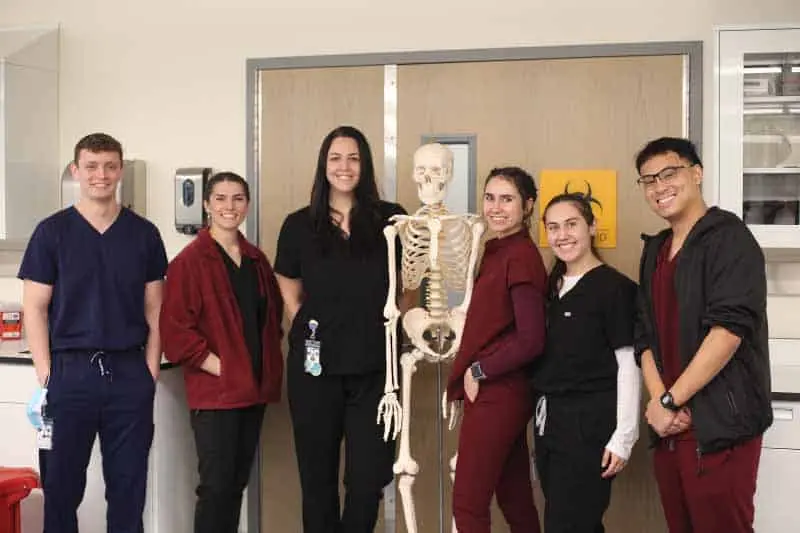
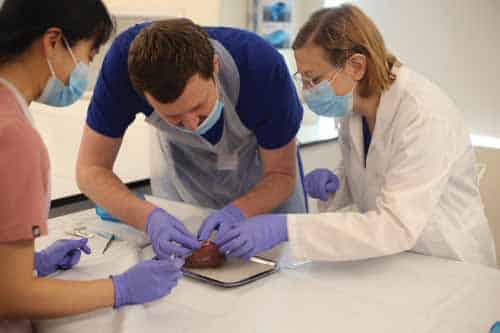
To address this educational blind spot, a group of forward-thinking medical students at the California University of Science and Medicine (CUSM) in Colton, California, designed and implemented a novel, peer-led solution. Established by the cofounders of the CUSM Pathology Student Interest Group (PathSIG)—Sarah Galloway, Ella Martinetto, and Anthony Mamaril—the initiative took the form of a highly interactive, six-part annual simulation workshop series. Targeting first- and second-year medical students, the program utilizes hands-on, role-playing, and kinesthetic exercises to demystify the discipline.
The pedagogical and longitudinal outcomes of this initiative, recently published in the peer-reviewed journal Archives of Pathology & Laboratory Medicine (2026;150[7]:564–571), demonstrate that student-driven, low-cost simulations can significantly enhance pre-clerkship understanding of pathology. By bridging the gap between basic sciences and clinical practice, the series not only prepares future clinicians to collaborate more effectively with laboratory specialists but also provides a replicable, highly adaptable framework for institutions facing severe resource constraints.
Detailed Chronology: From Concept to Self-Sustaining Curriculum
Phase I: Conception and the Pilot Initiative (2022–2023)
The genesis of the workshop series began during the first year of medical school for Galloway, Martinetto, and Mamaril. Recognizing that many of their peers would navigate their entire undergraduate medical education without setting foot in a pathology lab, the trio sought a dynamic way to introduce the specialty. Galloway, who would later complete a prestigious post-sophomore fellowship in pathology at Stanford Medicine, proposed shifting away from traditional didactic lectures in favor of hands-on, simulation-based learning.
The founders met twice monthly to establish the educational objectives, design the initial modules, and secure institutional review board (IRB) approval to study the project’s efficacy. A key component of their early success was securing the mentorship of Helena Spartz, MD, PhD, then an associate professor of pathology in medical education and the faculty advisor for PathSIG at CUSM.
By late 2023, the team launched their pilot session. To maximize attendance among busy pre-clerkship students, they relied on strategic communication, using eye-catching flyers and utilizing catered lunches as an incentive.
Phase II: Expansion and Curriculum Standardization (2023–2024)
Following the success of the pilot, the leadership team expanded to include three additional PathSIG members: Ty Thompson, Julia Gonda, and Francesca Johnson. Together, the six-student cohort structured a comprehensive, six-part annual workshop series, with each session meticulously aligned with core organ systems and clinical subspecialties:
Cardiology (Led by Julia Gonda): Students performed a hands-on dissection of porcine hearts, pairing the physical anatomy with a clinical lecture focused on macroscopic cardiac pathology and congenital defects.
Gastroenterology: Designed as an active role-playing exercise, this workshop simulated a multidisciplinary tumor board for a colorectal cancer case. Students assumed the distinct professional roles of pathologist, general surgeon, medical oncologist, radiologist, gastroenterologist, and internist to debate and formulate a patient care plan.
Endocrinology: To introduce procedural skills, students utilized ultrasound guidance to perform fine-needle aspiration (FNA) biopsies on simulated thyroid phantoms containing hidden nodules.
Hematology: This session placed students in the role of transfusion medicine specialists. Participants reviewed mock clinical cases of acute blood transfusion reactions, identified the underlying immunological causes, and completed formal prevention assessments.
Dermatology: Students worked through the diagnostic pathway of a mock squamous cell carcinoma case, learning the clinical indications for biopsy and the processing of dermatopathological specimens.
Obstetrics-Gynecology (Presented by Sarah Galloway): As the sole two-hour module in the series, this comprehensive workshop walked students through the sequential stages of clinical and pathological care for a patient presenting with an ectopic pregnancy.
To ensure scientific rigor and clinical relevance, the student organizers partnered with board-certified pathologists from the nearby Arrowhead Regional Medical Center (CUSM’s clinical partner). At least one practicing pathologist attended each workshop, verifying the accuracy of the student-developed materials, answering complex clinical questions, and offering valuable professional networking opportunities.
Phase III: Institutionalization and Sustainability (2024–2026)
As the founding members transitioned into their clinical clerkships and specialized fellowships, they established a structured succession plan to pass leadership to incoming medical students. By 2026, the workshop series had achieved self-sustaining status, operating annually and cementing PathSIG as one of the most active and highly regarded student interest groups on the CUSM campus.
To evaluate the pedagogical impact of their curriculum, the PathSIG leaders conducted a robust longitudinal study during the 2023–2024 academic year. The findings, published in the Archives of Pathology & Laboratory Medicine, provide quantitative proof of the program’s success.
Study Demographics and Immediate Outcomes
The workshops attracted a total of 151 attendees over the course of the academic year. Out of these, 111 matched pre- and post-workshop surveys were completed. Because many students chose to attend multiple sessions, these 111 completed surveys represented 67 unique pre-clerkship students—approximately 25% of the entire eligible student body at CUSM.
Metric Evaluated (Pre- vs. Post-Workshop)
Statistical Significance
Key Finding
Understanding of Pathologist Roles
Highly Significant ($p < 0.05$)
Marked improvement in identifying how pathologists contribute to the diagnostic pipeline.
Comprehension of Pathology as a Discipline
Highly Significant ($p < 0.05$)
Students reported increased confidence in interpreting basic pathology concepts for exams.
Pathology as an Immediate Career Choice
No Significant Difference
The short-term workshops did not immediately alter the students’ planned career specialties.
15-Month Longitudinal Follow-Up
To assess the long-term retention of these educational interventions, the researchers distributed a follow-up survey 15 months after the conclusion of the 2023–2024 series. The survey was sent to 54 eligible participants, yielding an exceptionally high response rate of 74% (40 out of 54 respondents).
Perceived Value:100% (40/40) of the longitudinal respondents agreed that the workshops successfully demonstrated how pathologists directly contribute to patient care.
Career Consideration: When asked if they were actively considering a career in pathology, the responses reflected the highly competitive and multi-factorial nature of specialty selection:
Agree: 2 respondents (5%)
Neutral: 14 respondents (35%)
Disagree: 14 respondents (35%)
Strongly Disagree: 10 respondents (25%)
Strongly Agree: 0 respondents (0%)
Clerkship Impact: Out of the 16 students who provided detailed qualitative feedback regarding how the workshops influenced their clinical rotations, 7 students (43.7%) explicitly stated that the simulations sparked or solidified their interest in the field, leading them to actively consider or apply for elective pathology rotations.
Financial and Resource Efficiency
One of the most remarkable aspects of the CUSM PathSIG model is its extreme cost-effectiveness. Galloway estimated the total annual cost of the six-part series at approximately $1,000.
Funding was secured through a combination of the local PathSIG budget and a prestigious Sparking Interest in Pathology Award from the College of American Pathologists (CAP) Foundation. By investing in durable, reusable simulation models—such as synthetic thyroid phantoms—the group minimized recurring annual expenses, making the curriculum highly viable for resource-constrained institutions.
Official Statements and Educational Philosophy
Reflecting on the success of the program, the creators and their faculty mentor emphasized that recruiting students into pathology residencies, while highly desirable, was never the sole metric of success.
"Exposure sparks curiosity and confidence to take action," noted Sarah Galloway, now a third-year medical student. "Many medical students graduate without an understanding of how pathologists contribute to patient care. This workshop series inspires some to further explore pathology and teaches others how to work well with their future pathology colleagues. And it’s a program that’s adaptable and practical to host at other institutions, including those with limited resources."
Galloway emphasized that the primary goal was clinical integration rather than aggressive recruitment:
"Choosing a specialty is such a multifactorial decision. We just wanted to provide meaningful exposure to enable informed career decisions rather than encourage a particular choice. Our primary objective was educational."
Dr. Helena Spartz, who guided the students through the design and IRB approval process before transitioning to her current role at Texas Tech University Health Sciences Center in El Paso, praised the student-driven nature of the project. "It was 100 percent student driven," Dr. Spartz stated. Addressing the career metrics, she added, "These are first-year medical students, and they don’t yet know what they want to do. I don’t feel that is a negative outcome as long as they become interested in and understanding of the roles of the pathologist."
Dr. Spartz highlighted that the lessons learned from the CUSM initiative are highly applicable to other campuses:
"Our goal is to demonstrate we can use a different set of resources at different institutions to roll out these workshops, as long as you have a lot of student interest, as long as the students are developing it, and as long as the students have a good feeling for what’s available and not available in terms of support."
Future Outlook: Replication, Optimization, and Addressing the Workforce Deficit
As medical schools continue to face a national shortage of board-certified pathologists, initiatives that demystify the laboratory are becoming increasingly vital. The future of the PathSIG workshop model is focused on two primary frontiers: curriculum optimization and multi-institutional replication.
Curriculum Enhancements and New Modules
Based on feedback from senior students returning from clinical rotations, the CUSM PathSIG organizers have identified key areas to expand and improve the workshops. Future iterations will focus on incorporating more complex, procedural tasks that simulate the daily workflow of surgical pathology:
Advanced Dermatology Integration: Developing realistic, multi-layered skin biopsy models that allow students to practice punch and shave biopsies before analyzing the mock histology.
Surgical Grossing Simulations: Creating a simulated breast cancer resection module to teach students the clinical importance of surgical margins, specimen orientation, and how to properly gross and ink specimens.
Replicating the Model at Texas Tech
The true test of the curriculum’s adaptability is currently underway at the Texas Tech University Health Sciences Center in El Paso. Dr. Spartz is actively working to replicate the workshop series, utilizing the lessons learned in California to tailor the program to a new institutional environment.
While Texas Tech offers a different array of clinical resources and departmental structures compared to CUSM, Dr. Spartz is committed to keeping the curriculum lean and inexpensive. "I’m trying to do it with as few resources as possible, or with as few new resources as possible, to keep it inexpensive," she explained. By doing so, she hopes to create a highly standardized, low-cost blueprint that can be adopted by any medical school in the country.
Ultimately, Dr. Spartz believes that by refining the curriculum and maintaining a strong student-led focus, the workshops can play a pivotal role in addressing the nationwide pathology workforce deficit. "I think we can get there," she concluded. "I think we can get more interest in the field, in the students at least doing an elective to explore pathology as a career, and maybe going into pathology. That was an original goal, and I think we can get there."
Through peer-to-peer education, clinical collaboration, and low-cost simulation, these medical students have proven that they do not need a massive institutional budget to reshape how future physicians view the critical field of pathology.