







Executive Overview
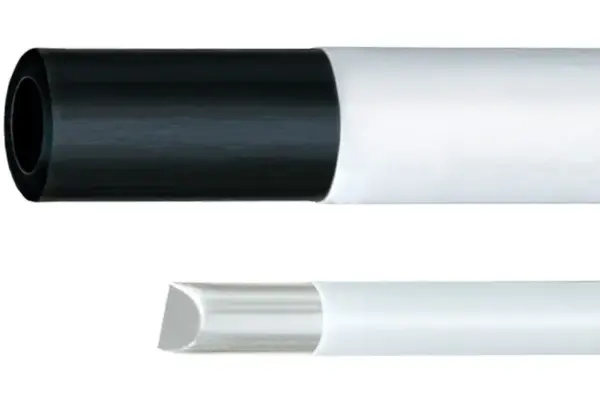
In a milestone development poised to reshape the landscape of medical device manufacturing, global industrial technology leader TE Connectivity has officially announced the introduction of an advanced, automated 3D printing process tailored specifically for catheter shafts. Developed out of the company’s state-of-the-art PROPELUS Prototype Center in Galway, Ireland, this breakthrough additive manufacturing technology is engineered to supplant the labor-intensive, costly, and predominantly manual assembly workflows that have long defined the medical catheter sector.
Catheters—indispensable tools in modern minimally invasive medicine—frequently demand complex structural configurations. To navigate tortuous vascular pathways and reach precise anatomical locations, these slender medical tubes often require multiple distinct polymer jacket sections, each engineered with unique flexibility characteristics along a single shaft length. Historically, achieving this variable rigidity required gluing, heat-bonding, or manually fusing distinct segments together in a tedious step-by-step process.
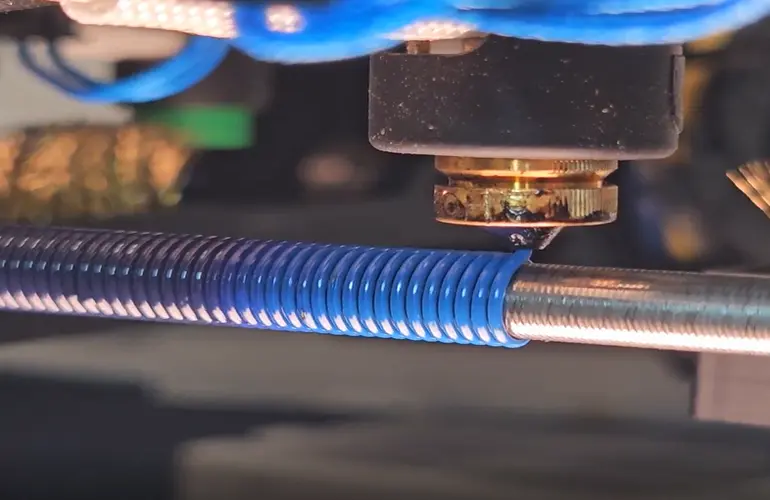
TE Connectivity’s newly commercialized automated 3D printing technique disrupts this paradigm. By applying precision polymer sections directly onto the catheter shafts during production, the technology achieves unprecedented manufacturing speed and consistency. Crucially, the resulting components retain the exact mechanical properties, material integrity, and visual aesthetics of traditional counterparts while eliminating the bottlenecks of legacy assembly methods. As medical device developers face mounting pressure to accelerate time-to-market and reduce production overhead, this innovation promises not only to streamline supply chains and lower costs, but also to unlock entirely new horizons in device design and patient care.
Detailed Chronology: The Path to Additive Manufacturing in MedTech
The Legacy of Manual Assembly
For decades, the manufacturing of medical-grade catheter shafts has relied heavily on artisanal, hands-on assembly techniques. While the industry has made monumental strides in materials science—developing advanced thermoplastics, specialized polyurethanes, and sophisticated block co-polymers—the actual fabrication of variable-flexibility shafts remained stubbornly anchored to manual labor.
Technicians and line operators routinely spliced together micro-tubular segments of varying durometers (hardness levels) to create a device that transitions from a stiff, pushable proximal end to a supple, flexible distal tip. This manual or semi-automated fusing process was fraught with challenges:
- High Labor Costs: Requiring intense manual dexterity and close visual inspection, the assembly floor demanded significant human capital.
- Variability and Scrap Rates: Human error during bonding could lead to structural weaknesses, inconsistent transitions, or structural failures during quality testing, driving up scrap rates.
- Design Limitations: Because traditional assembly relied on lining up prefabricated tubes, engineers were structurally constrained in how rapidly or intricately they could alter durometer profiles along a single axis.
The Genesis at the PROPELUS Prototype Center
Recognizing these systemic limitations, the Advanced Technology Group within TE Connectivity’s Medical business set out to reimagine the fabrication pipeline. Operating from the company’s PROPELUS Prototype Center in Galway, Ireland—a recognized hub for medical device innovation—a team of elite engineers and material scientists began exploring the viability of additive manufacturing (3D printing) for micro-scale medical tubing.
Unlike traditional 3D printing, which often struggles to match the strict regulatory compliance, biocompatibility, and microscopic tolerances demanded of implantable or vascular medical devices, TE’s team focused on developing an industrialized, repeatable, and scalable process. Over years of research, materials testing, and mechanical validation, the group successfully engineered a proprietary method to deposit polymer sections directly onto the catheter core.
The breakthrough culminated in the official rollout of the process, shifting the Galway facility from a pure prototyping sandbox into a vanguard for commercial-grade additive manufacturing in healthcare. By successfully bypassing the traditional multi-step assembly line, TE Connectivity has bridged the gap between rapid prototyping agility and high-volume industrial reliability.
Supporting Context & Metrics: The Mechanics and Market Impact of 3D-Printed Catheters
Engineering Precision: Materials, Mechanics, and Aesthetics
A primary hurdle in introducing disruptive manufacturing technologies to the medical device sector is overcoming regulatory and functional skepticism. Medical OEMs (Original Equipment Manufacturers) cannot afford deviations in performance when a device is navigating a patient’s coronary arteries or neurological pathways.
TE Connectivity’s new 3D printing process was meticulously validated to ensure it meets—and in many cases exceeds—the stringent standards of legacy production. The direct-application technique deposits polymer material with exactitude, ensuring that the transition zones between different flexibility segments are seamless.
- Mechanical Equivalency: Rigorous stress, torque, pushability, and kink-resistance testing have demonstrated that 3D-printed catheter shafts possess identical mechanical properties to those manufactured through traditional thermal bonding or reflow processes.
- Material Integrity: The process utilizes medical-grade polymers compatible with current clinical sterilizations and regulatory frameworks, ensuring zero compromise on biocompatibility.
- Visual Aesthetics: Despite the advanced digital layer-by-layer or direct-write deposition methods involved, the final shafts maintain the smooth surface finishes and clear visual characteristics required for clinical deployment.
Economic and Environmental Dimensions
Beyond mechanical parity, the integration of 3D printing introduces powerful economic and ecological advantages. Modern medical device supply chains are notoriously complex, often relying on multi-tier global sourcing for raw tubing, specialized connectors, and sub-assemblies.
By consolidating multiple manufacturing steps into a single, automated digital workflow, TE Connectivity is positioning its partners to realize dramatic savings:

- Cost Reduction: Removing manual touchpoints drastically lowers direct labor overhead and reduces the financial drag associated with high component scrap rates.
- Supply Chain Simplification: Digital manufacturing allows for on-demand adjustments and localized production scalability, shielding OEMs from sudden supply shocks and reducing warehouse inventory costs for diverse pre-fabricated tubing stock.
- Environmental Sustainability: Traditional catheter manufacturing often generates significant polymer waste during trimming, bonding, and defect disposal. Additive manufacturing is inherently more material-efficient, depositing only what is required for the final geometry, thereby shrinking the carbon and material footprint of medical production lines.
Official Statements: Industry Leadership Speaks
The introduction of this technology marks a strategic evolution for TE Connectivity, reinforcing its commitment to high-end industrial engineering and healthcare advancement.
Pat Duane, Senior Vice President and General Manager of TE Connectivity’s Medical business, emphasized the broader implications of the launch for the medical device industry at large:
"This work reflects TE’s continued focus on advancing manufacturing innovation to help our customers develop increasingly sophisticated minimally invasive medical devices. We believe additive manufacturing technologies have the potential to expand design possibilities, accelerate development, and support the future of catheter manufacturing."
Echoing these sentiments, Bernard McDermott, Medical Engineering Fellow at TE Connectivity, highlighted the transformative nature of the new process and its long-term industry footprint:
"This process, along with complementary disruptive processes in development, will result in a paradigm shift in catheter manufacturing for our customers. It has the potential to significantly reduce product costs, simplify supply chains, and have a positive environmental impact."
These remarks underscore a broader cultural shift within TE Connectivity: viewing manufacturing processes not merely as a means to an end, but as a core competitive differentiator that empowers medical innovators to push the boundaries of what is clinically possible.
Future Outlook: The Next Frontier in Minimally Invasive Device Architecture
Accelerating R&D and Design Iteration
In the fast-paced world of cardiovascular, neurovascular, and peripheral vascular interventions, speed-to-market can dictate a company’s commercial survival. Under traditional frameworks, designing a new catheter variant required commissioning custom extruded tubing, waiting weeks for delivery, and manually assembling prototypes. If a flexibility profile or tip stiffness was sub-optimal, the engineering team had to repeat the cycle.
TE Connectivity’s automated 3D printing process changes this dynamic entirely. Because the deposition parameters are controlled digitally, engineers can alter durometer profiles, segment lengths, and wall thicknesses via software adjustments. This capability allows TE’s engineering teams—and by extension, their medical device customers—to iterate designs in real time, dramatically shrinking the R&D cycle from months to days.
Unlocking Impossible Geometries
Perhaps the most exciting frontier opened by this technology is the potential for entirely new device architectures. Manual and semi-automated assembly methods imposed strict geometric limitations on catheter design; engineers were largely restricted to linear transitions of concentric tubular segments.
With additive manufacturing, the design envelope expands exponentially. Future catheter shafts could feature:
- Graduated, continuous flexibility gradients rather than abrupt stepped transitions, resulting in smoother force transmission and reduced vascular trauma.
- Embedded functional channels or helical reinforcement patterns printed directly into the shaft wall, optimizing torque response without increasing outer diameters.
- Patient-specific custom geometries, paving the way for personalized medicine where a catheter is digitally tailored to match the unique anatomical topography of an individual patient’s vascular anomalies.
A Connected Future
As TE Connectivity continues to integrate advanced manufacturing across its global footprint—supported by a workforce of over 90,000 employees, including 10,000 engineers operating in approximately 130 countries—the Galway launch serves as a powerful proof point of the company’s overarching mission.
By applying its deep expertise in connectivity, sensing, and advanced industrial processes to the medical sphere, TE is helping to ensure that next-generation minimally invasive therapies are not only more effective and affordable, but also capable of meeting the escalating demands of modern healthcare systems worldwide. As complementary disruptive processes emerge from TE’s research pipelines, the paradigm shift in catheter manufacturing is only just beginning.