






Executive Overview
Nature has long balanced a precarious knife-edge between healing and harm. Nowhere is this dynamic more pronounced than in the botanical world, where ancient survival mechanisms have birthed some of the most potent chemical structures known to science. Among these, the neurotoxic defenses of wolfsbane and larkspur stand out. Capable of inducing profound nerve damage, paralysis, and cardiac arrest at infinitesimal doses, these plants have cast a long, dark shadow over human history, featuring prominently in folklore as agents of assassination and lethal predation.
Yet, concealed within their complex cellular machinery lies an extraordinary pharmaceutical paradox. The very compounds that make these flora lethal also hold immense therapeutic promise. For centuries, researchers have suspected that derivatives of these toxic alkaloids could be harnessed to combat intractable pain, treat malaria, halt aggressive cancers, and formulate sustainable agricultural pesticides. However, unlocking this potential has been stymied by a formidable chemical roadblock: the sheer structural intricacy of the molecules involved has made laboratory synthesis nearly impossible.
Now, in a landmark scientific breakthrough, an international research collaborative bridging the Michigan State University (MSU) Hamberger Laboratory and Tomáš Pluskal’s group at the Czech Academy of Sciences has successfully cracked a major part of this chemical code. Published in the prestigious journal Molecular Plant, the team’s findings illuminate how wolfsbane (Aconitum) and larkspur (Delphinium) synthesize a class of complex structures known as diterpenoid alkaloids.
By tracking down the genetic assembly lines of these deadly plants and successfully transplanting their biochemical instructions into living tobacco biofactories, the researchers have manufactured atisinium—a key precursor in the diterpenoid alkaloid family—in a controlled setting. This monumental achievement not only sheds light on millions of years of evolutionary chemistry but also establishes a viable, sustainable pathway toward synthesizing novel, plant-inspired pharmaceuticals without relying on wild harvesting or intractable chemical synthesis.
Detailed Chronology of a Breakthrough
A Decades-Long Chemical Puzzle
The journey to decoding the synthesis of diterpenoid alkaloids spans nearly two centuries of frustration and fascination within the global scientific community. Diterpenoid alkaloids are hybrid molecules that combine structural motifs from two of the planet’s oldest and most expansive classes of plant metabolites. Their spatial architecture is notoriously convoluted, featuring cage-like hydrocarbon skeletons fused with nitrogen-containing rings.
The most famous of these compounds, aconitine—the primary neurotoxin found in wolfsbane—was first isolated and identified by chemists nearly 200 years ago. Despite the meteoric evolution of organic chemistry since the 19th century, synthetic chemists have repeatedly failed to construct aconitine and its close relatives from scratch in a laboratory. The sheer number of chiral centers, unstable intermediates, and stereochemical demands placed synthetic routes entirely out of reach.
For decades, the mechanisms by which plants effortlessly assembled these molecular masterpieces remained an impenetrable black box. Plants produce specialized metabolites not as primary sources of metabolic energy, but as evolutionary adaptations—chemical armor designed to deter herbivores, combat pathogens, and secure ecological dominance. Because these defensive molecules are typically synthesized in minuscule quantities and through slow, multi-step enzymatic pathways, identifying the precise genes responsible for their creation has proven exceptionally difficult.
The Transatlantic Convergence
The momentum that finally cracked this long-standing puzzle came from an unexpected, serendipitous encounter at a scientific conference in Barcelona, Spain. There, Björn Hamberger, the James K. Billman Endowed Professor in MSU’s Department of Biochemistry and Molecular Biology, crossed paths with researchers from the Pluskal Laboratory at the Czech Academy of Sciences.
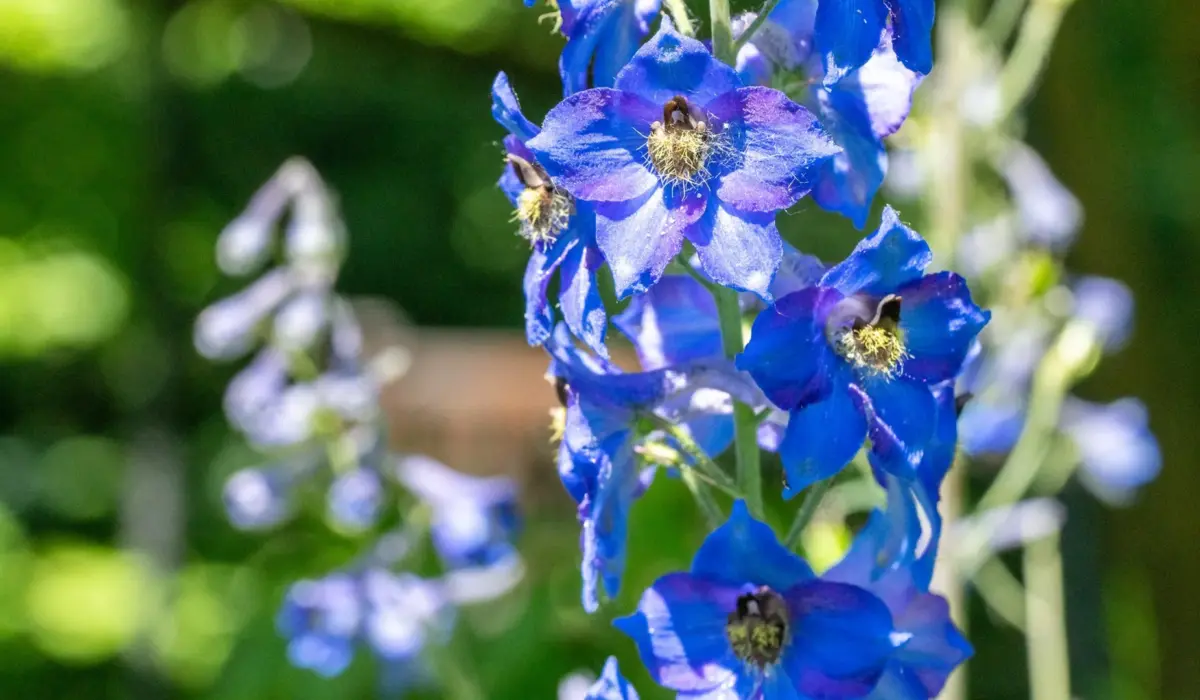
Independently, both research groups had converged on the same elusive family of complex chemicals. While the Hamberger Lab at MSU was investigating larkspur (aptly named Delphinium for its dolphin-shaped flowers) and its biochemical pathways, the Pluskal Group—including graduate student and co-first author Lana Mutabdžija—was examining wolfsbane, the famously toxic relative of larkspur more commonly known as monkshood.
Recognizing the immense value of pooling their resources, expertise, and genetic databases rather than competing in parallel silos, the teams chose to join forces.
"When this happens, we can either go our own ways, or come together, and it’s joining up that always leads to the best science," reflected Hamberger.
This transatlantic partnership fused MSU’s deep expertise in specialized plant metabolism and functional genomics with the Czech Academy of Sciences’ advanced analytical chemistry and bioinformatics pipelines.
Mapping the Molecular Assembly Line
With the partnership forged, the international team embarked on what can only be described as a high-stakes molecular scavenger hunt. Their objective was to trace the exact biochemical sequence—the assembly line—that wolfsbane and larkspur utilize to build diterpenoid alkaloids from basic cellular building blocks.
The researchers analyzed multiple species across both genera, sequencing transcriptomes and tracking thousands of candidate genes. The challenge lay in isolating the specific genes that became transcriptionally "switched on" within the exact plant tissues, and at the exact developmental moments, required to initiate the biosynthesis.
Garret Miller, an MSU alumnus, co-first author of the study, and now an assistant professor of biotechnology at the University of Michigan-Flint, offered an illuminating analogy for the process:
"You can imagine a biosynthetic pathway almost as an assembly line. If you have ten steps in a row needed to build a finished product, and suddenly one quits, the next steps can’t happen."
Pinpointing these sequential enzymatic steps required filtering out thousands of irrelevant genetic expressions. Every single step in the pathway relies on a specialized enzyme—a biological catalyst—to bend, fold, and bond carbon and nitrogen atoms into the required configuration.
Tobacco as a Living Biofactory
Once the international team narrowed down a promising collection of candidate genes responsible for the early stages of diterpenoid alkaloid production, they faced the ultimate test: proving that these genes actually worked together to build the intended molecule.
Rather than attempting to reconstruct the enzymes entirely in vitro, the researchers turned to a classic workhorse of plant biotechnology: Nicotiana benthamiana, a species of wild tobacco. Tobacco plants serve as exceptional living "biofactories" because they can be transiently transformed with foreign genetic material, readily expressing complex foreign enzymes without disrupting their own fundamental biology.
The team transferred the isolated genetic instructions from wolfsbane and larkspur into the tobacco plants. Subsequent chemical and mass-spectrometric analyses of the modified flora revealed a stunning success: the tobacco cells had successfully assembled the targeted biochemical pathway.
Specifically, six distinct plant enzymes worked in concert to convert basic cellular precursors into atisinium, a vital diterpenoid alkaloid. Not only did these enzymes successfully sculpt the complex, multi-ringed architecture of the molecule, but they also catalytically incorporated an essential nitrogen source—a crucial structural integration that had previously baffled researchers attempting to map the pathway.
Supporting Context & Metrics
To fully appreciate the scope of this breakthrough, it is necessary to examine the broader economic, ecological, and medical contexts surrounding plant-derived specialized metabolites.
| Parameter | Metric / Context |
|---|---|
| Primary Plant Genera | Aconitum (Wolfsbane/Monkshood) & Delphinium (Larkspur) |
| Target Compound Class | Diterpenoid Alkaloids |
| Key Compound Synthesized | Atisinium (via 6 distinct plant-derived enzymes) |
| Historical Milestone | Aconitine isolated ~200 years ago; total synthetic synthesis remains elusive |
| Potential Therapeutic Areas | Analgesics (pain management), antimalarials, oncology (cancer treatments), agrochemicals (pests) |
| Biotechnological Host | Nicotiana benthamiana (Tobacco transient expression system) |
| Primary Institutions | Michigan State University (USA) & Czech Academy of Sciences (Czechia) |
The Unmatched Chemistry of Nature
Despite decades of monumental leaps in organic synthesis, the pharmaceutical industry remains profoundly dependent on botanical chemistry. As Björn Hamberger noted, plants remain "the best chemists around," having spent millions of years refining their biochemical arsenals through relentless evolutionary pressure.
While synthetic chemists can engineer myriad carbon-based structures in industrial laboratories, the energy requirements, use of toxic heavy-metal catalysts, and multi-step purification processes often render traditional chemical synthesis economically unviable and environmentally destructive. Conversely, plants execute complex stereospecific reactions at ambient temperatures, in aqueous cellular environments, and with near-perfect molecular fidelity.
This dependency is reflected across modern medicine. Roughly half of all approved pharmaceutical drugs are either derived directly from natural plant products, semisynthetic derivatives of plant molecules, or synthetic compounds explicitly designed around plant-inspired pharmacophores. Iconic examples include:
- Caffeine: A natural central nervous system stimulant produced by plants to deter insect predators.
- Capsaicin: The fiery compound in chili peppers utilized in topical pain management formulations.
- Menthol: A cyclic terpene alcohol harvested from mint used extensively in therapeutics and consumer goods.
- Vanillin: The primary component of the vanilla bean extract, widely synthesized and utilized globally.
By unlocking the genetic blueprints of complex defense chemicals like those found in wolfsbane and larkspur, science is moving away from extractive, environmentally damaging wild harvesting and toward sustainable bio-production platforms.
Official Statements & Expert Insights
The collaborative nature of the study, published in Molecular Plant, underscores the reality that modern scientific breakthroughs rarely happen in isolation. The synergy between American functional genomics and European analytical chemistry proved to be the catalyst for success.
Garret Miller emphasized the historical continuum of these plants in human culture, stating:
"These plants have been used in different forms of medicine throughout the world for thousands of years. We know they interact with our bodies in so many ways, and understanding how to create them can help provide totally new routes of testing."
Lana Mutabdžija of the Czech Academy of Sciences underscored the ubiquity and importance of botanical compounds in daily life, pointing out how plant chemistry forms the foundational bedrock of modern pharmacology:
"These include caffeine, capsaicin, menthol and vanillin, not to mention the fact that many of the medicines we use today either come directly from plants or are inspired by plant chemistry."
Looking toward the horizon, Mutabdžija elaborated on the long-term translational potential of the team’s findings:
"In an ideal scenario, this could eventually help create new drugs inspired by these natural products."
Summarizing the ultimate vision and philosophy driving the research team, Björn Hamberger emphasized the shift toward green, bio-based methodologies:
"Our vision is to provide green, sustainable tools that will allow us to harness these plants’ natural power."
Future Outlook: From Toxic Weeds to Green Biofactories
The successful reconstruction of the atisinium biosynthetic pathway in tobacco plants marks not an endpoint, but a foundational beginning. By charting the initial genetic steps required to build diterpenoid alkaloids, the international research team has unlocked a master key that can now be applied to the broader, highly complex family of related compounds.
Scaling Up via Metabolic Engineering
The immediate implication of this discovery lies in the realm of synthetic biology and metabolic engineering. Now that the specific enzymes responsible for assembling atisinium have been identified, researchers can transition from transient expression systems—such as tobacco plants—to more scalable, industrial microbial hosts, such as engineered strains of baker’s yeast (Saccharomyces cerevisiae) or Escherichia coli.
Yeast fermentation is already widely utilized in modern biotechnology to produce complex molecules, ranging from insulin to artemisinin (an essential antimalarial drug originally derived from sweet wormwood). By transferring the newly discovered wolfsbane and larkspur genes into yeast, bioengineers can potentially turn microbial vats into living chemical factories capable of churning out milligram-to-gram quantities of rare diterpenoid alkaloids.
This scalable production bypasses the immense ecological hurdles of harvesting wild populations of Aconitum and Delphinium, which are not only difficult to cultivate at scale due to their slow growth and dangerous toxicity, but also yield variable concentrations of active compounds depending on soil composition, climate, and geography.
Paving the Way for Novel Therapeutics
With a reliable supply chain of these complex chemical structures within reach, medicinal chemists can finally conduct comprehensive high-throughput screening libraries on diterpenoid alkaloids. Historically, researchers have been hesitant to investigate these molecules extensively due to the severe risks of handling highly concentrated neurotoxins and the sheer impossibility of acquiring sufficient sample quantities for clinical assays.
With safer, sustainable production routes now viable, laboratories around the world can begin systematically modifying these natural scaffolds. By introducing targeted chemical or genetic alterations to the newly synthesized pathways, scientists aim to decouple the therapeutic benefits of the molecules—such as their potent analgesic and anti-inflammatory properties—from their lethal neurotoxic side effects.
Furthermore, the insights gained into how plants construct intricate nitrogen-containing ring structures may inspire entirely new classes of synthetic drugs that mimic natural designs without utilizing biological extraction at all. In agriculture, these discoveries offer a blueprint for developing sustainable, plant-derived biopesticides that harness nature’s own defenses to protect crops against resistant insects, thereby reducing reliance on synthetic, environmentally persistent chemical pesticides.
Conclusion
The collaborative triumph between Michigan State University and the Czech Academy of Sciences serves as a shining testament to the power of international scientific cooperation. By translating the ancient, deadly evolutionary history of wolfsbane and larkspur into the programmable language of modern genetics, researchers have bridged a two-century-old chemical divide.
What was once feared exclusively as a lethal poison is now poised to become an invaluable engine of pharmaceutical innovation. As this research scales from tobacco biofactories to industrial fermentation vats, humanity takes a vital step forward—harnessing the unmatched brilliance of plant chemistry to heal, protect, and sustain life on Earth.