








Executive Overview
In a milestone achievement for chemical biology and pharmacology, an international research team has finally unlocked a biochemical mystery that has eluded scientists for decades: how bacteria naturally manufacture diverse variants of potent anti-cancer drugs. Published in the prestigious journal Nature Communications, the breakthrough reveals the sophisticated internal communication system microbes use to assemble families of complex therapeutic compounds. This newly understood mechanism opens the floodgates for "combinatorial biosynthesis"—a technique that allows scientists to harness and redirect natural enzymatic assembly lines to engineer novel, highly optimized cancer treatments in the laboratory.
At the heart of this discovery is the elucidation of how bacterial enzymes coordinate their labor to produce a class of life-saving medications known as histone deacetylase (HDAC) inhibitors. This family includes Romidepsin (marketed as Istodax), an FDA-approved drug utilized in the treatment of refractory T-cell lymphomas. By identifying the tiny molecular connectors—known as "docking domains"—that drive this process, researchers have moved past passive observation of nature’s biochemical machinery. They can now actively reverse-engineer and reprogram it.
The implications for oncology are profound. Hard-to-treat malignancies, which frequently develop resistance to existing pharmaceutical interventions, may soon face a new generation of targeted therapeutics. These synthetic derivatives can be custom-tailored for superior potency, heightened cellular selectivity, and minimized systemic toxicity. By learning to mimic and accelerate evolutionary biology, scientists are transitioning from merely studying natural microbial products to building entirely new ones, promising a paradigm shift in how modern cancer drugs are conceptualized, synthesized, and brought to the clinic.
Detailed Chronology: Unraveling Decades of Biochemical Mystery
To understand the magnitude of the recent discovery, one must trace a decades-long journey of biochemical sleuthing, molecular biology breakthroughs, and interdisciplinary collaboration.
The Historical Context: The Promise of Microbial Biosynthesis
For over half a century, pharmacognosists and microbiologists have known that microorganisms—particularly soil-dwelling bacteria and actinomycetes—are the planet’s most prolific chemists. Evolutionary pressures forced these organisms to synthesize complex secondary metabolites to compete in crowded ecological niches. Many of these compounds possess potent antibacterial, antifungal, or anti-tumor properties.
Among these are depsipeptides, a class of complex cyclic molecules characterized by peptide and ester bonds. In the late 20th century, researchers identified a particularly promising subset of these compounds: cyclic tetrapeptides that function as HDAC inhibitors. The most prominent among them, Romidepsin, demonstrated a unique ability to target epigenetic regulators in malignant cells, leading to its eventual regulatory approval for cutaneous and peripheral T-cell lymphomas.
Concurrently, scientists identified a chemically related compound, FR-901375, which exhibited similar anti-cancer properties. However, a major roadblock persisted: while researchers could isolate these compounds in trace quantities or synthesize them laboriously through traditional total organic synthesis, the exact biological pathway bacteria used to manufacture FR-901375 remained completely unknown. Furthermore, while it was clear that bacteria naturally produced multiple closely related structural variants of these drugs, the intracellular mechanisms driving this "mix-and-match" production line were an absolute black box.
The Bottleneck of Combinatorial Biosynthesis
In theory, scientists wanted to utilize a strategy called combinatorial biosynthesis—essentially swapping out genes or enzymatic domains within natural microbial pathways to generate vast libraries of novel drug candidates. In practice, however, this approach hit a brick wall.
The molecular machinery responsible for building these drugs consists of massive, multi-enzyme complexes known as polyketide synthase (PKS) and nonribosomal peptide synthetase (NRPS) hybrids. These systems operate like molecular assembly lines, where individual modules add specific chemical building blocks step-by-step. Without a precise understanding of how these modules communicate, hand off intermediates, and tolerate structural variations, attempts to tinker with the assembly line typically resulted in broken, inactive enzymes or zero product yield. The code of inter-enzyme communication remained uncracked.
The Breakthrough: Decoding the Docking Domains
The tide turned when a collaborative research team—anchored by scientists at the University of Warwick and Monash University—embarked on a multi-pronged investigation integrating structural biology, biochemistry, genetics, and advanced computational modeling.
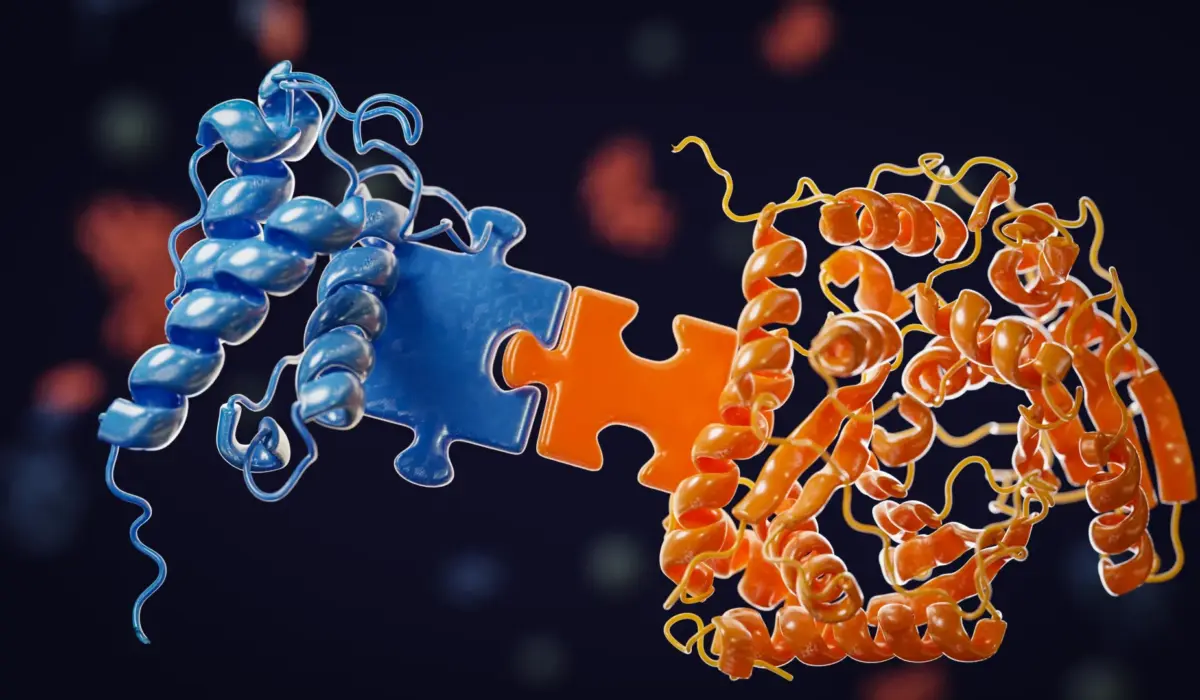
The researchers focused on the intricate physical interfaces where different segments of the PKS-NRPS assembly line meet. They discovered that small, specialized regions termed "docking domains" act as the critical physical connectors between the core drug-building machinery and the peripheral enzymes responsible for modifying the growing molecular scaffold.
Crucially, the team found that these docking domains possess a highly conserved connection point that exhibits a surprising degree of structural flexibility. This flexibility is the evolutionary secret weapon of the bacteria: it allows a single core assembly line to interact with multiple variant enzyme partners, swapping out specific chemical groups without stalling the entire manufacturing process. This elegant economy of design explains how microbes effortlessly generate diverse families of structural variants while preserving the exact spatial conformation required for pharmaceutical efficacy.
Filling in the Missing Evolutionary Link
With the mechanics of the system revealed, the research team successfully mapped the biosynthetic pathway for FR-901375, solving the decades-old mystery of its natural origin. Comparative genomic and biochemical analyses further illuminated how these systems evolved over geological time scales. The data indicated that the pathway responsible for producing FR-901375 likely arose from ancestral drug-producing pathways through a continuous process of gene duplication, mutation, and recombination.
By reverse-engineering this evolutionary logic, the researchers transitioned from describing natural history to designing synthetic futures, proving that nature’s ancient trial-and-error approach can now be directed intentionally in a modern laboratory.
Supporting Context & Metrics: The Science of HDAC Inhibition and PKS-NRPS Systems
To fully grasp the utility of this discovery, it is essential to examine the underlying pharmacology and biochemistry that govern these microbial drug-manufacturing systems.
The Target: Histone Deacetylases (HDACs) and Epigenetic Regulation
Inside human cells, DNA is tightly wound around proteins called histones, forming chromatin. The accessibility of this DNA—and consequently, which genes are actively transcribed—is regulated by chemical tags on the histones. Histone acetyltransferases (HATs) add acetyl groups, relaxing chromatin and promoting gene transcription. Conversely, histone deacetylases (HDACs) remove these acetyl groups, causing chromatin to condense and silencing gene expression.
In many cancers, aberrant recruitment or overexpression of HDACs leads to the inappropriate silencing of tumor-suppressor genes, allowing malignant cells to proliferate unchecked. HDAC inhibitors like Romidepsin block the action of these enzymes, leading to the re-activation of tumor-suppressor genes, cell cycle arrest, and the induction of apoptosis (programmed cell death) in cancer cells.
The Machinery: PKS-NRPS Hybrids and Depsipeptide Architecture
The microbial factories that produce these drugs are marvels of nanobiotechnology. PKS-NRPS hybrid systems are among the largest protein complexes found in nature.
- Polyketide Synthases (PKS): These enzymes assemble complex carbon skeletons by iteratively condensing small carboxylic acid units, much like fatty acid biosynthesis.
- Nonribosomal Peptide Synthetases (NRPS): These massive modular enzymes construct complex peptides independently of messenger RNA and ribosomes, utilizing amino acid building blocks (including non-standard and D-amino acids).
In the case of depsipeptides like Romidepsin and FR-901375, these two systems work in tandem. They assemble a complex cyclic structure composed of amino acid building blocks coupled with a conserved hydroxy acid pharmacophore, linked together via a delicate web of peptide and ester bonds.
Quantitative Metrics in Modern Drug Discovery
The integration of combinatorial biosynthesis into drug discovery changes the economics and timelines of pharmaceutical development:
- Library Diversification: Traditional organic total synthesis of complex cyclic depsipeptides can take dozens of sequential steps with extremely low cumulative yields. Microbial biosynthesis bypasses this by generating structural variants in vivo in a single fermentation step.
- Structural Space Exploration: While traditional medicinal chemistry libraries often explore linear modifications around a core scaffold, microbial combinatorial biosynthesis can simultaneously alter ring sizes, stereochemistry, and functional group side-chains, exponentially expanding the chemical space sampled.
- Development Velocity: By utilizing bacterial hosts as living factories, researchers can scale up the production of lead optimization candidates in days rather than months, accelerating the preclinical pipeline.
Official Statements and Expert Perspectives
The breakthrough has drawn widespread acclaim from the international scientific community, highlighting the collaborative ethos and translational potential of the research.
Dr. Munro Passmore, Research Fellow in the Department of Chemistry at the University of Warwick and first author of the study, emphasized the fundamental shift in perspective the discovery provides:
"For decades, we’ve known that bacteria can naturally produce multiple versions of powerful anti-cancer drugs, yet we had no idea how they achieved this. This work finally cracks that code. We’ve identified how the different enzymes communicate and cooperate to produce these drug variants, something that has eluded researchers because the system is so elegantly economical. It’s the breakthrough we needed to actually engineer these drugs ourselves."
Echoing these sentiments, Professor Greg Challis, Monash Warwick Alliance Professor of Sustainable Chemistry at the University of Warwick and Monash University, pointed toward the ambitious translational goals ahead:
"This research gives us a blueprint to do what nature does, but better and faster. By reverse-engineering nature’s evolutionary logic, we can now design synthetic pathways that generate new anti-cancer drug candidates with properties optimized for clinical use, such as superior potency, improved selectivity, and fewer side effects."
Prof. Challis outlined the immediate operational objectives for the collaborative research initiative:
"Our immediate goal is to build an expanded library of candidates for various cancers where new treatments are urgently needed. This discovery is moving us from understanding how the systems work to building new ones."
Independent pharmacologists not directly involved in the study have similarly lauded the work as a masterclass in synthetic biology, noting that the identification of flexible docking domains could theoretically be applied beyond HDAC inhibitors to other high-value classes of microbial therapeutics, such as glycopeptide antibiotics and immunosuppressants.
Future Outlook: Translating Microbial Engineering into Clinical Reality
With the mechanistic code of bacterial drug variation now cracked, the scientific community stands on the threshold of a new era in drug development. The roadmap moving forward focuses on several key translational milestones.
1. Constructing Expanded Chemical Libraries
The immediate priority for the Warwick and Monash research teams—alongside international collaborators—is the construction of engineered bacterial strains designed specifically for combinatorial biosynthesis. By inserting modular variations into the newly mapped docking domains and enzymatic assembly lines, the researchers plan to generate hundreds of novel depsipeptide variants that do not exist in nature.
2. High-Throughput Screening and Pharmacological Optimization
Once these expanded libraries of synthetic-natural hybrid compounds are generated via microbial fermentation, they will undergo high-throughput screening against panels of treatment-resistant cancer cell lines. Particular focus will be placed on hematological malignancies and aggressive solid tumors where current HDAC inhibitors exhibit dose-limiting toxicities or acquired resistance.
3. Engineering Enhanced Clinical Profiles
The ultimate measure of success for this technological leap will be its translation from bench to bedside. By systematically tweaking the structures of these molecules through engineered biosynthesis, scientists aim to achieve three critical clinical improvements:
- Enhanced Potency: Lowering the effective therapeutic concentration required to induce apoptosis in malignant cells.
- Targeted Selectivity: Refining the binding affinity to specific human HDAC isoforms (such as selectively targeting HDAC1 or HDAC2 while sparing others), thereby drastically reducing off-target toxicities and adverse side effects.
- Improved Pharmacokinetics: Altering metabolic stability and tissue distribution to ensure the drug reaches deep-seated tumor microenvironments effectively.
4. Beyond Oncology: A Universal Paradigm
While the immediate application centers on cancer therapeutics targeting histone deacetylases, the broader methodological framework holds immense promise for other therapeutic areas. The principles governing docking domain flexibility and modular communication in PKS-NRPS systems are universal across many classes of microbial natural products. By mastering these rules, bioengineers can soon apply similar logic to antimicrobial resistance, generating novel antibiotics to combat multi-drug resistant superbugs.
Conclusion
The unraveling of how bacteria manufacture diverse cancer drugs marks the end of an era of passive observation and the beginning of an era of intentional biological design. By deciphering the molecular handshake between tiny docking domains and massive enzyme complexes, scientists have transformed evolutionary biology into a predictive engineering discipline. As these synthetic pathways hum to life in laboratories across the globe, humanity moves one step closer to outsmarting cancer through nature’s own ancient, yet endlessly adaptable, playbook.