










Executive Overview
For decades, conservation biologists have watched in horror as a silent pandemic swept across the globe, decimating frog, toad, and salamander populations with terrifying speed. At the heart of this ecological catastrophe is the chytrid fungus (Batrachochytrium dendrobatidis, or Bd), a relentless pathogen responsible for what scientists have termed the greatest recorded loss of biodiversity attributable to a single disease. Causing chytrid fungus—a condition that attacks the keratinized layers of amphibian skin, utterly destroying their ability to regulate vital water and electrolyte balances—Bd has driven dozens of species to the brink of extinction and entirely wiped out others.
Yet, amid the grim statistics of global amphibian decline, a glimmer of hope has emerged. In some regions, populations that were once devastated by the fungus are staging remarkable, unexpected comebacks, persisting in environments where the pathogen remains stubbornly active.
A groundbreaking, collaborative study led by researchers at University College London (UCL), the ZSL (Zoological Society of London), and Imperial College London has finally unmasked the secret behind these Lazarus-like recoveries. Published in the prestigious journal Nature Chemical Biology, the research reveals that the key to survival is not merely the presence of chemical defenses, but the timing of their development. Furthermore, by deploying cutting-edge mass spectrometry, the scientific team has uncovered an astonishing hidden arsenal of more than 1,100 novel immune peptides secreted by amphibian skin—opening up thrilling new avenues not just for wildlife conservation, but potentially for human medicine as well.
Detailed Chronology: Unraveling the Pyrenean Mystery
To understand how some amphibian populations manage to outwit a global killer while others succumb, an international team of scientists focused their lens on a high-altitude crucible of infection: the Pyrenees mountains stretching across the borders of France and Spain.
The Pyrenean Field Study
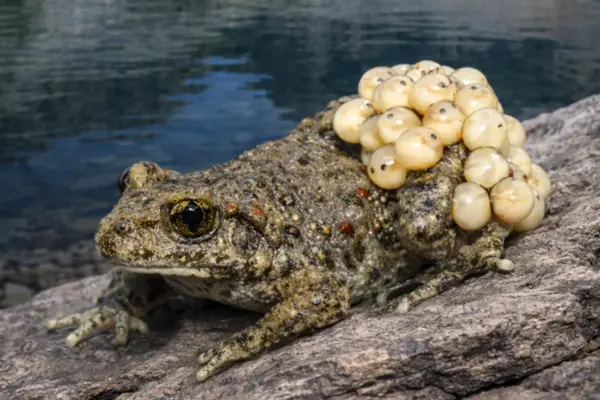
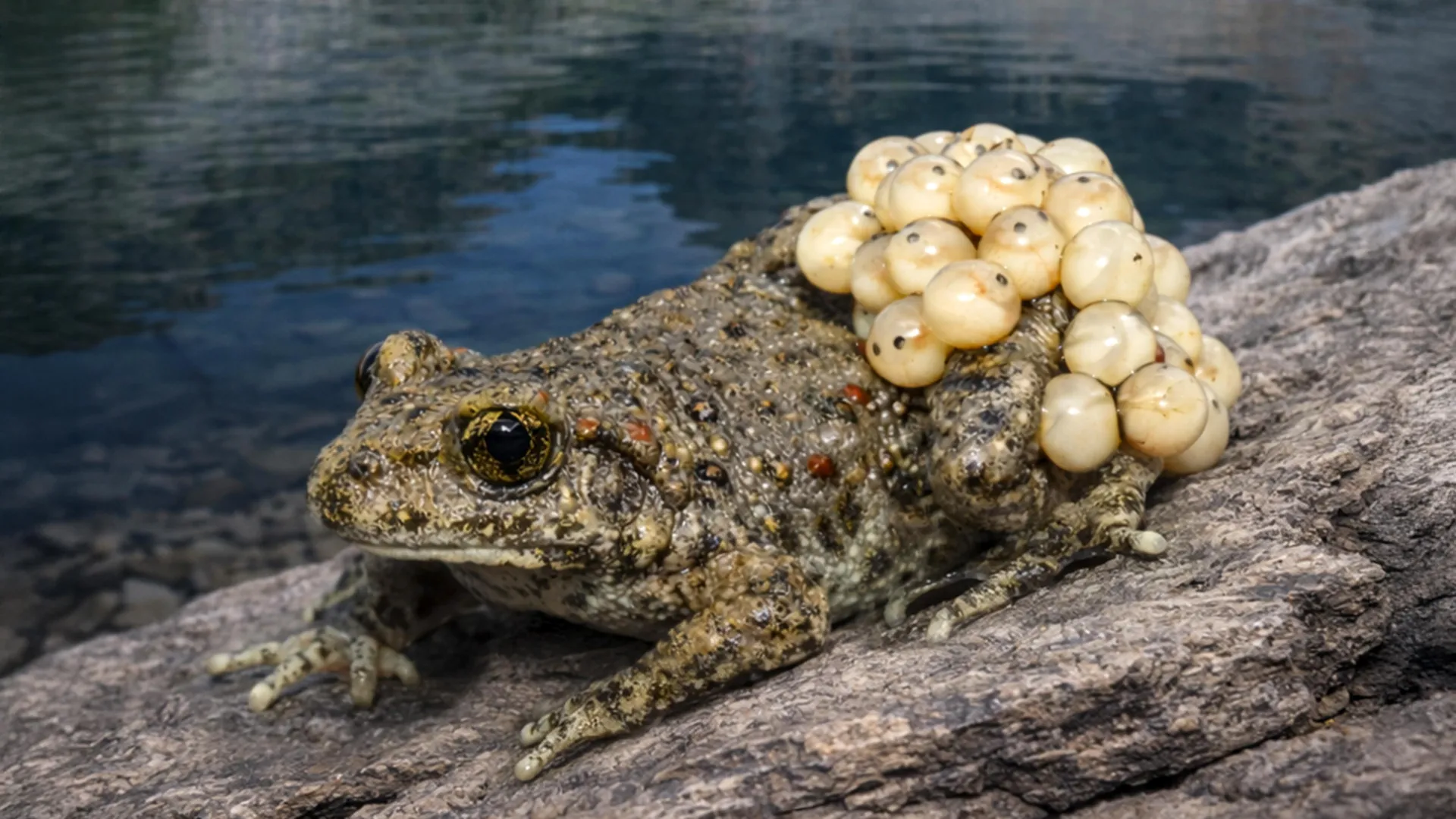
The researchers concentrated their efforts on common midwife toads (Alytes obstetricans) inhabiting the ecosystems surrounding four distinct alpine lakes. All four locations shared a grim common denominator: each had suffered severe, catastrophic outbreaks of Bd. However, as time progressed, the trajectories of the toad populations diverged dramatically, creating a natural laboratory for evolutionary and immunological investigation.
- Lake 1 (The Declining Population): At the first site, the situation remained dire. The toad population continued its downward spiral, pushed to the absolute precipice of local extinction. The fungus held total sway, and the recruitment of young adults was continuously failing.
- Lakes 2, 3, and 4 (The Rebounding Populations): By stark contrast, the toad populations at the other three lakes had mounted a staggering recovery. Despite environmental sampling confirming that the chytrid fungus was still actively circulating in the water and soil around these bodies of water, the toads were surviving, breeding, and thriving.
The Vulnerability Window
To understand this divergence, the researchers had to examine the life cycle of the common midwife toad. Amphibians face a unique developmental paradox when it comes to Bd. The fungus specifically targets keratin—a tough, fibrous protein found in the outer layers of adult amphibian skin.
During their early aquatic phase, tadpoles and larvae are largely protected because their skin lacks significant keratinization. However, as they undergo metamorphosis, transforming from swimming tadpoles into terrestrial juveniles and adults, their skin changes dramatically. It develops a rich matrix of keratin, instantly converting them from resilient larvae into highly vulnerable targets. When Bd zoospores infect this newly keratinized skin, they disrupt osmotic regulation, leading rapidly to cardiac arrest and death.
The researchers realized that the difference between life and death in the Pyrenean lakes came down to how the toads navigated this dangerous metamorphic transition.
The Discovery of Accelerated Immunity
By analyzing the biochemical defenses of the toads across all four lakes, the research team discovered a critical immunological discrepancy.
The toads hailing from the three rebounding populations were priming their defenses far earlier in life. While still swimming as tadpoles, well before the dangerous onset of metamorphosis and keratinization, these young amphibians were already beginning to express vital antimicrobial peptides—natural chemical weapons produced by the skin. By the time they crawled onto land as fully formed juveniles, their chemical armor was already fully locked, loaded, and battle-tested.
Conversely, the toads from the struggling, near-extinct population lagged behind. They produced vastly lower quantities and a narrower diversity of these protective peptides during their tadpole stage. Entering the terrestrial world with immature or deficient chemical defenses, they were mowed down by the encroaching fungus before they had a fighting chance.
Supporting Context & Metrics: A Hidden Chemical Arsenal
To map out these chemical defenses with unprecedented precision, the research team turned to advanced analytical chemistry, utilizing state-of-the-art mass spectrometry at UCL Chemistry.
Mass Spectrometry and the Peptide Explosion
Amphibians are known to secrete a variety of bioactive molecules from their skin glands to deter predators and fend off pathogens. However, scientists previously had only a rudimentary understanding of the sheer scale of this chemical diversity.
Using tandem mass spectrometry, the UCL researchers were able to shatter complex peptide mixtures (short chains of amino acids) into minute fragments, measure those fragments with exceptional accuracy, and algorithmically reconstruct the precise structures of hundreds of molecules simultaneously.
The results of this deep molecular profiling stunned the scientific community. Out of an astonishing 1,152 distinct immune peptides identified across the study samples, only seven had ever been documented in scientific literature before. Over 1,100 of these molecules were entirely unknown to science, hidden in plain sight on the skin of these small alpine toads.
The Quantitative Link to Survival
The mass spectrometry data provided a direct mathematical correlation between chemical diversity and survival:
- High Diversity = High Survival: Tadpoles that expressed a rich, highly diverse array of peptides prior to metamorphosis consistently belonged to the rebounding populations. Their advanced chemical repertoires acted as a broad-spectrum shield against the chytrid pathogen.
- Low Diversity = High Mortality: Conversely, populations with restricted peptide production during their early aquatic phase suffered devastating mortality rates year after year, unable to halt the relentless colonization of Bd.
Official Statements and Expert Insights
The study’s leaders have emphasized both the immediate conservation implications of their work and the broader horizons it opens for interdisciplinary science.
Dr. Phillip Jervis, lead author of the study from UCL Chemistry, the ZSL Institute of Zoology, and Imperial College London, highlighted the paradigm shift represented by these findings:
"Our study shows species that have declined heavily from this disease can still recover. They have the tools to fight off infection—it just depends on timing. The disease kills toads and frogs as they turn from tadpoles to adults. Getting mature immunity at the tadpole stage helps these toads survive and the population to continue."
Addressing the environmental triggers that might influence this immunological timeline, Dr. Jervis noted:
"The next step is to look at what factors prevent these immune systems from maturing early. This could be down to genetics or environmental factors such as temperature or the presence of trout—a major danger for tadpoles that could drive them to develop into adults faster so they can leave the water, meaning less time for their immune system to develop."
Professor Alethea Tabor, senior author of the study from UCL Chemistry, underscored the potential translational value of discovering over 1,100 novel peptides, drawing parallels to legendary historical breakthroughs:
"We discovered a far greater diversity of peptides than we expected. We now need to understand how they work to control pathogens and which ones are antimicrobial. A lot of medicines for humans were initially found in the natural world—penicillin came from fungi, for example. So these peptides are new leads that could be used to help human health, especially as we have our own problems as a species with the rise of antimicrobial resistance, which is requiring us to find new ways to treat infections."
Echoing the technological marvel behind the discovery, co-author Dr. Kersti Karu (UCL Chemistry) explained the methodological leap:
"The ability to analyze hundreds to thousands of molecules in parallel has only emerged over the past decade. This approach is more commonly applied in human health research, for example to distinguish cancer cells from normal tissue, but is increasingly being extended to other areas of biological investigation."
Future Outlook: Conservation Strategies and Human Medicine
As amphibians continue to face synergistic threats from habitat loss, climate change, and infectious diseases, the insights gleaned from the Pyrenean midwife toads offer a blueprint for future intervention and research.
1. Targeted Conservation and Assisted Evolution
Conservationists are already looking at how these findings can be applied in the field. By identifying the environmental or genetic triggers that prompt early peptide maturation, wildlife managers may be able to manipulate breeding ponds or microhabitats to encourage early immune development in endangered populations. Understanding how predators (like introduced trout) or thermal stress force premature metamorphosis could also lead to habitat restoration strategies that give tadpoles the unhurried developmental window they need to build robust chemical defenses.
2. Combating Human Antimicrobial Resistance (AMR)
Beyond saving frogs and toads, the discovery of more than 1,100 novel antimicrobial peptides holds immense promise for human medicine. As global health agencies sound the alarm over the rising tide of drug-resistant "superbugs"—bacteria and pathogens that no longer respond to conventional antibiotics—the pharmaceutical pipeline is running dry.
Amphibian skin secretions represent an evolutionary goldmine. Because these peptides have been refined over millions of years to combat aggressive pathogens like Bd, they offer novel biochemical templates. Researchers will now methodically screen these 1,152 newly sequenced molecules to isolate those with potent antimicrobial properties, potentially paving the way for a new generation of human therapeutics.
Ultimately, this research bridges the gap between wildlife conservation and biomedical innovation. It demonstrates that protecting the Earth’s most vulnerable biodiversity may not only preserve the intricate tapestries of our natural ecosystems, but also yield the very tools humanity needs to safeguard its own future health.