








Executive Overview
One hundred years ago, quantum mechanics emerged not as a commercial blueprint, but as a desperate mathematical fix for an academic crisis. Early-twentieth-century physicists found themselves unable to explain why atoms behaved the way they did using the classical laws of Newtonian physics. As pioneers like Max Planck, Niels Bohr, Erwin Schrödinger, and Werner Heisenberg began peeling back the layers of the subatomic world, they uncovered a reality that defied common sense. Particles could exist in multiple places at once, span vast distances while remaining instantaneously linked, and behave simultaneously as solid objects and intangible waves.
To many of its creators, including Albert Einstein, these propositions felt jarringly incomplete—a philosophical paradox rather than a practical science. Einstein famously balked at the implications, dismissing quantum entanglement as "spooky action at a distance."
Fast forward to the twenty-first century, and that very "quantum weirdness" has transformed from an abstract theoretical debate into the bedrock of modern civilization. In a comprehensive new perspective piece published in the journal Science, renowned physicist Dr. Marlan Scully of Texas A&M University and Princeton University reflects on this remarkable century-long transition. As Scully outlines, the equations that once troubled the world’s greatest minds now quietly power the infrastructure of daily life. Lasers at supermarket checkout lines, microchips in smartphones, ultra-secure financial encryption protocols, and the nascent processing architecture of quantum computers all trace their lineage directly back to these early twentieth-century breakthroughs.
Today, quantum mechanics is no longer confined to the chalkboard. It has escaped into biology, engineering, and astrophysics, offering researchers powerful new tools to tackle humanity’s most complex challenges—from deciphering the chaotic fluid dynamics of atmospheric turbulence to hunting for gravitational waves ripples across the fabric of spacetime.
Detailed Chronology: The Evolution of Quantum Theory
To understand how quantum mechanics reshaped the technological landscape, one must trace its journey through three distinct historical eras: the early foundational debates, the mid-century rise of quantum optics and coherence, and the modern epoch of practical manipulation and multi-disciplinary expansion.
Era I: The Birth of the Subatomic Paradox (1900–1935)
The twentieth century opened with classical physics stumbling over a fundamental problem: thermal radiation, or the way heated objects emit light. In 1900, Max Planck proposed that energy is not emitted in a continuous wave, but in discrete packets called "quanta." Albert Einstein expanded on this in 1905 by explaining the photoelectric effect, demonstrating that light itself can behave like a stream of particles (photons).
By the 1910s and 1920s, Niels Bohr applied these concepts to atomic structure, introducing a model where electrons orbit the nucleus in fixed, quantized energy states. But Bohr’s model was soon superseded by more rigorous mathematics. Between 1925 and 1926, Werner Heisenberg formulated "matrix mechanics," while Erwin Schrödinger developed wave mechanics via his famous wave equation.
These competing yet mathematically equivalent approaches gave scientists a way to calculate subatomic probabilities. Yet, they also introduced profound conceptual headaches. In 1935, Schrödinger sought to expose the absurdities of the Copenhagen interpretation of quantum mechanics by proposing his infamous thought experiment: a cat locked in a box with a radioactive mechanism, rendering it simultaneously alive and dead until an observer opens the box to check.
Era II: From Abstraction to Application (1950–1990s)
For decades, the paradoxes of Schrödinger’s cat and Einstein’s spooky entanglement remained strictly philosophical discussion points. However, the post-World War II era ushered in a new breed of physicists who began harnessing these abstract principles to build physical devices.
Central to this transition was the concept of quantum coherence—the phenomenon wherein particles such as atoms and photons remain locked in a synchronized, harmonious phase relationship across space and time. Coherence paved the way for the invention of the laser (Light Amplification by Stimulated Emission of Radiation) in 1960. While early critics doubted whether lasers could ever serve a practical purpose, the technology quickly revolutionized manufacturing, telecommunications, and medicine.
During this period, theorists like Dr. Marlan Scully stepped forward to push the boundaries of quantum optics. Scully’s work on coherent nanoscale laser spectroscopy allowed scientists to probe molecules with unprecedented atomic-scale precision. Simultaneously, researchers began exploring how quantum principles could be applied to thermodynamics, setting the stage for advanced energy conversion models.
Era III: The Second Quantum Revolution (2000–Present)
We now live in the era of the "Second Quantum Revolution." Rather than merely observing quantum phenomena passively, modern scientists can manipulate individual atoms, electrons, and photons with exquisite control.
This newfound precision has triggered an explosion of applied technologies. Quantum cryptography now secures sensitive data streams by exploiting the fact that measuring a quantum system inherently alters it, instantly alerting users to eavesdropping. Meanwhile, massive global investments are pouring into quantum computing, a paradigm that leverages superposition and entanglement to solve calculations that would take classical supercomputers millennia to process.
Supporting Context & Metrics: The Pillars of Modern Quantum Physics
The modern quantum ecosystem rests upon several core physical phenomena that differentiate it entirely from classical mechanics.
1. Quantum Coherence and Entanglement
Quantum coherence allows systems to exist in linear combinations of states (superposition). When coupled with entanglement—where two or more particles become inextricably linked regardless of the physical distance separating them—these properties form the backbone of modern quantum sensing.
For instance, the Laser Interferometer Gravitational-Wave Observatory (LIGO) relies on quantum-enhanced optical systems to detect infinitesimal distortions in spacetime caused by colliding black holes. Without tuning lasers to account for quantum noise limits, detecting these faint cosmic whispers would be physically impossible.
2. Quantum Heat Engines and Thermodynamics
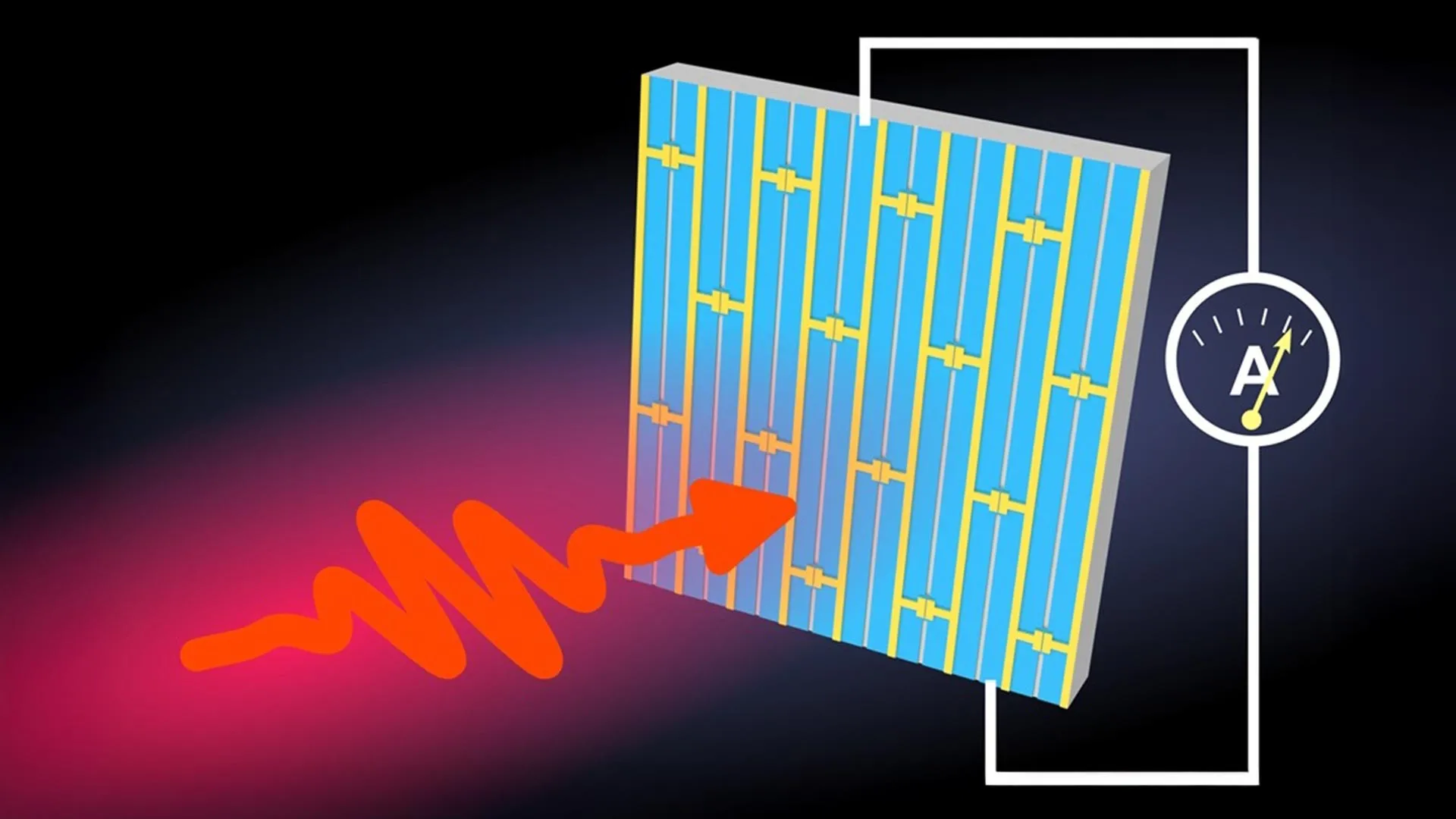
In classical physics, engines are strictly bound by the Carnot Limit, which dictates the maximum theoretical efficiency of a thermal engine operating between two heat reservoirs. However, Dr. Marlan Scully and other thermodynamicists have demonstrated that quantum heat engines—systems operating at the nanoscale utilizing quantum coherence—can potentially bypass traditional efficiency ceilings. By exploiting phase relationships between energy states, these novel engines challenge classical thermodynamic assumptions and point toward futuristic energy technologies.
3. Interdisciplinary Expansion: Biology and Turbulence
While quantum mechanics was born in physics, its mathematical toolkit has rapidly expanded into other domains:
- Quantum Biology: Utilizing techniques like coherent Raman spectroscopy, researchers can now examine viruses and cellular structures at the nanoscale, uncovering quantum-level mechanisms in biological processes.
- Astrophysics and String Theory: Theoretical physicists are employing quantum frameworks to reconcile general relativity with quantum mechanics, striving to build a unified "theory of everything" (quantum gravity).
- Fluid Dynamics and Turbulence: The chaotic, unpredictable motion of fluids and gases governs everything from weather patterns to aerodynamics. By studying superfluid helium—a fluid that exhibits zero viscosity and bizarre quantum properties—scientists are extracting mathematical patterns to improve climate modeling, weather forecasting, and aviation safety.
Official Statements and Expert Perspectives
Reflecting on the centennial trajectory of his field, Dr. Marlan Scully emphasizes that the journey from obscure theory to daily utility was neither linear nor guaranteed.
"Quantum mechanics started as a way to explain the behavior of tiny particles," notes Scully, whose foundational textbook Quantum Optics has educated generations of physicists. "Now it’s driving innovations that were unimaginable just a generation ago."
Addressing the historical shift from philosophical skepticism to modern technological dominance, Scully points out that yesterday’s theoretical oddities are today’s commercial standards.
"That ‘quantum weirdness’ is no longer just a philosophical puzzle," Scully says. "It’s the foundation of quantum computing, quantum cryptography, and even gravitational wave detection."
On the horizon of energy research and fundamental physics, Scully highlights how quantum principles continue to overturn long-standing scientific dogmas:
"It’s a striking example of how quantum principles can rewrite the rules of classical physics," he remarks regarding quantum heat engines.
Looking forward into the twenty-first century, Scully rejects the nineteenth-century notion that physics was nearing completion, offering an optimistic rallying cry for a new generation of scientists:
"At the start of the 20th century, many thought physics was complete," Scully reflects. "Now, in the 21st century, we know the adventure is just beginning."
Future Outlook: The Next Century of Discovery
As humanity steps further into the twenty-first century, the horizons of quantum research stretch outward into uncharted territory. Several profound questions continue to animate the global scientific community:
- Can Gravity Be Quantized? One of the most stubborn hurdles in modern physics is merging the smooth, continuous geometry of Einstein’s general relativity with the discrete, probabilistic realm of quantum mechanics. Finding a working theory of quantum gravity remains the holy grail of modern theoretical physics.
- How Far Will Quantum Computing Scale? While current quantum processors are still grappling with error-correction and decoherence challenges, the day when fault-tolerant quantum computers arrive seems increasingly inevitable. When they do, they promise to revolutionize drug discovery, materials science, and global economic cryptography.
- What Unseen Phenomena Await Discovery? Just as the pioneers of 1900 could not foresee smart phones, MRI machines, or fiber-optic internet, today’s researchers acknowledge that the most profound applications of twenty-first-century quantum mechanics are likely things we cannot yet conceptualize.
What began as a desperate mathematical patch for a recalcitrant spectrum of light has become the ultimate engine of human ingenuity. As the quantum century rolls on, the subatomic realm continues to prove that reality is far stranger—and infinitely more powerful—than we ever dared to imagine.