




Executive Overview
More than five millennia after his final footsteps high in the Ötztal Alps, Ötzi the Iceman remains one of the most thoroughly analyzed archaeological subjects in human history. Discovered by hikers in 1991 emerging from an alpine glacier, this 5,300-year-old copper-age traveler has continuously challenged our understanding of ancient human life, pathology, and environmental interactions.
Now, a groundbreaking study published in the peer-reviewed journal Microbiome has peered deeper into Ötzi’s physical makeup than ever before, focusing not on his bones or tools, but on the complex, dynamic universe of microorganisms inhabiting his remains. Utilizing an intricate array of advanced sampling techniques—ranging from ice and meltwater collection to targeted swabs of internal tissues and long-frozen local soil samples—an international team of researchers has mapped the microbial ecosystems that survived both the deep freeze of the glacier and the decades of modern museum preservation.
The findings reveal a fascinating duality. Within Ötzi’s stomach and intestinal tract, scientists isolated intact genetic traces of his original gut flora, offering a pristine glimpse into the microbiome of early European populations—bacterial communities largely lost to modern, industrialized humanity. Simultaneously, the research team made an unexpected and potent discovery: a collection of cold-adapted yeast species that likely colonized his body during millennia inside the glacier and persist on the mummy today. Some of these resilient yeasts may even have been sustained by historical conservation treatments applied after his recovery.
Far from being a static, inert historical artifact, Ötzi is proving to be a living, breathing—or at least biologically reactive—ecosystem. This revelation not only refines our strategies for safeguarding ancient organic remains against microbial degradation, but it also opens remarkable new frontiers in industrial biotechnology. The cold-tolerant yeasts discovered on the Iceman possess unique metabolic traits—such as the ability to break down chemical compounds like phenol—that could soon be harnessed for low-temperature industrial fermentation and green manufacturing processes.
This comprehensive report examines the methodology behind the discovery, the historical context of Ötzi’s ancient gut flora, the survival mechanics of his glacial yeasts, and the profound implications this research holds for future conservation efforts and biotechnology.
Detailed Chronology
To comprehend the significance of the recent Microbiome study, it is necessary to retrace the biological timeline of Ötzi the Iceman—from his life in the Copper Age to his accidental preservation, discovery, and subsequent modern stewardship.
Phase 1: The Copper Age Life and Gut Colonization (c. 3300 BCE)
During life, Ötzi consumed meals typical of a high-altitude hunter-gatherer in the Italian-Austrian borderlands. His digestive tract accumulated a rich, diverse flora of bacteria that helped him process coarse, ancient grains, wild game, and foraged vegetation. As established by baseline sequencing completed in a landmark 2019 study by Eurac Research, Ötzi’s gut microbiome bore striking similarities to those of other early human populations—communities distinguished by a high abundance of specific fiber-fermenting bacteria that are virtually absent in modern urban populations whose diets and antibiotic use have drastically altered internal ecosystems.
Phase 2: The GlACIAL Encasement (c. 3300 BCE – 1991 CE)
Upon his death in the high Alps, Ötzi was rapidly covered by snow and sealed inside a moving glacier. The sub-zero temperatures, lack of oxygen, and high-pressure ice barrier halted ordinary aerobic decomposition. However, this environment was not entirely biologically dead. Over the course of 5,300 years, psychrophilic (cold-loving) microorganisms—including specialized yeasts originating from the surrounding glacial ice and meltwater—slowly migrated into and onto his exposed tissues, establishing a dormant or extremely slow-metabolizing symbiotic presence that endured the millennia.
Phase 3: Discovery and Initial Conservation (September 1991)
On September 19, 1991, German tourists Helmut and Erika Simon discovered the mummified remains protruding from an ablation zone of the Similaun Glacier in the Ötztal Alps. During the chaotic recovery process, standard environmental contaminants were introduced. Furthermore, soil samples taken directly from the discovery site were sealed and frozen, providing researchers with a pristine geological control sample to later differentiate between native site microbes and those introduced later.
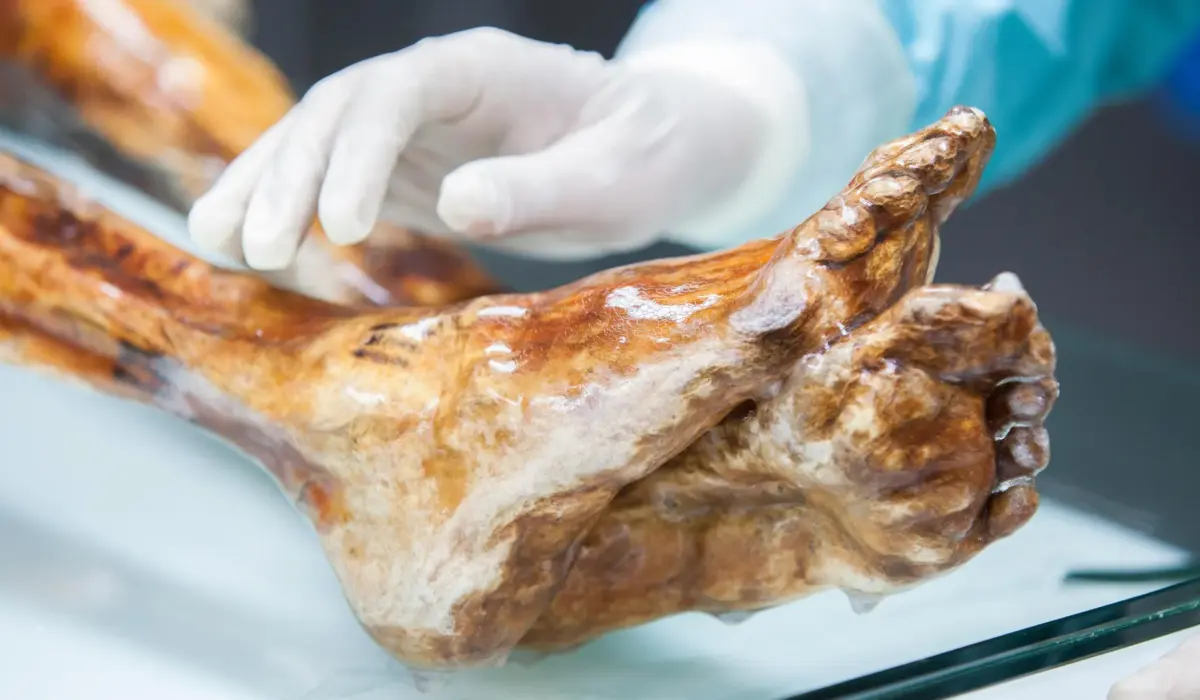
In the immediate aftermath of his extraction, conservationists faced a major hurdle: fungal growth began attacking the exposed skin of the mummy. To combat this biological threat, technicians treated the surface with phenol, a powerful antiseptic and antifungal chemical. As the recent study reveals, this emergency intervention inadvertently set the stage for a unique evolutionary twist: several of the cold-adapted yeasts residing on the mummy possessed the precise genetic machinery required to metabolize phenol, effectively turning a preservative into a food source.
Phase 4: Modern Archival Storage and Continuous Monitoring (Present Day)
Today, Ötzi is housed in a specialized, highly controlled cold-storage chamber at the South Tyrol Museum of Archaeology in Bolzano, Italy. Maintained at a strict minus six degrees Celsius ($pu-6^circ C$) with high humidity, the room is designed to mimic the natural glacial conditions that preserved him for millennia. Microbial monitoring is constant. However, as the latest research emphasizes, maintaining this environment requires sophisticated management because the mummy is an active biological theater where ancient and modern microbial strains continuously interact.
Supporting Context & Metrics
The scope and depth of the recent investigation required an unprecedented multi-pronged sampling and sequencing strategy. By combining high-throughput metagenomic sequencing with deep environmental profiling, the research team quantified the distinct microbial populations living within and upon the Iceman.
Sampling Vectors and Methodologies
To accurately isolate ancient indigenous microorganisms from modern contaminants, the research team analyzed a diverse matrix of samples:
- Surface Ice and Meltwater: Collected directly from the exterior and interior cavities of the mummy to capture mobile aquatic microorganisms and glacial strains.
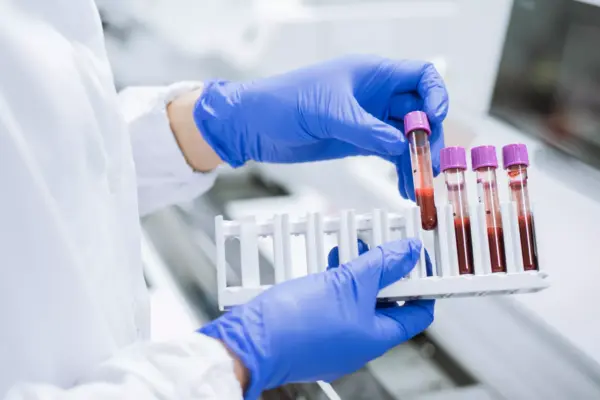
- Targeted Swabs: Dozens of swabs gathered from various skin folds, orifices, and conservation contact points.
- Internal Tissues: High-depth genetic material harvested from previously acquired intestinal tract and stomach content biopsies.
- Control Soil Samples: Core samples preserved in a frozen state since the initial 1991 recovery at the alpine discovery site.
Quantitative Breakdown of Microbial Findings
- 5,300 Years: The estimated age of the original gut microbiome structures recovered from Ötzi’s stomach and intestinal tracts.
- Minus Six Degrees Celsius ($pu-6^circ C$): The precise ambient storage temperature maintained at the South Tyrol Museum of Archaeology to keep the mummy stable.
- Three out of Four: The proportion of newly identified yeast species that possess the genetic adaptation to break down phenol—the chemical compound applied during post-discovery antifungal treatments in 1991.
- Antarctic Relatives: Genetic sequencing revealed that the cold-adapted yeasts discovered on Ötzi share close phylogenetic markers with microbial strains native to the extreme cold of Antarctica, validating their glacial origin.
Official Statements
The implications of this research extend far beyond archaeology, touching fields as diverse as evolutionary biology, microbiology, and industrial engineering. Key leaders of the research and conservation teams shared their insights regarding the findings:
"We see continuity here. These yeasts have accompanied Ötzi on his long journey through the millennia. The results show that the mummy is not a static relic, but a dynamic biological system."
— Frank Maixner, Director of the Institute for Mummy Studies, Eurac Research
The concept of a dynamic biological system challenges the traditional museum view of ancient mummies as inert, stable museum exhibits. Maixner’s remarks highlight that organic preservation is an ongoing negotiation between historical microbes, modern environmental controls, and biochemical interventions.
"A mummy’s microbiome is unique because we are dealing with microbes that are over 5,000 years old and, at the same time, with modern microbes that have been introduced since the discovery."
— Mohamed S. Sarhan, Microbiologist and Lead Author of the Study
Sarhan’s observation underscores the methodological complexity faced by researchers attempting to sequence ancient biomolecules without interference from contemporary genetic drift or human handling.
"The mummy’s conservation conditions are very stable today. Close microbiological monitoring ensures that the mummy suffers no damage. But further research and full conservation efforts are certainly needed to preserve it for many more generations."
— Elisabeth Vallazza, Director of the South Tyrol Museum of Archaeology
Vallazza points to the operational reality of managing a world-class archaeological treasure. While current protocols are effective, the revelation that certain microbes can subsist on historical preservatives signals that monitoring parameters must remain exceptionally vigilant.
"The conditions under which glacial mummies are preserved are not yet fully understood. This study expands our knowledge in this area, giving us a clearer framework for how these unique preservation environments operate over geological timescales."
— Marco Samadelli, Conservation Expert and Co-Author
Samadelli emphasizes that glacial mummification is a rare and poorly understood taphonomic process. Every insight gained from Ötzi helps conservators protect other glacial finds that may emerge as global warming accelerates alpine ice melt.
Future Outlook: From Ancient Conservation to Industrial Biotechnology
The publication of this study in Microbiome marks a turning point, not only for how we study Ötzi the Iceman, but for how interdisciplinary science extracts value from ancient organic matter. Looking forward, the research points toward several critical trajectories:
1. Advanced Conservation and Biosecurity Protocols
Armed with the knowledge that certain microorganisms can utilize chemical preservatives—such as phenol—as metabolic fuel, museum conservators can design targeted antimicrobial strategies that do not inadvertently feed rogue microbial populations. Future conservation protocols will likely rely on non-chemical physical controls, hyper-purified humidity management, and continuous metagenomic surveillance to intercept any shifts in the mummy’s microbial community before physical degradation can occur.
2. Safeguarding Melting Alpine Heritage
As climate change accelerates the melting of glaciers worldwide, glaciologists and archaeologists expect an increase in the discovery of ancient human and animal remains trapped in ice. The sampling frameworks established during the study of Ötzi—specifically the methodology for separating ancient core flora from modern environmental contaminants—will serve as the gold standard for future high-altitude archaeological recoveries.
3. Industrial Innovations in Cold-Adapted Biotechnology
Perhaps the most unexpected commercial upside of the research lies in the metabolic capabilities of the cold-adapted yeasts discovered on the mummy. Psychrophilic microorganisms possess enzymes and cellular structures optimized to function at temperatures that paralyze standard industrial enzymes. By studying how these yeasts survive extreme cold and metabolize complex hydrocarbons (such as phenol), biotechnology firms can explore novel applications in:
- Low-Temperature Fermentation: Reducing energy consumption in industrial brewing, baking, and chemical synthesis.
- Bioremediation: Deploying cold-tolerant, phenol-degrading organisms to clean up environmental pollutants in cold climates, such as Arctic oil spills or alpine industrial runoff.
- Green Chemical Manufacturing: Utilizing cold-active enzymes to drive chemical reactions without requiring massive thermal inputs, thereby reducing the carbon footprint of industrial manufacturing sectors.
Conclusion
More than thirty years after his accidental unearthing, Ötzi the Iceman continues to teach us profound lessons about human history and the resilience of life. The discovery that his remains support a living, ancient, and dynamic microbial ecosystem transforms our understanding of mummification. He is not merely a preserved window into the Copper Age, but an active biological bridge connecting 3,300 BCE to the cutting edge of twenty-first-century biotechnology. As researchers continue to monitor his delicate state in Bolzano, Ötzi proves that even in death, life finds a way to endure, adapt, and inspire.