











Executive Overview
In the sprawling, emerald expanses of the Ecuadorian Amazon rainforest, where evolutionary adaptation reaches its most baroque and inventive extremes, scientists have uncovered a biological marvel that blurs the line between predator and pathogen. Named Taczanowskia waska, a newly identified species of spider has confounded researchers with a survival strategy previously unknown to science: it disguises itself as a parasitic fungus that specifically preys upon spiders.
Published in the peer-reviewed scientific journal Zootaxa, this groundbreaking discovery was brought to light by an international coalition of arachnologists and biodiversity researchers, including key contributions from the Leibniz Institute for the Analysis of Biodiversity Change (LIB). The spider was initially located within the ecologically vital Llanganates-Sangay Corridor—a rugged, high-biodiversity transition zone stretching from the high Andes down into the Amazonian basin. During a nocturnal field survey, professional field biologists fell victim to the arachnid’s uncanny mimicry, initially brushing past the creature under the absolute conviction that they were looking at a harmless forest mushroom rather than a living, breathing predator.
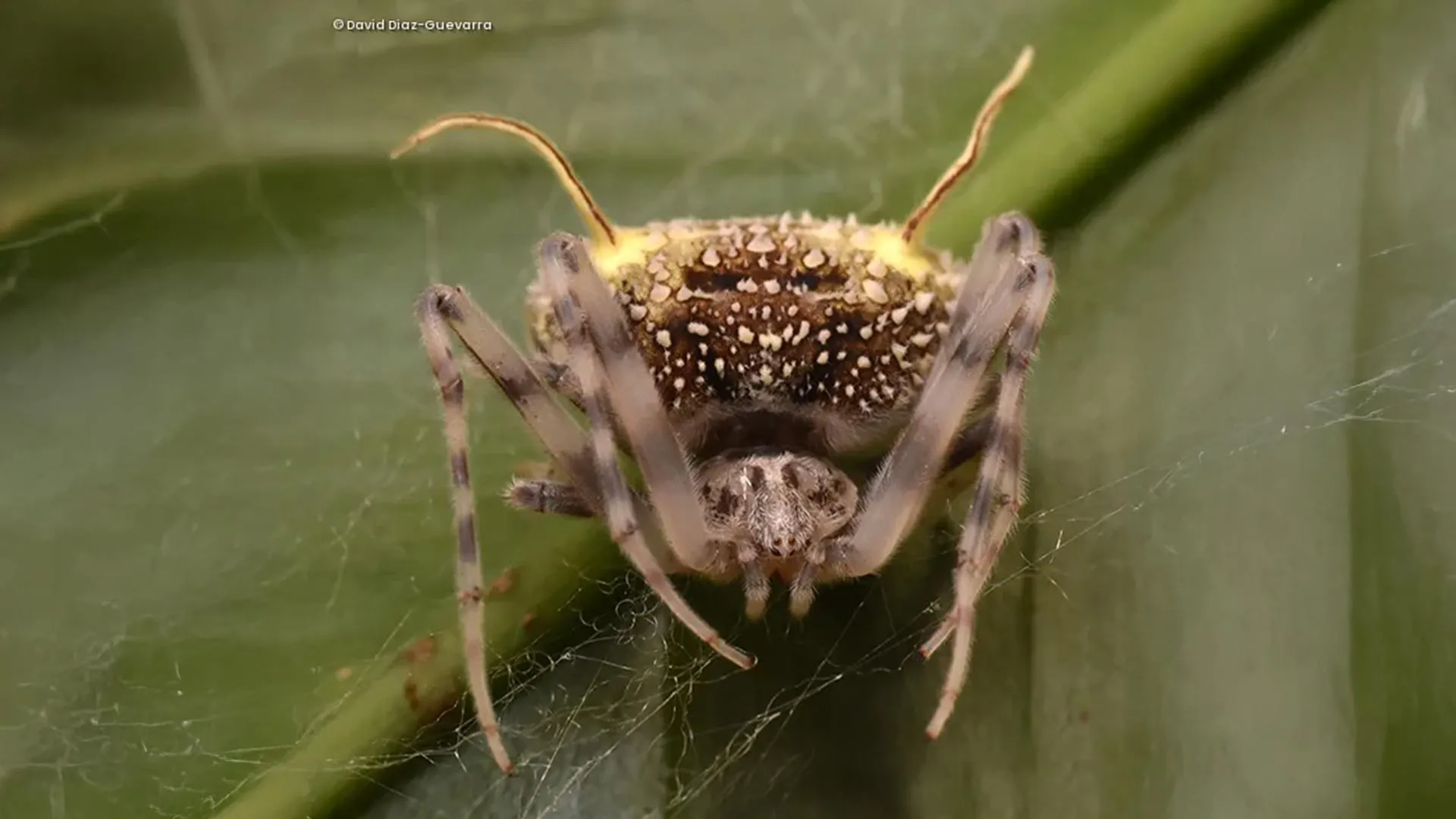
What elevates Taczanowskia waska from a mere evolutionary curiosity to a premier scientific breakthrough is the profound irony of its camouflage. Rather than mimicking a generic twig, leaf, or bird dropping—common protective strategies across the arachnid world—this species has evolved to mirror the fruiting bodies of Gibellula, a genus of entomopathogenic fungi renowned for infecting, consuming, and ultimately bursting forth from the bodies of unfortunate spiders. By wrapping itself in the visual signature of its own worst nightmare, Taczanowskia waska has successfully weaponized psychological warfare against its would-be predators and prey alike.
Beyond its striking morphology, the discovery underscores a modern triumph of collaborative science. The foundational spark for this major zoological find did not originate in a high-tech university laboratory, but rather on the digital platform iNaturalist, where observant amateur naturalists flagged an anomalous photograph of a "mushroom with legs." This convergence of grassroots citizen science, rigorous museum curation, and international fieldwork highlights a shifting paradigm in modern biodiversity research. As habitats face unprecedented anthropogenic pressures, the unveiling of Taczanowskia waska serves as both a testament to the boundless ingenuity of natural selection and a stark reminder of the countless mysteries still waiting to be unmasked in Earth’s rapidly vanishing tropical sanctuaries.
Detailed Chronology: From Digital Curiosity to Taxonomic Triumph
The journey of Taczanowskia waska from an obscure dweller of the Amazonian understory to a globally celebrated scientific milestone is a tale defined by serendipity, digital connectivity, and meticulous detective work.
Phase I: The Digital Spark on iNaturalist
The narrative of discovery began not beneath the dense canopy of the Ecuadorian jungle, but within the glowing digital ecosystem of iNaturalist, a premier citizen-science platform. An amateur naturalist traversing the Llanganates-Sangay Corridor captured a photograph of what appeared to be a bizarre, pale fungal growth protruding from the underside of a leaf. Upon closer inspection, however, the observer noticed features inconsistent with standard botany—faintly articulated limbs and a distinct cephalothorax.
When the photograph was uploaded to the platform, it immediately sparked intense debate among online naturalists and amateur arachnologists. Was it a diseased spider consumed by mold, or was it an entirely unknown organism playing a high-stakes game of visual deception? The unusual post caught the attention of professional researchers who recognized that the anomaly warranted immediate, on-the-ground scientific scrutiny.
Phase II: The Nocturnal Expedition in the Llanganates-Sangay Corridor
Armed with digital coordinates and a hypothesis of a potential mimicry system, an international team of field researchers launched a targeted expedition into the Llanganates-Sangay Corridor. Known globally as a biodiversity hotspot, this corridor acts as an ecological bridge, allowing species to migrate across varying elevations between the Andes and the Amazon.
During a grueling nighttime field survey—the prime operational window for nocturnal arachnids—scientists encountered the living organism in its natural habitat. Even with prior knowledge of what they were searching for, the researchers experienced a moment of cognitive dissonance. Clinging motionless to the underside of a broad tropical leaf, the creature was so utterly convincing in its botanical facade that veteran field biologists initially misidentified it as a common forest mushroom. It was only when the specimen was carefully examined under magnification that the true nature of the animal became undeniably clear.
Phase III: Laboratory Analysis and Museum Curation
Following its collection, the specimen was integrated into academic research pipelines. Nadine Dupérré of the Museum of Nature Hamburg at the LIB played a pivotal role in the subsequent phases of the discovery. Working out of state-of-the-art laboratory facilities, Dupérré and her colleagues undertook the painstaking process of morphological examination.
This phase required cross-referencing the newly collected specimen against extensive historical holdings and reference collections housed within international natural history museums. By comparing Taczanowskia waska with legacy specimens of the poorly understood genus Taczanowskia, the research team was able to confirm its status as an entirely new species to science. The formal taxonomic description was subsequently compiled, peer-reviewed, and published in Zootaxa, officially introducing Taczanowskia waska to the global scientific community.
Supporting Context & Metrics: Anatomy of an Illusion
To fully comprehend the significance of Taczanowskia waska, one must examine the specific evolutionary mechanics that make its disguise so remarkably effective. Mimicry in nature is rarely accidental; it is the product of millions of years of natural selection, wherein individuals bearing even slight structural or behavioral advantages survive long enough to pass on their genetic material.
Morphological Adaptations
Taczanowskia waska exhibits a suite of bizarre physical traits that directly mirror the characteristics of Gibellula fungi:
- Elongated Abdominal Structures: The spider’s abdomen features specialized, finger-like projections that closely replicate the shape and texture of fungal stalks (stipes) and fruiting bodies.
- Cryptic Coloration: Eschewing the dark, glossy, or boldly patterned exteriors common to many predatory spiders, Taczanowskia waska sports a ghostly, pale coloration. This eerie pallor matches the mycelial mats and powdery spore-producing structures typical of advanced fungal infections.
- Proportional Integration: Every aspect of the spider’s body plan appears optimized to break up its recognizable arachnid silhouette, ensuring that casual visual scans by insectivorous birds, reptiles, or larger predatory arthropods register the animal as inedible, rotting flora rather than protein-rich fauna.
Behavioral Specialization
Physical appearance alone is rarely sufficient for successful mimicry; behavior must harmonize with morphology to complete the illusion. Taczanowskia waska accomplishes this through strict behavioral synchronization:
- Strategic Positioning: The spider exhibits an unwavering fidelity to the undersides of leaves—the exact microhabitat where Gibellula spores germinate and proliferate on host spiders.
- Complete Immobility: During daylight and vulnerable resting periods, the spider remains entirely motionless. This behavioral stillness neutralizes the motion-detection triggers utilized by visually oriented predators.
Ecological Function and Evolutionary Implications
The deployment of this dual strategy—morphological camouflage paired with behavioral immobility—serves a double evolutionary purpose:
- Predator Avoidance: By masquerading as a fungus that actively consumes spiders, Taczanowskia waska effectively broadcasts a biochemical "stay away" signal. Predators that might otherwise relish a soft-bodied spider will bypass the individual, knowing that Gibellula-infected hosts are frequently toxic, chemically altered, or devoid of nutritional value.
- Ambush Predation: The disguise acts as a cloaking device against potential prey. Insects and other small arthropods, unconcerned by the presence of a harmless patch of stationary fungus, may approach dangerously close, walking directly into striking range before the spider executes a rapid, lethal ambush.
The Mystery of the Genus Taczanowskia
Adding weight to the discovery is the inherent rarity of the genus Taczanowskia. Historically, arachnologists have struggled to study these spiders because they are vanishingly rare in the wild, resulting in sparse field data and incomplete phylogenetic trees. The identification of Taczanowskia waska not only expands the taxonomic boundaries of the genus but also provides critical physiological data that may help researchers untangle the evolutionary history of related cryptic species across the Neotropics.
Official Statements and Expert Insights
The unveiling of Taczanowskia waska has elicited widespread excitement across the international scientific community, serving as a powerful case study for the integration of modern digital tools with traditional museum-based taxonomy.
Nadine Dupérré, a senior researcher at the Museum of Nature Hamburg at the Leibniz Institute for the Analysis of Biodiversity Change (LIB), emphasized the multifaceted nature of modern zoological discoveries in her official commentary on the project:
"Finds like these demonstrate the immense value of scientific collections. They enable us to classify new species and compare them with historical specimens. Combined with international collaboration and citizen science, this opens up unprecedented opportunities for researching global biodiversity."
Dupérré further elaborated on the collaborative dynamics that brought the species to light, noting that the fusion of crowdsourced observation data with rigorous institutional taxonomy represents a vital frontier in 21st-century conservation science. Without the initial digital breadcrumbs laid down by iNaturalist users, professional researchers might never have focused their limited field hours on the specific micro-habitats within the Llanganates-Sangay Corridor where the species resides.
Other contributing authors and independent arachnologists have echoed these sentiments, pointing out that Taczanowskia waska challenges our current understanding of how complex mimicry complexes evolve. Evolutionary biologists note that while Batesian and aggressive mimicry are well-documented across the animal kingdom, mimicking a pathogen that targets one’s own taxonomic family represents an extraordinary evolutionary gamble—one that evidently pays remarkable dividends in the treacherous theater of the Amazonian understory.
Future Outlook: Conservation Imperatives and Scientific Frontiers
As the scientific community digests the implications of Taczanowskia waska, the discovery serves as both an inspiration and a sobering cautionary tale regarding the state of tropical ecosystems.
Expanding Taxonomic Horizons
For arachnologists, the immediate future involves targeted field expeditions designed to map the true geographic range and population density of Taczanowskia waska. Because the genus Taczanowskia remains so poorly understood, researchers are eager to investigate:
- Whether other species within the genus exhibit similar fungal mimicry or if this adaptation is an isolated evolutionary innovation.
- The specific life cycle, reproductive behaviors, and dietary preferences of the newly discovered spider.
- The genetic lineage of the species, which will be mapped using modern genomic sequencing techniques on collected reference specimens.
The Expanding Role of Citizen Science
The trajectory of this discovery confirms that citizen science is no longer a peripheral hobby but a core pillar of modern biological research. As platforms like iNaturalist continue to grow, encompassing millions of observations from remote corners of the globe, the lag time between a species existing in the wild and its formal academic description is shrinking. Empowering local communities, ecotourists, and amateur naturalists to act as frontline observers creates a vast, decentralized surveillance network for global biodiversity—one that professional research institutions can leverage to direct formal expeditions.
Conservation in the Llanganates-Sangay Corridor
Ultimately, the discovery of Taczanowskia waska highlights the irreplaceable value of hyper-diverse tropical sanctuaries like the Llanganates-Sangay Corridor. These ecosystems are currently facing intensifying pressures from deforestation, agricultural expansion, climate change, and resource extraction.
Every undiscovered species like Taczanowskia waska is a testament to the staggering complexity of nature—complexities that can be permanently erased before humanity even realizes they exist. Researchers stress that protecting these fragile habitats is not merely an aesthetic or moral imperative, but a scientific necessity. As Taczanowskia waska brilliantly demonstrates, the natural world still holds sophisticated evolutionary secrets that have the power to redefine our understanding of biology—provided we preserve the wild spaces that give them sanctuary.