






Executive Overview
In a landmark transaction reshaping the landscape of advanced medical device manufacturing, Quasar Medical has officially announced the acquisition of the Medres Nitinol Design and Development Center located in Carlsbad, California. This strategic buyout marks a pivotal milestone for Quasar Medical, a premier contract development and manufacturing organization (CDMO) specializing in the fabrication and engineering of sophisticated, minimally invasive medical devices.
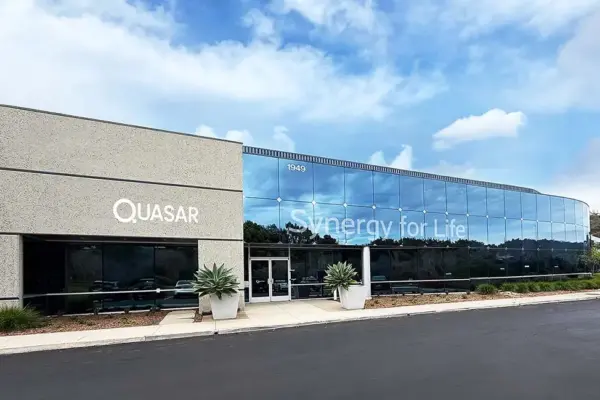
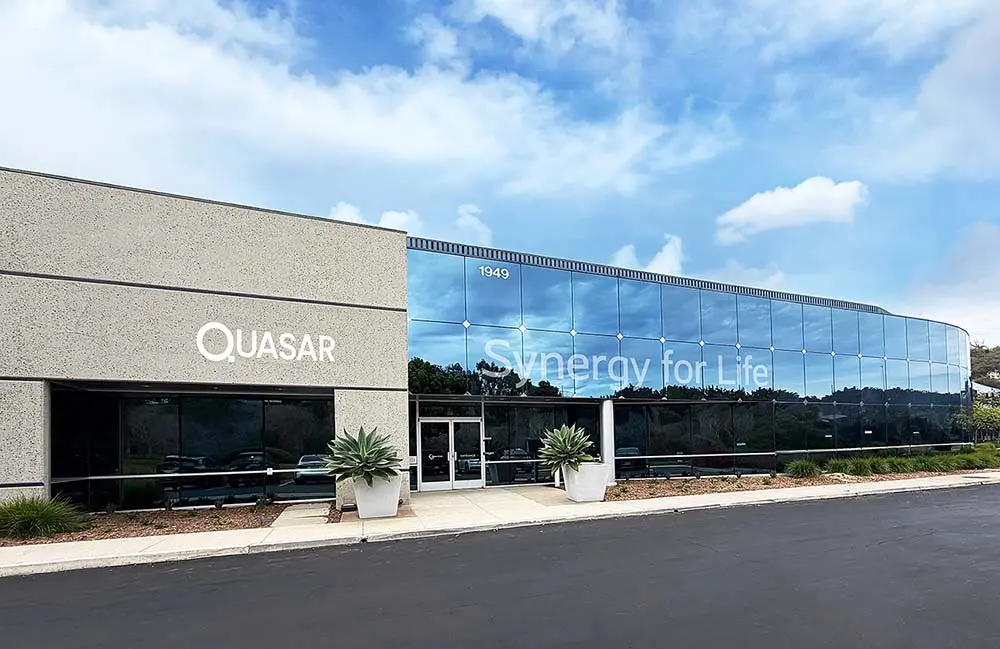
The acquired facility—a specialized 10,000-square-foot campus situated just north of San Diego—brings critical mass, specialized engineering talent, and dedicated manufacturing lines for nitinol, a unique nickel-titanium shape-memory alloy. Nitinol has rapidly become a cornerstone material for cutting-edge medical technologies due to its exceptional superelasticity and thermal memory. These properties allow medical instruments and implants to navigate complex vascular pathways with minimal trauma before deploying into precise functional configurations.
By integrating the Carlsbad site, Quasar Medical instantly elevates its technical capabilities, bridging early-stage concept development with scalable commercial manufacturing. The transition connects the San Diego-based design center directly to Quasar’s high-capacity production hub in Tecate, Mexico—situated just a one-hour drive away—while synergizing with Quasar’s existing global development powerhouses in Israel and Galway, Ireland.
Leadership appointments underscore the strategic gravity of the deal. Christine Trepanier, Quasar’s Senior Vice President of Technology and a globally recognized authority in surface and materials technology, will spearhead the integration. Furthermore, the company has secured the visionary expertise of industry pioneer Tom Duerig, founder of Nitinol Devices & Components (NDC), who joins as a senior advisor. For Medres International, the divestiture of its California branch allows the parent company to refocus capital and operational bandwidth on the aggressive expansion of its corporate headquarters and core operations in Hungary.
Detailed Chronology: Building a Nitinol Powerhouse
The genesis of the Carlsbad development center dates back to its establishment by Medres in 2024. Recognizing the soaring demand for specialized, biocompatible metal alloys capable of withstanding the rigorous demands of cardiovascular, structural heart, and neurovascular interventions, Medres built the 10,000-square-foot facility from the ground up to house dedicated nitinol processing equipment and a high-caliber engineering team.

Just one year later, in 2025, Medres enacted a strategic expansion of the Carlsbad campus, scaling up its cleanroom footprint, laser-cutting infrastructure, and heat-treatment stations. This expansion cemented the center’s reputation as a premier destination for custom component design.
The trajectory of the facility shifted decisively when executive talent began to migrate. In May 2026, Christine Trepanier—who previously served as Chief Operating Officer at Medres and Chief Technology Officer at Confluent Medical Technologies—joined Quasar Medical as Senior Vice President of Technology. Trepanier’s deep familiarity with the Carlsbad site’s foundational infrastructure, combined with her extensive track record in nitinol surface modification and processing, laid the groundwork for the structural acquisition.
By mid-2026, formal negotiations between Quasar Medical and Medres International culminated in the definitive purchase agreement. Under the terms of the deal, Quasar assumes total ownership of the Carlsbad Nitinol Design and Development Center, its proprietary intellectual property frameworks, and its active customer portfolios. Simultaneously, Medres International carved out the transaction to ensure uninterrupted business continuity for its non-nitinol ventures, committing to a collaborative transition phase managed under the oversight of Medres CEO and Chair Chris Cheng.
Supporting Context & Metrics: The Science and Strategy of Nitinol
To understand the industrial significance of Quasar Medical’s latest acquisition, one must examine the unique material science driving the shift toward minimally invasive medicine. Nitinol—an acronym for Nickel Titanium Naval Ordnance Laboratory—is an equiatomic intermetallic alloy that exhibits two closely related and extraordinarily useful physical properties: superelasticity and shape memory.
The Material Advantage
- Superelasticity: Unlike traditional stainless steel or cobalt-chromium alloys, which deform permanently when bent past a certain threshold, nitinol can undergo strains of up to 8% to 10% and completely spring back to its original shape. This allows delivery systems for catheters, stents, embolic protection devices, and heart valves to snake through tortuous human blood vessels without structural kinking or permanent deformation.
- Shape Memory: The alloy can be "trained" at high temperatures to remember a specific geometric configuration. When cooled, it can be compressed into a rigid catheter sheath; upon reaching body temperature inside a target organ or blood vessel, it automatically expands to its pre-programmed design.
Facility and Geographic Synergies
The metrics underpinning the Carlsbad site highlight its immediate operational readiness:

- Footprint: 10,000 square feet of specialized engineering and manufacturing space.
- Proximity to Tijuana/Tecate Corridor: Located just an hour’s drive from Quasar’s high-volume manufacturing facilities in Tecate, Mexico, the Carlsbad center provides a frictionless bridge from advanced R&D to cost-effective, scaled production.
- Global R&D Network: The site joins an elite tri-continental development network managed by Quasar, operating alongside technical centers in Israel and Galway, Ireland.
For medical device original equipment manufacturers (OEMs), this integration solves a persistent industry bottleneck. Historically, medical innovators had to work with fragmented supply chains, outsourcing raw material sourcing to one vendor, prototype design to another, and mass manufacturing to a third. Quasar Medical’s acquisition establishes a unified, roof-to-roof ecosystem where a device can be conceptualized, simulated, prototyped, and commercially produced within a tightly coordinated pipeline.
Official Statements: Leadership Perspectives
The transaction has drawn widespread attention across the global medtech sector, eliciting detailed commentary from the executive leadership teams driving the transition.
Quasar Medical CEO Alex Wallstein emphasized that the acquisition represents a transformational leap in the company’s corporate evolution:
"The acquisition of the San Diego Nitinol Design and Development Center represents a step change as part of Quasar’s long-term growth strategy. Nitinol is a foundational technology for many of today’s most advanced devices, both in minimally invasive disposables and implantables. Leading the integration of the new San Diego site with our other development centers in Israel and Galway will be no other than Christine Trepanier, our senior vice president of technology and a recognized leader in surface technology. In addition, we are adding visionary talent, including Tom Duerig, senior advisor, who introduced nitinol to medical devices as founder of NDC. This is a significant upgrade of Quasar to a whole new level of expertise."
Christine Trepanier, SVP of Technology at Quasar Medical, detailed how the acquisition enhances the company’s technical value proposition for clinical innovators:

"The center significantly strengthens Quasar’s global technology organization. By bringing together world-class nitinol expertise with our existing design, development, and manufacturing capabilities, we can support customers earlier in the product lifecycle and provide a seamless path from concept through commercialization. This investment expands our ability to solve complex engineering challenges while accelerating innovation for the next generation of minimally invasive medical devices."
From the perspective of the divestor, Medres International CEO and Chair Chris Cheng expressed confidence in the future stewardship of the Carlsbad team:
"We are excited about the future of the Nitinol Center we built within Medres. We are confident that under the stewardship of Quasar, the Nitinol Center in San Diego will thrive with dramatically increased resources and customer reach to achieve its full potential. Selling the site allows Medres to focus intensely on the growth and strategic scaling of our primary corporate headquarters in Hungary."
Future Outlook: The Next Generation of Minimally Invasive Medtech
As cardiovascular, orthopedic, and neurovascular interventions shift increasingly toward smaller incisions and transcatheter delivery systems, the demand for sophisticated nitinol engineering is projected to accelerate exponentially. By embedding seasoned pioneers like Tom Duerig and operational experts like Christine Trepanier into its corporate hierarchy, Quasar Medical has positioned itself at the absolute forefront of this technological curve.
For customers of the former Medres Nitinol Center, the transition unlocks immediate operational advantages. Clients will no longer experience the friction of transitioning complex thermal-mechanical designs across disparate corporate entities. Instead, they gain direct access to an unbroken continuum of care: advanced alloy consultation, rapid prototyping in Southern California, rigorous regulatory testing across global development hubs, and high-volume commercial scaling in Mexico.

Looking ahead, industry analysts anticipate that Quasar Medical will leverage its expanded footprint to capture greater market share in rapidly expanding clinical categories, such as pulsed-field ablation (PFA) catheters, structural heart valve frames, neurovascular thrombectomy retrievers, and advanced peripheral vascular scaffolds. By consolidating specialized material science with global CDMO infrastructure, Quasar Medical has set a new benchmark for vertical integration in modern medical device manufacturing.