






Executive Overview
As humanity prepares to return to the Moon through NASA’s Artemis campaign and establish a permanent presence on the lunar surface, a quiet and persistent passenger is coming along for the ride: the human microbiome. According to a landmark study published on August 19, 2026, in Science Advances, scientists at NASA have confirmed that certain Earth-originating microbes can survive in sheltered, permanently shadowed regions near the Moon’s South Pole.
While these microorganisms cannot grow or multiply in the harsh, anoxic vacuum of space, their ability to remain dormant and viable poses a profound double-edged sword for space exploration. On one hand, it threatens to obscure pristine lunar chemistry and complicate the search for indigenous biological signatures. On the other hand, it turns the lunar poles into an unprecedented natural laboratory, allowing astrobiologists to test the absolute resilience of life under extreme environmental stressors that cannot be replicated on Earth.
Led by planetary scientist Prabal Saxena of NASA’s Goddard Space Flight Center, the research team analyzed how specific bacteria and fungi hitchhike on human spaceflight missions and withstand the punishing conditions of the lunar environment. By mapping micro-topography—ranging from sprawling crater floors to tiny niches no larger than an astronaut’s boot print—the researchers have opened a critical dialogue regarding planetary protection protocols. As humanity steps outward toward Mars and deeper into the solar system, understanding and managing these microbial hitchhikers has transformed from a theoretical precaution into an urgent operational necessity.
Detailed Chronology
The discovery of potential microbial survival niches on the Moon is the culmination of decades of spaceflight microbiology, advanced computer modeling, and high-resolution lunar mapping. The timeline of this scientific breakthrough highlights the intersection of human space exploration and astrobiological vigilance:
- Pre-Artemis Era (Space Station Discoveries): Microbiologists studying the International Space Station (ISS) repeatedly isolate hardy organisms from ventilation systems, walls, and astronaut gear. Among these is Aspergillus niger, a common household fungus typically found in warm, humid bathrooms and HVAC units. Surprisingly, tests reveal that this fungus and other non-extremophiles can endure exposure to the vacuum of space on the exterior of the station, challenging long-held assumptions about microbial durability.
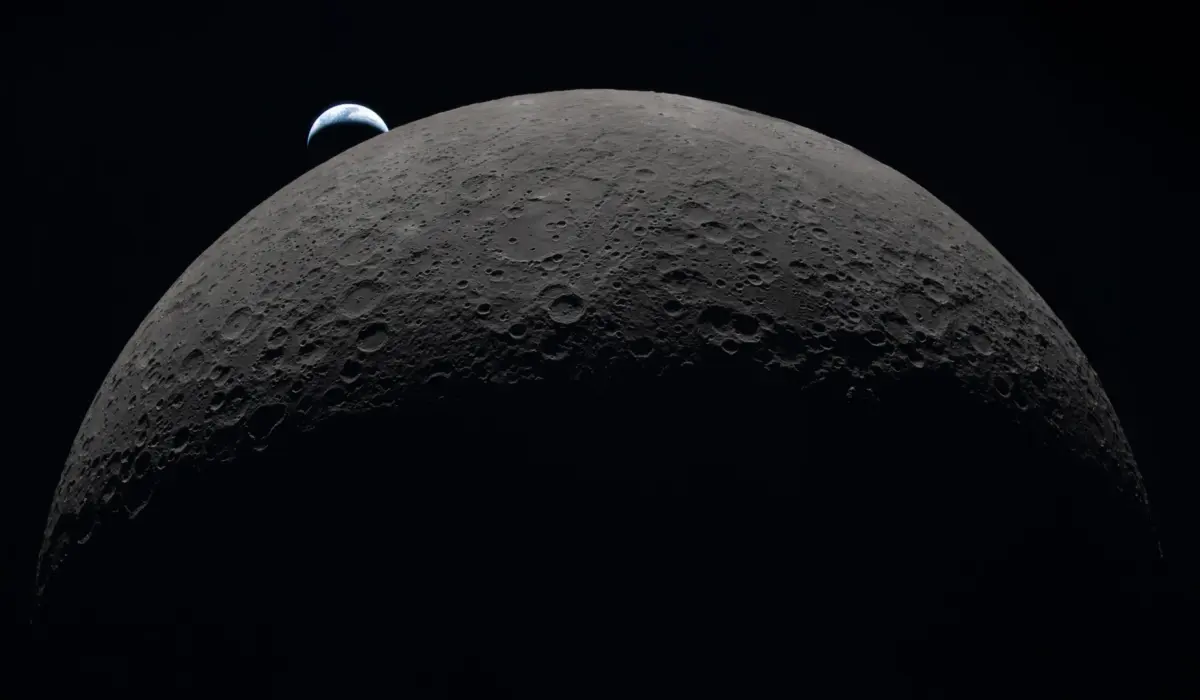
- The LRO Mapping Campaign: NASA’s Lunar Reconnaissance Orbiter (LRO) continuously gathers high-resolution elevation and temperature data of the lunar poles. Because the Moon possesses only a minimal axial tilt of roughly 1.5 degrees, the Sun hugs the horizon, casting long, unyielding shadows across crater rims, ridges, and valleys. These datasets provide the foundational topography needed to model radiation and thermal profiles across the lunar south polar terrain.
- August 19, 2026 (The Science Advances Publication): Prabal Saxena and his interdisciplinary team of NASA researchers publish their definitive study. By integrating LRO thermal maps with radiation models and biological resilience data, the team demonstrates that specific Earth microbes can survive for at least one Earth day—remaining viable in a dormant state—within protected micro-environments near the lunar South Pole.
- Present Day (Operational Adjustments and Protocol Reviews): NASA contamination-control scientists and geomicrobiologists utilize these findings to establish pre-exploration baselines. As robotic and crewed missions target the lunar south polar regions, mission planners weigh the biological footprint of human explorers against the imperative to preserve the pristine nature of ancient lunar chemistry.
Supporting Context & Metrics
To appreciate the gravity of the NASA Goddard study, one must understand the sheer scale of the microbial burden carried by humans and the hostile nature of the lunar landscape.
The Microbial Passenger Manifest
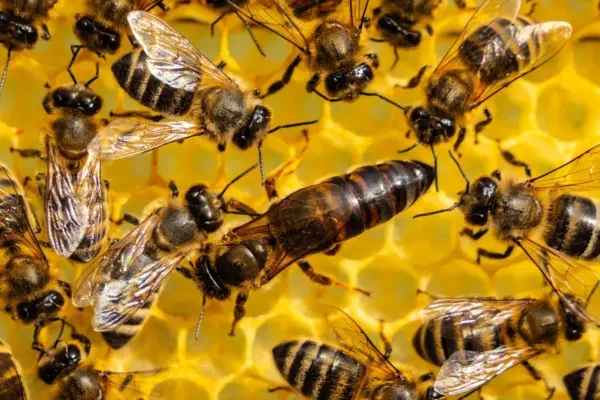
The human body is an ecosystem unto itself. On average, a square patch of human skin roughly the size of a pencil eraser plays host to approximately one million bacteria. Despite rigorous pre-launch quarantines, intensive cleaning protocols, and advanced spacesuit filtration, it is physically impossible to sterilize a human astronaut. During EVA (Extravehicular Activity) operations, skin cells, hair follicles, and microscopic droplets inevitably shed into the surrounding environment, escaping habitats and spacesuits.
While robotic spacecraft can undergo terminal sterilization procedures—such as being baked at temperatures exceeding 400 degrees Fahrenheit (204 degrees Celsius)—such measures are entirely incompatible with crewed missions. Consequently, human explorers leave an inescapable biological trail wherever they tread.
The Select Microbe Panel
For their computer simulations, the research team selected five specific organisms known for their tenacity in spaceflight settings or their close association with human populations:
- Aspergillus niger: A resilient fungus capable of withstanding high levels of ultraviolet (UV) radiation.
- Bacillus subtilis: A spore-forming bacterium common in soil and associated with the human gut.
- Staphylococcus aureus: A prominent member of the human skin and nasal microbiome.
- Deinococcus radiodurans: An extremophile legendary for its resistance to ionizing radiation, cold, dehydration, and vacuum.
- Fusarium species: A diverse group of filamentous fungi frequently found in soil and associated with indoor environments.
The Lunar South Pole: A Mosaic of Shadows
Survival in the context of this study is strictly defined as remaining alive (viable and capable of cellular repair or waking from dormancy) for at least one Earth day; it does not imply growth or reproduction, which remains impossible due to the complete absence of liquid water and atmospheric pressure.
The survival of these microbes is dictated by the unique geography of the lunar poles. Because the Sun remains perpetually low on the horizon, its light sweeps across the surface like a flashlight held flat against a table. This low angle creates deep shadow zones where crater walls, boulders, and microscopic depressions block both direct sunlight and the destructive UV radiation that sterilizes the rest of the lunar surface.
By modeling three specific south polar sites—Nobile Rim, Connecting Ridge, and De Gerlache Rim—using LRO data, the researchers discovered that survivable niches vary wildly in scale. They range from vast crater floors spanning several miles across down to micro-refuges as small as an astronaut’s boot print. Among all tested organisms, Aspergillus niger emerged as the most resilient, owing to its superior resistance to UV radiation. This allows the fungus to persist even in peripheral zones that receive intermittent, scattered sunlight.
Official Statements
The findings have elicited a mix of scientific caution and philosophical acceptance among the researchers at NASA, framing human space exploration as an organic, albeit messy, extension of Earth’s biosphere.
"Humans are natural explorers, and with them come their voices, their memories … and their microbes. For some scientists, myself included, that reality can be unsettling. But it also creates an opportunity to turn an imperfect situation into a useful experiment."
— Prabal Saxena, Planetary Scientist, NASA’s Goddard Space Flight Center
Saxena’s sentiment captures the psychological shift required by modern astrobiology. Rather than pretending contamination can be entirely prevented, leading researchers advocate for transparent cataloging and empirical testing.
"We need to understand what was there before us, because when we go to Mars to search for signs of life beyond our planet, we will want to make sure it’s not stuff we brought."
— Andrew Needham, Artemis Contamination-Control Scientist, NASA Goddard
Needham highlights the ultimate stakes of lunar planetary protection. The Moon serves as a vital proving ground. If space agencies cannot successfully monitor, manage, and differentiate terrestrial contamination on the lunar doorstep, the scientific integrity of future life-detection missions to Mars will be severely compromised.
"I would have expected these microbes to have dried out. When we think of the Moon, we don’t typically think of biology. But the Moon is a place where a cell can survive, so our first exploration of these sites should pay extra attention to our microbial hitchhikers and work hard to characterize lunar chemistry before our visits change what we will find."
— Aaron Regberg (Geomicrobiologist, NASA Johnson Space Center) & Heather Graham (Co-author, NASA Goddard)
These statements underscore the surprise within the scientific community. Organisms like Aspergillus niger are not traditionally classed as extremophiles designed for the vacuum of space, yet their surprising hardiness redefines the boundaries of where Earth life can endure in a dormant state.
Future Outlook
The publication of this study in Science Advances marks a foundational shift in how space agencies approach planetary protection, human operations, and astrobiological research. As the Artemis program transitions toward sustained surface habitation, several key developments will shape the future of lunar and planetary exploration:
1. Establishing Baseline Contamination Inventories
Before astronauts begin extensive operations near the lunar South Pole, space agencies must catalog the exact strains and quantities of microorganisms introduced by habitats, rovers, and spacesuits. This baseline inventory will act as a forensic tool, enabling future scientists to definitively distinguish between indigenous chemical anomalies and human-introduced organic compounds.
2. Controlled Lunar Microbiology Experiments
Rather than viewing microbial presence as a purely negative outcome, researchers plan to leverage shaded south polar niches as natural testing grounds. By deploying carefully monitored, enclosed biological experiments to locations like the Nobile or De Gerlache rims, scientists can empirically test the limits of terrestrial organism survival under true lunar conditions—data that is impossible to fully replicate inside terrestrial vacuum chambers.
3. Refining Protocols for Mars Exploration
The lessons learned at the lunar South Pole will serve as the operational blueprint for crewed missions to Mars. The Red Planet possesses more complex environmental dynamics, including a thin atmosphere and potential subsurface water ice, making planetary protection even more critical. Ensuring that future Martian explorers do not accidentally seed the planet with resilient Earth microbes—thereby triggering a false positive in the search for native Martian life—depends entirely on the methodologies developed during early Artemis sorties.
Ultimately, the Moon is no longer viewed as a sterile, dead rock, but rather as an interactive frontier where Earth’s biological history touches the cosmos. As human footprints settle into the shadowed dust of the lunar South Pole, they carry not just the ambition of a spacefaring civilization, but the resilient, microscopic echoes of life on Earth.