




Executive Overview
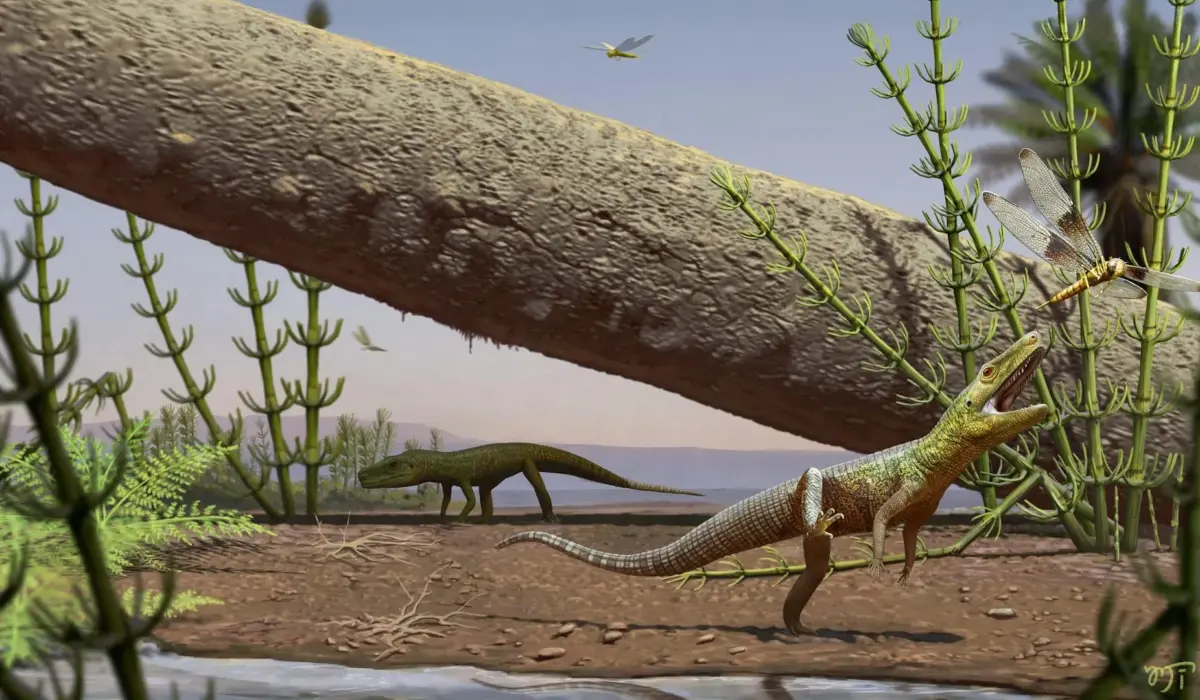
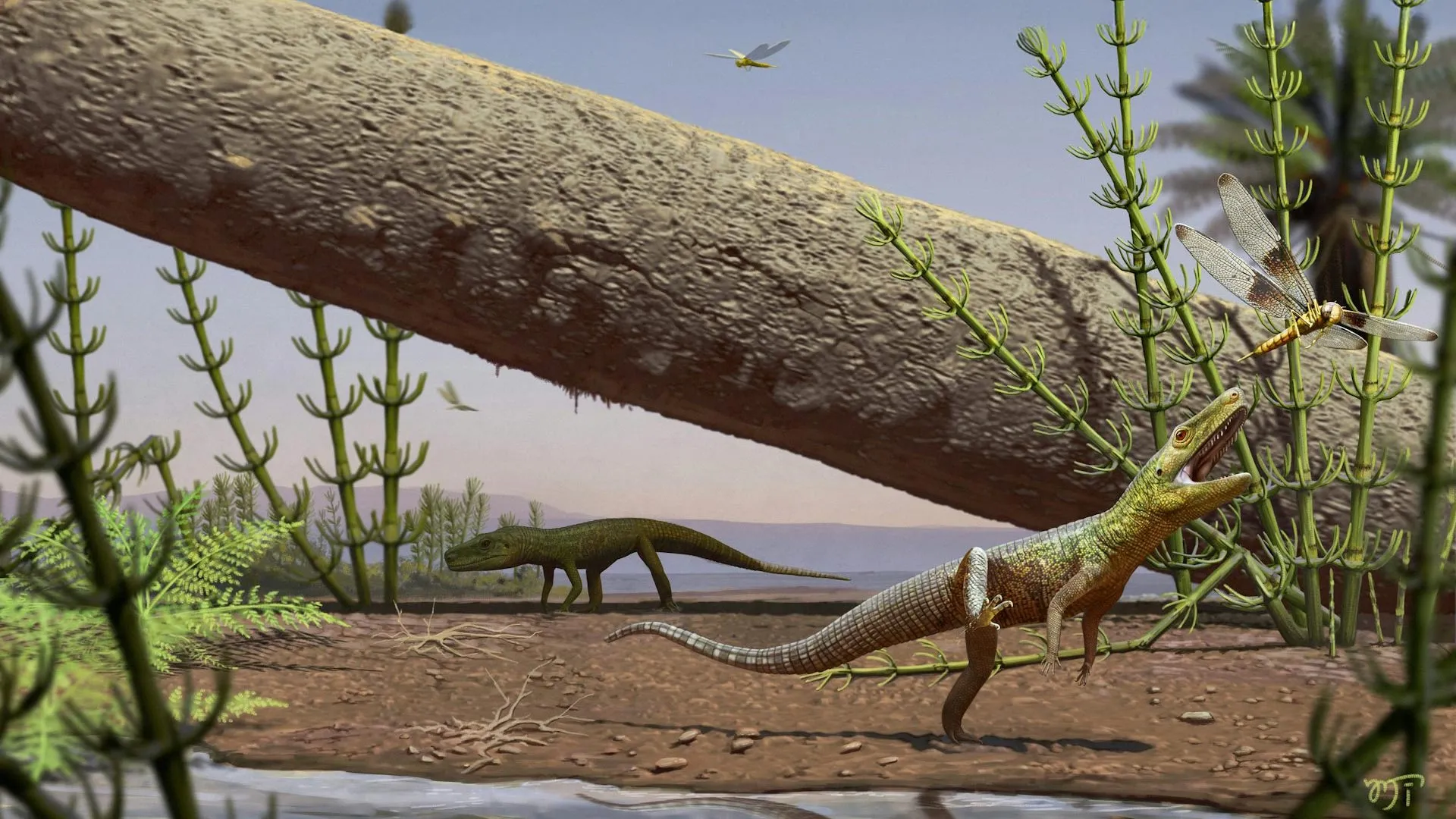
Deep within the fossil-rich sedimentary layers of southern Brazil lies a 240-million-year-old secret that has taken over two decades to bring to light. Named Silescelida acristata, a newly described species of prehistoric reptile is upending traditional models of vertebrate evolution during the Middle Triassic period. Unearthed in the rural municipality of Dona Francisca, located within the UNESCO Quarta Colônia Geopark in the central region of Rio Grande do Sul, this slender, quadrupedal predator roughly the size of a small alligator serves as a crucial missing link in our understanding of archosauriform evolution.
The significance of Silescelida acristata extends far beyond its modest physical stature. As a precursor to the archosaurs—the vast lineage that ultimately branched into dinosaurs, pterosaurs, crocodilians, and birds—this animal illuminates a critical evolutionary staging ground. During the Middle Triassic, terrestrial ecosystems were engaged in a slow, fragile recovery from the apocalyptic Permian-Triassic extinction event, a catastrophe that obliterated up to 90% of marine species and 70% of terrestrial vertebrate species some 252 million years ago. In this vacuum of life, archosauriforms began experimenting with radical new body plans, semi-erect postures, and behavioral adaptations.
Compounding the scientific triumph of the discovery is an extraordinary narrative of academic perseverance: a crucial fragment of the fossil, containing vital provenance data, was accidentally misplaced for more than twenty years before being fortuitously "rediscovered" in a university archive in 2022. Published in the prestigious journal Scientific Reports, the collaborative study—led by the Quarta Colônia Center for Paleontological Research at the Federal University of Santa Maria (CAPPA/UFSM), alongside researchers from UFRGS and PUCRS—not only establishes a novel taxonomic classification but also fundamentally expands the geographic and phylogenetic boundaries of Euparkeriidae, a rare and enigmatic group of Triassic reptiles previously thought to be largely restricted to the Old World.
Detailed Chronology: From the Triassic Crucible to a 21st-Century Archive
The Middle Triassic World: A Planet Under Reconstruction
To understand the ecological arena inhabited by Silescelida acristata, one must peer back 240 million years into the Anisian age of the Middle Triassic. The Earth at this time was locked within a single colossal supercontinent known as Pangea, surrounded by the Panthalassa Ocean and the Tethys Sea. The global climate was intensely arid and prone to sweeping seasonal monsoons, punctuated by harsh, dry interiors and sprawling river systems that cut across shifting floodplains.
Only twelve million years prior, the planet had suffered the worst mass extinction in its history at the end of the Permian period. Volcanic activity associated with the Siberian Traps had pumped astronomical volumes of carbon dioxide and greenhouse gases into the atmosphere, triggering runaway global warming, ocean acidification, and widespread anoxia. The recovery was agonizingly slow; complex, multi-tiered terrestrial ecosystems took millions of years to reorganize.
In this landscape of ecological renewal, surviving lineages vied for dominance. Synapsids—the ancestors of mammals—shared the terrain with an explosion of diapsid reptiles. Among these, the archosauriforms began an evolutionary radiation that would permanently alter the trajectory of terrestrial life. Silescelida acristata emerged directly out of this crucible of recovery. Though it was neither a dinosaur nor a crocodile, it occupied a pivotal position on the evolutionary tree, serving as a biological blueprint for the biomechanical innovations that would soon allow archosaurs to conquer the globe.
[Permian-Triassic Extinction ~252 Ma]
              │
              ▼
    [Triassic Ecosystem Recovery]
              │
              ▼
  [Archosauriform Radiation] ──► (Silescelida acristata ~240 Ma)
              │
              ▼
  [Rise of Archosaurs: Dinosaurs & Crocodiles]
The Anatomy of a Pioneer: Morphology and Locomotion
The fossil material of Silescelida acristata primarily preserves portions of the animal’s limbs, particularly the hindlimbs and pelvic structures. While paleontologists often prize complete skulls or articulated skeletons, isolated limb bones can tell a profoundly detailed story about an organism’s lifestyle, biomechanics, and evolutionary relationships.
The most striking anatomical feature of Silescelida acristata is its femur (thigh bone). Comparative biomechanical analysis reveals that the animal possessed a semi-erect posture. Unlike sprawling lizards whose limbs project outward to the sides in a sprawling gait—requiring immense muscular energy to lift the body off the ground—Silescelida acristata held its limbs lower and more directly beneath its body. This semi-erect posture dramatically increased locomotor efficiency, reducing lateral body-bending (lateral drag) and allowing for faster, more sustained movement over broken terrain.
Furthermore, the species’ specific binomial nomenclature reflects its unique skeletal morphology. The generic name Silescelida is a portmanteau derived from "silence"—alluding to the long decades the fossil lay forgotten in a university drawer—and "celida," referencing the preserved leg bones. The specific epithet acristata translates directly to "without a crest." This refers to the absence of the prominent trochanter—a raised bony ridge on the femur where specific tail and pelvic musculature typically attach in closely related taxa. This distinct anatomical deviation separates Silescelida from virtually all known contemporary counterparts, confirming its status as a distinct genus and species.
The Twenty-Year Disappearance and Rediscovery
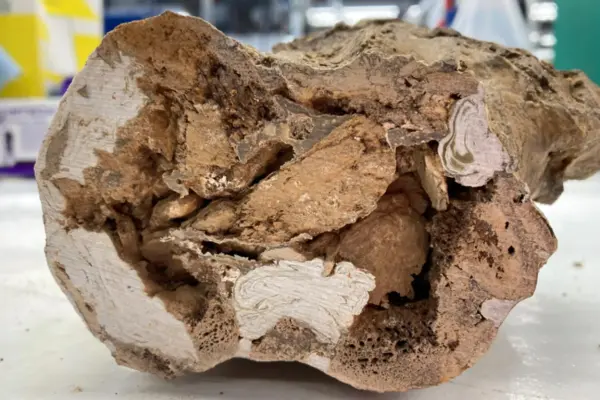
The path from excavation to formal scientific publication is rarely straightforward, but the history of Silescelida acristata features a narrative twist worthy of a detective novel. The initial fossil fragments were unearthed decades ago in the fossiliferous mudstones of Dona Francisca. However, a critical piece of the puzzle—the specific matrix block and associated field notes containing the precise stratigraphic provenance—was separated from the main collection and inadvertently lost in the administrative and physical archives of the Pontifical Catholic University of Rio Grande do Sul (PUCRS).
For over twenty years, the incomplete specimen languished in obscurity, an orphan fossil lacking the contextual data required for rigorous scientific description. Without knowing the exact geological layer or geographic coordinates of origin, researchers could not reliably date the specimen or place it within a precise phylogenetic framework.
The turning point occurred in 2022 during a routine technical audit and curation sweep of the PUCRS scientific collections. Paleontologists examining uncatalogued historical drawers stumbled upon the missing fragment. By cross-referencing the lithological characteristics of the matrix with known fossil beds in Rio Grande do Sul and matching archival field records, the research team successfully reconstructed the specimen’s provenance. This fortuitous rediscovery unlocked the gate for a comprehensive anatomical and phylogenetic study, culminating in the 2026 publication in Scientific Reports.
Supporting Context & Metrics: Global Significance and Phylogenetic Mapping
Expanding the Realm of the Euparkeriidae
One of the most consequential outcomes of the phylogenetic analyses conducted by CAPPA/UFSM and its partner universities is the positioning of Silescelida acristata within or closely adjacent to the Euparkeriidae family. Euparkeriids are an enigmatic and exceptionally rare group of small-to-medium-sized archosauriforms. Prior to this discovery, fossils definitively linked to this lineage were known almost exclusively from the fossil record of the Old World—specifically Africa (such as Euparkeria capensis in South Africa), Asia, and Europe.
The identification of a euparkeriid-adjacent form in South America shatters previous biogeographical assumptions. It demonstrates that these specialized reptiles possessed a much broader geographic distribution during the Triassic than previously indicated by the sparse fossil record.
| Taxonomic Feature | Silescelida acristata | Traditional Euparkeriids (e.g., Euparkeria) |
|---|---|---|
| Geological Age | Middle Triassic (~240 Million Years Ago) | Early to Middle Triassic |
| Geographic Origin | Dona Francisca, Rio Grande do Sul, Brazil | South Africa, Europe, Asia |
| Femoral Morphology | Lacks prominent trochanter (acristata) | Possesses standard trochanteric crests |
| Posture & Locomotion | Semi-erect, quadrupedal, cursorial adaptations | Semi-erect to facultatively bipedal |
| Ecological Role | Small-bodied insectivore/carnivore | Active terrestrial predator |
This expanded range implies that continental drift and dispersal corridors during the Middle Triassic allowed terrestrial tetrapods to traverse vast swaths of Pangea with fewer physical barriers than previously modeled. It also elevates South America—and the Brazilian state of Rio Grande do Sul in particular—from a localized fossil repository to a primary epicentered theatre for the global evolution of vertebrate lineages.
The Stratigraphic Wealth of Rio Grande do Sul
Rio Grande do Sul has long been recognized by the international paleontological community as one of the premier windows into the Triassic world. The sedimentary sequences exposed throughout the state—particularly those preserved within the UNESCO Quarta Colônia Geopark and the Santa Maria Formation—record an unbroken, multi-million-year archive of ecosystem succession.
These rocks capture the transition from the end-Permian extinction aftermath straight through to the dawn of the dinosaur age. Among the world-renowned finds previously unearthed in this region are some of the oldest known dinosaurs on Earth, including Saturnalia tupiniquim and Buriolestes schultzi, as well as formidable carnivorous pseudosuchians (such as Rauisuchians) that reigned as apex predators before the theropods took over.
The addition of Silescelida acristata to this faunal list enriches the structural resolution of the local food webs. It provides direct evidence of the smaller-bodied trophic levels—the meso-predators and insectivores that sustained the larger carnivorous guilds during the rebuilding phase of Pangean ecosystems.
Official Statements and Expert Perspectives
The formal publication of Silescelida acristata in Scientific Reports has generated substantial commentary within the global paleobiological community, highlighting the collaborative nature of Brazilian science and the theoretical implications of the discovery.
Dr. Átila Augusto Stock Da-Rosa, a senior paleontologist involved with the research team at the Federal University of Santa Maria (UFSM), emphasized the paradoxical value of fragmentary remains in modern evolutionary biology:
"In paleontology, there is an ongoing bias toward complete, articulated skeletons. However, the vast majority of our historical record consists of isolated elements. Silescelida acristata proves that even fragmentary limb bones, when analyzed with rigorous phylogenetic tools and backed by solid stratigraphic provenance, can upend our understanding of deep-time biogeography and locomotor evolution. This animal bridges a crucial gap in our anatomical baseline."
Co-researchers from the Pontifical Catholic University of Rio Grande do Sul (PUCRS) reflected on the serendipitous recovery of the missing fossil fragment that made the study possible:
"Finding a lost piece of a fossil after two decades feels like finding a missing page from a historical manuscript. Without that specific fragment recovered during our 2022 collection audit, this species would have remained an anonymous specimen. The name we chose—Silescelida—honors both that silent period of neglect and the sturdy limbs that carried this animal across the Triassic landscape."
International specialists unaffiliated with the direct excavation have similarly praised the work for recalibrating models of archosaurian radiation. Evolutionary morphologists note that the semi-erect femur structure observed in Silescelida provides empirical weight to theoretical models predicting how terrestrial vertebrates transitioned away from sprawling postures without immediately committing to the fully upright, pillar-like gait of advanced dinosaurs and rauisuchians.
Future Outlook: The Next Frontier in Triassic Paleontology
The discovery and description of Silescelida acristata mark the conclusion of one chapter and the opening of several new avenues for ongoing research in South American paleontology. As the scientific community digests the implications of this euparkeriid-related form in Brazil, several key areas of inquiry are taking shape for future field seasons and laboratory analyses.
1. Expanded Fieldwork in the Quarta Colônia Geopark
With the stratigraphy of the Dona Francisca site firmly established through the recovered provenance data, paleontologists at CAPPA/UFSM are intensifying localized excavations. Geological mapping suggests that adjacent strata may preserve additional skeletal elements of Silescelida acristata, including cranial material. Discovering a skull or vertebrae would allow researchers to refine phylogenetic matrices with absolute precision, clarifying whether Silescelida sits squarely within Euparkeriidae or represents an independent, parallel-evolving stem lineage.
2. Micro-CT Scanning and Histological Analysis
Plans are currently underway to subject the existing limb bones of Silescelida acristata to high-resolution micro-computed tomography (Micro-CT) scanning. By visualizing the internal bone microstructure and vascular canals through osteohistological analysis, scientists hope to determine the precise ontogenetic stage (age) of the type specimen—whether it was a fully grown adult or a juvenile—as well as infer its metabolic growth rates. Such physiological data are vital for understanding how early archosauriforms managed energy budgets in the fluctuating climates of post-extinction Pangea.
3. Global Phylogenetic Re-evaluation
The expansion of the geographic range of euparkeriid-related reptiles necessitates a comprehensive global revision of Middle Triassic tetrapod databases. Researchers plan to re-run phylogenetic algorithms incorporating Silescelida alongside newly discovered taxa from Argentina, South Africa, and Eastern Europe. This will test hypotheses regarding whether southern Pangea acted as a evolutionary refuge or a cradle of innovation for archosaurian precursors during the Anisian age.
Ultimately, Silescelida acristata serves as a powerful reminder that the history of life on Earth is still written in fragments. Beneath the rolling hills of Rio Grande do Sul, millions of years of sedimentation continue to yield silent witnesses to deep time—remind us that the creatures who inherited the Earth after its greatest catastrophes began as small, experimental pioneers testing out new ways to walk upon a recovering world.