



Executive Overview
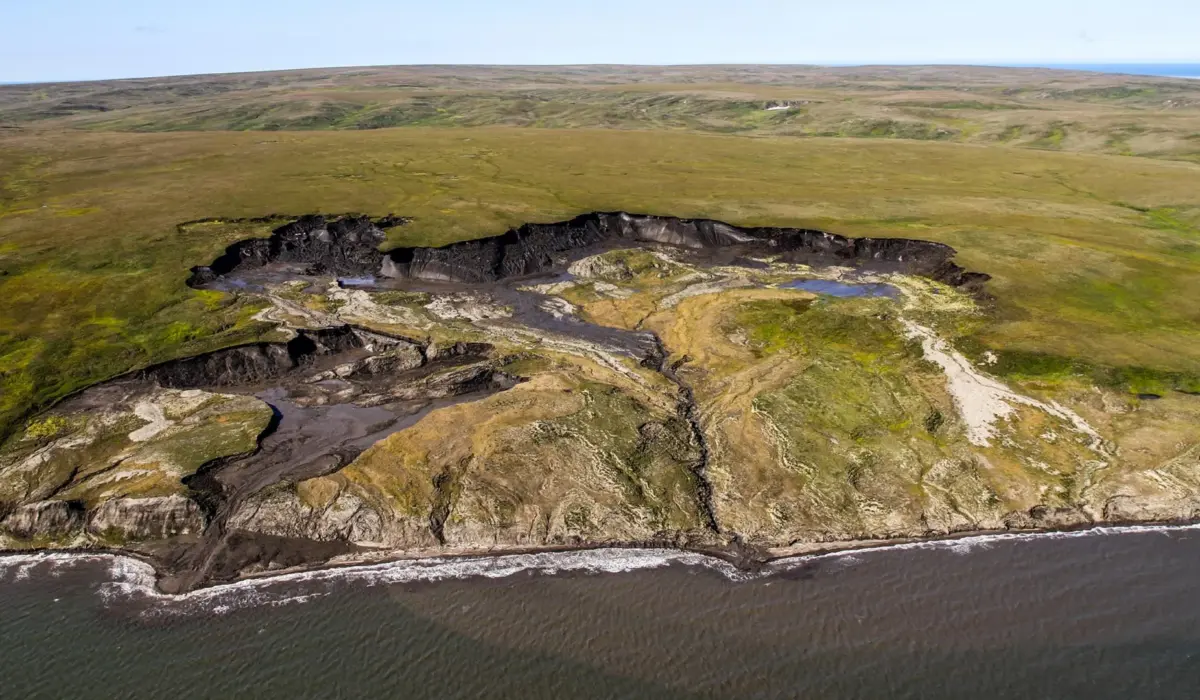
High in the Canadian Arctic, the landscape is literally dissolving into the sea. For millennia, the permafrost of the circumpolar north has functioned as a massive, frozen vault, locking away colossal quantities of organic carbon derived from ancient plant remains, roots, and ancient tundra ecosystems. Today, however, a rapidly warming climate is dismantling this ancient architecture. As atmospheric temperatures in the Arctic climb faster than anywhere else on Earth, the frozen ground thaws, and ferocious coastal erosion strips away entire shorelines, funneling immense pulses of particulate and dissolved organic matter directly into the Arctic Ocean.
For climate scientists, this transfer of land-based carbon into the marine realm has long represented a critical blind spot. Conventional climate forecasting models have struggled to answer a fundamental question: Once this ancient terrestrial carbon enters the ocean, what is its ultimate fate? Does it fuel microbial respiration, returning rapidly to the atmosphere as carbon dioxide and methane to accelerate global warming, or does it sink harmlessly into the abyssal depths, effectively sequestered away from the active carbon cycle for millennia?
A groundbreaking study recently published in the prestigious journal Nature Geoscience has begun to lift the veil of uncertainty surrounding this planetary-scale dynamic. Led by an international team of researchers from the Alfred Wegener Institute, Helmholtz Centre for Polar and Marine Research (AWI), and MARUM – Centre for Marine Environmental Sciences at the University of Bremen, the investigation sheds unprecedented light on the biogeochemical processing of permafrost-derived carbon along the vulnerable coast of Qikiqtaruk (Herschel Island) in Canada.
Contrary to the prevailing fears that all thawed permafrost carbon would quickly supercharge microbial activity and escape into the atmosphere, the researchers discovered that the vast majority of this material is preserved rather than respired. By analyzing decades-old sediment cores, the team found that marine microorganisms—acting with surprising selectiveness—sidestep the ancient permafrost carbon in favor of fresher, more labile organic material derived from marine algae. Consequently, only about ten percent of the land-derived organic carbon deposited in coastal sediments is converted into greenhouse gases by microbes. The rest remains safely buried in the seabed.
This revelation does more than just offer a brief sigh of relief for climate modelers; it fundamentally alters our understanding of Arctic carbon cycling. Nevertheless, scientists warn that the complex interplay between thawing land, microbial selectivity, and shifting coastal optics carries profound implications for marine food webs, coastal communities, and the accuracy of next-generation climate projections.
Detailed Chronology & Scientific Investigation
To untangle the complex journey of land-based carbon as it enters the marine environment, the research team designed a comprehensive field and laboratory campaign centered on the waters surrounding Qikiqtaruk (Herschel Island), an ice-rich island situated in the Beaufort Sea off the Yukon coast of Canada. This region serves as a living laboratory for the study of rapid coastal permafrost degradation.
Step 1: Recovering the Archives of the Seafloor
The investigation began with the collection of sediment cores from strategic locations off the Herschel Island coast. These vertical cylinders of mud and silt act as natural historical archives, capturing layers of material deposited over roughly the past fifty years. Every millimeter of sediment represents a snapshot of the environmental conditions, sedimentation rates, and organic inputs of a bygone season.
By systematically sampling these cores, the scientists were able to track how organic carbon from land and sea has accumulated on the seafloor over decades. This historical perspective is vital, as modern baseline data alone cannot capture the multi-year transformation processes that occur as terrigenous organic matter interacts with marine sediments.
Step 2: Pore Water Geochemistry and Isotopic Forensics
Once the cores were secured and processed, the team deployed high-resolution analytical techniques to examine the chemical environment within the sediment. A primary focus was placed on "pore water"—the microscopic water trapped in the interstitial spaces between individual sediment particles.
As marine microorganisms consume organic matter buried in the sediment, they respire, releasing dissolved inorganic carbon (DIC) into the pore water. By measuring the concentration and chemical signature of this DIC, the researchers could precisely quantify how much carbon had been broken down and converted into gases since deposition.
To determine the exact pedigree of the organic matter consumed by the microbes—distinguishing between ancient plant debris from thawing permafrost and fresh organic matter from marine algae—the team utilized advanced carbon isotope analysis:
- The $^13$C Isotope: Used as an atomic fingerprint to differentiate between carbon originating from terrestrial plants versus marine organisms.
- The $^14$C Isotope (Radiocarbon dating): Deployed to ascertain the absolute age of the carbon, clearly separating "old" Pleistocene- or Holocene-aged permafrost deposits from "fresh" modern biomass.
Step 3: Unmasking Microbial Selectivity
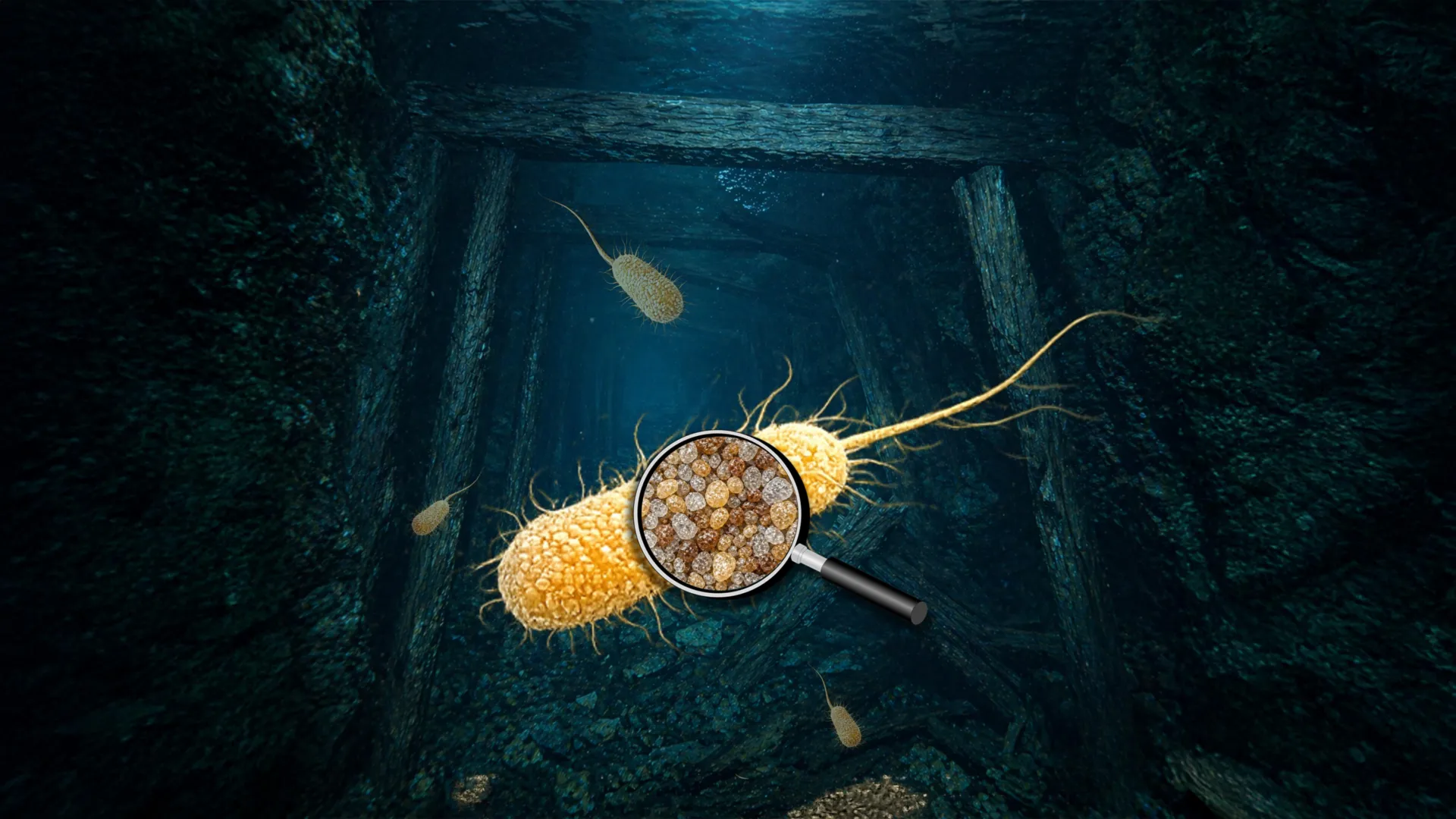
The isotopic and geochemical data revealed a surprising hierarchy of microbial consumption. Rather than acting as opportunistic scavengers that devour any organic carbon available within the sediment matrix, the bacterial communities exhibited distinct culinary preferences.
The microbes overwhelmingly favored fresh organic matter, such as the seasonal remains of marine algae, while largely ignoring the recalcitrant, highly processed old carbon washed down from the eroding permafrost cliffs. This microbial "gourmet" behavior explains why the bulk of the terrigenous carbon escapes remineralization and remains locked away in the sediment record.
Supporting Context & Metrics: The Scale of the Arctic Carbon Vault
To appreciate the significance of the AWI and MARUM findings, one must first grasp the sheer magnitude of the Arctic carbon reservoir and the velocity at which it is being mobilized.
The Numbers Behind the Permafrost
- 1,300 Gigatonnes: The estimated volume of organic carbon currently locked within circumpolar terrestrial permafrost ecosystems. This immense store is equivalent to roughly twice the amount of carbon currently residing in the Earth’s atmosphere. Much of this material consists of ancient plant remains that accumulated over thousands of years and were preserved in a state of perpetual cryogenic arrest.
- 400 Gigatonnes: The additional volume of organic carbon stored in Arctic ocean sediments and river deltas, much of it delivered over millennia by massive river systems draining the Siberian and North American continents.
- 0.02 Gigatonnes: The current annual flux of terrestrial organic carbon entering the Arctic Ocean via coastal erosion and riverine discharge.
- 70% to 150% Increase: The projected surge in coastal and riverine carbon outflow by the year 2100 under current greenhouse gas emissions scenarios and warming trajectories.
+-------------------------------------------------------------------------+
|                  THE ARCTIC CARBON CYCLE DYNAMICS                       |
+-------------------------------------------------------------------------+
|                                                                         |
|  [ Terrestrial Permafrost ] ---> (Thawing & Erosion)                    |
|       (1,300 Gigatonnes)               |                                |
|                                        v                                |
|                             [ Arctic Ocean / Coastal ]                  |
|                                        |                                |
|            +---------------------------+---------------------------+    |
|            |                                                       |    |
|            v                                                       v    |
|  (~10% Remineralized)                                    (~90% Buried)  |
|  Microbes convert carbon into                          Carbon remains   |
|  gases released to the                                 sequestered in   |
|  atmosphere (CO2 / CH4).                               seabed sediments.|
|                                                                         |
+-------------------------------------------------------------------------+
The Amplification Loop of Arctic Warming
The Arctic is currently warming at a rate roughly four times faster than the global average—a phenomenon known as Arctic amplification. As atmospheric and sea-surface temperatures rise, sea-ice extent shrinks, leaving coastlines exposed to high-energy storm surges and wave action. Combined with the thermal degradation of ice-rich coastal cliffs (a process known as thermo-abrasion), this creates rapid retreat rates along thousands of kilometers of northern coastline.
As chunks of frozen tundra collapse into the sea, they release massive quantities of sediment, nutrients, and organic carbon into the nearshore zone. Until this latest study, climate scientists feared that this sudden influx of organic fuel would trigger runaway microbial respiration, creating a positive feedback loop that would pump gigatonnes of additional greenhouse gases into the atmosphere. The revelation that roughly 90% of this material is successfully sequestered in seafloor sediments provides a crucial nuance to these catastrophic projections.
Official Statements & Expert Insights
The research team emphasizes that while the findings offer a reassuring check on potential carbon-climate feedbacks, they also underscore the profound and multifaceted transformations currently underway in the high north.
"Although the sea here carries away huge quantities of organic carbon from the coast, surprisingly little of it ends up in the ocean’s active carbon cycle," explains Dr. Manuel Ruben, lead author of the study from the Alfred Wegener Institute, Helmholtz Centre for Polar and Marine Research (AWI). "Microorganisms convert around ten percent of the organic carbon from the sediments into gases, which rise into the water and can then enter our atmosphere."
Dr. Ruben notes that quantifying this fraction with high precision is essential for removing uncertainty from global climate projections.
"Our study shows, more precisely than ever before, how much carbon is safely stored in the seabed—and just how much of the decomposed material actually originates from the old permafrost," Ruben adds. "This provides an important foundation for climate models that can predict the consequences of permafrost thawing for the global climate."
Prof. Gesine Mollenhauer, a geochemist at AWI and co-spokesperson for the ‘The Ocean Floor – Earth’s Unexplored Interface’ Cluster of Excellence, highlights the ingenuity of using isotopic tracers to decode microbial diets.
"Carbon isotopes represent our atomic indicators that can identify the food source of the microorganisms," Prof. Mollenhauer explains. "The $^13$C isotope, for example, tells us whether they have consumed carbon from land or from the sea. By way of the $^14$C isotope, we were able to determine whether the single-celled organisms preferred old organic carbon from permafrost or fresh organic carbon from algae remains."
Expanding on the surprising selectivity of the seabed bacteria, Mollenhauer characterizes the benthic microbial community in vivid terms:
"The sediment is home to ‘gourmet’ bacteria that apparently prefer fresh carbon stemming from, for example, more recent algal remains over the ‘old’ carbon from permafrost deposits."
However, the authors remain cautious, noting that the journey of carbon from land to permanent burial is fraught with transitional steps that require further scrutiny.
"We do need further research here," Mollenhauer cautions. "This is because some of the organic carbon from the permafrost may already have been broken down before it reaches the seabed."
Future Outlook: Ecosystem Disruption and the 2027 ‘Arctic Pulse’ Campaign
While the sequestration of permafrost carbon in marine sediments helps mitigate runaway atmospheric warming, the physical movement of land-based material into the ocean is far from benign. The massive discharge of sediment and dissolved organic carbon is fundamentally restructuring the physics, chemistry, and biology of Arctic coastal waters.
The Optical Transformation of Arctic Coasts
When millions of tons of eroded soil and sediment enter the nearshore environment, they dramatically alter the optical properties of the water column. Freshly eroded mineral fragments render the coastal ocean turbid and opaque, while dissolved organic carbon (DOC) imparts a deep, tea-colored stain to the water.
This reduction in light penetration has immediate consequences for primary producers at the base of the marine food web. Microscopic algae (phytoplankton) and benthic microalgae rely heavily on solar radiation to perform photosynthesis, producing the biomass and oxygen that sustain the entire Arctic marine ecosystem. When light levels plummet due to coastal turbidity, primary production can be severely suppressed.
The cascading effects of this ecological disruption ripple upward through the marine food web, potentially impacting populations of fish, crustaceans, marine mammals, and the indigenous coastal communities that depend upon traditional subsistence hunting and fishing.
Looking Ahead: The ‘Arctic Pulse’ Campaign (2027)
To untangle these complex interactions between permafrost degradation, marine optics, and ecosystem productivity, researchers are already preparing for the next major leap in polar observation: the international ‘Arctic Pulse’ campaign, scheduled for 2027.
This massive, coordinated scientific initiative will marshal multi-disciplinary resources across air, land, and sea. Researchers plan to execute synchronized observations utilizing:
- The state-of-the-art German polar research icebreaker RV Polarstern.
- Specialized AWI research aircraft equipped with advanced remote-sensing instrumentation to map coastal erosion and water turbidity across vast geographic scales.
- Comprehensive land-based monitoring stations tracking permafrost thaw dynamics in real-time.
By bridging terrestrial permafrost science with oceanography and marine ecology, the Arctic Pulse campaign aims to construct a holistic, end-to-end model of how rapid environmental change is reshaping the entire Arctic Earth system.
Conclusion: Refining Our Climate Future
The findings from Qikiqtaruk mark a vital milestone in Earth science. By proving that marine microorganisms selectively bypass ancient permafrost carbon in favor of fresh algal nutrients—leaving roughly 90% of land-derived carbon safely buried in seabed sediments—the study refines our understanding of carbon budgeting in a warming world.
Yet, as permafrost thaw accelerates toward the close of the 21st century, the Arctic will continue to spring surprises upon scientists and policymakers alike. Integrating these nuanced biogeochemical mechanisms into global climate models is no longer just an academic exercise; it is an urgent necessity for accurately forecasting the trajectory of our changing planet.