





Executive Overview
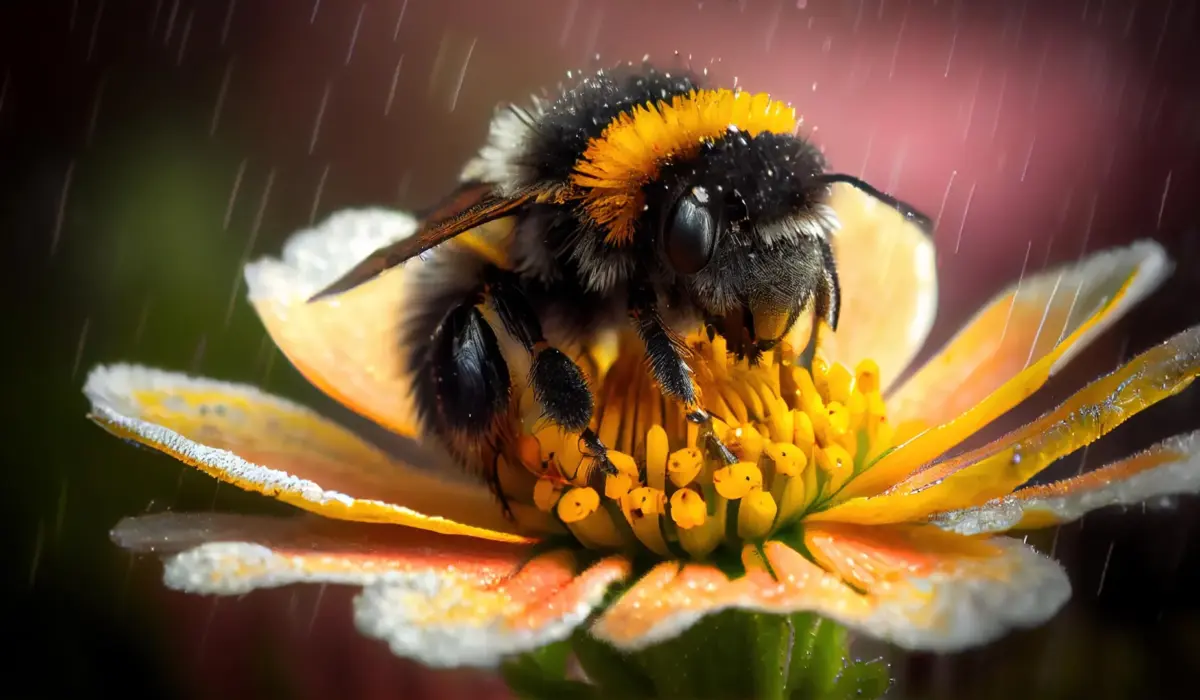
Standing at barely an inch in length, the humble bumblebee commands an outsized role in the stability of the global food supply. Approximately one-third of the human diet relies directly or indirectly on animal-mediated pollination, with bees serving as the primary architects of agricultural abundance. Yet, these vital insects are caught in the crosshairs of an escalating environmental crisis. While modern industrial agriculture demands ever-greater crop yields to feed a burgeoning global population, the chemical interventions designed to protect harvests are increasingly undermining the biological foundations upon which those harvests depend.
At the center of this scientific and ecological debate is sulfoxaflor, a next-generation systemic pesticide introduced in 2013. Marketed as an essential tool to combat sap-feeding pests—such as aphids, whiteflies, and plant bugs—on high-value crops like soybeans, corn, and cotton, sulfoxaflor was developed to replace older, heavily restricted chemistries. However, mounting scientific evidence indicates that while the chemical is devastatingly effective against targeted agricultural pests, it carries a profound, unintended cost for non-target organisms, most notably pollinators.
Groundbreaking research conducted by a team at the Georgia Institute of Technology, funded by the U.S. Department of Agriculture (USDA), has moved the conversation past general toxicity. Scientists have uncovered definitive proof that even low-level, field-realistic exposures to sulfoxaflor induce profound molecular-level alterations in bumblebees. Specifically, the pesticide disrupts gene expression within ovarian tissues, threatening reproductive capability and portending long-term declines in colony viability.
This investigative report explores the mechanisms of this chemical disruption, details the chronological unfolding of the Georgia Tech study, examines the broader socioeconomic and ecological metrics of the pollinator crisis, features exclusive commentary from the leading researchers, and evaluates the future outlook for global agriculture as it struggles to balance pest eradication with ecological preservation.
Detailed Chronology of the Georgia Tech Study
The investigation into sulfoxaflor’s cellular-level impacts on bumblebees represents a methodological leap forward in environmental toxicology. For decades, regulatory assessments of pesticides largely relied on acute toxicity metrics—measuring the concentration of a chemical required to cause immediate mortality within a localized test population (commonly known as the $textLD_50$ or lethal dose). These metrics frequently overlooked sublethal effects: the physiological, neurological, and reproductive impairments that do not immediately kill an insect, but slowly incapacitate its ability to survive, forage, and reproduce.
To bridge this critical knowledge gap, a research collective led by Professor Michael Goodisman and postdoctoral fellow Sarah Orr (now an assistant professor at the University of Tampa) set out to investigate what happens inside a bumblebee’s body when it encounters low, non-lethal doses of sulfoxaflor.
Phase 1: Controlled Exposure and Tissue Collection
The experimental design mirrored real-world agricultural scenarios where worker bumblebees forage in treated fields and ingest trace residues of systemic chemicals via nectar and pollen. Worker bumblebees within a controlled laboratory setting were subjected to carefully calibrated, low-dose exposures of sulfoxaflor.
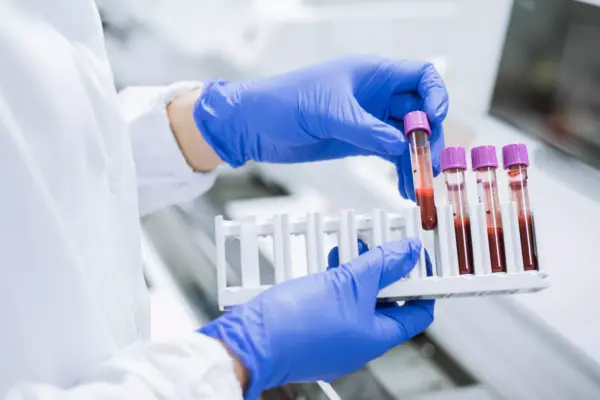
Following the exposure period, the research team utilized advanced specimen-preservation techniques. They immediately flash-froze the bee tissues using liquid nitrogen—a process that halts all biochemical reactions instantly, preserving the precise state of cellular activity at the moment of freezing. This rapid preservation was essential for capturing accurate snapshots of gene expression without artifactual changes induced by handling or decay.
Phase 2: RNA Sequencing and Transcriptomic Analysis
With the tissues safely preserved, the team extracted ribonucleic acid (RNA) to conduct transcriptomic analyses. By sequencing the RNA, the researchers could measure precisely which genes were active, or "expressed," and at what levels, following pesticide exposure. Messenger RNA acts as the molecular blueprint intermediary between the organism’s DNA and its functional proteins; alterations in these transcripts reveal how a chemical stressor forces an organism to rewrite its internal programming.
When comparing the treated bees to a control group, the researchers observed widespread transcriptomic shifts. The most dramatic and significant alterations in gene activity were concentrated heavily within the ovarian tissue of the worker bees.
Phase 3: Computational Modeling and Systemic Mapping
To interpret the massive datasets generated by the RNA sequencing, the team deployed sophisticated computational and bioinformatic models. These models mapped the differentially expressed genes onto known biological networks, allowing scientists to identify which physiological systems were suffering the greatest disruption.
The models confirmed that sulfoxaflor interfered directly with pathways governing oogenesis (egg production) and metabolic homeostasis. The disruption of these foundational systems carries dire implications. In eusocial insect colonies, worker bees do not typically lay the majority of eggs—that role is reserved for the queen—but worker physiology remains deeply intertwined with the overarching health, labor allocation, and generational continuity of the colony. Furthermore, in many wild bee species, virtually all females possess functional ovaries and bear the sole responsibility for future reproduction.
By connecting these molecular disruptions directly to physiological outcomes, the Georgia Tech team succeeded in establishing a clear, unbroken causal chain: from chemical ingestion to altered gene expression, from altered gene expression to reproductive impairment, and ultimately, from reproductive impairment to population-level collapse.
Supporting Context & Metrics: The Intersection of Agriculture and Ecology
To fully grasp the gravity of the Georgia Tech findings, one must examine the broader statistical and ecological landscape governing modern food production and pollinator health.
The Economic Value of Pollinators
According to data compiled by the Food and Agriculture Organization (FAO) of the United Nations and various agricultural economists, approximately 35% of global crop production volume depends directly or indirectly on pollinators. This includes:
- Fruits: Apples, blueberries, strawberries, cherries, peaches, and citrus varieties.
- Vegetables: Cucumbers, tomatoes, squash, and peppers.
- Nuts and Legumes: Almonds, which are almost entirely dependent on managed honeybee and wild bumblebee pollination, represent a multi-billion-dollar industry in California alone.
- Forage Crops: Alfalfa and clover, which are grown to feed dairy and beef cattle, relying on insect pollinators to set seed.
Without these pollinators, the global diet would experience a catastrophic nutritional contraction, characterized by an over-reliance on wind-pollinated cereal grains like wheat, rice, and corn, while essential micronutrients, vitamins, and antioxidants derived from pollinator-dependent fruits and vegetables would become scarce and prohibitively expensive.
The Rise of Sulfoxaflor
Introduced commercially in the mid-2010s by Dow AgroSciences (now part of Corteva Agriscience), sulfoxaflor belongs to the sulfoximine class of insecticides. It was engineered to act on the central nervous system of sap-feeding insects by targeting insect nicotinic acetylcholine receptors (nAChRs).
While structurally distinct from older neonicotinoid pesticides—which have faced widespread bans and severe restrictions across the European Union and parts of the United States due to their extreme toxicity to bees—sulfoxaflor shares a similar mode of action. It binds to neural receptors, causing hyper-excitation, paralysis, and eventual death in target pests. However, because bees and other beneficial insects also possess nAChRs, they are inherently vulnerable to these neurotoxic effects, even at concentrations far below those intended to kill pests.
Cumulative Environmental Pressures
Pesticide exposure does not occur in a vacuum. Bumblebees today face a compounding matrix of anthropogenic stressors that weaken their resilience:
- Habitat Fragmentation and Loss: Agricultural monocultures and urban sprawl strip away the diverse floral meadows and nesting sites that wild bees require throughout their life cycles.
- Climate Change and Thermal Stress: Rising global temperatures and an increase in the frequency, duration, and intensity of heatwaves impose severe physiological stress on foraging bees, reducing their lifespans and cognitive performance.
- Pathogens and Parasites: Managed and wild bees alike are increasingly battered by introduced pathogens, such as the Nosema microsporidian parasites and the parasitic Varroa mite (more common in honeybees, but reflective of broader disease pressures), which interact synergistically with chemical toxins to decimate colonies.
When a bumblebee already weakened by heat stress and nutritional deprivation encounters a pesticide like sulfoxaflor, its physiological margins for survival evaporate.
Official Statements and Expert Perspectives
The intersection of molecular biology and agricultural policy has generated intense debate among researchers, regulatory bodies, and the agricultural community. The findings from Georgia Tech provide empirical weight to long-standing warnings issued by independent entomologists.
Reflecting on the study’s breakthrough implications, Dr. Michael Goodisman, professor in the School of Biological Sciences at the Georgia Institute of Technology, emphasized the rarity and value of bridging microscopic data with macroscopic realities:
"What makes this study exciting is that it connects molecular changes in gene expression to real-world consequences for individual bees and their colonies. That type of connection is historically rare in environmental toxicology and gives us a much clearer, undeniable picture of how modern agricultural chemicals actually affect beneficial insects at a foundational level."
Echoing these sentiments, Dr. Sarah Orr, who spearheaded the research as a postdoctoral fellow at Georgia Tech before transitioning to her current role as an assistant professor at the University of Tampa, highlighted the nuanced balancing act required of modern food systems. She underscored that the goal of scientific inquiry is not to condemn agriculture, but to optimize it:
"We unquestionably need effective pesticides to control destructive crop pests, but those same chemicals can severely harm essential non-target insects like bumblebees. As a scientist, my ultimate goal is to identify practical, evidence-based solutions that support necessary pest management while simultaneously protecting beneficial insects and the delicate food systems that depend on them."
Dr. Orr further stressed the arithmetic of pollination biology, noting that small losses in individual reproductive output cascade upward into systemic ecosystem failure:
"We need high densities of healthy bees for successful pollination to occur across agricultural landscapes. If forager bees are compromised and failing to produce sufficient offspring, overall pollination rates will inevitably decline, threatening both wild biodiversity and cultivated harvest yields."
Agricultural industry representatives, meanwhile, maintain that sulfoxaflor undergoes rigorous pre-market regulatory evaluations by agencies such as the U.S. Environmental Protection Agency (EPA). They argue that when applied in strict accordance with label instructions—such as avoiding application during peak daytime foraging hours or when crops are actively blooming—the risks to pollinators can be successfully mitigated.
However, independent conservation biologists and toxicologists counter that label instructions are frequently insufficient to prevent chronic, low-level environmental contamination, pointing out that systemic insecticides pervade entire plant tissues, including pollen and nectar, rendering protective timing guidelines largely ineffective for truly systemic compounds.
Future Outlook: Toward Sustainable Agricultural Harmonization
As the scientific consensus solidifies around the hidden costs of next-generation chemistries, the agricultural sector faces an imperative to pivot toward integrated pest management (IPM) frameworks and next-generation agronomic innovations.
1. Regulatory Evolution and Risk Assessment
Regulatory frameworks must evolve to incorporate high-throughput molecular screening tools, such as the RNA-sequencing and transcriptomic assays pioneered in the Georgia Tech study. By mandating sublethal and generational reproductive assessments during the pesticide registration process, regulatory agencies can intercept hazardous compounds before they enter commercial circulation. Furthermore, regulatory bodies must re-evaluate existing chemistries under real-world multi-stressor conditions—testing how pesticides interact with elevated ambient temperatures and nutritional stress.
2. Precision Agriculture and Chemical Minimization
The future of crop protection lies in precision application technologies. Rather than blanket spraying entire fields with systemic insecticides, farmers are increasingly turning to data-driven, targeted interventions. Utilizing AI-powered drone monitoring, automated optical sensors, and variable-rate application equipment, growers can apply treatments exclusively to localized pest hotspots, drastically reducing the total volume of chemicals released into the broader agricultural ecosystem.
3. Agroecological Integration and Habitat Enhancement
Restoring ecological resilience to farmlands is equally critical. Programs that incentivize farmers to dedicate small fractions of their land—such as field margins, ditch banks, and non-arable corners—to native wildflower plantings provide vital nutritional refuges for wild bumblebees. These floral strips not only buffer bees against pesticide exposure by offering diverse dietary sources, but they also support natural predatory insect populations that help control pests organically, reducing reliance on synthetic insecticides.
4. Innovation in Biological and Non-Chemical Controls
Investment in biorational pesticides—substances derived from natural materials, such as microbial biopesticides, botanical extracts, and pheromone-based mating disruption tools—must accelerate. These targeted alternatives often degrade rapidly in sunlight and air, leaving minimal persistent residues and posing drastically lower risks to non-target pollinators.
Conclusion
The revelations regarding sulfoxaflor and bumblebee gene expression serve as a stark reminder of the intricate interdependence linking human agricultural enterprise to the natural world. The microscopic alterations occurring within the ovarian tissues of a single worker bee are not isolated biological anomalies; they are warning flares for the broader stability of global food production.
Safeguarding the future of agriculture requires abandoning the false dichotomy that pits crop protection against environmental conservation. By embracing advanced scientific insights, tightening regulatory screening protocols, and integrating sustainable farming practices, society can forge a path forward that secures bountiful harvests while preserving the invaluable, irreplaceable pollinators that make those harvests possible.