






Executive Overview
In a groundbreaking discovery that bridges microbiology, ichthyology, and marine geochemistry, scientists have revealed that the inner workings of marine fish harbor a hidden engine of global ocean chemistry. Led by former University of Miami graduate student Anthony Bonacolta, a collaborative research team has uncovered compelling evidence that gut bacteria living inside marine fish play a pivotal, active role in producing calcium carbonate—a mineral compound fundamental to regulating marine carbon cycles and overall ocean health.
For generations, marine scientists operated under the consensus that the biomineralization of calcium carbonate within bony fish (teleosts) was governed entirely by the physiological mechanisms of the host animal itself. However, this new research shatters that long-standing paradigm. It demonstrates that a sophisticated, finely tuned symbiosis exists between the fish and its resident intestinal microbiome. Together, these biological partners secrete solid calcium carbonate pellets known as ichthyocarbonates, directly impacting how the world’s oceans process carbon, maintain chemical equilibrium, and buffer against environmental shifts.
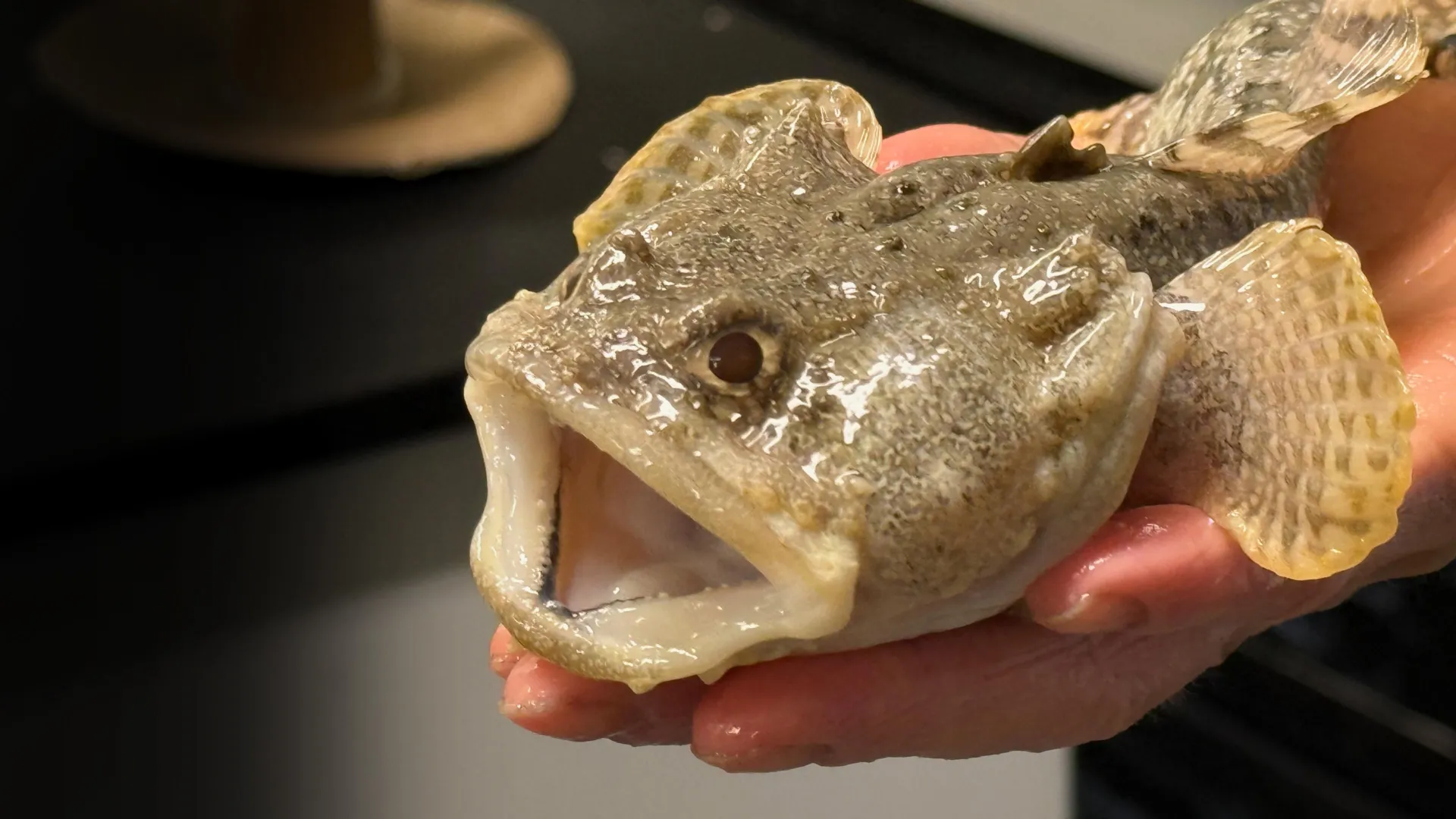
By examining Gulf toadfish (Opsanus beta) across varying salinity gradients and deploying advanced genomic and transcriptomic sequencing, the researchers isolated specific bacterial strains—most notably Photobacterium damselae subsp. damselae—that are deeply integrated into the mineral-forming process. This revelation not only broadens our understanding of host-microbiome interactions in aquatic vertebrates but also forces a recalculation of global marine nutrient models. As scientists race to understand how marine ecosystems will respond to climate change, this study proves that even the smallest microscopic players within a fish’s gut can exert an outsized influence on planetary-scale environmental processes.
Detailed Chronology: Unraveling the Toadfish-Microbiome Partnership
The path to this discovery required a meticulous, multi-stage scientific investigation combining physiological experiments, environmental manipulations, and cutting-edge molecular biology.
Phase 1: Conceptualization and the Salinity Experiment
The inquiry began with a fundamental question regarding how marine teleosts manage osmoregulation. Bony fish inhabiting marine environments must constantly combat dehydration. To survive the hypertonic environment of the ocean, they continuously ingest large volumes of seawater, actively drinking and subsequently excreting excess ions—specifically calcium and bicarbonate—through specialized intestinal processes. This physiological mechanism results in the precipitation and excretion of solid calcium carbonate.
Previously, researchers viewed this mineral excretion purely as a metabolic byproduct of the fish’s osmoregulatory system. However, Anthony Bonacolta and senior author Martin Grosell, Maytag Professor of Ichthyology and chair of the Department of Marine Biology and Ecology at the University of Miami, suspected that the gut microbiome might be pulling more than its biological weight in this equation.
To test how environmental conditions influence this dynamic, the research team designed a controlled laboratory experiment using the Gulf toadfish. Specimens were divided and acclimated to three distinct salinity environments:
- Brackish water: 9 parts per thousand (ppt)
- Normal seawater: 35 ppt
- Hypersaline water: 60 ppt
The primary objective was to observe how varying osmotic stress—and the corresponding adjustments in the fish’s drinking rates and internal ion regulation—affected the production of ichthyocarbonates.
Phase 2: Behavioral and Physiological Observations
The results of the salinity trials immediately confirmed established physiological trends while setting the stage for microbiological inquiry. The data revealed a direct, proportional relationship between salinity and mineral production:
- Low-Salinity Environment (9 ppt): Fish housed in brackish water exhibited virtually no ichthyocarbonate production. Because the external environment was less saline, the fish did not need to drink seawater incessantly to maintain hydration, thereby shutting down the pathway responsible for carbonate precipitation.
- Normal Seawater (35 ppt): In standard marine conditions, the fish actively drank seawater, leading to predictable, baseline levels of ichthyocarbonate pellet formation.
- Hypersaline Environment (60 ppt): Under extreme osmotic stress, production spiked significantly. The fish increased their seawater consumption to combat severe dehydration, which accelerated the concentration of calcium and carbonate ions within the intestinal tract and drove massive mineral precipitation.
Phase 3: Microbiome Sampling and Molecular Deep-Dive
While the salinity data validated the mechanical triggers of ichthyocarbonate formation, it did not fully explain the rapid biochemical kinetics observed within the gut. To investigate the micro-environment, the team executed rigorous sampling protocols. They collected biological material from multiple distinct regions of the fish intestine, harvested the newly formed ichthyocarbonate pellets directly, and sampled the surrounding aquatic environments.
This is where the investigation shifted from classical physiology to molecular genomics. The researchers deployed DNA and RNA analyses to peer inside the microscopic architecture of the fish gut.
- Genetic Sequencing (DNA): Utilized to construct a comprehensive inventory of the microbial communities residing within the intestinal tract and embedded directly inside the mineral pellets.
- Gene Expression Studies (RNA): Implemented to measure metabolic activity and track patterns of gene expression, helping scientists determine whether the resident microbes possessed active biological machinery linked to calcium carbonate precipitation.
Phase 4: Pinpointing the Culprits
The genomic data yielded a striking revelation. While a diverse community of microorganisms was present, one specific bacterial group dominated the landscape: Vibrio species. Specifically, Photobacterium damselae subsp. damselae was found in exceptionally high abundances both freely swimming within the intestinal tract and firmly occluded within the structure of the ichthyocarbonates themselves.
Furthermore, transcriptomic profiling revealed that these bacteria were not merely passive bystanders swept along by the digestive current. Their gene expression patterns indicated active metabolic pathways that favor mineral nucleation and precipitation. The convergence of high bacterial density and active genetic profiles confirmed that Photobacterium damselae and its taxonomic relatives were working in concert with the host fish, providing the chemical catalysts necessary to turn dissolved ions into solid geological minerals.
Supporting Context & Metrics: The Scale of Marine Biomineralization
To appreciate the gravity of this discovery, one must examine the broader chemical and ecological context of calcium carbonate in the world’s oceans. Ichthyocarbonates are not trivial geological curiosities; they are a major component of the marine carbon cycle.
The Marine Carbonate Budget
Calcium carbonate ($textCaCO_3$) dynamics dictate the pH, alkalinity, and buffering capacity of the global ocean. When marine organisms—ranging from microscopic phytoplankton to massive reef-building corals—form calcium carbonate shells or skeletons, they alter the carbon dioxide equilibrium between the ocean and the atmosphere.
For decades, marine carbon models accounted for calcium carbonate production by pelagic calcifiers (like coccolithophores and foraminifera) and benthic organisms (like corals and mollusks). However, marine teleosts—which comprise nearly half of all vertebrate species on Earth—contribute an estimated 15% to 30% of the total calcium carbonate produced in the upper ocean.
Because fish-derived calcium carbonate is exceptionally soluble compared to mineral forms produced by other marine organisms, it dissolves rapidly in the water column (typically within the upper few hundred meters of the ocean). This rapid dissolution neutralizes acidic compounds, directly influencing the ocean’s capacity to absorb anthropogenic carbon dioxide from the atmosphere.
Microscopic Metrics of the Gut Ecosystem
The quantitative metrics uncovered by the University of Miami team highlight the sheer density of this biological partnership:
- Salinity Thresholds: A transition from 9 ppt to 60 ppt shifts gut fluid chemistry from a non-precipitating state to a hyper-saturated mineral factory.
- Bacterial Dominance: Photobacterium damselae populations within the posterior intestine frequently constituted a staggering percentage of the total active microbiome during peak mineral production phases.
- Structural Integration: Scanning electron microscopy and genomic screening confirmed that bacterial cells act as organic nucleation templates—microscopic scaffolds upon which calcium and carbonate ions bind to crystallize into solid pellets.
| Environmental Salinity (ppt) | Osmotic Stress Level | Fish Seawater Ingestion Rate | Ichthyocarbonate Production | Dominant Gut Microbe Identified |
|---|---|---|---|---|
| 9 ppt (Brackish) | Low / Minimal | Negligible | None / Undetectable | Diverse baseline flora; low Vibrio presence |
| 35 ppt (Seawater) | Moderate / Baseline | Standard | Moderate baseline levels | Balanced Vibrio and non-Vibrio populations |
| 60 ppt (Hypersaline) | Extreme | Maximum | Significantly elevated | Massive spikes in Photobacterium damselae expression |
Official Statements and Expert Perspectives
The implications of the study have resonated deeply across the marine science community, prompting reflections on the ubiquity of symbiosis in aquatic life and the necessity of interdisciplinary research.
Lead investigator Anthony Bonacolta emphasized how the findings rewrite our fundamental understanding of vertebrate biology:
"This research bridges a long-standing gap between animal physiology and environmental microbiology. We traditionally looked at fish as isolated biological units responding to environmental stressors. By uncovering the active role of the gut microbiome, we realize that fish are essentially walking, swimming ecosystems that outsource vital chemical reactions to their microscopic passengers."
Senior author Dr. Martin Grosell, a leading authority in ichthyology and marine biology, underscored the broader ecological and planetary dimensions of the work during a departmental briefing:
"Most life on Earth is microbial, driving nutrient cycles and ecosystem function while revealing new dimensions of biological diversity through symbiosis. The ocean is especially rich in these partnerships, and the toadfish-vibrio symbiosis potentially linked to calcium carbonate production is a striking new example."
Dr. Grosell further elaborated on the systemic shift required in marine carbon modeling:
"What was previously thought to be a process driven solely by the fish may actually reflect a close symbiosis between the fish and its gut microbial community. If other teleost species—spanning coral reefs, open pelagic zones, and deep-water environments—rely on similar microbial partnerships for mineral excretion, we must recalibrate how we calculate marine carbon budgets and global ocean alkalinity."
Future Outlook: Implications for Climate Science and Ocean Conservation
As marine scientists digest the implications of the University of Miami study, the research opens several critical avenues for future investigation. The discovery that fish-microbiome symbioses drive global chemical cycles transforms our approach to both micro-level biology and macro-level climate modeling.
1. Expanding the Taxonomic Scope
The current study focused primarily on the Gulf toadfish (Opsanus beta) as a robust physiological model. However, bony fish comprise over 28,000 species inhabiting every conceivable aquatic niche—from shallow tropical coral reefs to the freezing depths of the polar seas. A primary frontier for future research will be determining whether this microbial partnership is universal among teleosts or specialized to specific ecological niches, feeding strategies, or taxonomic families.
2. Refining Global Carbon Models
Climate scientists rely heavily on sophisticated biogeochemical models to predict how the oceans will absorb carbon dioxide over the coming centuries. Current models often treat fish-mediated calcium carbonate production as a simple, static chemical equation tied strictly to osmoregulatory rates. Integrating microbial variables—such as how shifts in water temperature, pollution, and ocean acidification impact the gut microbiome of marine fish—will allow researchers to build more resilient and accurate predictive models of ocean health.
3. The Vulnerability of Marine Micro-Ecosystems to Climate Change
Anthropogenic pressures, including ocean warming, deoxygenation, and acidification, are actively disrupting marine ecosystems. While much attention has been paid to how these stressors impact coral reefs and pelagic fisheries, far less is known about how environmental stressors affect the internal microbiomes of marine fish. If rising ocean temperatures or chemical pollution disrupt the delicate balance of gut bacteria like Photobacterium damselae, it could inadvertently impair the fish’s ability to regulate internal ion balances and produce ichthyocarbonates, creating cascading effects on ocean chemistry.
Funding and Acknowledgments
This pivotal research was made possible through institutional start-up funds provided by the University of Miami, alongside specialized international grants, including Project PID2023-152522NB-I00 financed by the Ministry of Science, Innovation, and Universities in Spain. As research teams secure subsequent funding to expand genomic sampling across diverse marine species, the scientific community stands on the precipice of a new era in marine biogeochemistry—one where the invisible world of the fish gut is recognized as a key architect of our global seas.