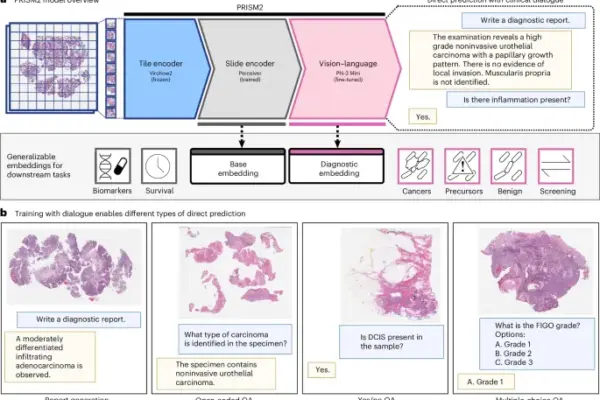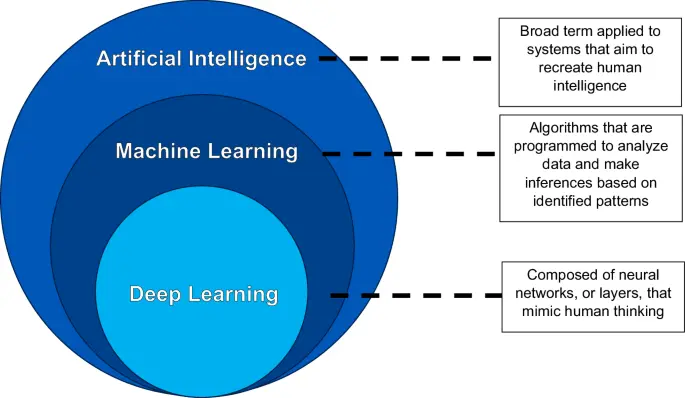










In the rapidly evolving domain of computational pathology, artificial intelligence foundation models have emerged as the cornerstone of automated diagnostics, biomarker prediction, and digital discovery. Trained on massive, unlabelled corpuses of whole-slide images (WSIs) and billions of parameters, these large-scale systems frequently outperform traditional supervised learning approaches and non-biomedical counterparts. Yet, a fundamental vulnerability has remained largely unaddressed: a severe lack of robustness to technical variability across disparate medical centers.
Differences in biopsy acquisition, tissue preparation, sectioning thickness, staining protocols, and scanner hardware introduce systematic data biases—commonly known as batch effects—that do not reflect underlying biology. A landmark study published in Nature Communications titled "Towards robust foundation models for digital pathology" reveals that major state-of-the-art pathology foundation models struggle significantly with these non-biological confounders. The research introduces PathoROB, a comprehensive multi-center benchmark designed to measure representation robustness, expose critical downstream failures, and evaluate post-training alignment strategies that can safeguard clinical artificial intelligence without requiring computationally prohibitive model retraining.
Detailed Chronology & Benchmark Methodology
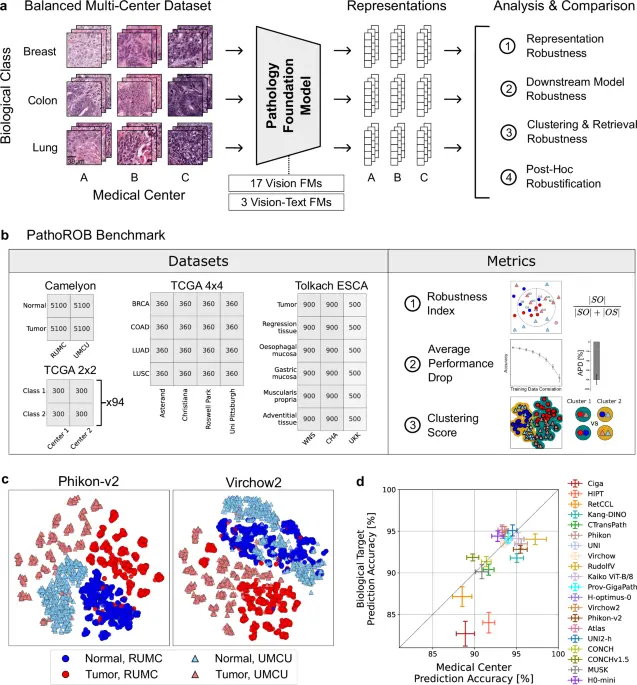
The initiative behind PathoROB stems from a growing benchmarking crisis in biomedical machine learning. As researchers race to scale foundation models across millions of slides, measuring their real-world capabilities and failure modes has become exceedingly difficult. To tackle this, an interdisciplinary team constructed a robust data resource spanning 99,392 patches across 28 biological classes and 34 distinct medical centers, sourced from three public repositories: the Camelyon dataset for breast cancer metastasis detection, TCGA-UT for pan-cancer classification, and the Tolkach ESCA resource for esophageal adenocarcinoma grading.
+---------------------------------------------------------------------------------+
|                              PATHOROB FRAMEWORK                                 |
+------------------------------------+--------------------------------------------+
                                     |
         +---------------------------+---------------------------+
         |                                                       |
         v                                                       v
+------------------------+                             +------------------------+
|   Data Resource (4)    |                             |  Evaluation Metrics    |
| - Camelyon (Metastasis)|                             | - Robustness Index     |
| - TCGA-UT (Pan-Cancer) |                             | - Avg. Performance Drop|
| - Tolkach ESCA (Tissues|                             | - Clustering Score     |
+------------------------+                             +------------------------+
The 20 Foundation Models Evaluated
The study evaluated 20 prominent pathology foundation models, covering a vast spectrum of architectural variations, pre-training dataset sizes, and objectives:
- Vision-Only Self-Supervised Models: Ciga, Phikon, Phikon-v2, RudolfV, Kang-DINO, CTransPath, Virchow, Virchow2, Atlas, H-optimus-0, UNI2-h, Prov-GigaPath, HIPT, H0-mini, and others.
- Vision-Language Models: CONCH, CONCHv1.5, and MUSK.
Using these models, the researchers investigated representation-level robustness—how strongly non-biological signals dictate embedding spaces—and output-level robustness, observing how these representations behave when deployed in downstream classification, clustering, and case-retrieval pipelines.
Supporting Context & Core Findings
1. The Trap of "Clever Hans" Shortcuts in Representation Spaces
When analyzing foundation model embedding spaces through t-SNE visualizations and linear probing, the study revealed that nearly all models strongly encode medical center origins. While some models (like Virchow2 and Atlas) primarily organize their representation spaces by biological information with secondary clustering by hospital, others (such as Phikon-v2) group embeddings predominantly by medical center. Across all 20 models, the hospital origin could be predicted from feature vectors with staggering accuracies between 88% and 98%.
To quantify this, the authors introduced the Biological Representation Robustness Index ($mathcalR$), measuring the ratio of nearest neighbors sharing the same biological class versus those sharing the same technical confounding class. The index scores ranged from 0.446 to 0.861, indicating that up to 55.4% of local embedding neighborhoods were dictated by technical artifacts rather than histology.
2. Catastrophic Failures in Downstream Clinical Tasks
When shallow downstream networks or multiple instance learning (MIL) models were trained on data with correlations between medical centers and targets (simulating real-world class imbalances for rare diseases), performance dropped precipitously.
- Patch-Level ROI Classification: For Camelyon tumor detection, prediction accuracies plummeted from over 92% in balanced settings to as low as 53% when medical centers acted as perfect confounders. Downstream models frequently mistook unambiguous tumor patches for normal tissue simply because they originated from a specific hospital.
- Whole-Slide Biomarker and Prognosis Inference: In weakly supervised MIL tasks—including lung cancer subtyping, homologous recombination deficiency (HRD) prediction, and overall survival prognosis—cross-hospital generalization deteriorated drastically. In breast cancer survival prediction, adding training data from new hospitals with divergent label distributions actually decreased overall C-Index performance, despite increasing the training pool by 67%.
- Unsupervised Clustering and Case Retrieval: Unsupervised $K$-means clustering driven by non-robust embeddings resulted in clusters built entirely around hospital source codes rather than morphological disease subtypes, destroying the utility of exploratory case searches.
3. Effective Post-Hoc Robustification Framework
Recognizing that retraining billions of parameters from scratch is economically and environmentally prohibitive, the researchers explored post-hoc robustification techniques that do not require foundation model retraining:
- Data Robustification (DR): Reinhard stain normalization consistently reduced color and intensity variations in image space, boosting the robustness index and improving downstream generalization.
- Representation Robustification (RR): Applying ComBat batch correction directly to extracted feature vectors yielded massive jumps in biological representation robustness (increasing scores by up to +28.2% on average). However, ComBat could overcorrect if biological signals were tightly coupled with medical center distributions.
- Training Robustification (TR): Domain-adversarial neural network (DANN) training penalized downstream models for utilizing hospital signatures, yielding modest performance gains.
Official Statements & Expert Insights
The study underscores a critical reality for medical artificial intelligence: scaling dataset size alone does not eliminate technical bias. While models pre-trained on larger corpuses of whole-slide images showed improved robustness indices, not a single foundation model achieved complete immunity to batch effects.
"Our work demonstrates that foundation model representations entangle biologically meaningful information with spurious confounders such as scanner type or medical center origin," noted the authors. "When clinical case distributions are heterogeneous across contributing hospitals, downstream models are prone to making severe mistakes that rule out their safe use in high-stakes clinical settings."
The findings challenge the prevailing notion that uncurated, massive-scale pre-training automatically generates invariant features. Instead, the authors advocate for the mandatory inclusion of robustness metrics—such as the PathoROB benchmark suite—during foundation model design, validation, and clinical deployment.
Future Outlook & Clinical Implications
As computational pathology transitions from retrospective academic benchmarks to prospective clinical trials, ensuring out-of-distribution generalization is non-negotiable. The implications of this research span several key areas:
- Regulatory Alignment: Medical device regulators and clinical validators must demand multi-center robustness evaluations before clearing AI-driven diagnostic tools for clinical workflows.
- Post-Training Alignment: Future model development cycles will likely incorporate instruction tuning, reinforcement learning, or contrastive vision-language alignment steps specifically optimized to decouple technical artifacts from cellular morphology.
- Omics and Radiology Expansion: Because batch effects plague high-throughput omics, flow cytometry, and multi-center radiology imaging alike, the PathoROB framework serves as a foundational blueprint across broader biomedical artificial intelligence disciplines.
Ultimately, integrating robustness criteria into the lifecycle of foundation models will bridge the gap between experimental AI performance and reliable, equitable patient care in global clinical practice.