






Executive Overview
For over three centuries, Sir Isaac Newton’s third law of motion has stood as an unyielding pillar of classical physics. The axiom—that for every action, there is an equal and opposite reaction—governs how we walk, how automobiles propel themselves down highways, and how rockets escape the pull of Earth’s gravity. It is a concept so deeply embedded in our understanding of the physical universe that it forms the foundational bedrock of theoretical mechanics taught to every generation of physics students.
Yet, looking upward reveals a glaring, beautiful defiance of this fundamental rule.
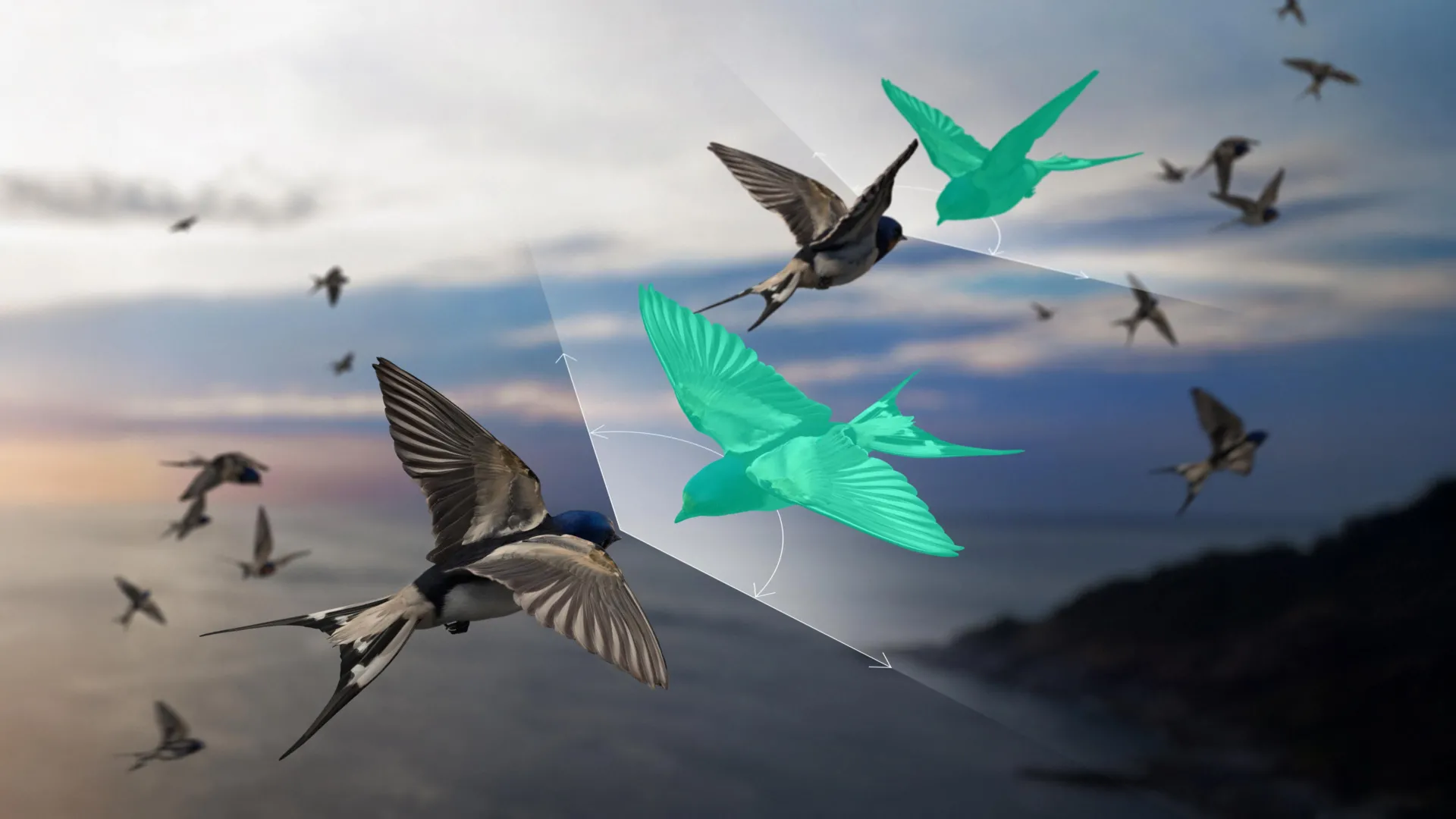
When a massive flock of starlings swoops and rolls across the evening sky, a breathtaking choreography unfolds. Each bird moves in sweeping, synchronous harmony with its neighbors, yet careful observation reveals an asymmetric truth: birds pay attention exclusively to those beside them or ahead of them. They do not adjust their flight paths in response to the companions trailing behind them.
This one-way street of perception breaks Newton’s sacred balance. In physics, such dynamics are classified as non-reciprocal interactions. They are not anomalies restricted to the avian world; rather, they are a pervasive feature of complex, living systems. Bacterial swarms writhing in a petri dish, chaotic human crowds surging through a transit station, and even individual cells migrating within living biological tissue all share this characteristic behavior. Components respond selectively to partial segments of their environment, creating a fundamental imbalance where action and reaction fail to match.
For decades, this behavioral loophole has presented a formidable bottleneck for theoretical physics. Traditional mathematical frameworks were engineered specifically for reciprocal systems—those where forces balance symmetrically. Consequently, scientists have struggled to accurately model, simulate, and fully comprehend the macro-level behavior of non-reciprocal systems.
Now, a multi-institutional team of researchers based in Dresden and Würzburg, working alongside prominent physicist Roderich Moessner, has shattered this methodological barrier. By ingeniously extending the traditional action-reaction framework through the introduction of mathematical fiction—specifically, "fictitious partners" or auxiliary variables—the research team has devised a universal theory. Published in the prestigious journal Nature Physics, this breakthrough allows scientists to model systems that violate Newton’s third law using long-established, highly reliable computational methods.
This article explores the mechanics of this groundbreaking discovery, the brilliant theoretical workaround that brought imaginary birds into mathematical equations, and what this means for the future of classical mechanics, biophysics, and quantum matter research.
Detailed Chronology
To understand the magnitude of the Dresden team’s breakthrough, it is necessary to retrace the historical relationship between classical mechanics and collective behavior, and to map the gradual realization that the natural world often operates outside the clean lines of Newtonian physics.
The Reign of the Third Law
Since its publication in the Philosophiae Naturalis Principia Mathematica in 1687, Newton’s third law has provided an intuitive and mathematically airtight description of reciprocal forces. If Object A exerts a force on Object B, Object B exerts an equal and opposite force on Object A.
In everyday macroscopic environments, this principle is absolute. When a runner’s foot strikes the asphalt, the ground pushes back with an equivalent force, propelling the body forward. When a commercial jetliner burns fuel, the expelled gases push backward against the engine housings, creating an equal and opposite thrust that drives the aircraft through the stratosphere. For nearly 350 years, this principle has served as the baseline assumption for nearly all of theoretical mechanics.
The Rise of Nonequilibrium and Non-Reciprocity
As physics expanded from the study of rigid, idealized bodies into the realms of soft matter, biophysics, and complex systems during the late 20th and early 21st centuries, researchers encountered systems that refused to play by classical rules.
Living systems are inherently "active matter"—they consume energy internally and expend it to move, grow, or organize. In active systems, interactions are frequently governed by information processing, sensory perception, and chemical signaling rather than mechanical contact forces alone.
- Sensory Asymmetry: An animal can see or sense what is in front of it, but it cannot automatically exert an equal and opposite physical force on the entity it is observing.
- Chemical Signaling: Cells emit chemical gradients to guide their neighbors, creating directional cues that lack reciprocal feedback loops.
- Information Cascades: In human crowds, individuals react to visual stimuli in their immediate field of view, creating cascading waves of motion that travel primarily downstream relative to the crowd’s flow.
As these systems gained prominence across biophysics and statistical mechanics, researchers hit a wall. Traditional computational models, built entirely upon the assumption of reciprocal exchange, failed to accurately capture or predict the emergent properties of non-reciprocal systems. Simulating them required ad-hoc, system-specific hacks that lacked a unified, rigorous theoretical foundation.
The Dresden Breakthrough
Recognizing this systemic gap, a collaborative research initiative anchored in the Würzburg-Dresden Cluster of Excellence ct.qmat (Complexity, Topology and Dynamics in Quantum Matter) set out to reconcile non-reciprocal systems with the broader canon of classical physics.
Led by research group leaders, biophysicists, and condensed-matter theorists—including Roderich Moessner, director at the Max Planck Institute for the Physics of Complex Systems (MPI-PKS) in Dresden, Marin Bukov, and Ricard Alert—the team focused on a radical proposition: What if non-reciprocal systems could be mathematically transformed into reciprocal ones without altering their fundamental behavior?
Instead of inventing entirely new mathematics from scratch—an endeavor that often leads to intractable equations—the team looked for a bridge. They discovered that by expanding the phase space of the system through auxiliary variables, they could trick standard simulation tools into handling non-reciprocal interactions seamlessly. Their findings, finalized and published in Nature Physics, have transformed an intractable theoretical problem into an elegant, solvable framework.
Supporting Context & Metrics
To appreciate why this theoretical advancement represents a seismic shift in computational physics, one must examine the specific mechanics of non-reciprocal interactions and the mathematical limitations they previously imposed.
| Dimension | Reciprocal Systems (Newtonian Standard) | Non-Reciprocal Systems (Active/Living Matter) |
|---|---|---|
| Force / Interaction Symmetry | Equal and opposite ($FAB = -FBA$) | Asymmetric ($FAB neq -FBA$ or one-way) |
| Information Flow | Bidirectional feedback loops | Unidirectional perception or signaling |
| Examples in Nature | Gravity, springs, collisions, planetary orbits | Bird flocks, bacterial swarms, cellular migration, human crowds |
| Traditional Simulation Difficulty | Low; well-supported by 300 years of established tools | Extremely high; historically required ad-hoc approximations |
| New Theoretical Approach | Direct application of classical mechanics | Application of auxiliary degrees of freedom ("fictitious partners") |
The Mathematics of the "Fictitious Partner"
The core innovation of the Dresden team lies in the strategic use of auxiliary degrees of freedom.
In theoretical physics, systems are described using phase space variables—coordinates that represent real, measurable properties of the system, such as position, momentum, velocity, or orientation. For a flock of birds, these variables would denote the actual spatial coordinates ($x, y, z$) and velocity vectors ($vecv$) of every living bird in the flock.
Because Bird A reacts to Bird B (ahead of it), but Bird B does not experience an equal and opposite reaction force from Bird A, the interaction matrix is non-Hermitian or asymmetric. Standard simulation algorithms struggle with these matrices because energy conservation principles and variational principles (like the principle of least action) break down.
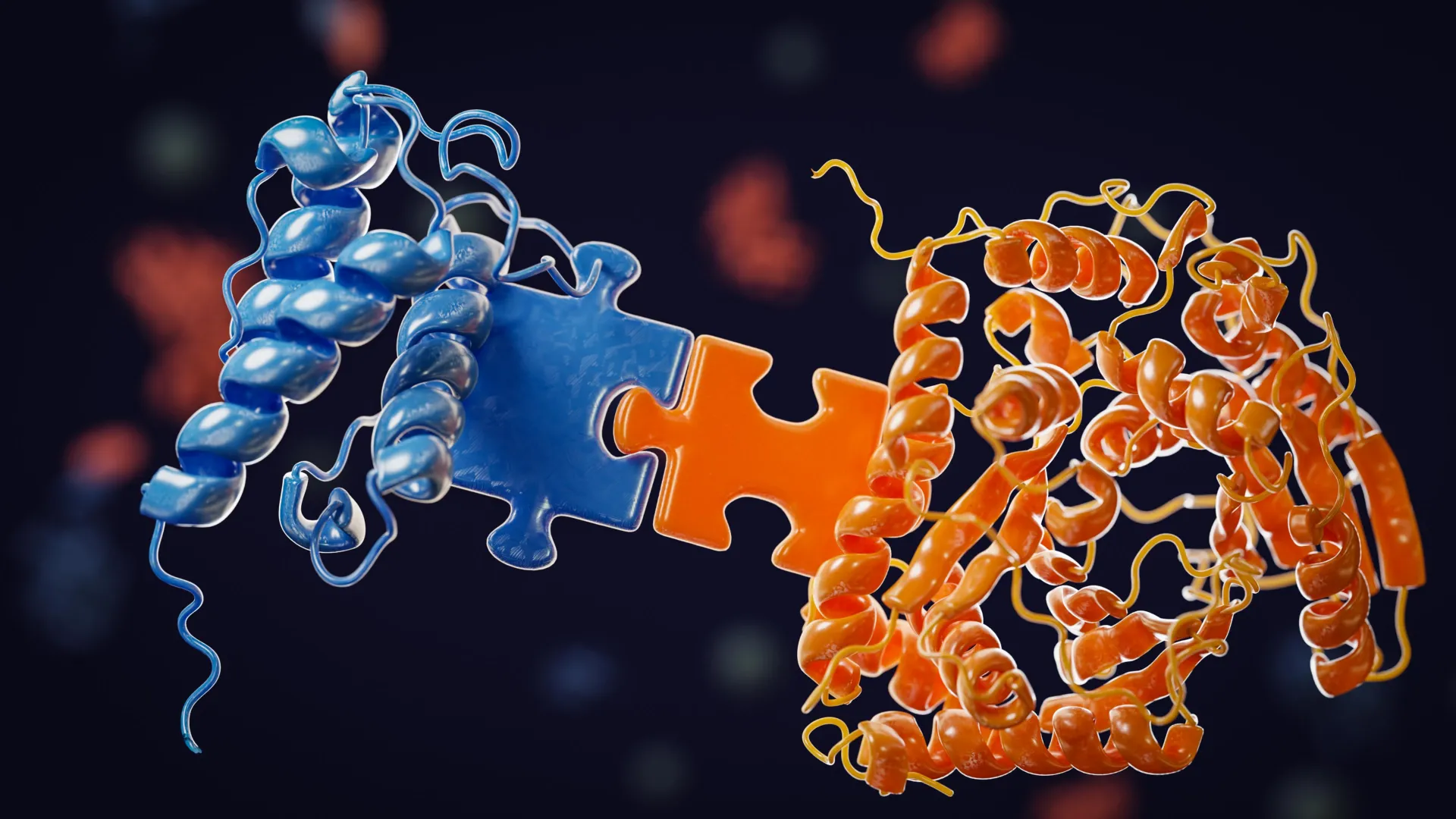
The Dresden researchers bypassed this obstacle by introducing fictitious partners.
For every real component in the non-reciprocal system, the mathematical framework constructs an imaginary, non-physical counterpart. The original one-way interactions are then systematically replaced by reciprocal interactions between the real components and these auxiliary degrees of freedom.
[Real Bird A] --------(One-Way Visual Cue)--------> [Real Bird B]
      ^                                                  |
      |                 (Mathematical Trick)             |
      +-------[Fictitious Partner / Auxiliary Variable]--+
As biophysicist Ricard Alert explains, when simulating a flock of birds, the system is modeled using established classical methods as if it were entirely reciprocal. The elegant mathematical trick involves artificially placing a fictitious bird in front of each real bird, aligned in precisely the opposite direction.
These imaginary partners do not exist in the physical world. They exert no physical mass, consume no energy, and have no biological awareness. Yet, by embedding them within the equations of motion, they absorb the asymmetry of the system. This mathematical transformation converts a messy, non-reciprocal problem into a clean, reciprocal one that can be solved using decades-old, highly optimized simulation algorithms.
Official Statements
The implications of this research have reverberated across the global physics community, drawing praise from leaders in theoretical mechanics, biophysics, and quantum matter.
Dr. Marin Bukov, research group leader and co-architect of the study, emphasized how the discovery bridges a vital educational and practical gap in physics:
"Whatever we normally teach our students in theoretical mechanics, it ultimately rests on the action-reaction principle. The research team has developed and proven a theory that makes much of what we teach our students applicable to non-reciprocal systems as well. These systems, where Newton’s third law does not apply, can now finally be described exactly and simulated precisely—even using established methods. This is exactly the kind of tool that has been missing in recent years."
Ricard Alert, a biophysicist whose work bridges theoretical physics with biological phenomena, elaborated on the intuitive mechanics of the simulation strategy:
"The trick behind the new theory is that it constructs a partner for each component of the system—a fictitious partner that doesn’t exist in nature. The original non-reciprocal interactions are replaced by reciprocal interactions with these auxiliary degrees of freedom. To simulate the birds’ movements precisely, we describe the dynamic system ‘flock of birds’ using established methods—as if it were a reciprocal system, even though it is not. The elegant solution is to artificially place a fictitious bird in front of each real bird, aligned in exactly the opposite direction."
Professor Roderich Moessner—Principal Investigator of the Würzburg-Dresden Cluster of Excellence ct.qmat and Director at the Max Planck Institute for the Physics of Complex Systems—highlighted the expansive horizon this opens up, extending far beyond biological flocks and into the esoteric realms of quantum matter:
"In Würzburg and Dresden, we study quantum matter whose particles interact under certain conditions in ways that give rise to new phenomena such as magnetism or lossless current transport. The exciting question now is whether these exceptions to Newton’s law lead to entirely new forms of collective quantum behavior. We still know very little about this—and that is precisely what makes this so fascinating."
Future Outlook & Implications
By proving that non-reciprocal systems can be systematically mapped onto reciprocal frameworks using auxiliary variables, the Dresden researchers have unlocked vast new frontiers across multiple scientific disciplines. The ripple effects of this discovery are projected to impact several distinct fields:
1. Revolutionizing Active Matter and Biophysics
Understanding how cells coordinate during embryonic development, how immune cells swarm toward an infection site, and how bacterial biofilms colonize surfaces are central challenges in modern biophysics. Because biological tissues operate entirely outside Newton’s reciprocal framework, previous simulations were plagued by inaccuracies. With this new mathematical tool, biophysicists can run high-fidelity simulations of cellular morphogenesis and tissue repair, potentially accelerating breakthroughs in regenerative medicine and oncology.
2. Optimizing Human Crowd Dynamics and Robotics
Urban planners, civil engineers, and robotics researchers grapple constantly with non-reciprocal movement. Human pedestrians do not obey Newtonian mechanics; they anticipate, look ahead, and make asymmetric decisions based on visual fields. Similarly, multi-agent robotic swarms—drones and autonomous vehicles designed to operate in congested environments—frequently rely on decentralized, unidirectional sensor data. The new Dresden framework provides engineers with robust mathematical models to prevent pedestrian bottlenecks, optimize emergency evacuation procedures, and design safer, more efficient swarming algorithms for autonomous drone fleets.
3. Uncharted Territories in Quantum Matter
Perhaps the most profound implication lies in the domain of quantum physics. Within the laboratories of the ct.qmat cluster, researchers study quantum materials—systems where subatomic particles interact in extreme conditions to produce exotic states of matter, such as high-temperature superconductivity, topological insulators, and fractional quantum Hall effects.
Traditionally, quantum many-body physics has relied heavily on Hermitian operators and reciprocal interactions. However, open quantum systems—those interacting with their external environments—frequently exhibit non-reciprocal behaviors.
By introducing auxiliary degrees of freedom to study quantum systems that violate Newton’s third law, physicists can now probe whether these macroscopic mechanical exceptions have microscopic quantum equivalents. Could non-reciprocity give rise to entirely novel forms of collective quantum behavior, previously hidden behind the mathematical limitations of traditional models?
As Moessner notes, humanity still knows very little about this intersection, but the tools to investigate it are finally in place.
Conclusion
Sir Isaac Newton’s third law remains one of the greatest intellectual achievements in human history, serving as the cornerstone of classical mechanics for over 300 years. Yet, science advances not by treating laws as dogmatic absolutes, but by discovering the boundaries where those laws bend, transform, and give way to deeper, more complex realities.
By looking at a flock of birds and daring to imagine an invisible, fictitious partner dancing in front of each living creature, the Dresden research team has bridged the gap between Newtonian order and the chaotic, beautiful asymmetry of living and quantum systems. In doing so, they have provided science with a master key to model the collective motion of the universe.