





Executive Overview
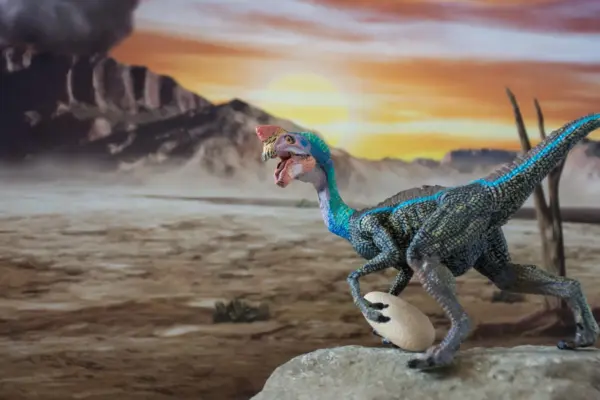
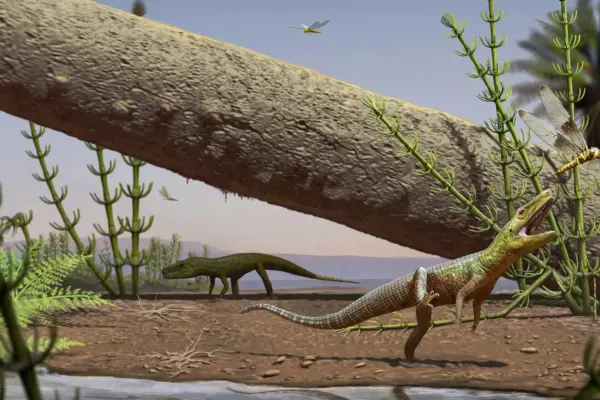
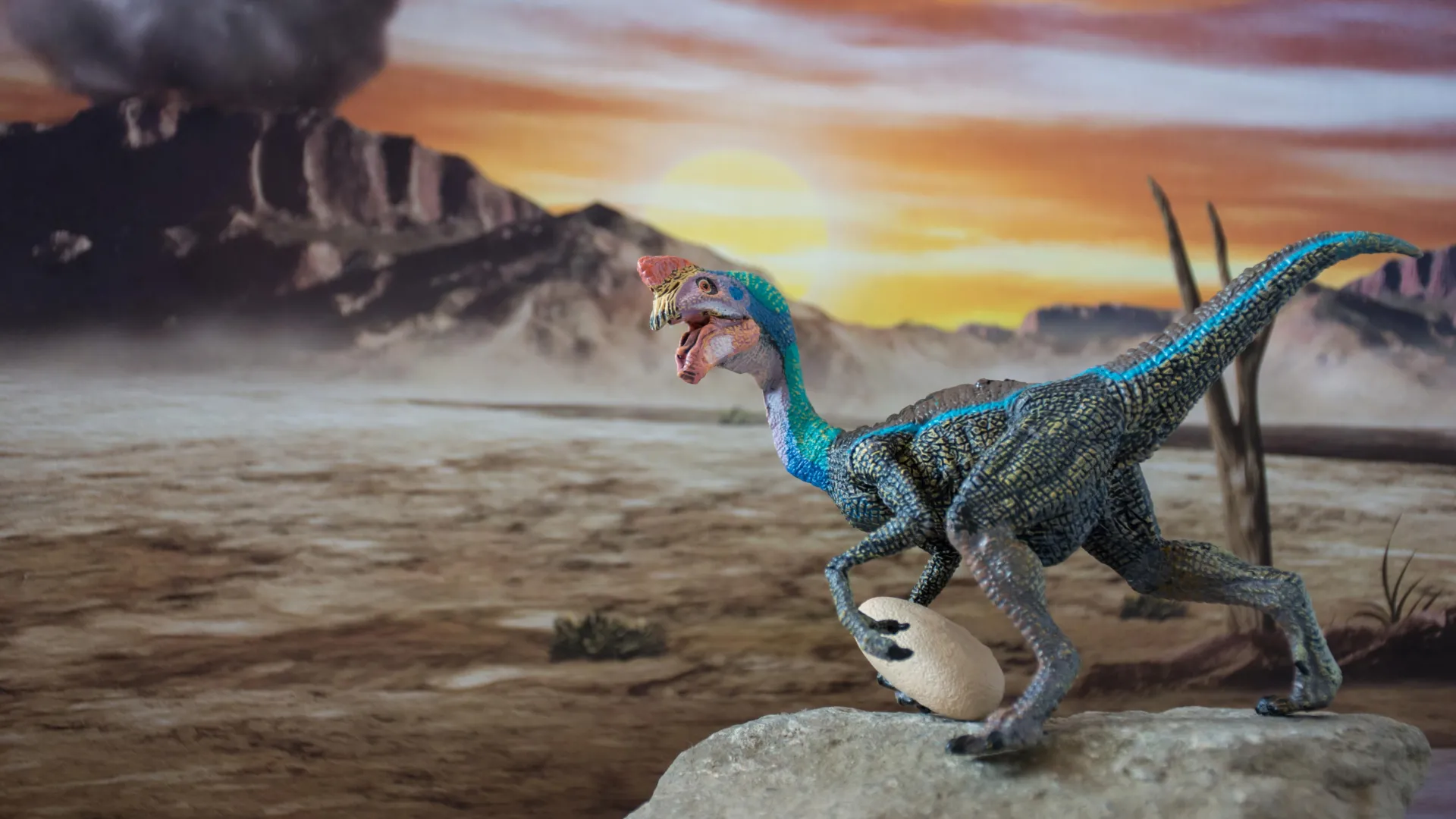
How did prehistoric, feathered dinosaurs bring their young into the world? For decades, paleontologists have wrestled with the reproductive strategies of oviraptors—a group of bipedal, bird-like theropods that roamed the Earth during the Late Cretaceous Period, roughly 100 to 66 million years ago. While these creatures bore a striking physical resemblance to modern avian species, featuring beak-like jaws, long necks, crests, and coats of primitive feathers, they lacked the capability of powered flight. More importantly, scientists have long debated whether oviraptors incubated their eggs with the devoted body heat characteristic of modern birds or if they relied heavily on environmental warmth, much like contemporary crocodiles and turtles.
A groundbreaking study published in the journal Frontiers in Ecology and Evolution has cast fresh light on this ancient mystery. By merging physical experimentation with advanced computer simulations, an international research team led by scientists in Taiwan has reconstructed the brooding behaviors of Heyuannia huangi, an oviraptor species that inhabited ancient China between 70 and 66 million years ago. To achieve this, the investigators constructed a life-sized physical model of the dinosaur and recreated its distinct, semi-open nest layout using custom-built resin eggs.
The findings indicate that oviraptor reproduction was a complex, cooperative venture between parental attendance and ambient environmental conditions. Specifically, the relative positioning of the brooding adult to the nest played a pivotal role in regulating egg temperatures and embryonic development. Furthermore, the study estimates that oviraptor incubation efficiency was significantly lower than that of modern birds. Rather than viewing this as an evolutionary shortcoming, however, researchers emphasize that these dinosaurs employed a highly successful hybrid incubation strategy—acting as "co-incubators" alongside the sun—tailored to the climatic and structural demands of their Late Cretaceous world.
Detailed Chronology of the Research
The path to decoding oviraptor brooding habits required a meticulous blend of paleontological deduction, modern engineering, and thermodynamic computer modeling.
Phase 1: Conceptualization and Specimen Selection
The research initiative began with a focus on Heyuannia huangi, a representative oviraptor species whose fossilized remains—including adults preserved directly atop fossilized clutches—have provided rare windows into prehistoric parental care. Living roughly 70 to 66 million years ago, a typical Heyuannia huangi measured approximately 1.5 meters in length, weighed an estimated 20 kilograms, and constructed intricate, semi-open nests consisting of multiple rings of elongated eggs.
Recognizing the limitations of studying fossilized stone alone, senior author Dr. Tzu-Ruei Yang, an associate curator of vertebrate paleontology at Taiwan’s National Museum of Natural Science, spearheaded a project to recreate these ancient nesting environments physically. Yang was joined by first author Chun-Yu Su, who was an enterprising student at Washington High School in Taichung when the research was conducted, proving that high-level paleontological contributions can stem from diverse educational backgrounds.
Phase 2: Building the Dinosaur and the Nest
Reconstructing an extinct brooding dinosaur and its clutch presented immense engineering hurdles. To build the life-sized physical model of the oviraptor, the team fabricated an internal torso structure using a supportive wooden framework layered with polystyrene foam. Soft tissues and anatomical contours were simulated using cotton, cloth, and bubble paper to mimic the organic density and heat-retention properties of a living animal.
Replicating the eggs proved even more challenging, as oviraptor eggs possess unique geometries and structural characteristics unlike those of any living species. The team engineered custom resin eggs, casting them to match the exact dimensions and arrangements found in fossilized nests—specifically, double rings that radiated outward from the center of the clutch.
Phase 3: Thermal Experiments and Environmental Simulations
With the physical model and resin clutch assembled, the researchers subjected the setup to various controlled thermal environments to monitor how heat transferred through the nest. They tested scenarios simulating both cool and warm climates to observe how the presence of a brooding adult interacted with ambient sunlight and air temperature.
The experimental data yielded clear patterns:
- Under Cool Conditions: Eggs positioned in the outer ring of the nest exhibited temperature variances of up to 6°C compared to inner eggs. Such drastic thermal discrepancies would have induced asynchronous hatching, meaning certain hatchlings would emerge days or weeks ahead of others within the same clutch.
- Under Warm Conditions: When subjected to elevated ambient temperatures, the thermal gap between the inner and outer rings dropped dramatically to just 0.6°C. This indicated that direct sunlight served as a vital, stabilizing heat source, compensating for the physical limitations of the adult’s body size.
Through computational heat-transfer modeling, the team mapped these thermal gradients to broader evolutionary implications, culminating in the publication of their study in Frontiers in Ecology and Evolution.
Supporting Context & Metrics
To fully understand the significance of this study, it is necessary to examine the evolutionary backdrop of oviraptors, the mechanics of modern avian incubation, and the quantitative metrics that define this prehistoric reproduction strategy.
The Misunderstood "Egg Thief"
Oviraptors occupy a crucial chapter in the paleontological timeline, illuminating the evolutionary bridge between non-avian dinosaurs and modern birds. Their common name—derived from Latin to mean "egg thief"—is a historical misnomer born from early 20th-century fossil discoveries in Mongolia. When researchers first uncovered an oviraptor skeleton draped over a clutch of fossilized eggs, they assumed the animal had been caught in the act of raiding a nest.
Decades later, subsequent fossil finds revealed the truth: the dinosaur was not stealing the eggs, but rather brooding and protecting its own progeny. This profound discovery established that advanced parental care, feather insulation, and complex nesting behaviors were well-established long before the emergence of true modern birds.
Thermoregulatory Contact Incubation (TCI) vs. Co-Incubation
In biology, modern birds achieve high incubation efficiency through a process known as Thermoregulatory Contact Incubation (TCI). TCI requires three strict physiological and behavioral criteria:
- The parent must make direct, physical contact with every single egg in the clutch.
- The parent’s body must serve as the primary, dominant source of thermal energy.
- The parent must maintain all eggs within a narrow, highly regulated temperature window.
The Taiwan-based research demonstrates that oviraptors fundamentally could not satisfy these TCI requirements. Due to their morphological build and the expansive, semi-open layout of their multi-ring nests, an adult oviraptor could not physically wrap its body around every egg simultaneously.
Instead, oviraptors practiced a hybrid method. They acted as co-incubators alongside the environment, utilizing their body heat to supplement warmth generously provided by direct sunlight and warm soil. While this method resulted in an incubation efficiency "much lower than that of modern birds," it represented an optimal evolutionary solution for an animal transitioning from buried-nest strategies (typical of primitive reptiles) to surface-level brooding.
Comparative Incubation Metrics
- Geographic Range: Late Cretaceous Asia (primarily modern-day Mongolia and China).
- Adult Body Mass (Heyuannia huangi): ~20 kilograms.
- Adult Body Length: ~1.5 meters.
- Clutch Layout: Multi-ring, semi-open arrangements exposed to ambient air.
- Outer Ring Temperature Variance (Cool Climate): Up to 6°C differential, driving asynchronous hatching.
- Outer Ring Temperature Variance (Warm Climate): 0.6°C differential, stabilized by ambient solar heat.
- Incubation Efficiency: Substantially lower than modern avian TCI standards, reliant on solar-parental synergy.
Official Statements from the Research Team
The researchers have emphasized that their findings reframe how scientists evaluate evolutionary adaptations across deep time, urging caution against teleological views of progress in nature.
Dr. Tzu-Ruei Yang, senior author of the study and associate curator of vertebrate paleontology at the National Museum of Natural Science in Taiwan, highlighted the mechanical reality of prehistoric brooding:
"We show the difference in oviraptor hatching patterns was induced by the relative position of the incubating adult to the eggs. It’s unlikely that large dinosaurs sat atop their clutches. Supposedly, they used the heat of the sun or soil to hatch their eggs, like turtles. Since oviraptor clutches are open to the air, heat from the sun likely mattered much more than heat from the soil."
Addressing the comparative efficiency between dinosaurs and their living descendants, Yang underscored that evolutionary adaptations must be judged by environmental context rather than a ladder of superiority:
"Modern birds aren’t ‘better’ at hatching eggs. Instead, birds living today and oviraptors have a very different way of incubation or, more specifically, brooding. Nothing is better or worse. It just depends on the environment."
Chun-Yu Su, the study’s first author who participated in the research as a high school student in Taichung, elaborated on the experimental hurdles the team overcame during the physical modeling phase:
"Moreover, we obtained an estimate of the incubation efficiency of oviraptors, which is much lower than that of modern birds. Part of the difficulty lies in reconstructing oviraptor incubation realistically. For example, their eggs are unlike those of any living species, so we invented the resin eggs to approximate real oviraptor eggs as best as we could."
Reflecting on the broader implications for international and regional scientific participation, Yang offered an encouraging closing remark:
"It also truly is an encouragement for all students, especially in Taiwan. There are no dinosaur fossils in Taiwan, but that does not mean that we cannot do dinosaur studies."
Future Outlook & Methodological Implications
While the study provides robust insights into the reproductive biophysics of Heyuannia huangi, the researchers acknowledge important contextual variables that will shape future investigations. For one, Earth’s global climate during the Late Cretaceous Period was significantly warmer and more stable than today’s climate, meaning ancient oviraptors experienced baseline environmental conditions that physical laboratory models can only approximate. Furthermore, biological data suggests that oviraptors likely possessed considerably longer incubation periods than modern birds, introducing temporal dynamics into embryonic development that warrant further exploration.
Despite these variables, the integration of physical reconstructions with high-resolution thermodynamic modeling establishes a transformative paradigm for paleontological research. By moving beyond descriptive anatomy and into experimental functional morphology, scientists can now quantitatively test hypotheses regarding dinosaur physiology, behavior, and ecology that were once deemed inaccessible through fossil evidence alone.
As paleontology continues to embrace interdisciplinary methodologies—bridging material science, computer simulation, and comparative biology—we move ever closer to breathing functional life into the stone skeletons of the past, unraveling the intricate biological tapestries of creatures that ruled the Earth millions of years ago.