






Executive Overview
Museums are universally idealized as sanctuaries of our planet’s collective cultural and scientific heritage. Within their climate-controlled archives and sprawling display halls rest the physical fragments of Earth’s deep history—traced in the bones of extinct leviathans, the impressions of ancient flora, and the rare fossils that map the tortuous path of evolution. Yet, beneath the veneer of meticulous curation and academic precision lies an open secret of the museum world: specimens go missing.
Whether lost to the chaos of global warfare, swallowed by the logistical nightmares of bureaucratic institutional moves, reduced to dust by extreme fragility, or simply misplaced on a forgotten back shelf like an overdue library book, the catalog of "missing fossils" is as extensive as it is startling.
Happily, however, they can also be rediscovered.
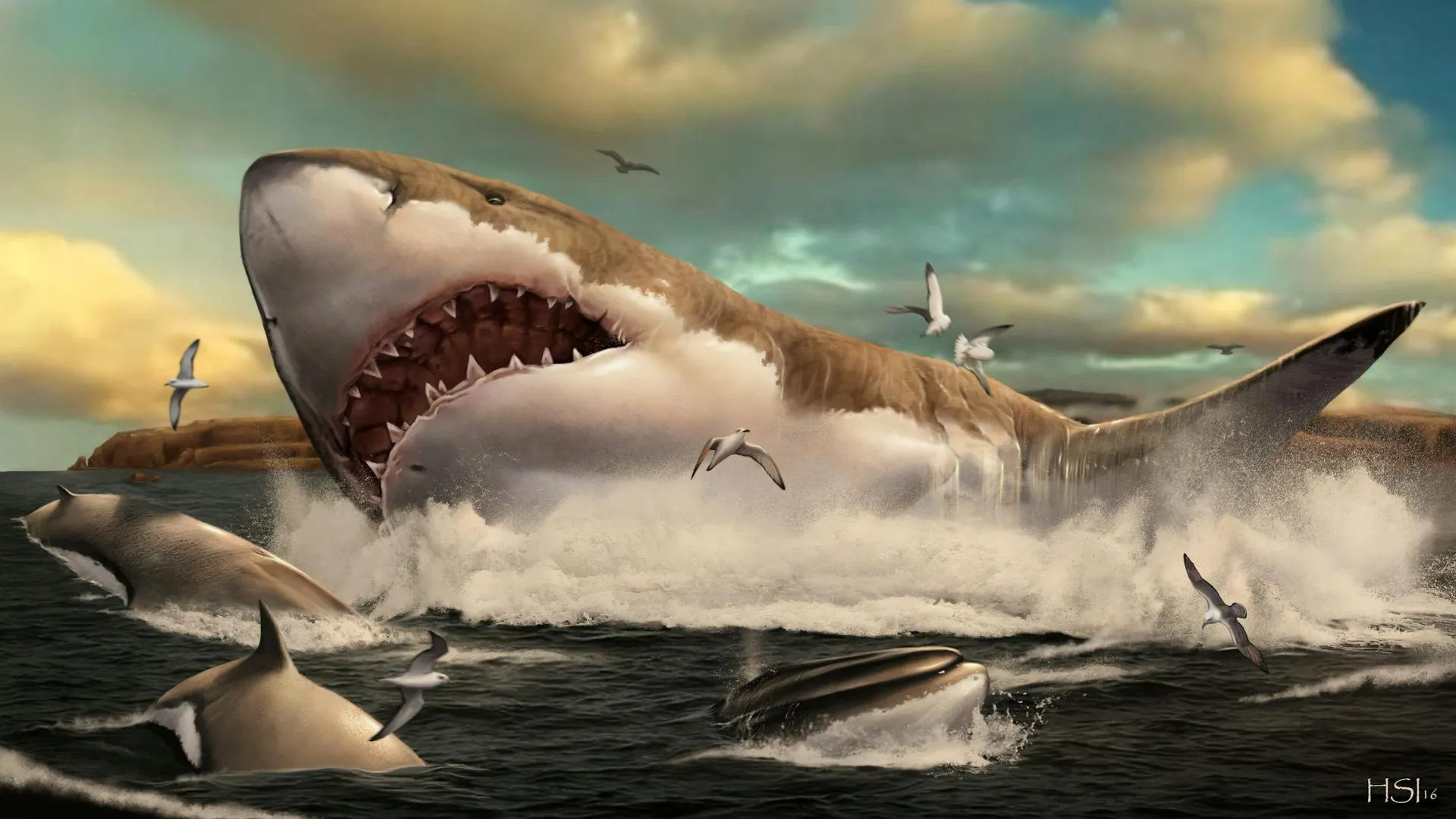
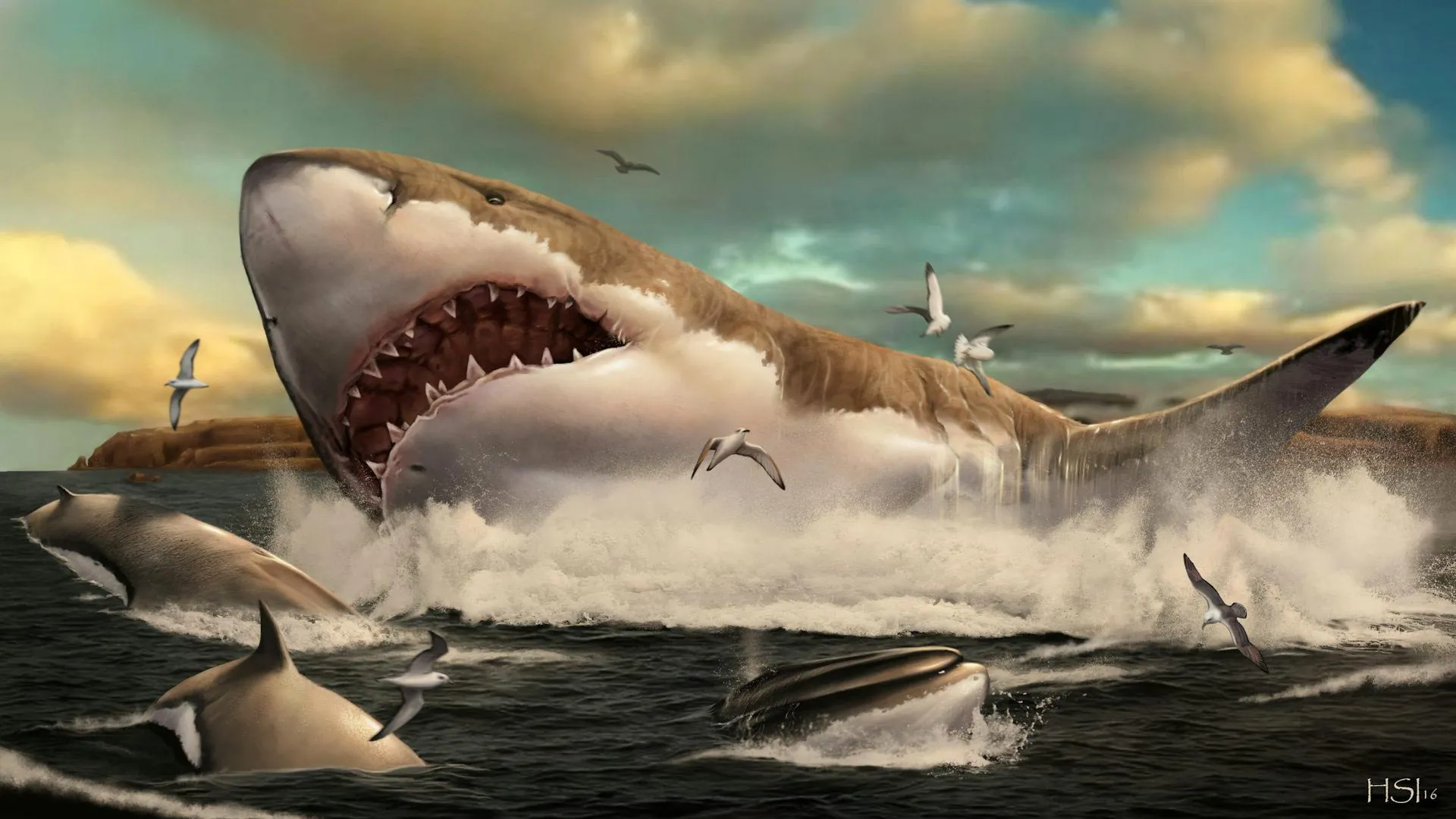
This resilient truth is powerfully illustrated by a groundbreaking new scientific study centered on the legendary apex predator Otodus megalodon—the colossal shark better known to the public by its obsolete moniker, Megalodon. Decades after being written off as casualties of an institutional relocation, a set of colossal, 11-million-year-old O. megalodon vertebrae has turned up on a museum shelf in Denmark, sitting unrecognized in plain sight.
The miraculous recovery of these fossils has allowed paleontologists to breathe new life into historical records, verifying that these prehistoric terrors reached staggering lengths exceeding 24 meters (79 feet), dwarfing the largest cinematic exaggerations of the Jaws franchise. Moreover, this serendipitous rediscovery sheds light on a broader, rarely discussed phenomenon: how and why some of the most valuable paleontological specimens in human history vanish, and the astonishing ways they occasionally make their way back to the light.
Detailed Chronology: The Odyssey of the Danish Megalodon
To understand the magnitude of the recent rediscovery, one must trace the path of the Danish O. megalodon vertebrae from their ancient origins in the marine environments of the Miocene epoch to the sterile quiet of a modern museum archive.
The Miocene Predator and the Scarcity of Cartilage
Sharks are cartilaginous fish. Unlike bony vertebrates, whose robust skeletons readily fossilize and endure the deep pressures of geological time, a shark’s skeletal structure is composed primarily of flexible cartilage. When a shark dies, its cartilage typically rots away long before mineralization can occur. Consequently, while O. megalodon teeth are relatively common finds for divers and fossil hunters—largely due to the thousands of teeth a single shark sheds over its lifetime—complete or even partial vertebral columns are exceptionally rare.
Vertebrae are the holy grail for paleobiologists attempting to accurately estimate the physical dimensions of extinct sharks. A tooth can hint at a massive creature, but a vertebral column provides structural architecture, allowing scientists to reliably extrapolate body length, mass, and growth rates.
Approximately 11 million years ago, an individual O. megalodon swam the waters of what is now Denmark. When it died, a portion of its vertebral column was preserved in the sediment, eventually unearthed to become a paleontological treasure. Each vertebra measured an astonishing 23 centimeters (9 inches) in diameter—making them the largest known vertebrae of any Otodus megalodon discovered to date.
The 1989 Disappearance
For years, these monumental specimens were housed within the esteemed Geological Museum of Copenhagen, an institution that has since been absorbed into the Natural History Museum of Denmark. They served as vital benchmarks for researchers studying Neogene marine ecosystems.
However, in 1989, the museum orchestrated a major administrative and physical migration, transferring numerous collections to the Museum of Southern Jutland. In the chaotic shuffle of crating, transporting, and uncrating thousands of delicate objects, the giant shark vertebrae vanished.
In the decades that followed, the physical specimens were presumed destroyed or hopelessly lost in transit. Paleontologists writing about the giant shark were forced to rely on ghostly ghosts of the past: faded black-and-white photographs and handwritten historical descriptions preserved in institutional archives. The physical evidence of the world’s largest shark vertebrae appeared to be gone forever.
The Shelf-Life Discovery
Decades later, during routine collection management and retrospective audits, researchers examining material housed in Danish repositories stumbled upon a set of vertebrae sitting quietly on an archival shelf. Upon closer inspection, cross-referencing with historical documentation, and modern morphological analysis, the startling truth crystallized: these were the long-lost O. megalodon vertebrae of Copenhagen.
The recovery of these specimens catalyzed a comprehensive, state-of-the-art re-evaluation of O. megalodon size and growth dynamics, culminating in a landmark study published in Palaeontologia Electronica.
By integrating the newly recovered physical evidence with advanced biomechanical models, the research team confirmed previous, heavily debated estimates: mature O. megalodon specimens routinely attained lengths exceeding 24 meters (79 feet). To put that scale into perspective, the hyper-exaggerated, mechanical great white shark terrorizing swimmers in Steven Spielberg’s cinematic masterpiece Jaws topped out at a mere 10.5 meters (34 feet). Furthermore, the study calculated that a newborn O. megalodon would enter the world measuring an impressive 3.6 meters (12 feet) in length—roughly the size of a modern adult great white shark—and could live for nearly a century.
Supporting Context & Metrics: How Museums Lose History
The story of the Danish shark vertebrae highlights a comforting reality: lost things can be found. Yet, it also forces a reckoning with an uncomfortable truth. How do professional institutions entrusted with safeguarding the world’s most irreplaceable treasures manage to lose them in the first place?
The answer is complex, rooted in the intersection of geopolitics, human error, institutional growth, and the inherent fragility of the fossil record itself.
1. The Crucible of Global Conflict
History is littered with the casualties of war, and natural history collections have historically served as collateral damage in human conflicts.
- World War II Bombings (1944): Perhaps the most infamous loss of paleontological specimens occurred on the night of April 24–25, 1944, when an Allied bombing raid targeted Munich, Germany. The Bavarian State Collection of Paleontology was struck, reducing the original, pristine holotype specimens of Spinosaurus aegyptiacus—the colossal, sail-backed predatory dinosaur described by German paleontologist Ernst Stromer—to ash and rubble. Decades later, scientists are still struggling to piece together the biology of Spinosaurus because its defining, primary physical evidence was wiped out in a single night of fire.
- The Blitz on Bristol (1940): Earlier in the conflict, Axis air raids over the United Kingdom wrought similar destruction. In Bristol, a bombing run decimated local museum collections, destroying critical early dinosaur fossils, including portions of the basal dinosaur Thecodontosaurus.
- The Sinking of the SS Mount Temple (1916): Warfare does not even need to reach the museum floor to destroy its contents. In December 1916, the Canadian cargo steamship SS Mount Temple was intercepted and sunk by the German raider SMS Möwe in the North Atlantic. While primarily carrying wheat, the ship was also transporting a precious cargo of newly excavated dinosaur fossils from the rich bone beds of Alberta, Canada, destined for British museums. The cargo manifests were notoriously vague, meaning modern science will likely never know precisely which species rest at the bottom of the Atlantic.
2. Desperate Evacuations and Wartime Disappearances
When nations face imminent invasion, curators often attempt to evacuate their most prized cultural and scientific artifacts, sometimes with tragic results.
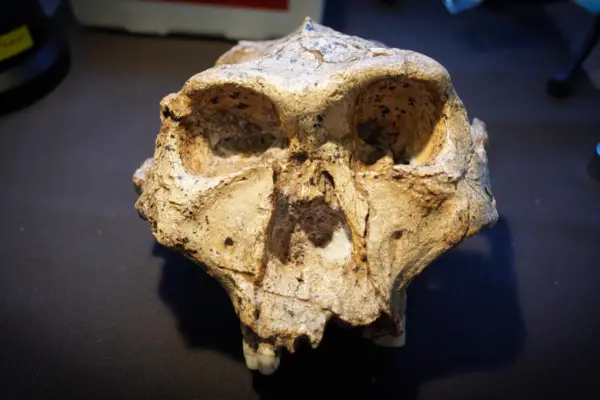
In 1941, as the Japanese military advanced across China, researchers at the Peking Union Medical College made a desperate bid to save the irreplaceable fossils of "Peking Man" (Homo erectus pekinensis). Comprising up to 40 individual specimens representing our early hominid ancestors with human-like proportions, the fossils were packed into crates intended for shipment to the United States for safekeeping.
The crates vanished en route. Whether they were lost at sea when the vessel carrying them was sunk, intercepted by occupying forces, or somehow misplaced before ever leaving port remains one of the greatest unsolved mysteries in paleoanthropology.
3. Fragility, Decay, and Administrative Chaos
Not all losses are dramatic; many are the result of quiet, mundane degradation combined with poor record-keeping.
Consider the enigmatic sauropod Amphicoelias fragillimus (recently reclassified as Maraapunisaurus). Described by legendary American paleontologist Edward Drinker Cope in 1877, the dinosaur was known from a single, gargantuan, yet profoundly fragile vertebra. Cope provided shifting measurements in his notes, creating lasting confusion over its actual size. When Cope passed away and his vast collections were acquired by the American Museum of Natural History, curators searched in vain for the specimen.
Given the primitive preservation techniques of the 19th century and the extreme structural fragility of the bone, paleontologists suspect the vertebra simply disintegrated on an open shelf, its powdered remains quietly swept into the trash by handlers who did not recognize its worth.
4. Scale and Institutional Blind Spots
Modern museums are victims of their own colossal success. The Natural History Museum in London alone houses an estimated 80 million individual specimens. The Smithsonian Institution boasts a collection numbering over 145 million items.
When an institution manages tens of millions of distinct objects spanning botany, mineralogy, zoology, and paleontology, administrative oversights are practically guaranteed. As experienced researchers note, it is not uncommon for a valuable specimen to be miscataloged, entered into a ledger with a typographical error, or simply shelved in the wrong department—effectively hiding a dinosaur skull or pterosaur skeleton in plain sight among modern mammalian archives, operating much like a misfiled book in a massive, unguided library.
5. Natural Disasters
Mother Nature herself occasionally reclaims what has been excavated from the earth.
- The Fukushima Earthquake and Tsunami (2011): The catastrophic triple disaster in Japan inflicted severe structural damage on coastal research facilities, including the Iwaki Coal and Fossil Museum, where many regional specimens suffered heavy impacts.
- The National Museum of Brazil Fire (2018): In a tragedy that sent shockwaves through the global scientific community, a massive fire engulfed the historic National Museum in Rio de Janeiro, destroying an estimated 20 million items. The blaze consumed irreplaceable geological and paleontological specimens, wiping out centuries of South American natural history in hours.
Official Statements & Expert Perspectives
The rediscovery of the O. megalodon vertebrae in Denmark has prompted renewed dialogue among international paleontologists regarding collection management, archival transparency, and the ethics of curation.
Dr. Hans-Jürgen Hansen, a prominent invertebrate paleontologist and marine historian, emphasized the critical importance of physical re-examinations over digital or photographic archives:
"A photograph is a shadow of data; a vertebra in hand is a physical ledger of biology. For decades, our understanding of Megalodon’s upper limits was constrained by the ghost of a lost specimen. Having these bones back on the lab bench allows us to apply 21st-century biomechanical modeling to 20th-century mysteries. It fundamentally shifts our baseline of what these animals were capable of achieving."
Meanwhile, museum curators worldwide are utilizing the incident to advocate for comprehensive, digitized inventory systems. Archival specialists point out that while historical paper logs were prone to misinterpretation during institutional relocations, modern RFID-tagged, digitized databases drastically reduce the risk of specimens getting lost in the shuffle.
A spokesperson for the Natural History Museum of Denmark remarked on the find:
"Our historical collections span centuries of shifting organizational structures, building moves, and changing scientific paradigms. While we strive for absolute accounting, finding a misfiled specimen of this magnitude reminds us of the dynamic nature of archives. It is a humbling experience that underscores the need for continuous, rigorous auditing across all global institutions."
Future Outlook: The New Era of Paleontological Discovery
The revival of the Danish O. megalodon vertebrae is more than a heartwarming institutional anecdote; it represents a harbinger of modern paleontology’s future.
As institutions increasingly invest in high-resolution digitization, deep-archival audits, and cross-border database integration, the "lost and found" bin of natural history is yielding unprecedented dividends. When historical specimens are rediscovered, they are rarely studied with the same tools used when they were first cataloged.
In the case of Otodus megalodon, the recovered vertebrae have provided concrete mathematical boundaries for the species’ maximum size, settling long-standing academic debates regarding whether the shark could truly surpass the 20-meter threshold. By coupling these physical relics with computed tomography (CT) scanning, internal trabecular bone analysis, and isotopic tracking, modern researchers can extract data that earlier generations of scientists could only dream of accessing.
Ultimately, while museums will continue to grapple with the vulnerabilities of scale, human error, and the occasional unforeseen disaster, stories like the return of the giant Danish shark vertebrae offer a powerful reminder. History is remarkably resilient. Even when buried beneath layers of bureaucratic oversight, lost during wartime evacuations, or sitting quietly on a forgotten shelf for thirty-five years, the physical archives of our planet’s deep past retain their voice—waiting patiently for the day someone finally looks up, recognizes what has been hiding in plain sight, and asks the right questions all over again.