






Executive Overview
For over half a century, silicon microchips have served as the undisputed computational bedrock of the modern world, orchestrating everything from simple household appliances to the hyper-scale data centers powering global artificial intelligence. However, the boundaries separating solid-state electronics from living biological systems are rapidly dissolving. In an unprecedented convergence of semiconductor engineering and molecular biology, a team of researchers at Harvard University has successfully repurposed microchip architecture to manufacture genetic material.
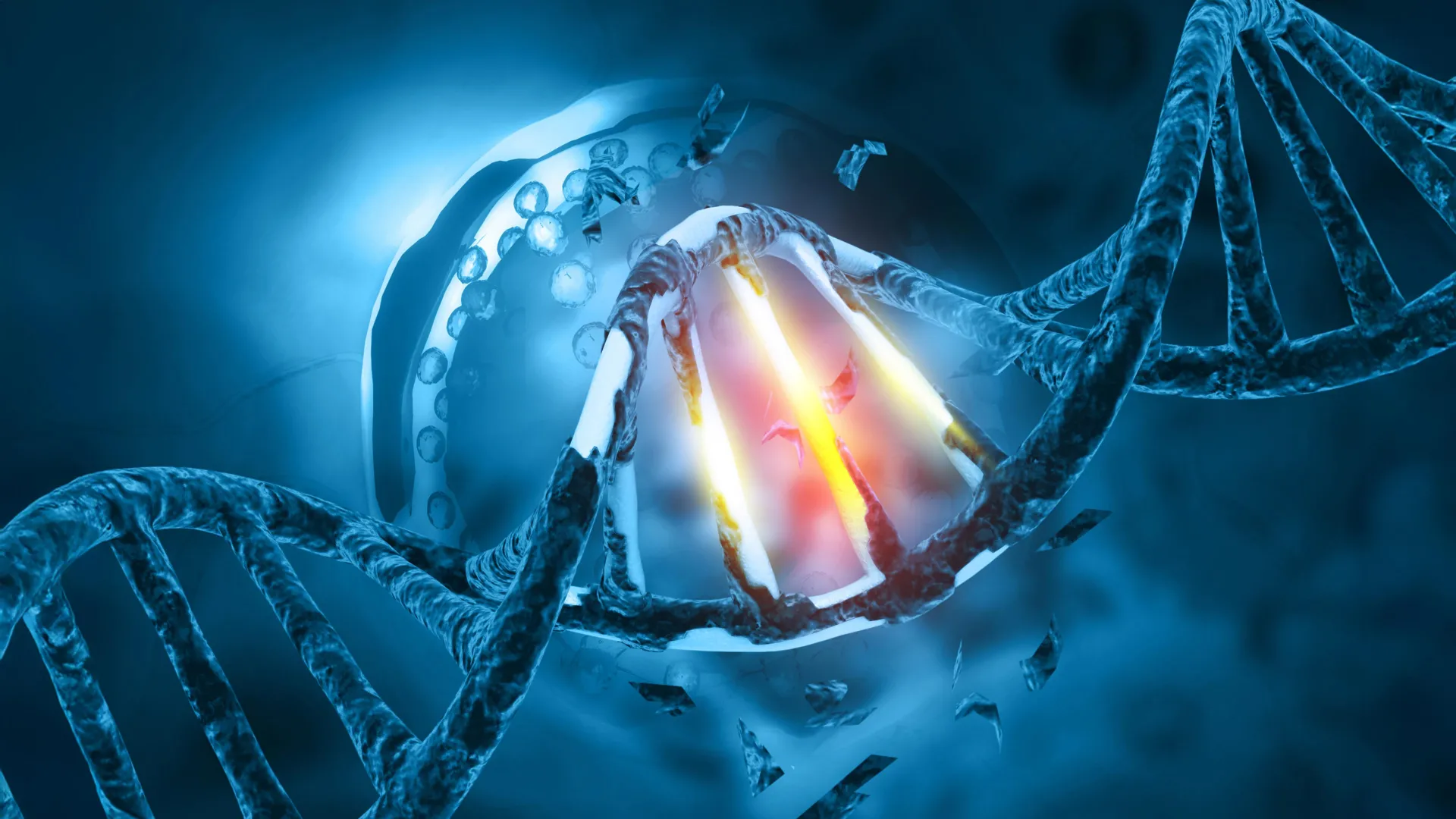
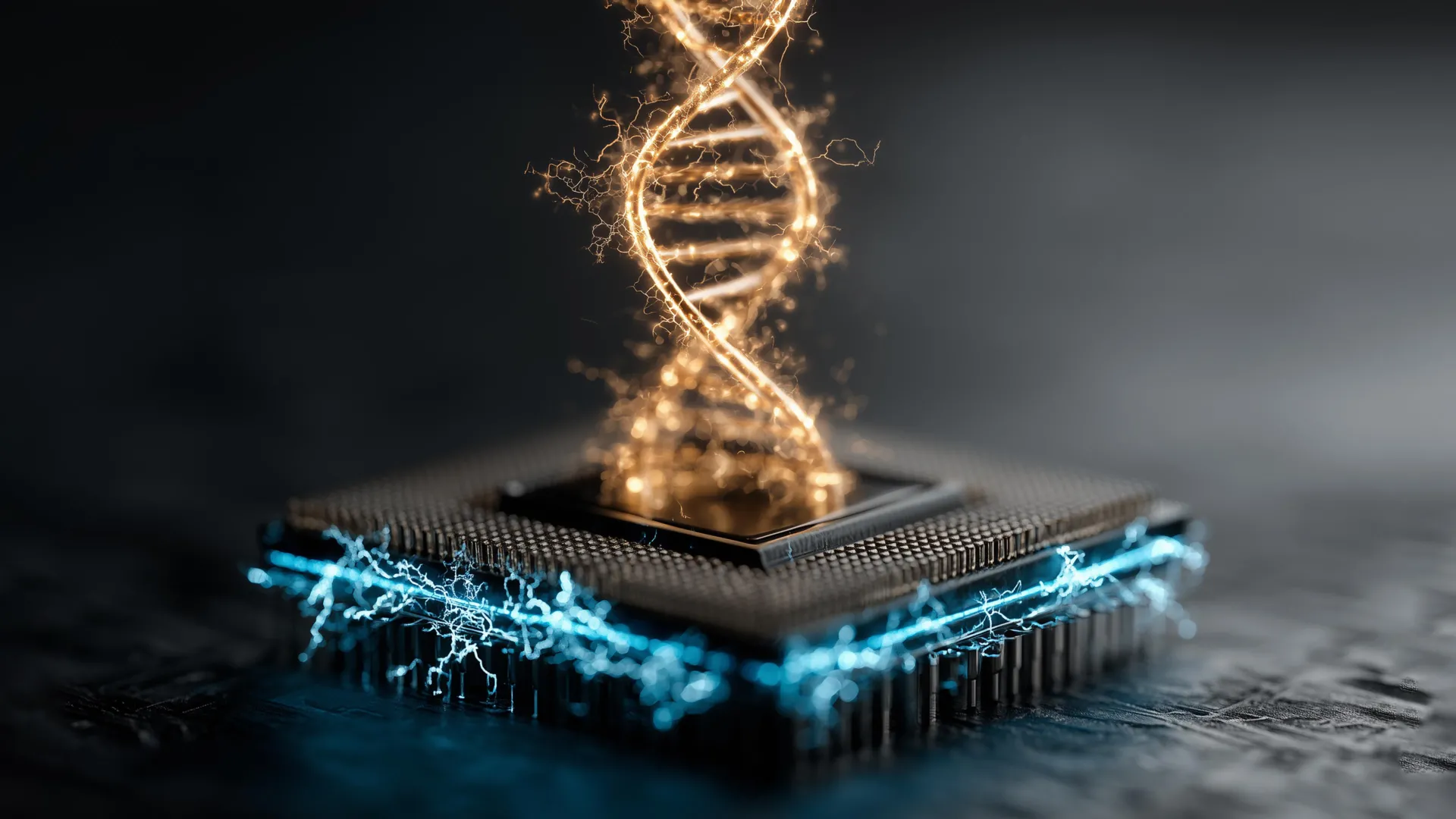
Published in the journal Nature Electronics, a landmark study led by Harvard’s John A. Paulson School of Engineering and Applied Sciences (SEAS) unveils a revolutionary silicon chip capable of synthesizing 64 distinct DNA sequences simultaneously. Unlike conventional industrial manufacturing methods—which rely heavily on hazardous organic solvents, centralized heavy-industry facilities, and complex chemical reagent chains—the Harvard-developed device utilizes an eco-friendly, water-based enzymatic approach. By deploying meticulously calibrated electrical currents across a micro-scale semiconductor array, the platform triggers precision DNA-building chemical reactions at highly specific coordinates on the chip’s surface.
This breakthrough represents a paradigm shift for biotechnology, medicine, and data science. By bridging the gap between electronic current control and biochemical synthesis, the technology promises to decentralize the production of custom genetic sequences, drastically reduce the chemical footprint of biotechnology laboratories, and open viable new pathways for long-term molecular data storage. Though formidable chemical and scaling hurdles remain before the technology can rival the sheer output capacity of multi-billion-dollar legacy manufacturing pipelines, this proof-of-concept establishes an entirely new trajectory for how humanity writes the code of life.
Detailed Chronology: From Neural Probes to Genetic Engineering
To understand the magnitude of this breakthrough, one must trace the unconventional trajectory of its development—a journey that did not begin in a molecular biology lab, but rather in the realm of neuroengineering.
The Accidental Genesis in Neurotechnology
The foundational technology behind the chip was not originally conceived to write DNA. Years prior to the recent Nature Electronics publication, Jeffrey Abbott—then a Ph.D. candidate working in the laboratory of Donhee Ham, the John A. and Elizabeth S. Armstrong Professor of Engineering and Applied Sciences at SEAS—was tasked with designing advanced silicon electronics to record the minute electrical activities of large populations of living neurons.
To interface directly with biological tissue, Abbott and his colleagues engineered a semiconductor surface equipped with precision current-injection capabilities. This system was designed to subtly and safely permeabilize neuronal membranes, granting researchers unprecedented intracellular electrical access to the brain’s complex circuitry.
As the project evolved, the research team stepped back to evaluate the fundamental physics of their device. They recognized that the chip’s core competency was not merely listening to biological signals, but exerting micro-scale spatial and temporal control over ionic environments via precise current injection.
"A defining feature of the chip was precision current injection, which we used to permeabilize neuronal membranes for intracellular access," recalled Professor Donhee Ham. "At a certain point, we wondered whether that same current control could be redirected from cells to molecules, replacing the neuron-facing electrodes with ring-electrode pairs that could localize pH for DNA synthesis. It worked."
Pivoting from Neuro-Physics to Molecular Synthesis
With this hypothesis in place, the Harvard team embarked on a radical redesign of the chip’s surface architecture. They replaced the neuron-interfacing electrode configurations with concentric ring-electrode pairs optimized for chemical manipulation.
In a traditional laboratory setting, enzymatic DNA synthesis—which relies on water-based enzyme reactions to link nucleotides—had long struggled with spatial multiplexing. While chemical synthesis methods could easily scale to produce millions of strands in parallel, enzymatic methods were sluggish, typically bottlenecked at generating roughly a dozen unique sequences simultaneously.
By applying their semiconductor expertise to the problem, the Harvard researchers successfully weaponized the chip’s precision current-injection capabilities to locally alter chemical pH. This allowed them to choreograph the step-by-step assembly of 64 unique DNA strands, each measuring up to 39 nucleotides in length, operating in parallel on a single fingernail-sized piece of silicon.
Supporting Context & Metrics: The Mechanics of Semiconductor-Driven Genetics
To appreciate the technical achievement of the Harvard platform, it is necessary to examine the mechanics of DNA synthesis, the environmental liabilities of legacy manufacturing, and the specific engineering triumphs of the new silicon device.
The Problem with Phosphoramidite Chemistry
For decades, custom DNA strands have been manufactured using an established industrial process known as phosphoramidite chemistry. While remarkably efficient at producing millions of parallel sequences for diagnostics, genome engineering, and pharmaceutical research, this methodology carries significant drawbacks:
- Heavy Chemical Reliance: The process mandates the use of volatile, hazardous organic solvents that present disposal challenges and environmental hazards.
- Centralized Infrastructure: Because of the specialized safety protocols and hazardous waste management required, phosphoramidite synthesis is typically confined to massive, centralized manufacturing facilities rather than point-of-care clinical settings or local research laboratories.
- Enzymatic Alternatives: For years, scientists have looked toward enzymatic DNA synthesis as a cleaner, gentler alternative. Because enzymes operate naturally in aqueous (water-based) environments inside living cells, adopting them for synthetic manufacturing would dramatically reduce the need for toxic organic reagents. However, scaling enzymatic synthesis to match the parallel output of traditional chemistry has remained an elusive holy grail for bioengineers.
How the Silicon Chip Writes DNA
DNA is assembled sequentially, one nucleotide building block at a time. During manufacturing, after each nucleotide is chemically attached to a growing strand, a temporary molecular "blocking group" must be attached to prevent uncontrolled, runaway polymerization. Before the next specific nucleotide can be added in the subsequent cycle, that blocking group must be stripped away through a process called deprotection.
In water-based systems, this deprotection step is triggered by acidic conditions (low pH). The core engineering challenge lies in lowering the pH exclusively at targeted, microscopic locations across a chip’s surface without altering the chemical environment of adjacent reactions.
The Harvard semiconductor chip resolves this via a sophisticated electrode design:
- The Array Layout: The chip’s active surface contains 64 distinct synthesis sites.
- Concentric Ring Electrodes: Each individual site features two concentric ring electrodes surrounding the anchor point where the root DNA molecules are bound.
- Proton Generation and Containment: When a specific site is digitally activated, the inner electrode generates protons, locally lowering the pH and triggering the removal of the blocking group, thereby allowing the next nucleotide to bind. Simultaneously, the outer ring electrode acts as a biochemical shield, actively sweeping away or neutralizing excess protons that attempt to drift outward. This ensures the acidic zone remains strictly confined to its designated micro-site.
Through iterative cycles of activation, deprotection, and nucleotide washing, the chip independently and simultaneously builds 64 unique DNA sequences across its micro-scale surface.
Official Statements & Collaborative Perspectives
The multi-institutional nature of the research highlights the complex, cross-disciplinary collaboration required to push the boundaries of synthetic biology. The project brought together experts from Harvard SEAS, the Broad Institute, DNA Script, and the Pohang University of Science and Technology (POSTECH).
Reflecting on the milestone, Woo-Bin Jung, co-first author of the study and now an assistant professor of chemical engineering at POSTECH—who executed the core experimental work as a postdoctoral researcher in Ham’s laboratory—emphasized the broader industrial implications of the technology, particularly regarding futuristic applications like DNA-based data storage.
"DNA data storage asks DNA synthesis to operate at a scale far beyond today’s needs," Jung noted. "That is why enzymatic synthesis in water can matter. If far more than 64 sequences can be synthesized in parallel, it could offer an environmentally friendly route toward writing DNA at very large scale."
However, the team remains transparent about the current technical ceilings of their platform. When the researchers attempted to aggressively scale the technology by fabricating chips with synthesis sites packed significantly closer together to increase parallel output, the experiment encountered an unexpected barrier.
Crucially, the failure was not structural or electronic; the semiconductor chip performed flawlessly in confining the low-pH environment to the intended coordinates. Instead, the limitation stemmed from the underlying chemistry.
"The chip did what we asked it to do: it localized low pH at selected sites," explained Han Sae Jung, co-first author of the study, former Harvard graduate student, and current postdoctoral researcher. "The limitation came from the deprotection chemistry, not from the silicon. That leaves a clear next step for the field—develop a more direct acid-driven deprotection chemistry that can keep pace with the chip."
Specifically, the low pH generates intermediate chemical molecules that perform the deprotection step; these active intermediates were found to occasionally diffuse past spatial boundaries into neighboring reaction wells, causing cross-contamination despite the precise control of the electrical field. Solving this chemical diffusion dilemma is now recognized as the primary engineering objective for the next generation of semiconductor-based DNA writers.
Future Outlook: Implications for Biotechnology and Beyond
The successful demonstration of parallel enzymatic DNA synthesis on a semiconductor chip opens a sweeping horizon of possibilities across multiple scientific and industrial domains.
Decentralized Diagnostics and Personalized Medicine
By replacing solvent-heavy infrastructure with a clean, water-based, chip-driven synthesis system, the technology paves the way for desktop-sized DNA printers. In the future, hospitals, regional clinics, and field researchers could manufacture custom genetic diagnostics, personalized cancer therapeutics, and targeted gene-editing components on demand, eliminating the logistical delays and cold-chain dependencies associated with outsourcing genetic material to centralized manufacturing hubs.
The Long Road to Molecular Data Storage
Digital data creation is rapidly outstripping global silicon storage manufacturing capabilities. DNA offers an almost incomprehensibly dense alternative medium: a single gram of DNA can theoretically store hundreds of petabytes of digital information in a stable, space-efficient format for millennia.
However, realizing practical DNA data storage requires manufacturing synthetic DNA at an astronomical scale and at a radically lower environmental cost than current industrial methods permit. The Harvard team’s proof-of-concept demonstrates that silicon-powered enzymatic synthesis provides a viable, sustainable architectural framework capable of scaling sustainably into the petabyte-storage era, provided that complementary advancements in biochemistry can match the speed and precision of solid-state electronics.
Commercialization and Intellectual Property
Recognizing the commercial viability of the platform, Harvard’s Office of Technology Development has actively filed robust intellectual property claims related to the semiconductor-based DNA synthesis architecture. With ongoing support from foundational backers—including the Intelligence Advanced Research Projects Activity (IARPA) via the Office of the Director of National Intelligence (ODNI), the Horizon Europe Hyperion project, and the Samsung Research Funding & Incubation Center for Future Technology—the research coalition is uniquely positioned to transition the technology from academic prototyping to commercial engineering.
As the physical lines dividing microelectronics and molecular biology continue to blur, this Harvard-led breakthrough signals the dawn of a new era. By teaching traditional silicon chips to speak the language of genetics, researchers have not only solved a persistent bottleneck in biotechnology—they have laid the foundational brick for the biological computing infrastructure of tomorrow.