Transforming Acute Care: How Becton, Dickinson and Co. is Redefining Noninvasive Continuous Patient Monitoring
Executive Overview
In the high-stakes environments of modern acute care, every second counts, and every data point matters. For decades, clinicians operating in intensive care units (ICUs) and operating rooms have relied on a patchwork of legacy monitoring technologies to track patient hemodynamics. While vital signs like blood pressure form the bedrock of medical decision-making, the tools used to capture them have remained largely unchanged for half a century. Traditional intermittent arm cuffs—staples of modern medicine—carry a staggering margin of error, often fluctuating by up to 30% in acute settings. Meanwhile, gold-standard continuous monitoring alternatives, such as invasive arterial lines, carry inherent clinical risks, including infection, thrombosis, and nerve damage.
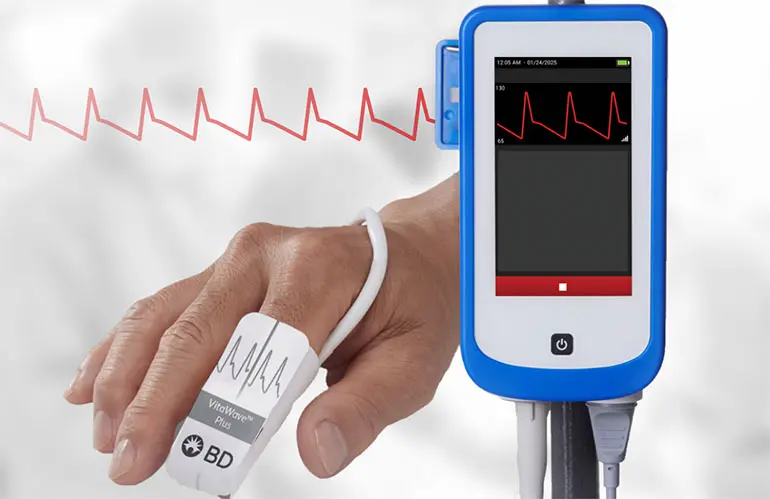
Recognizing this profound technological gap, global medical technology leader Becton, Dickinson and Co. (BD) has stepped forward with a paradigm-shifting solution. Under the leadership of Tim Patz, Worldwide President of BD’s Advanced Patient Monitoring business, the company has officially launched the HemoSphere Stream Module and the proprietary VitaWave Plus finger cuff. Together, this advanced platform delivers real-time, beat-to-beat arterial waveform data noninvasively, bridging the dangerous chasm between spot-check inaccuracy and invasive patient risk.
This comprehensive report explores the genesis of the HemoSphere Stream Module, dissects the engineering innovations that make it superior to traditional methodologies, analyzes the strategic vision guiding BD’s Advanced Patient Monitoring division, and maps out the future of continuous care from hospital admission to discharge.
Detailed Chronology: The Evolution of BD’s Advanced Monitoring Platform
The journey toward seamless, noninvasive continuous patient monitoring was neither swift nor straightforward. It required decades of clinical insights, material science advancements, and a fundamental reimagining of how medical devices interface with existing hospital infrastructure.
The Legacy Problem (1970s–2010s)
For nearly fifty years, standard blood pressure cuffs have dominated clinical environments. Invented generations ago, the pneumatic arm cuff relies on intermittent inflation to gauge systolic and diastolic pressures. While adequate for routine outpatient check-ups, its application in acute care settings has long troubled forward-thinking clinicians.
Published medical literature consistently highlights that traditional arm cuffs in acute care patients exhibit significant bias and margins of error—often reaching up to $pm 30%$. In an ICU or surgical suite, acting on data that is off by nearly a third can lead to misdirected pharmacological interventions, delayed recognition of physiological deterioration, and compromised patient outcomes. To achieve high-fidelity, continuous tracking, clinicians traditionally had to resort to invasive arterial lines—a procedure requiring catheter insertion into an artery, which introduces patient discomfort and clinical risks.
Recognizing the Paradigm Shift
BD’s Advanced Patient Monitoring team recognized that if the foundation of clinical decision-making rests on flawed data, the resulting treatments will inevitably fall short. The team set out to answer a fundamental question: How can we deliver the granular, second-by-second data of an invasive line without subjecting the patient to physical trauma, while simultaneously bypassing the inaccuracies of an outdated arm cuff?
The answer lay in noninvasive arterial waveform analysis via advanced photoplethysmography and volume-clamp technology integrated into an ergonomic digital ecosystem.
The Launch of the HemoSphere Stream Module
BD officially unveiled and launched the HemoSphere Stream Module to commercial markets, marking a major milestone in acute care technology. Designed to integrate fluidly into existing hospital footprints, the platform pairs the HemoSphere monitoring engine with the newly developed VitaWave Plus finger cuff. This launch represents the culmination of years of R&D focused on user-centric design, interoperability, and clinical precision.
Supporting Context & Metrics: The Anatomy of an Acute Care Crisis
To fully appreciate the significance of BD’s latest innovation, one must examine the clinical metrics and systemic challenges plaguing modern hospital environments.
The Margin of Error in Acute Care
In fast-paced hospital wards, emergency departments, and surgical suites, patient conditions can shift from stable to critical in a matter of minutes. Intermittent monitoring creates "blind spots" between readings. When a nurse or physician relies on an arm cuff that possesses a $pm 30%$ margin of error for a critically ill patient, the risks multiply exponentially:
Misdiagnosis of Hypotension: Hidden drops in blood pressure can lead to acute kidney injury or myocardial ischemia before the next scheduled cuff inflation.
Fluid Overload or Under-resuscitation: Ineffective hemodynamic tracking often leads to inappropriate administration of intravenous fluids or vasoactive medications.
Delayed Escalation: Without beat-to-beat data trends, clinical teams may miss the early warning signs of systemic shock or sepsis.
The Interoperability Challenge
Beyond raw accuracy, modern hospitals face severe infrastructure fragmentation. Different departments—the emergency department (ED), the general ward, the operating room (OR), and the ICU—often utilize disparate monitoring hardware from competing manufacturers.
BD engineered the HemoSphere Stream Module to solve this logistical nightmare. Unlike proprietary systems that demand expensive, brand-specific ecosystem overhauls, the Stream Module is designed for universal adaptability. It plugs seamlessly into a wide range of compatible bedside monitors across various brands and configurations via standard cabling. This cross-platform agility ensures that high-level, continuous monitoring is no longer restricted to specialized ICU beds; it can be deployed rapidly across virtually any clinical care space.
Official Statements and Leadership Insights
In an exclusive interview with Medical Design & Outsourcing, Tim Patz, Worldwide President of BD’s Advanced Patient Monitoring business, elaborated on the philosophy, engineering breakthroughs, and ultimate mission driving his division forward.
Patient-Centric Innovation
When asked about the overarching mission of the Advanced Patient Monitoring team, Patz emphasized a culture deeply rooted in clinical utility and patient outcomes:
"Big picture, what we do is help clinicians identify what’s going on with the patient. A lot of our patients are either sick in the ICU or they’re under anesthesia in the operating room. Whether it’s hemodynamics or advanced physiology, we provide information to clinicians so they can get patients through this care pathway faster. The information helps you make treatment decisions. The treatment decisions then impact the care. We’re a very patient-focused group. Ultimately, our endgame is to get information to clinicians and improve patient outcomes. Then we celebrate those patients, we get great patient stories and we have a lot of culture built around that."
The Dual Innovation of HemoSphere Stream
Patz broke down the revolutionary aspects of the HemoSphere Stream Module into two primary pillars: continuous granularity and universal hospital agility.
"Two things in my mind. No. 1 is when we go to primary care, it’s great to have a blood pressure cuff give you a measurement. But when you’re in that acute phase, and you’re in the hospital, you really need continuous monitoring. If you’re sick enough to be admitted to the hospital, then you should have information coming on a beat-by-beat, second-by-second basis so that you get information back to your clinical care provider."
Addressing the hardware integration hurdle, Patz continued:
"The second piece is whether you’re in an emergency room bed, general ward or the operating room, there are different monitors in all these different rooms. Sometimes you don’t have access to the monitoring that’s required to have that high level of care. Stream is unique because it’ll plug into a wide range of compatible bedside monitors, across different brands and configurations, just via cable. It doesn’t require you to have any special connections. Stream is really using the monitoring that exists within any care space. It gives you that continuous need, but also that ability to be agile in the hospital environment you’re in."
Rethinking 50-Year-Old Technology
Addressing the clinical community’s reliance on legacy methods, Patz offered a candid critique of traditional arm cuffs without dismissing their historical value:
"When you see the data from traditional blood pressure monitoring, it’s not great. In general, the arm cuff in an acute care patient has probably plus or minus 30% [margin of error/bias], so you can imagine… Our core principle is that we provide information that inevitably will lead to better treatment. If you’re starting with the basis that the information a physician or nurse is getting is 30% off, you have a risk to patients that you could be making a treatment decision that actually is not in line with the numbers that are really happening to those patients… This is widely published within different journals, these error rates."
Patz concluded with a forward-looking perspective on technological evolution:
"We are not trying to bash the technology, but it is a technology that is close to 40, 50 years old. Arm cuff technology is one of the oldest technologies in our space. I think it’s a natural evolution that these products should evolve over time."
Future Outlook: Continuous Monitoring from Admission to Discharge
The introduction of the HemoSphere Stream Module and VitaWave Plus finger cuff is merely the opening salvo in BD’s broader vision for the future of healthcare. Tim Patz envisions an unbroken continuum of care where continuous monitoring is not restricted to moments of critical crisis, but follows the patient seamlessly "from admission or the point of surgery, all the way to discharge."
Expanding the Continuum of Care
As hospital systems face mounting financial pressures, nursing shortages, and a growing geriatric demographic, the demand for proactive, preventative care metrics has never been higher. By removing the barriers of invasive lines and inaccurate spot-checks, platforms like HemoSphere Stream pave the way for early detection of patient deterioration across lower-acuity hospital floors.
Future iterations of continuous monitoring platforms are expected to incorporate predictive analytics and machine learning algorithms. These smart systems will not only report beat-by-beat hemodynamic data in real time, but will also forecast hemodynamic instability hours before clinical symptoms manifest, allowing care teams to shift from a reactive posture to a proactive stance.
Conclusion
Becton, Dickinson and Co. has demonstrated how targeted medical device engineering can successfully disrupt decades of clinical complacency. By tackling the inherent inaccuracies of 50-year-old arm cuff technology and eliminating the invasive risks of arterial lines, BD’s Advanced Patient Monitoring division is empowering clinicians with the high-fidelity, real-time data they need to save lives. As the HemoSphere Stream Module rolls out across diverse hospital environments, it stands as a testament to what is possible when patient-centric innovation meets uncompromising engineering standards—ushering in a safer, more connected era of acute care medicine.