






Executive Overview
For the vast majority of evolutionary history, the dominant reproductive strategy across the animal kingdom was straightforward and detached: animals reproduced, laid eggs or released gametes, and left their offspring to fend for themselves. Yet, across countless divergent lineages—from mammals feeding their young with milk and birds constructing intricate nests to social insects tending to fragile larvae—complex parental care emerged.
A landmark study published in the journal Nature has now provided a compelling explanation for how this monumental behavioral shift occurred. Researchers investigating clonal raider ants have discovered that evolution did not construct entirely new, bespoke brain networks from scratch to facilitate parenting. Instead, it systematically repurposed and adapted ancient neural pathways originally designed to regulate hunger and feeding, coopting these primitive survival mechanisms to drive social caregiving.
By leveraging automated behavioral tracking and comprehensive neurochemical profiling, the research team identified two critical signaling molecules—Neuropeptide F (NPF) and Allatostatin A (AstA)—that act as molecular switches. These chemicals dictate whether an ant nurtures larvae or abandons the nest to forage for food, depending directly on age and internal metabolic state.
Crucially, because ants and mammals share conserved brain signaling systems yet possess far simpler nervous systems (an ant brain contains roughly 60,000 cells compared to a mouse’s 100 million), this discovery offers an unprecedented model for decoding the biological architecture of parenting. Beyond illuminating the evolutionary origins of caregiving, the findings provide a revolutionary framework for studying healthy brain aging, shifting the scientific lens away from late-stage neurodegeneration toward the gradual, lifelong chemical shifts that govern behavior across species.
Detailed Chronology
Unraveling the Evolutionary Paradox
The question of how complex caregiving evolved from ancestors that offered little to no parental investment has long baffled evolutionary biologists. For decades, leading hypotheses pointed toward the repurposing of pre-existing biological systems. Earlier work in mammalian models suggested that neuropeptides—small signaling molecules used by neurons to communicate—might have transitioned over evolutionary timescales from regulating metabolic hunger to encouraging protective and nurturing behaviors toward offspring.
However, proving this direct physiological and evolutionary connection proved exceptionally difficult. Traditional neuroscience models presented significant roadblocks. Widely studied invertebrate models, such as fruit flies (Drosophila melanogaster) and roundworms (Caenorhabditis elegans), do not exhibit parental care. Conversely, while mice provide extensive and complex caregiving, their brains are staggeringly intricate, containing roughly 100 million neurons, making it extraordinarily difficult to isolate and map the precise micro-circuits driving individual behaviors.
The Clonal Raider Ant Model
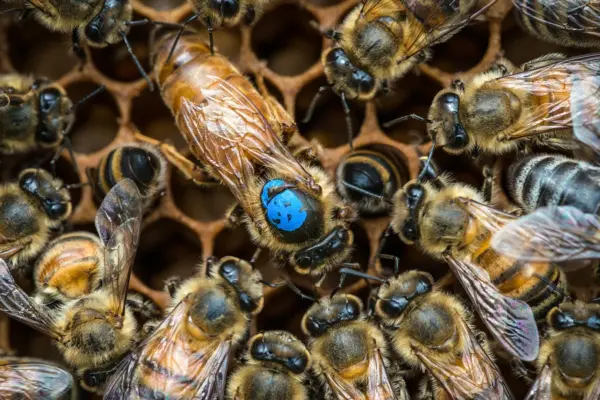
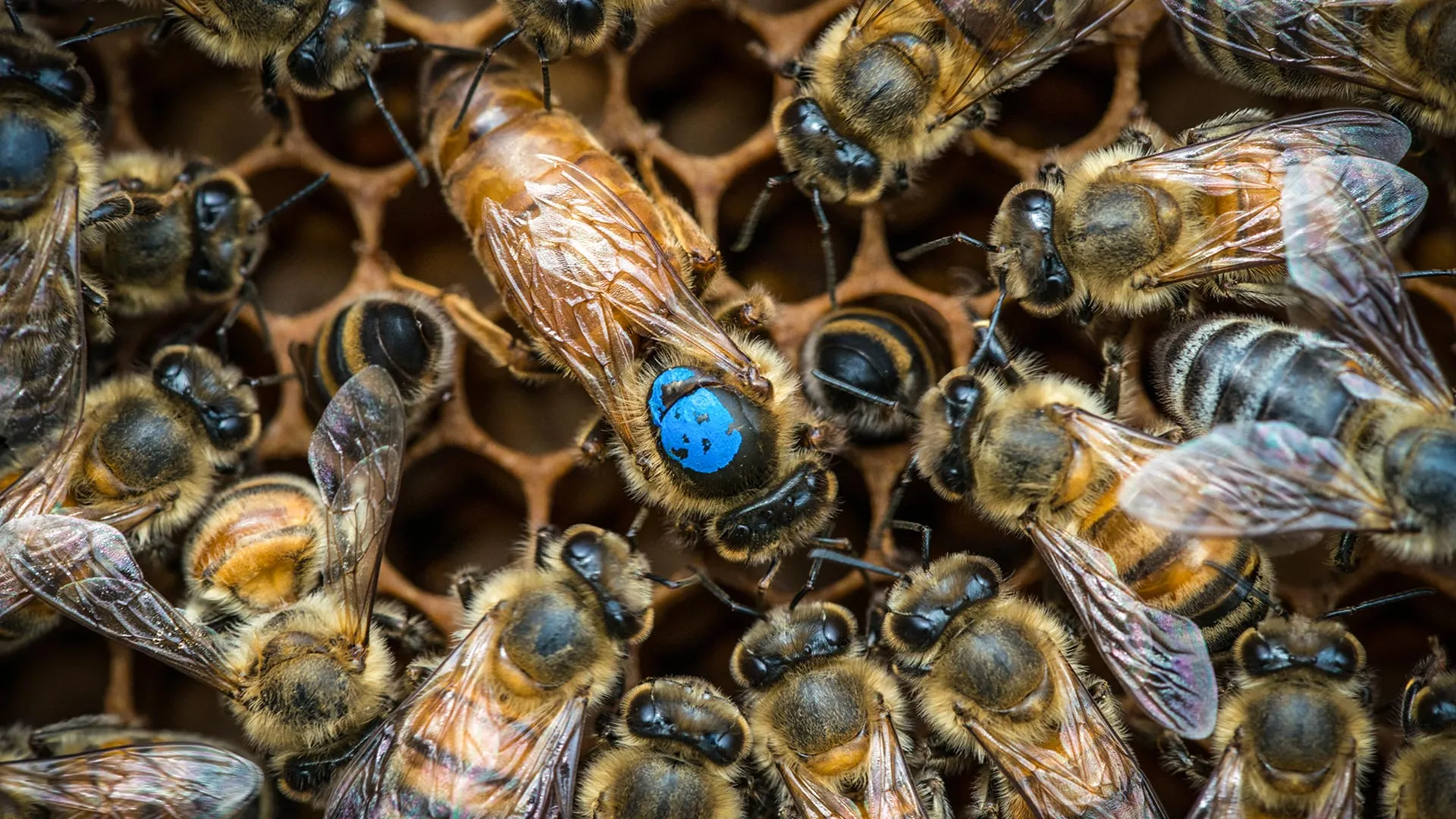
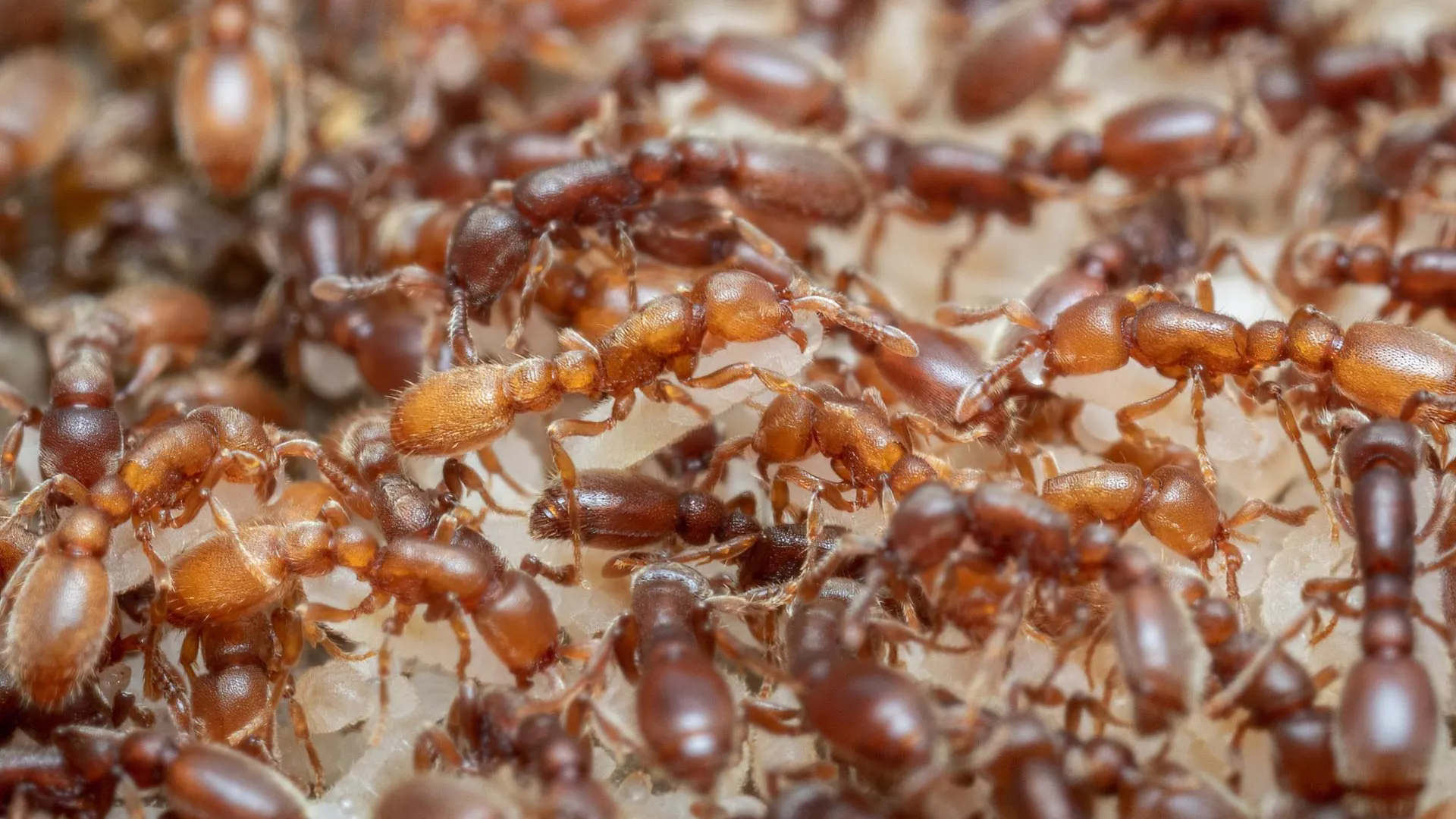
To bridge this experimental gap, researchers turned to the clonal raider ant (Oerapheidole / clonal raider ants). These social insects exhibit a clear, highly structured division of labor that shifts predictably as they age. Young ants remain sheltered deep within the nest, dedicating their time entirely to nursing and tending developing larvae. As they age, their behavioral repertoire shifts fundamentally: they transition into foragers, leaving the nest to secure resources for the colony.
This predictable, age-dependent behavioral transition made clonal raider ants an ideal organism to study how brain chemistry governs shifts in social roles over time. With a compact brain of approximately 60,000 cells, the ant offered the research team a tractable system to map neuromodulatory circuits with pinpoint precision.
Automated Tracking and the Neuropeptidome
To meticulously map how brain chemistry drives these shifts, the researchers engineered a high-throughput, automated behavioral monitoring system. This setup paired individual ants with individual larvae, allowing the team to record and quantify hundreds of distinct caregiving interactions in real time.
Simultaneously, the researchers performed a comprehensive chemical census of the ant brain. They successfully annotated the ant’s complete neuropeptidome—identifying 70 distinct neuropeptides. With this molecular catalog in hand, the team synthesized these chemical messengers and tested them systematically to observe whether introducing or blocking specific molecules could alter an ant’s behavioral propensity toward the larvae.
Pinpointing the Molecular Switches: NPF and AstA
Through these targeted behavioral and chemical assays, the research team zeroed in on two key signaling molecules that regulate both feeding and social behavior: Neuropeptide F (NPF) and Allatostatin A (AstA).
The experiments revealed that NPF and AstA act as a molecular push-and-pull mechanism. NPF strongly encouraged ants to tend to and nurture larvae, while AstA had the opposite effect, driving the insects away from the brood and inciting foraging behavior.
Crucially, these molecules mirrored the ants’ natural life stages. Young, nest-bound nurse ants naturally exhibited high concentrations of NPF and low levels of AstA in critical brain regions. As the ants aged into foragers, this chemical profile inverted, with AstA levels rising and NPF concentrations dropping. When researchers artificially manipulated the activity of these molecules, the ants’ behaviors shifted accordingly, proving that these neuropeptides were active causal agents rather than passive correlates of age.
The Hunger-Care Connection
To test whether these caregiving circuits remained tethered to their ancient metabolic roots, the researchers subjected ants to varying nutritional states, comparing well-fed insects with those subjected to food deprivation.
The results established a direct physiological link between hunger and caregiving. Starved ants experienced a spike in NPF levels and a drop in AstA, effectively shifting their internal chemistry into a caregiving profile and increasing their responsiveness to larvae. Once fed, the chemical balance reversed, dampening their nurturing instincts and refocusing them on foraging. This behavioral plasticity demonstrated that parental care had indeed evolved by extending the neural machinery of self-nourishment to include the provisioning of offspring.
Supporting Context & Metrics
To fully grasp the magnitude of this discovery, it is essential to examine the structural and biological metrics that define the research:
- Neuronal Complexity Gap: The ant brain consists of approximately 60,000 cells, whereas a standard mammalian model like the mouse boasts roughly 100 million neurons. This stark difference in scale reduces combinatorial complexity, allowing neuroscientists to trace neural pathways with significantly higher resolution and speed.
- Neuropeptidome Scale: Researchers successfully cataloged and mapped 70 distinct neuropeptides within the clonal raider ant brain, providing a robust molecular library for future neuroethological studies.
- Behavioral Plasticity: The study monitored hundreds of discrete caregiving interactions using automated tracking systems, eliminating human observational bias and generating high-density behavioral datasets.
- Conserved Signaling Pathways: The neuropeptides identified in ants (NPF and its mammalian homologues, such as Neuropeptide Y) demonstrate deep evolutionary conservation, underscoring that the neurochemical toolkits governing social motivation are preserved across vast phylogenetic distances.
Official Statements
The implications of the study have drawn acclaim from leading figures in neurobiology and social evolution, emphasizing the profound efficiency of natural selection:
"Our work is a prime example of how evolution seldom invents things from scratch. Evolution takes what it has and works with that, sometimes in very surprising ways."
— Daniel Kronauer, Head of the Laboratory of Social Evolution and Behavior, The Rockefeller University"It amazes me that similar parenting behaviors have evolved so many times in so many distinct animal lineages. Our paper suggests that the evolutionary routes to these sorts of behaviors are far more constrained than we may have naively imagined. That’s very exciting, because it may eventually lead to a blueprint of how these complex social behaviors evolve."
— Co-Lead Researcher / Study Collaborator
Highlighting the broader implications for understanding healthy brain development and aging, Kronauer further noted the critical gap in current scientific literature:
"There’s a lot of research and funding invested in studying late-stage neurodegenerative diseases, but we actually know very little about how the brain changes throughout the normal healthspan of an individual. In ant colonies, these dynamics are central to the organization of the society. Our discovery provides a striking demonstration that neuromodulators can produce age-dependent changes in behavioral proclivities in ants, and I suspect that that’s the case in other animals as well, including in humans."
— Daniel Kronauer
Future Outlook
The publication of this study in Nature marks the beginning of a new chapter in neuroethology, opening multiple avenues for future research that bridge evolutionary biology, neurochemistry, and gerontology.
Mapping the Micro-Circuits
With the primary molecular actors—NPF and AstA—identified, the immediate objective for the research team is to map the downstream neural circuits they influence. By tracing how these chemical signals are received, processed, and translated into physical actions within the ant’s compact brain, scientists hope to construct a definitive wiring diagram of social care. This mapping will clarify how primitive metabolic centers physically expanded their functional reach to include social bonding and offspring provisioning.
Cross-Species Translation to Mammals
Because mammals utilize parallel neuropeptidergic systems (such as oxytocin, vasopressin, and neuropeptide Y) in the regulation of parental behavior and feeding, comparative neurobiologists plan to investigate whether the functional overlap observed in ants is conserved in higher vertebrates. Uncovering a shared biological blueprint for parenting across widely separated animal lineages could fundamentally alter our understanding of maternal and paternal behavior in humans.
Redefining Aging Research
Perhaps the most far-reaching implication of the clonal raider ant model lies in the realm of aging. Modern biomedical research is heavily skewed toward late-stage pathologies, such as Alzheimer’s disease and other forms of dementia. Consequently, science remains largely in the dark regarding the subtle, progressive neurochemical shifts that occur during normal, healthy aging.
Because clonal raider ants undergo a natural, predictable, and socially vital transition in behavior as they age, they offer an unprecedented natural laboratory for studying how neuromodulators drive age-dependent behavioral changes. Researchers believe that unlocking the chemical kinetics of aging in social insects will shed light on parallel processes in human brains, offering fresh insights into how lifelong neurochemical adjustments shape personality, cognition, and social behavior across the natural lifespan.