






Executive Overview
In the modern landscape of biomedical research, few paradoxes are as striking as the "hygiene hypothesis." For generations, the eradication of parasitic intestinal worms through advanced sanitation, clean water, and modern medicine has been heralded as a monumental victory for public health. Yet, this triumph over pathogens has coincided with an alarming, simultaneous surge in the prevalence of autoimmune disorders, chronic allergies, and inflammatory bowel diseases (IBD) across industrialized nations.
For roughly twenty years, a subset of immunologists and parasitologists has pursued a fascinating therapeutic avenue known as helminth therapy—introducing harmless or controlled intestinal parasites back into the human digestive tract to calm hyperactive immune systems. However, clinical and experimental results have historically been maddeningly inconsistent: sometimes these organisms provide profound relief from chronic inflammation, while other times they offer no therapeutic benefit at all.
Now, a landmark study published in the journal Nature Communications by a team of parasitologists at the Biology Centre of the Czech Academy of Sciences (CAS) has finally solved a major piece of this biological puzzle. The research reveals that intestinal worms do not operate in a biochemical vacuum. According to the findings, these organisms can only reduce inflammation when their host consumes a sufficient amount of dietary fiber.
Without adequate fiber, the worms undergo a dramatic physiological shift, entering a metabolic state closely resembling mammalian hibernation. In this dormant, energy-conserving mode, the parasites shrivel, fail to reach maturity, and completely lose their ability to modulate the host’s immune response.
This discovery bridges a critical knowledge gap, uniting nutritional science, parasitology, and immunology. It suggests that the Western diet—notoriously deficient in structural fiber—may inadvertently disarm one of our oldest evolutionary allies. As chronic inflammatory conditions continue to strain healthcare systems globally, this research underscores a profound biological truth: to heal our immune systems, we must first restore the complex, interdependent ecosystem of our guts, starting with what we put on our plates.
Detailed Chronology: Unraveling the Parasite-Fiber Connection
To understand how researchers arrived at this groundbreaking conclusion, it is necessary to retrace the steps of the Czech Academy of Sciences research team and examine the historical progression of helminth research.
The Rise and Fall of the "Old Friends" Hypothesis
The intellectual framework for this study rests on the "Old Friends" hypothesis, an evolution of the broader hygiene hypothesis proposed in the late 20th century. Evolutionary biologists noted that human beings co-evolved with a vast array of microorganisms and macro-organisms—including bacteria, viruses, fungi, and helminths (parasitic worms)—over millions of years.
Many of these organisms were not merely malicious pathogens; they were commensal or mutualistic partners that actively helped calibrate the human immune system. Helminths, in particular, are masters of immune modulation. To survive inside a human or animal host for decades without being destroyed by the immune system, these worms secrete complex biochemical cocktails that suppress localized and systemic inflammation. This evolutionary adaptation prevents the host’s immune system from launching a catastrophic attack against the parasite.
When modern sanitation virtually eliminated helminths from industrialized societies, our immune systems were suddenly left without their primary regulatory counterweights. Deprived of the evolutionary cues typically provided by these parasites, immune systems in Western nations began misfiring more frequently, driving up rates of Crohn’s disease, ulcerative colitis, multiple sclerosis, and asthma.
The Inconsistency Conundrum
Intrigued by these observations, scientists began testing helminth therapy around the turn of the 21st century. Clinical trials involving the ingestion of harmless pig whipworms (Trichuris suis) or human hookworms (Necator americanus) occasionally yielded miraculous remissions in patients suffering from severe autoimmune flare-ups.
Yet, researchers were frustrated by wildly unpredictable outcomes. In some patient cohorts, the therapy induced profound anti-inflammatory benefits; in others, it had zero discernible effect. Until recently, variables such as parasite dosage, strain differences, and patient genetics were blamed for these discrepancies. However, researchers suspected that an overlooked environmental variable—namely, the host’s diet—was playing a decisive role.
The Experimental Breakthrough
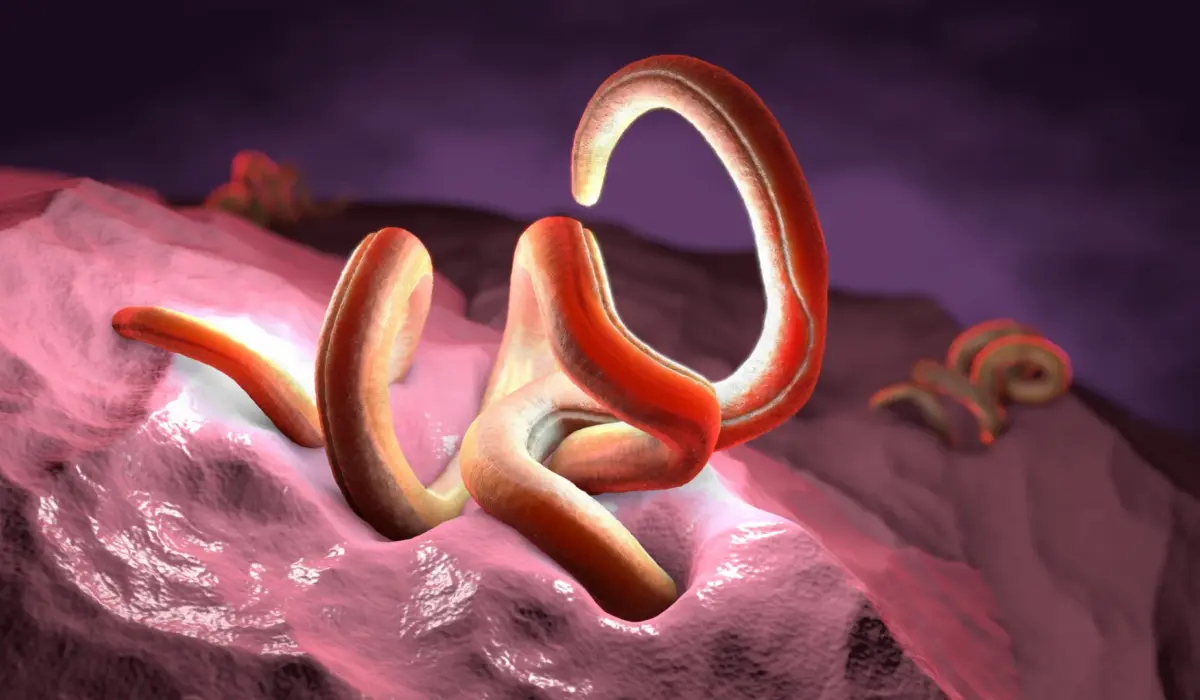
To isolate the impact of diet, Kateřina Jirků and her colleagues at the Institute of Parasitology within the Biology Centre CAS designed a controlled experimental model. They utilized the rat tapeworm Hymenolepis diminuta, a classic, non-pathogenic model organism extensively used in scientific literature to study the intricate dynamics between parasites, gut microbiota, and mammalian immunity.
The research team divided test subjects into distinct dietary cohorts, varying the proportions of structural dietary fiber while keeping overall caloric intake and macronutrient profiles stable. The results of the intervention were immediate and striking.
When subjects were maintained on a fiber-rich diet, the tapeworms thrived. They reached optimal physical size, achieved sexual maturity, and successfully engaged in the biochemical signaling required to suppress inflammation in the host.
Conversely, when the hosts were transitioned to a fiber-deficient diet, the physiological fortunes of the tapeworms plummeted. The parasites became a fraction of their normal size, completely arrested their development, failed to produce eggs, and entered an energy-conserving hibernation state. Crucially, as the worms went dormant, their anti-inflammatory properties vanished entirely. Subsequent genetic profiling confirmed widespread alterations in the worms’ gene expression profiles, shutting down metabolic and reproductive pathways to survive the nutritional famine imposed by the low-fiber diet.
Supporting Context & Metrics: The Anatomy of the Gut Ecosystem
The implications of the CAS study extend far beyond tapeworms and tapeworm biology; they illuminate the fragile interconnectedness of the entire gastrointestinal ecosystem.
The Fiber Deficit in Western Diets
To grasp the severity of the problem, one must examine modern dietary metrics against evolutionary baselines. Health organizations globally—including the World Health Organization and national dietary guidelines—typically recommend that adult humans consume between 25 and 30 grams of dietary fiber daily.
However, average daily intake in Western nations such as the United States, the United Kingdom, and parts of Western Europe languishes significantly lower, often hovering between 10 and 15 grams per day. This deficit is largely driven by the heavy consumption of ultra-processed foods, refined grains, and heavily stripped carbohydrates.
By contrast, anthropological studies of traditional foraging and agrarian populations—such as the Hadza of Tanzania—reveal a vastly different nutritional reality. Daily fiber consumption in these traditional groups is estimated to range between 80 and 120 grams per day. This massive influx of structural fiber does not merely aid regular digestion; it serves as the foundational energy source for the trillions of symbiotic microorganisms inhabiting the human gut.
Reshaping the Microbiome
The research team’s analysis demonstrated that dietary fiber acts as a master switch for the host’s gut microbiome.
- The Fiber-Rich State: When dietary fiber is abundant, it selectively fuels beneficial bacterial taxa—such as Bacteroidetes and various short-chain fatty acid (SCFA) producers like Faecalibacterium prausnitzii. These bacteria ferment fiber into beneficial metabolites, including acetate, propionate, and butyrate, which strengthen the intestinal epithelial barrier, nourish immune cells, and maintain an anti-inflammatory internal environment.
- The Fiber-Starved State: When fiber is absent, these beneficial microbial populations starve and die off. This creates an ecological vacuum that is rapidly filled by opportunistic, mucus-degrading, or inflammatory bacteria—a state clinically known as dysbiosis.
The CAS study highlights that this microbial collapse directly impacts resident parasites like Hymenolepis diminuta. The worms rely not only on direct nutrients from the host but also on the metabolic byproducts of a healthy, fiber-fed microbiome. When the microbiome fails due to lack of fiber, the cascading biochemical failure starves the parasites of the environmental cues they need to stay metabolically active and therapeutically useful.
Beyond the Gut: Systemic Health Impacts
The downstream consequences of a fiber-depleted gut extend into nearly every physiological system in the human body. An unhealthy microbial balance driven by low fiber intake has been robustly linked in epidemiological and experimental literature to a broad spectrum of modern pathologies:
- Autoimmune and Inflammatory Disorders: Increased intestinal permeability ("leaky gut") allows endotoxins to cross into the bloodstream, triggering chronic, low-grade systemic inflammation linked to IBD, rheumatoid arthritis, and type 2 diabetes.
- Allergies and Atopic Conditions: Immune calibration falters in the absence of microbial and parasitic regulatory signals, driving surging rates of food allergies, eczema, and asthma.
- Mental Health and Neurodegeneration: The gut-brain axis relies heavily on microbial metabolites and vagus nerve signaling. Dysbiosis and chronic inflammation are increasingly recognized as major contributors to mood disorders, including clinical depression and anxiety. Furthermore, emerging research links chronic gut inflammation to an elevated risk of neurodegenerative conditions, including Alzheimer’s disease.
Official Statements & Expert Analysis
The publication of these findings in Nature Communications has generated significant commentary within the international scientific community, shedding light on how future therapeutic protocols must adapt.
Dr. Kateřina Jirků of the Institute of Parasitology at the Biology Centre CAS emphasized the paradigm shift represented by their data:
"We found that when the diet contains a high proportion of structural fiber, the tapeworm is not only in excellent condition but is also able to induce an anti-inflammatory response in the host. When fiber is lacking, the worm enters an energy-saving state resembling hibernation in mammals, and its anti-inflammatory effect disappears."
Elaborating on why past clinical applications of helminth therapy yielded such erratic results, Jirků noted:
"However, the results of helminth therapy have been inconsistent—sometimes the worms suppress inflammation, sometimes they do not. That’s why we focused on factors that may influence their effects in the gut. Our findings point directly to the host’s dietary intake as the missing link that dictates whether these organisms act as powerful anti-inflammatory agents or become entirely dormant passengers."
Independent immunologists have praised the study for bridging the gap between nutritional epidemiology and parasitology. Dr. Aris Thorne, a specialist in mucosal immunology who was not directly involved in the study, remarked:
"For years, researchers treated helminth therapy as a standalone intervention, as if swallowing a therapeutic parasite was like taking a pharmaceutical pill. This study proves that macro-organisms like helminths cannot be divorced from their ecological context. They are entirely dependent on the micro-ecosystem we cultivate through our dietary choices. If you introduce a therapeutic worm into a patient eating a standard Western, low-fiber diet, you are essentially asking an animal to thrive in a desert. Of course it goes into hibernation, and of course the therapy fails."
Future Outlook: The Next Frontier in Therapeutics and Nutrition
As biomedical science absorbs the implications of the Czech Academy of Sciences research, the horizon of clinical therapeutics and preventive medicine is shifting. The study opens up several critical avenues for future investigation and practical application.
1. Redesigning Clinical Protocols for Helminth Therapy
Future clinical trials involving helminth therapy will likely incorporate strict dietary prerequisites. Rather than administering parasites to patients haphazardly, clinicians may soon mandate pre-treatment nutritional priming. Patients suffering from Crohn’s disease, ulcerative colitis, or severe allergies may be placed on aggressive, high-fiber dietary regimens designed to rehabilitate their gut microbiomes before introducing therapeutic helminths. This ensures that the introduced organisms encounter an environment rich in structural fiber, metabolic byproducts, and supportive bacterial communities, maximizing the probability of successful immune modulation.
2. Bio-Synthetic Alternatives and Metabolite Engineering
Understanding how fiber-fed worms suppress inflammation opens exciting doors for drug discovery. Researchers are now attempting to isolate the specific biochemical molecules and excretory-secretory products that active, well-fed tapeworms use to calm the immune system. If scientists can identify these precise anti-inflammatory compounds, it may eventually be possible to develop synthetic pharmaceuticals or targeted prebiotics that mimic the therapeutic benefits of helminths without requiring patients to ingest live organisms.
3. Public Health and Dietary Policy
On a broader public health scale, the research reinforces the urgent need to combat the fiber deficit in industrialized nations. Public health messaging must move beyond viewing fiber merely as a tool for digestive regularity. Instead, fiber must be recognized as an essential immunomodulatory nutrient—a vital chemical bridge that sustains our internal microbial partners and keeps ancient, regulatory evolutionary mechanisms online.
Educational initiatives aimed at increasing daily structural fiber intake toward ancestral targets (80–120 grams) through whole foods, legumes, root vegetables, and complex grains could yield massive dividends in reducing the global burden of autoimmune and inflammatory epidemics.
Conclusion
The research from the Biology Centre CAS serves as a humbling reminder of human evolutionary biology. We are not isolated biological units, but rather walking ecosystems composed of human cells, symbiotic bacteria, and historical physiological dependencies. The realization that intestinal worms require dietary fiber to heal us highlights the profound cost of modern dietary disconnection. By restoring fiber to our plates, we may finally unlock the full therapeutic potential of our oldest biological companions, turning nutritional science into a powerful tool for immune system restoration.