




Executive Overview
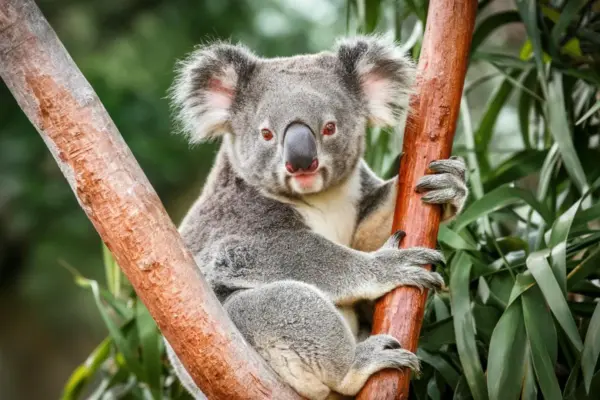
In a landmark genomic analysis that reshapes our understanding of Australian megafauna, researchers have uncovered definitive evidence that the iconic koala (Phascolarctos cinereus) endured a severe, near-fatal population crash roughly 100,000 years ago. Published in the prestigious journal Molecular Biology and Evolution—an Oxford University Press publication—this collaborative study led by scientists at the University of Sydney and Texas A&M University fundamentally challenges previous academic assumptions. For years, conventional archaeological and genetic models suggested that koala numbers plummeted primarily due to the arrival of modern humans on the Australian continent roughly 65,000 years ago.
By calculating the first-ever direct mutation rate for a marsupial belonging to the order Diprotodontia—which includes koalas, wombats, kangaroos, and possums—the research team established a high-precision genetic timeline stretching deep into the Pleistocene epoch. The findings reveal that every living koala today is the descendant of a solitary, remarkably resilient ancestral population that weathered extreme glacial cycles, radical habitat shifts, and severe climatic aridification millennia before anthropogenic pressures ever materialized.
However, this profound journey through evolutionary deep time does not absolve modern human activity. While historical data proves that koalas possess a deep-seated evolutionary capacity to bounce back from natural climate catastrophes, the compounded pressures they face today—ranging from aggressive urban expansion and historic land clearing to devastating bushfires, historical hunting, and rampant disease—threaten to overwhelm their genetic resilience. Conservation biologists argue that by understanding how these marsupials navigated past ecological bottlenecks, modern environmental strategies can be meticulously engineered to protect surviving populations from slipping into extinction.
Detailed Chronology: A Deep-Time Evolutionary History
To map the koala’s genetic trajectory across hundreds of millennia, the research team had to overcome a major historical handicap: the fossil record for koalas is sparse and structurally incomplete, offering little more than fragmented glimpses of ancient population distributions. To fill these vast empirical gaps, lead researcher and University of Sydney PhD student Toby Kovacs and his colleagues turned to the hidden archives locked inside the koala genome.
The Paleogene and Miocene Backdrops
The evolutionary staging ground for the koala family tree spans millions of years of dramatic continental reconfiguration. During the Paleogene period, roughly 23 to 66 million years ago, the landmass that would eventually become Australia was predominantly blanketed by dense, wet temperate and tropical forests—an absolute paradise for arboreal, leaf-eating specialists.
However, as the Australian tectonic plate steadily drifted northward during the Miocene (5 to 23 million years ago), the continent’s climate began to dry and warm. The lush, unbroken canopies began to fracture, setting the stage for the punishing climatic pendulum of the Pleistocene.
The Pleistocene Glacial Crisis (100,000 to 60,000 Years Ago)
Lasting from approximately 2.5 million to 11,700 years ago, the Pleistocene epoch was defined by violent oscillations between glacial periods (characterized by brutal cold and arid conditions) and interglacial periods (warmer and wetter). These cycles systematically reshaped the Australian interior, drying out the landscape and turning massive swaths of the continent into fire-prone environments.
According to the new genomic timeline, a major koala population decline began approximately 100,000 years ago, accelerating into a severe genetic bottleneck nearly 60,000 years ago. This collapse coincided directly with the most intense glacial cycles of the late Pleistocene.
Approximately 70,000 years ago, the progressive expansion of the Nullarbor Plain created an immense barrier of semi-arid shrubland. This geographical transformation drastically reduced the availability of suitable eucalyptus-rich habitats and severed contact between eastern and western koala populations. While the western lineages eventually perished under the relentless march of the desert, a small, isolated pocket of koalas in eastern Australia managed to cling to survival within refugia of damp forests.
Post-Glacial Recovery and Modern Fragmentation (16,500 to Present)
As the most recent glacial period waned and climatic conditions stabilized into the current interglacial period between 16,500 and 6,000 years ago, the surviving eastern koala population experienced a demographic rebound. As forests expanded, this singular group re-radiated and fragmented into five distinct genetic populations, laying the biological groundwork for the koala communities that currently inhabit Australia’s eastern seaboard.
Nevertheless, this hard-won recovery is once again being reversed. While ancient bottlenecks were driven by tectonic shifts and glacial drying, contemporary declines are overwhelmingly anthropogenic. Since 2022, koalas have been officially classified as endangered across Queensland, New South Wales, and the Australian Capital Territory.
Supporting Context & Metrics: Decoding the Marsupial Mutation Rate
The breakthrough in this study rests upon an ingenious methodological leap: establishing a species-specific mutation rate by directly tracking genetic inheritance across generations.
The Science of Mutation Rates
Genomes are not static; every time an organism reproduces, novel genetic mutations—random spelling errors in the DNA code—naturally arise within the germline. The mutation rate quantifies the frequency with which these changes accumulate per generation.
Historically, evolutionary biologists studying koalas were forced to rely on proxy mutation rates derived from distantly related placental mammals, primarily humans and mice. This methodological limitation skewed previous population models, leading researchers to incorrectly date major demographic shifts to the arrival of Indigenous Australians roughly 65,000 years ago.
Methodology: Sequencing Parent-Offspring Trios
To rectify this, Kovacs and his team executed a meticulous laboratory sequencing protocol. They sequenced the complete genomes of four parent-offspring trios, allowing them to directly count the novel genetic mutations that manifested between generations.
The results were striking: the koala mutation rate was calculated to be roughly half that of humans. This means koala DNA accumulates new mutations at a significantly slower pace per generation than our own, a factor that profoundly alters the calculation of historical timelines when projected backward across thousands of generations.
Upon establishing this baseline, the researchers applied the newly minted mutation rate to 457 high-coverage koala genomes sourced from across their geographical range. This massive dataset provided an unprecedentedly sharp lens through which to trace the historical expansion, contraction, and isolation of koala populations over millennia.
This achievement marks the very first direct estimate of a mutation rate not just for koalas, but for any member of the marsupial order Diprotodontia.
Official Statements and Expert Insights
The implications of the study have reverberated across the global conservation and evolutionary biology communities. Speaking on the paradigm-shifting nature of the research, lead investigator Toby Kovacs emphasized the necessity of revising the historical timeline:
"The study rewrites the timeline for the koala’s genetic history in Australia," says Toby Kovacs. "By calculating the mutation rate of modern koala populations, we can estimate and build the genetic timeline backwards all the way to 100,000 years ago to get a glimpse of genetic diversity and the sizes of ancient koala populations."
Fossil limitations have long frustrated paleontologists attempting to map prehistoric populations, but Kovacs notes that genomics bridges this chasm by preserving the molecular echoes of demographic shifts:
"Genomic analyses show that koalas have experienced major population declines in the past due to climate change and habitat loss. When environmental conditions improved, their populations recovered and expanded across much of eastern Australia."
However, Kovacs is swift to draw a sharp, unambiguous line between prehistoric climate resilience and the existential crises confronting modern koalas:
"It’s important to make clear many of the threats facing modern koala populations are caused by humans, which includes habitat loss and hunting."
Highlighting the practical applications of this research for contemporary wildlife management, Kovacs stresses that understanding historical population dynamics directly empowers conservationists:
"Understanding whether koala populations are shrinking helps conservationists act early, before populations lose genetic diversity and face increased risks from inbreeding. Koalas experienced large population retractions in the past, as the climate changed and suitable habitat disappeared. The surviving koalas are again experiencing a similar retraction, but this time due to human-driven land clearing, bushfires, hunting and disease."
Future Outlook: Implications for Modern Conservation Planning
The publication of this genomic dataset opens extraordinary new horizons for Australian conservation biology. By equipping researchers with an accurate molecular clock, wildlife agencies can now evaluate contemporary population health with unprecedented precision.
Regional Disparities in Modern Australia
Current generational estimates derived from the updated genetic models paint a complex, highly localized picture of modern koala survival:
- New South Wales and Queensland: Populations in these northern states continue a worrying, steep downward trajectory, driven by rampant land clearing, urban encroachment, chlamydia outbreaks, and the catastrophic impact of recurring mega-bushfires.
- Victoria: In contrast, certain southern populations in Victoria have shown signs of localized recovery, occasionally resulting in overpopulation pressures that require careful management.
Expanding the Genomic Frontier
Buoyed by the success of this study, the research team is already looking toward broader horizons. The methodology developed for koalas can be readily adapted to investigate other vulnerable Australian marsupials and extinct megafauna relatives.
"Given these results, we’re now curious to see if other Australian species, including the closest relatives of extinct megafauna, also experienced population declines before humans arrived," Kovacs remarks.
Ultimately, genomic resources are transforming conservation from a reactive exercise into a proactive science. By understanding the intrinsic limits of koala adaptability, conservationists can make informed, data-driven decisions—such as targeted translocations to restore genetic diversity and the strategic protection of climate-resilient forest refugia—ensuring that this ancient marsupial survives to navigate the human-dominated landscapes of the future.