





Executive Overview
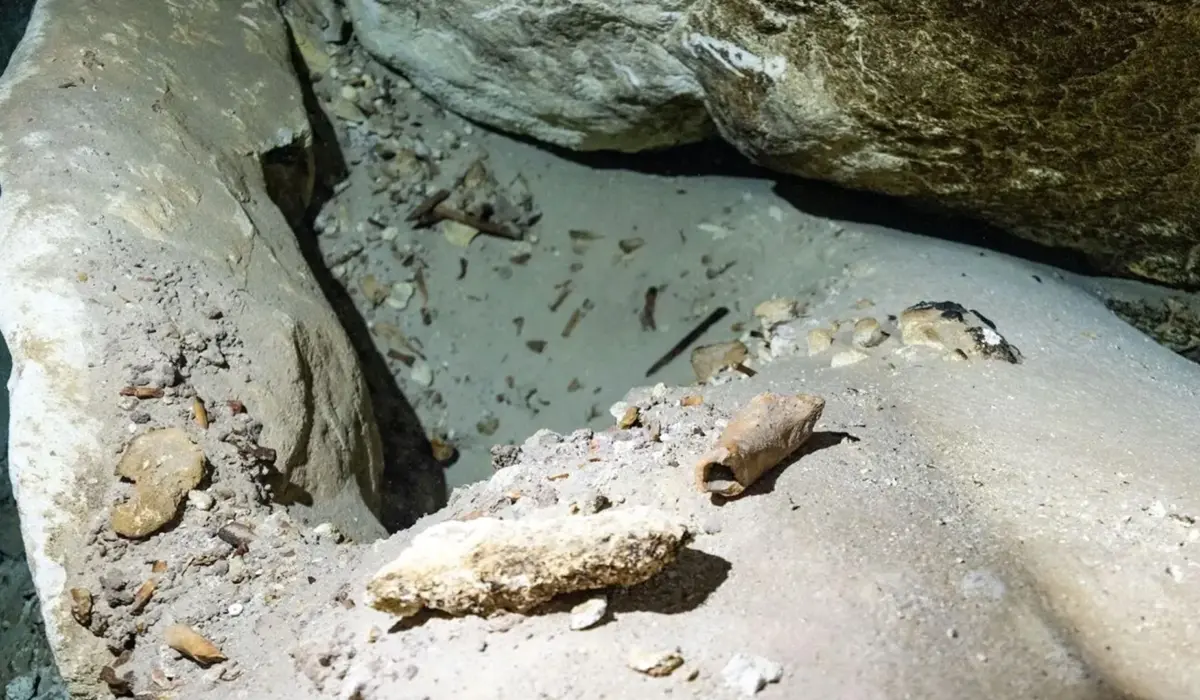
Beneath the sun-scorched limestone crust of Southern Australia lies an intricate, subterranean labyrinth of water-filled caverns. For centuries, these submerged chambers have acted as silent, watery sepulchers, preserving the skeletal remains of countless creatures. From the bones of modern fauna to the heavy, fossilized limbs of long-extinct megafauna, these underwater caves offer paleontologists and archaeologists an extraordinary, high-resolution record of Earth’s distant past.
Yet, until recently, this subterranean archive remained notoriously difficult to interpret. Scientists lacked a standardized, reliable methodology to decipher how these bones accumulated, survived, and underwent structural alterations within such unique aquatic environments. Without a robust taphonomic framework—the study of how organisms decay and become fossilized—researchers could not reliably distinguish whether ancient remains were washed in by flash floods, fell through vertical sinkholes, or were dragged into the dark by predatory beasts. Consequently, the true historical context of these subterranean deposits remained largely locked away.
Now, a pioneering study led by Griffith University researchers has fundamentally transformed our understanding of these aquatic vaults. Published in the prestigious open-access journal PLOS One under the title "Neotaphonomic characteristics of vertebrate site formation in underwater caves," the research provides the scientific community with its first comprehensive diagnostic framework. By analyzing the physical, chemical, and biological "fingerprints" left on vertebrate remains in both wet and dry cave systems, the research team has unlocked a powerful new lens through which to view prehistoric ecosystems.
Led by Meg Walker, a PhD candidate at the Australian Research Centre for Human Evolution (ARCHE), alongside Professor Julien Louys, director of the center, the study bridges a critical methodological gap. By examining bones ranging from historical farm animals to native Australian marsupials across South Australian sinkholes, the team has successfully mapped out how submerged environments systematically alter skeletal structures over decades and centuries. This breakthrough not only sheds light on the deposition processes of modern fauna but also creates a reliable baseline for interpreting the fossilized remains of Australia’s lost Pleistocene giants.
Detailed Chronology & Methodology: Decoding the Underwater Archive
To crack the code of underwater bone preservation, the research team embarked on a meticulous, multi-tiered investigation combining advanced analytical science with high-risk technical cave diving. The project centered on two major underwater cave systems located near Mount Gambier in South Australia: Green Waterhole and Gouldens Sinkhole.
The Dive into the Depths
Accessing these sites required specialized expertise. The Griffith University team partnered directly with elite specialist cave divers from the Cave Divers Association of Australia (CDAA). Navigating the pitch-black, narrow sub-aquatic corridors of Green Waterhole and Gouldens Sinkhole demands extreme precision, specialized breathing apparatuses, and meticulous safety protocols.
Working at varying depths and light gradients, the team collected a comprehensive assemblage of historical vertebrate remains. The collection spanned a diverse spectrum of native and introduced species, reflecting the ecological shifts that occurred in the region following European settlement in the 1840s. Recovered specimens included bones from:
- Domestic livestock: Cows, sheep, and pigs
- Introduced pests and predators: Rabbits and dingoes
- Native marsupials and monotremes: Kangaroos, emus, possums, quolls, swamp rats, and various small mammals
Some of these historical remains date back nearly two centuries, corresponding with the early colonial expansion and agricultural development of the Mount Gambier district. By studying how these relatively recent bones were deposited, transported, and chemically modified within the cave systems, researchers established a robust neotaphonomic baseline. This modern analogue approach allows scientists to work backward, applying the established physical and chemical markers to much older, Pleistocene-era megafauna fossils found in similar depositional contexts.
Multi-Scale Analytical Framework
Once the bone assemblages were safely recovered and cataloged, the research team subjected them to an exhaustive suite of analytical techniques. Moving seamlessly from macro-level structural observations to micro-level chemical probing, the researchers left no stone unturned in their quest for environmental signatures.
-
Macro-Scale Spatial and Surface Analysis:
Researchers mapped the spatial distribution of bones across the cave floors and ledges, noting how water currents, gravity, and underwater topography influenced skeletal scatter. They visually inspected bone surfaces under high-powered magnification to identify signs of physical abrasion, fracturing, and biological modification. -
Micro-Scale Elemental Profiling:
At the microscopic level, the team analyzed the mineral and elemental composition of the bone matrices. Submerged caves introduce unique geochemical conditions, causing minerals dissolved in the groundwater to leach into or out of the porous bone tissue. By tracking these elemental shifts, researchers can determine the chemical stability of the aquatic environment over extended periods. -
Molecular and Biochemical Preservation:
In one of the study’s most advanced components, researchers investigated trapped proteins and biomolecules preserved within ancient cellular structures. Even after decades or centuries underwater, certain resilient organic molecules can survive, offering unprecedented insights into paleodiet, genetics, and environmental stress.
Comparative Taphonomy: Wet vs. Dry Environments
A cornerstone of the Griffith University study was its comparative design. To isolate the unique variables introduced by water, the team contrasted the underwater cave specimens against bones recovered from dry cave environments.
The structural disparities between the two preservation states were stark. While dry cave bones exhibited classic subaerial weathering patterns—such as sun-bleaching, cracking, and extensive consumption by land-based bacteria and fungi, alongside deep groove-marking from encroaching plant roots—submerged bones told an entirely different evolutionary story. Water acted as a preservative buffer, shielding the remains from rapid oxidation and biological destruction. However, the aquatic environment simultaneously introduced its own distinct suite of chemical and biological signatures.
Supporting Context & Metrics: The Anatomy of Submerged Preservation
The physical condition of a bone recovered from an underwater cave is determined by a complex interplay of light, hydrology, chemistry, and biology. The Griffith University study categorized these preservation factors into distinct environmental zones within the cave networks.
The Light Gradient: From Algae to Absolute Darkness
One of the most profound discoveries of the research is how light availability dictates the type of biological modification found on skeletal remains. Cave environments are rarely uniform; they feature steep ecological gradients as one moves further from the surface opening.
-
The Photic Zone (Brightly Lit Entrances):
Near the mouths of sinkholes and cave entrances where sunlight penetrates the water column, conditions support vigorous aquatic life. Here, various species of algae, aquatic mosses, and photosynthetic microorganisms thrive. When bones settle in these shallow, well-lit waters, they frequently become colonized by these organisms. The resulting biological growth leaves behind unmistakable microscopic and macroscopic signatures, cementing the bone’s association with a shallow, light-rich depositional environment. -
The Aphotic Zone (Total Darkness):
Deeper within the cave networks lies the "midnight zone," where absolute darkness prevails. Devoid of sunlight, photosynthetic life cannot exist. Consequently, bones deposited in these deep, isolated chambers are spared from algal colonization and light-driven degradation. According to the study, skeletal remains in these deep-water contexts frequently retained an astonishing degree of structural integrity. Their original micro-architecture remained intact, and their surfaces displayed finely detailed morphological features that would have been erased in terrestrial or sunlit aquatic settings.
[Cave Entrance / Photic Zone]
       │
       ├──> Sunlight penetrates water column
       ├──> Proliferation of algae & aquatic microorganisms
       └──> Bones exhibit biological colonization signatures

[Deep Subterranean / Aphotic Zone]
       │
       ├──> Total darkness (no sunlight)
       ├──> Absence of photosynthetic organisms
       └──> Bones remain pristine, retaining fine-surface morphology
Chemical Stability and Mineral Exchange
Beyond biology, the chemical properties of submerged cave waters play a decisive role in taphonomic destiny. Groundwater circulating through limestone caverns is typically rich in dissolved calcium carbonate. This chemical composition can foster a delicate equilibrium with the hydroxyapatite mineral framework of vertebrate bones.
In stable, low-energy underwater settings, this mineral-rich water can facilitate the slow, long-term permineralization of skeletal tissue, effectively locking the bone in a state of arrested decay. Conversely, acidic micro-environments or fluctuating water tables can lead to localized leaching, softening the cortical bone and altering its density. By quantifying these chemical variations, the Griffith team demonstrated that the elemental composition of a submerged bone serves as a reliable proxy for the hydrological history of the cave chamber itself.
Official Statements & Expert Perspectives
The implications of this research extend far beyond the specific sinkholes of South Australia, offering a universal framework for subterranean archaeology and paleontology across the globe.
Lead author Meg Walker emphasized the profound shift this study brings to the scientific community:
"By analyzing animal bones from two underwater cave systems in South Australia, we have revealed how different cave environments leave distinct preservation ‘fingerprints’ on skeletal remains," said Meg Walker, a PhD Candidate supervised by Australian Research Centre for Human Evolution (ARCHE) Director Professor Julien Louys.
Detailing the multi-faceted methodological approach, Walker explained:
"Backed by radiocarbon-dated bones, we tracked how skeletons accumulated and were modified over decades and centuries in underwater caves, then compared them to those buried in dry caves. Using a range of methods, from the macro to the micro, we looked at features associated with wet and dry caves—things like spatial distributions of the bones and their surfaces, down to elemental compositions and proteins trapped in ancient cells."
Highlighting the overarching utility of the newly established framework, Walker concluded:
"This study has delivered the first framework for interpreting how megafauna fossils formed, survived, and changed in underwater caves. It will provide archaeologists and paleontologists worldwide with a powerful new tool for reconstructing past environments and histories in these challenging conditions."
Professor Julien Louys, Director of ARCHE and co-supervisor of the research, underscored the importance of integrating modern neotaphonomic baselines with deep-time paleontological investigations. By understanding the micro-processes that preserve or alter modern fauna over centuries, researchers gain the empirical certainty required to interpret the fossil beds of extinct Pleistocene fauna—such as giant short-faced kangaroos (Procoptodon), marsupial lions (Thylacoleo), and lumbering diprotodontids—that frequently met their ends in these treacherous natural traps.
Future Outlook: Reconstructing Lost Worlds
The publication of "Neotaphonomic characteristics of vertebrate site formation in underwater caves" in PLOS One marks the closing of a long-standing methodological gap in Earth sciences, but it also signals the opening door to an exciting future of discovery.
Underwater caves have long tantalized researchers with the promise of pristine fossils, yet the inability to rigorously verify depositional contexts has often relegated these finds to descriptive, isolated accounts. With Griffith University’s new analytical framework now available, researchers possess a standardized methodology to extract rigorous environmental and ecological data from submerged bone beds.
Moving forward, this toolset is expected to reshape research agendas in subterranean paleontology across multiple continents. As cave diving technology advances and researchers probe deeper into unexplored submerged cave networks—from the cenotes of the Yucatán Peninsula in Mexico to the flooded karst systems of the Mediterranean and Australasia—scientists will be able to reconstruct past climates, animal migration patterns, and extinction dynamics with unprecedented precision.
By learning to read the microscopic "fingerprints" left by algae, darkness, and mineral-rich waters, modern science has transformed mute, drowned bones into articulate storytellers of our planet’s deep past.