






Executive Overview
Deep within the rugged, sun-baked canyons of Morocco’s Dadès Valley, a routine scientific expedition has yielded a discovery that is forcing paleontologists and geobiologists to reevaluate millions of years of Earth’s history. Dr. Rowan Martindale, a paleoecologist and geobiologist at The University of Texas at Austin, alongside Stéphane Bodin of Aarhus University, stumbled upon a geological anomaly while exploring strata that once formed the floor of an ancient ocean.
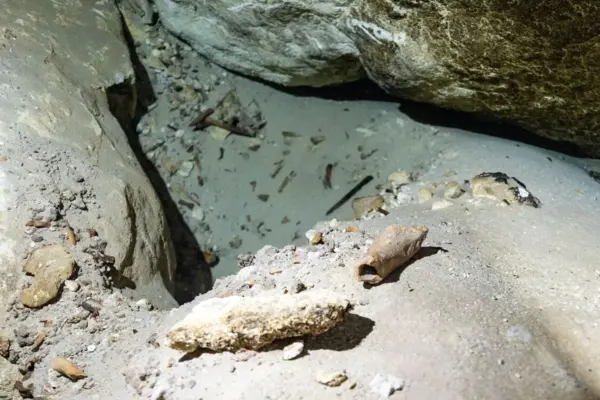
What initially caught Martindale’s trained eye was a beautifully exposed bedding plane marked by an intricate network of ripples. Upon closer inspection, however, those ripples revealed an impossibility: fragile, delicate wrinkle structures formed by microbial mats.
For decades, the scientific community has operated under a strict geological consensus: wrinkle structures—microbial mats composed of microscopic algae and bacteria binding sediment together—are almost exclusively the domain of shallow, sun-drenched coastal environments. Furthermore, because these structures are exceptionally fragile, they are typically destroyed by burrowing seafloor animals or subsequent underwater avalanches. Finding them in rocks dating back roughly 180 million years—an era when marine life was exceptionally diverse and active—was already improbable. Finding them in deep-water marine deposits, laid down at least 180 meters (590 feet) beneath the surface where sunlight cannot penetrate, pushed the boundary from improbable to seemingly impossible.
Yet, through meticulous chemical analysis, geological verification, and comparisons with modern deep-sea environments, Martindale and her research team have made a compelling case. The Dadès Valley wrinkles were not forged by sunlight-dependent algae, but by dark-dwelling, chemosynthetic bacteria feeding on chemical energy in the pitch-black depths of the ancient ocean.
This finding not only rewrites the evolutionary and ecological capabilities of ancient microbial communities but also signals a paradigm shift for geologists worldwide. By demonstrating that complex microbial textures can survive and fossilize in deep-water turbidites, the study opens a new frontier in the search for early life on Earth—and potentially beyond.
Detailed Chronology
To understand the magnitude of the Morocco discovery, one must trace the timeline of both the expedition itself and the millions of years of geological processes that set the stage for it.
Millions of Years Ago: The Jurassic Seafloor
Roughly 180 million years ago, during the Jurassic period, the region that is now the Dadès Valley in Morocco was submerged beneath a vast marine expanse. This ancient ocean floor was far from static. Periodically, massive underwater avalanches composed of mud, sand, and organic debris—known scientifically as turbidites—rushed down the continental slopes.
These dense, chaotic flows of sediment settled into thick, stratified layers. Between these major debris events, however, lay periods of relative calm. During these quiet intervals, microscopic life took hold. In the pitch-black, oxygen-depleted zones of the deep seafloor, mats of chemosynthetic bacteria established themselves on the newly deposited sediment, binding the grains together and leaving behind subtle, wrinkled impressions before subsequent debris flows buried and preserved them.
The Modern Expedition
Fast forward to the present day. Dr. Rowan Martindale, Dr. Stéphane Bodin, and their international team of researchers traveled to the Dadès Valley with a specific, targeted objective: to investigate ancient reef ecosystems that flourished millions of years ago beneath the long-vanished ocean.
To reach the strata containing these ancient reefs, the team had to traverse extensive, alternating layers of deep-water turbidites. It was during this grueling trek across the rugged Moroccan landscape that the unexpected discovery occurred. Walking along a steep rock face, Martindale noticed a striking, rippled bedding plane. Recognizing the structural nuances immediately, she called out to Bodin, urging him to inspect the formation. What they were looking at were pristine, perfectly preserved wrinkle structures—a find that defied the very fabric of standard geological assumptions.
Analytical Verification
Recognizing that extraordinary claims require extraordinary evidence, Martindale initiated a rigorous investigative protocol. The team realized they had to clear three major hurdles to validate their discovery:
- Confirm the Environment: They verified that the host rock layers were unequivocally deep-water turbidites, formed at depths well below the photic zone.
- Confirm the Temporal Context: They cross-referenced the geological age of the strata (~180 million years old), a time frame heavily populated by burrowing organisms that should have obliterated such delicate surface textures.
- Confirm the Biological Origin: They performed chemical assays on the rock layers to determine if biological signatures supported the presence of ancient organic mats.
The analytical results provided the missing pieces of the puzzle. Subsequent comparisons with modern-day deep-sea submersible footage supplied the final theoretical framework, allowing the team to reconstruct how chemosynthetic bacteria could forge such durable, textured mats in the absence of sunlight.
Supporting Context & Metrics
To fully grasp why the Dadès Valley discovery has sent shockwaves through the geobiology community, it is necessary to examine the physical metrics, ecological constraints, and historical paradigms governing wrinkle structures.
The Photic Zone Barrier and Light Deprivation
In marine ecology, the photic zone refers to the upper layer of a body of water—typically extending down to a maximum of about 200 meters depending on turbidity—where light penetrates with sufficient intensity for photosynthesis to occur. Traditionally, scientists linked wrinkle structures exclusively to this sunlit realm because the microscopic organisms building them (cyanobacteria and green algae) relied entirely on solar energy to synthesize organic compounds.
The turbidites investigated by Martindale’s team, however, were deposited at depths of at least 180 meters (590 feet), operating near or below the absolute lower limit of reliable light penetration. At these depths, photosynthesis is an energetic impossibility. For decades, any scientist claiming to find photosynthetic microbial structures at such depths was met with intense skepticism, as deep-water environments were assumed to be devoid of the stable, sun-driven mats required to create such distinctive textures.
The Bioturbation Paradox
Another major metric working against the preservation of the Moroccan wrinkle structures is geological time and evolutionary history. Wrinkle structures are exceptionally common in Precambrian rocks—those older than 540 million years—because complex animal life had not yet evolved to churn up the seafloor.
However, by the time the Jurassic rocks of the Dadès Valley were laid down 180 million years ago, the Cambrian explosion and subsequent evolutionary diversifications had populated the oceans with industrious, burrowing animals. Crustaceans, worms, and bottom-dwelling fish routinely churned, mixed, and bioturbated marine sediments. This constant reworking of the seafloor typically destroys delicate, surficial microbial mats before they can ever become lithified into the rock record. The survival of these structures in a high-disturbance, Jurassic deep-water environment is nothing short of miraculous.
Chemical Signatures: The Carbon Clue
How did the researchers verify that the ripples were biological rather than purely physical sedimentary artifacts? The answer lay in chemistry.
Laboratory analyses of the rock samples revealed significantly elevated concentrations of carbon concentrated directly in the sediment layers immediately beneath the wrinkles. In geology, carbon enrichment serves as a classic geochemical fingerprint of organic matter and biological activity. This chemical anomaly confirmed that living organisms—specifically dense populations of microbes—had concentrated on the seafloor, actively altering the composition of the sediment and driving the formation of the ridges and depressions.
Modern Analogues in the Abyss
To bridge the gap between theory and reality, the researchers looked to modern oceans. High-definition video footage gathered by remotely operated vehicles (ROVs) exploring abyssal plains and deep-sea trenches has revealed that microbial mats thrive in environments far removed from sunlight.
Instead of photosynthesis, these modern deep-sea microbes rely on chemosynthesis, utilizing chemical energy derived from inorganic compounds such as hydrogen sulfide, methane, and iron. These chemosynthetic communities can form dense, cohesive mats across dark seafloors. The researchers deduced that ancient turbidite flows in the Dadès Valley delivered rich pulses of organic nutrients and minerals to the deep seafloor. As this organic matter decayed, it depleted local oxygen levels, creating the exact chemical gradients required for chemosynthetic bacteria to proliferate, form mats, and leave behind their indelible signatures in the rock record.
Official Statements
The implications of this research have drawn commentary from leaders in the fields of paleoecology and sedimentology, highlighting the shift in how scientists view ancient marine ecosystems.
"As we’re walking up these turbidites, I’m looking around and this beautifully rippled bedding plane caught my eye," recalls Dr. Rowan Martindale, lead researcher and paleoecologist at The University of Texas at Austin. Realizing the significance of what she was viewing, she immediately called out to her colleague: "Stéphane, you need to get back here. These are wrinkle structures!"
Reflecting on the counterintuitive nature of the discovery, Martindale emphasized the rigorous verification process required to validate their findings in the face of established geological dogma:
"Let’s go through every single piece of evidence that we can find to be sure that these are wrinkle structures in turbidites, because they shouldn’t be in this deep-water setting."
Highlighting the broader ramifications of the discovery for future geological surveys, Martindale noted that science may have been overlooking critical chapters of Earth’s biological history:
"Wrinkle structures are really important pieces of evidence in the early evolution of life. By ignoring their possible presence in turbidites, we might be missing out on a key piece of history of microbial life."
Dr. Stéphane Bodin of Aarhus University, who co-authored the investigation alongside Martindale, echoed these sentiments, pointing out that the convergence of sedimentology, geochemistry, and modern oceanography was vital in solving the Dadès Valley mystery. The team’s collective stance is clear: textbooks detailing the distribution and formation of microbial mats must be updated to account for the robust, dark-dwelling capabilities of chemosynthetic communities throughout deep geological time.
Future Outlook
The discovery of chemosynthetic wrinkle structures in Morocco’s Dadès Valley marks the beginning of a new chapter in geobiological research, opening several promising avenues for future scientific inquiry.
1. Experimental Geobiology and Laboratory Simulation
Moving forward, Martindale and her team hope to bridge remaining knowledge gaps through controlled laboratory experiments. By simulating deep-water, low-oxygen conditions and introducing nutrient-rich sediment flows in controlled environments, researchers hope to observe firsthand how chemosynthetic bacterial mats interact with sediment under simulated turbidite flows. These experiments will help quantify the exact pressures, chemical concentrations, and sedimentation rates required to preserve delicate microbial textures before they can be eroded or bioturbated.
2. Re-evaluating Global Rock Archives
For decades, geologists examining deep-water turbidite sequences across the globe have frequently dismissed unusual, textured bedding planes as abiotic sedimentary features—mere ripples formed by hydrodynamic currents. Armed with the insights from the Dadès Valley study, research teams are expected to revisit archived core samples and field sites worldwide. By testing these overlooked formations for carbon enrichment and chemical biomarkers, science may uncover that deep-water microbial mats were far more common in Earth’s history than previously suspected.
3. Expanding the Search for Extraterrestrial Life
Beyond terrestrial geology, the implications of this discovery stretch into the realm of astrobiology. When searching for evidence of ancient life on Mars or the subsurface oceans of icy moons like Europa and Enceladus, astrobiologists focus heavily on environments that lack sunlight. If complex microbial mats can thrive, shape sediments, and leave fossilized architectural evidence in pitch-black, deep-water environments on Earth, similar processes could theoretically occur in extraterrestrial settings. Understanding how chemosynthetic life preserves itself in extreme, dark conditions provides a vital framework for interpreting biosignatures returned from planetary exploration missions.
Ultimately, the rocks of the Dadès Valley have delivered a humbling reminder that nature frequently operates outside human categorization. By looking where they thought nothing could live, scientists have unlocked a deeper understanding of how life persists, adapts, and leaves its mark across the vast expanses of geological time.