





Executive Overview
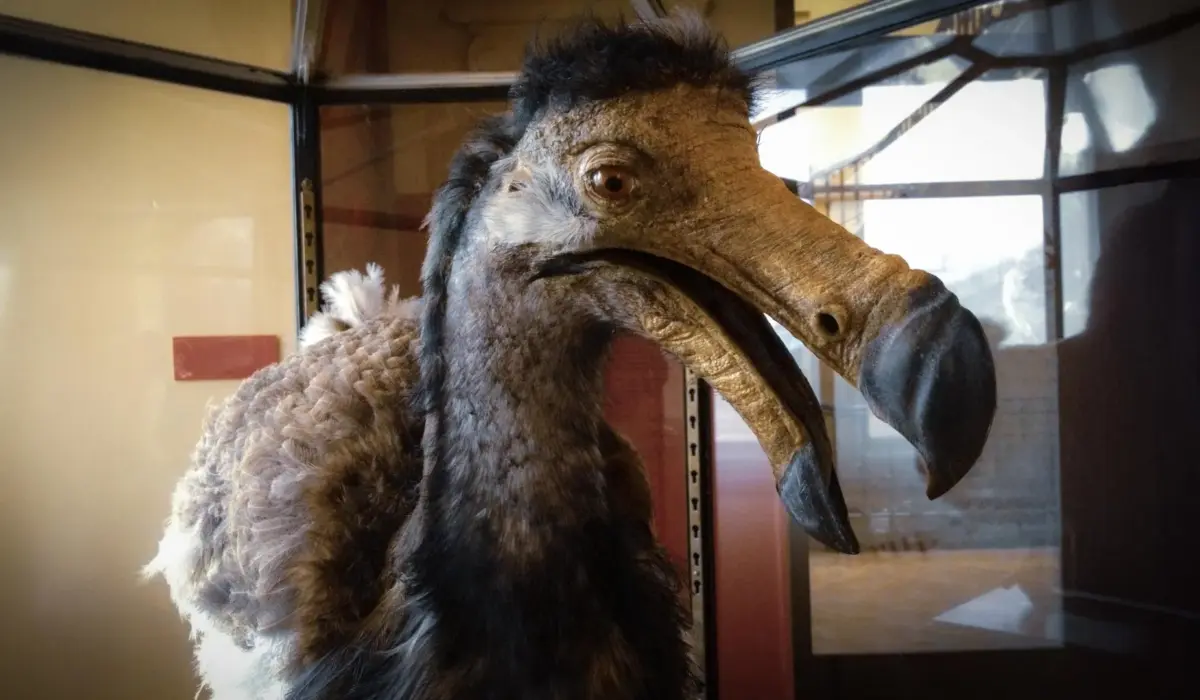
Centuries after its final recorded sighting consigned it to the annals of biological tragedy, the dodo (Raphus cucullatus) remains perhaps the most universally recognized symbol of anthropogenic extinction. Yet, beneath its cultural notoriety as an emblem of clumsy obsolescence lies an enduring scientific enigma. For generations, popular imagination has cast the flightless pigeon relative as dim-witted, sluggish, and ill-equipped for survival. However, a landmark international study spearheaded by researchers at the University of Lethbridge in Canada and the Natural History Museum Denmark is systematically dismantling these long-standing myths.
Leveraging state-of-the-art medical imaging and rare historical preservation, an interdisciplinary team of scientists has peered inside the minds of the dead. At the heart of this investigation are the only two complete, pristine dodo skulls known to exist anywhere in the world. One rests securely within the collections of the Natural History Museum Denmark in Copenhagen, having lingered there for centuries; its counterpart is housed at the Oxford University Museum of Natural History.
By utilizing high-resolution computed tomography (CT) scanning to digitally reconstruct the endocranial cavities of these priceless specimens—alongside a third partial skull—researchers have unlocked unprecedented insights into the dodo’s neurology and sensory ecology. The findings reveal a bird far more sophisticated than previously assumed. Far from a simple-minded creature doomed by its own biology, the dodo possessed a specialized suite of sensory adaptations. Evidence suggests it navigated its native Mauritian forests with a strong sense of smell, heightened tactile sensitivity in its robust upper beak, and a flexible daily activity schedule that may have stretched well into the dim light of dawn and dusk.
Published in the Zoological Journal of the Linnean Society, this research bridges the gap between historical myth and empirical biology. By moving beyond centuries of speculation, the study offers a radical re-evaluation of how the dodo perceived and interacted with its island ecosystem before human intervention and introduced predators sealed its fate in the late 17th century.
Detailed Chronology: From Museum Vaults to Digital Reconstruction
The journey of this scientific breakthrough spans hundreds of years, bridging the exploratory age of colonial expansion with the cutting-edge digital infrastructure of the 21st century.
The Rarity of the Surviving Material
Following its discovery by Dutch sailors on the island of Mauritius in the late 16th century, the dodo was hunted, studied, and subsequently driven to extinction within less than a century. Compounding the tragedy of its loss is the catastrophic scarcity of its physical remains. Complete skeletons are virtually non-existent; soft tissue vanished entirely before the advent of modern preservation; and pristine skulls are among the most coveted and fragile artifacts in paleontological history.
For centuries, the Copenhagen specimen remained largely an object of static curiosity, carefully guarded within the archives of the Natural History Museum Denmark. Its true potential, however, waited for the convergence of advanced non-destructive imaging technologies and modern evolutionary biology.
The Catalyst: Museum Expansion and Technological Opportunity
The immediate genesis of this study began not in a field excavation, but in the meticulous preparations for a major institutional overhaul. The Natural History Museum Denmark scheduled a sweeping modernization project, including the development of new permanent galleries slated to open in 2027. This transition demanded a thorough inventory, conservation assessment, and deep-dive analysis of its foundational collections.
Recognizing a rare operational window, the museum’s curators and researchers seized the opportunity to subject their prized dodo skull to high-resolution CT scanning. Crucially, this imaging technique had to be non-invasive. The fragile, centuries-old bone could not be compromised, sectioned, or physically manipulated. By passing X-rays through the skull from hundreds of different angles, the CT scanner captured minute details of the internal architecture, generating a precise, three-dimensional digital model of both the external morphology and the complex internal cavities.
Unlocking the Endocast
Once the digital scan data was acquired, researchers embarked on the intricate task of virtual reconstruction. In avian biology, the soft tissue of the brain decays rapidly after death, leaving behind a hard bony encasement. As an embryonic and juvenile bird’s brain grows, it exerts pressure against the interior walls of the skull, leaving distinct impressions, grooves, and contours etched into the bone.
By digitally isolating these internal impressions—known as an endocast—scientists were able to reconstruct the exact shape, volume, and proportions of the space that once housed the dodo’s central nervous system. This digital model served as a window into the past, allowing paleoneuroscientists to analyze cognitive and sensory regions that otherwise would have been lost to time.
Cross-Institutional Synthesis
To ensure that the anatomical conclusions drawn from the Copenhagen specimen were robust and representative of the species rather than individual variation, the research team expanded their scope. They integrated CT data from three distinct dodo skulls, anchored by the inclusion of the Oxford University Museum of Natural History’s complete specimen.
Comparing these two complete skulls side-by-side in virtual space provided a comparative baseline previously unattainable in dodo research. Researchers could cross-reference morphological features, rule out pathologies or preservation distortions, and establish a statistically sound foundation for their comparative neurological analyses.
Supporting Context & Metrics: Redefining the Dodo’s Sensory Ecology
To understand what the digital endocasts revealed, researchers had to establish a comparative framework. They measured and compared the dodo’s reconstructed brain cavities against those of its closest living phylogenetic relatives: modern pigeons and doves (family Columbidae). What emerged was a stark contrast between historical caricature and biological reality.
+---------------------------------------------------------------------------------+
|                        DODO VS. MODERN PIGEONS & DOVES                          |
+---------------------------+-----------------------------------------------------+
| Taxonomic Relationship    | Closely related (Family Columbidae)                 |
| Daily Activity Schedule   | Potentially flexible; spanning dawn, day, and dusk  |
| Olfactory Capability      | Enhanced relative to standard columbids             |
| Tactile Specialization    | Highly sensitive, large upper beak for foraging     |
| Cognitive Capacity        | Normal avian scaling; no deficit relative to family |
+---------------------------+-----------------------------------------------------+
Navigating the Darks: The Chronobiology of the Dodo
One of the most striking revelations from the brain cavity analysis concerns the dodo’s daily temporal niche. Modern pigeons and doves are overwhelmingly diurnal—active strictly during daylight hours and resting securely through the night.
However, the architecture of the dodo’s braincase suggests a different lifestyle. Portions of the brain associated with spatial processing and sensory integration indicate that the dodo may have maintained a more flexible daily schedule. It is entirely plausible that the bird extended its foraging and movement activities into the low-light conditions of dawn and dusk (crepuscular activity). On an island like Mauritius, dense with tropical foliage and seasonal microclimates, exploiting cooler or safer twilight hours would have offered a significant ecological advantage.
A Keener Sense of Smell
Popular scientific literature historically dismissed the olfactory capabilities of birds, operating under the outdated assumption that avian species relied almost exclusively on sight and hearing. Modern ornithology has systematically dismantled this myth, demonstrating that many birds—ranging from kiwis and seabirds to vultures—possess sophisticated olfactory systems.
The dodo is no exception. The digital endocast analysis revealed adaptations pointing toward an enhanced sense of smell compared to standard pigeons and doves. While not rivaling the hyper-developed olfactory bulbs of nocturnal scavengers, the dodo’s brain anatomy suggests it could detect chemical signatures in its environment. This olfactory aptitude would have been instrumental in locating specific fallen fruits, identifying subterranean food sources, or navigating the dense understory of Mauritian forests where visual lines of sight were severely restricted.
The Tactile Powerhouse: The Upper Beak
Perhaps the most physically distinct feature of the dodo is its oversized, heavily hooked bill. For centuries, this massive beak was viewed simply as a bizarre anatomical anomaly or an allometric quirk of island gigantism. The new CT scan data, however, provides functional context.
The internal bone structure and nerve canal impressions leading to the upper beak indicate a high density of somatosensory innervation. In practical terms, this means the dodo’s large upper beak was not merely a passive tool for crushing nuts or snapping branches; it was a highly sensitive tactile organ. The bird likely used its bill to probe leaf litter, soil, and rotting wood, feeling for hidden food items—such as seeds, invertebrates, and fallen palm nuts—in environments where direct visual confirmation was impossible.
Official Statements & Expert Perspectives
The publication of this study in the Zoological Journal of the Linnean Society has generated considerable discussion within the international paleontological community. The lead researchers have emphasized both the humility required when studying extinct taxa and the empowering nature of modern non-destructive imaging.
"The dodo is one of the world’s most recognizable extinct animals, yet surprisingly little is known about how it actually lived," notes Peter Andrew Hosner, Associate Professor and Curator of Birds at the Natural History Museum Denmark and co-author of the study.
"Its behavior and foraging ecology have been debated for centuries. Having access to one of only two complete dodo skulls has given us a unique opportunity to compare the dodo with its closest living relatives and gain new insights into how it experienced and interacted with its environment."
Hosner underscores that while the study does not answer every remaining question regarding the species’ complex biology, it builds a much-needed empirical foundation.
"The dodo has become a symbol of extinction, but in many ways it remains surprisingly mysterious," Hosner adds. "Every new piece of evidence helps us move beyond myths and build a more accurate picture of how this extraordinary bird lived before it disappeared."
Echoing these sentiments, Christy Anna Hipsley, Associate Professor at the Natural History Museum Denmark and co-author on the project, highlights the detective-like nature of modern paleontology:
"Studying extinct animals is a bit like detective work. Although the dodo’s brain disappeared centuries ago, it left an imprint on the inside of the skull. By digitally reconstructing those spaces and comparing them with the brains of living birds, we can begin to piece together how the dodo sensed, behaved, and interacted with the world around it."
Hipsley points out the distinct morphological challenges posed by the skull itself, which diverges dramatically from any living avian blueprint.
"The dodo’s skull is unlike that of any living bird, which makes it both fascinating and difficult to interpret," says Hipsley. "By comparing digital reconstructions of the world’s only two complete dodo skulls, we now have a much stronger foundation for identifying which features are truly characteristic of the species and what they can tell us about how the dodo lived."
Future Outlook: Beyond the Myth of the Doomed Dodo
The implications of this research extend far beyond the anatomical re-evaluation of a single charismatic bird. By dismantling the pervasive cultural trope that the dodo was inherently unintelligent, maladapted, and architecturally clumsy, this study challenges broader assumptions about island evolution and extinction vulnerability.
Challenging Island "Stupidity" Myths
The colonial-era narratives that framed the dodo as helpless—often citing its docility toward sailors as evidence of cognitive deficiency—conveniently justified its rapid slaughter and the wholesale destruction of its habitat. On isolated islands devoid of mammalian apex predators, many endemic species lose flight capabilities and fear responses because such traits carry high metabolic costs without evolutionary payoffs.
The neurological evidence confirms that the dodo was not cognitively impaired relative to its extant family members. Its brain volume and structural proportions were entirely appropriate for an island-dwelling, ground-foraging columbid. Its extinction was not an evolutionary inevitability written into its genetic code, but rather the direct result of rapid, catastrophic ecological disruption driven by human arrival—including habitat destruction, the introduction of invasive predators like rats, pigs, and macaques, and direct hunting pressure.
The Roadmap for Future Avian Paleontology
Methodologically, this study sets a new benchmark for how museum archives and digital technologies intersect. The successful extraction of high-fidelity CT data from centuries-old, irreplaceable specimens demonstrates that delicate fossils do not need to be physically sectioned or destroyed to yield profound anatomical secrets.
As computational power increases, machine learning algorithms and automated segmentation tools will likely allow researchers to refine these digital endocasts even further. Future studies may cross-reference the dodo’s inner ear morphology—also preserved within these CT scans—to model its balance, head posture, and hearing range, adding another layer of sensory resolution to our understanding of the species.
Conclusion: Restoring Dignity to an Icon
Ultimately, this international investigation breathes new life into an old ghost. By peering into the cranial cavities preserved in Copenhagen and Oxford, modern science has transitioned the dodo away from the realm of cartoonish caricature and restored its status as a highly specialized, finely tuned evolutionary success story.
As museums around the world prepare to showcase these discoveries in upcoming galleries—such as the Natural History Museum Denmark’s 2027 opening—the public will be introduced to a dodo that is vastly different from the one popularized by Victorian literature. It is an animal that smelled the damp earth of Mauritius, probed the forest floor with a sensitive beak, and walked through the dim island shadows long before the world changed forever.