








Executive Overview
The landscape of active implantable medical devices (AIMDs) stands on the precipice of a transformative leap forward. Energy storage—historically the most restrictive bottleneck in the design of life-sustaining medical hardware—is finally receiving a paradigm-shifting upgrade. ITEN, a recognized leader in the development and high-volume manufacturing of advanced solid-state energy storage solutions, has officially launched an ambitious, high-stakes development program aimed at adapting its high-capacity solid-state battery technology for Class III implantable medical devices.
Class III devices represent the highest-risk category of medical technology under global regulatory frameworks. These are systems implanted directly into the human body to sustain life, manage critical cardiac functions, or modulate neural activity. Consequently, they demand uncompromising standards for safety, reliability, longevity, and volumetric efficiency. Traditional lithium-ion batteries, which rely heavily on volatile liquid organic electrolytes, have long forced medical device manufacturers into difficult design compromises. These traditional configurations carry inherent risks of thermal runaway, fluid leakage, and physical swelling, while offering limited energy densities that restrict device miniaturization and necessitate frequent surgical replacements.
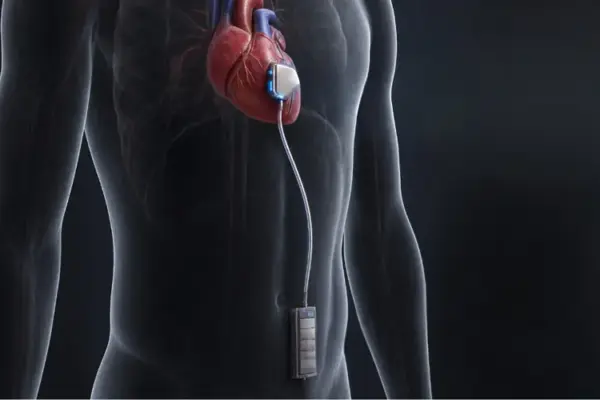
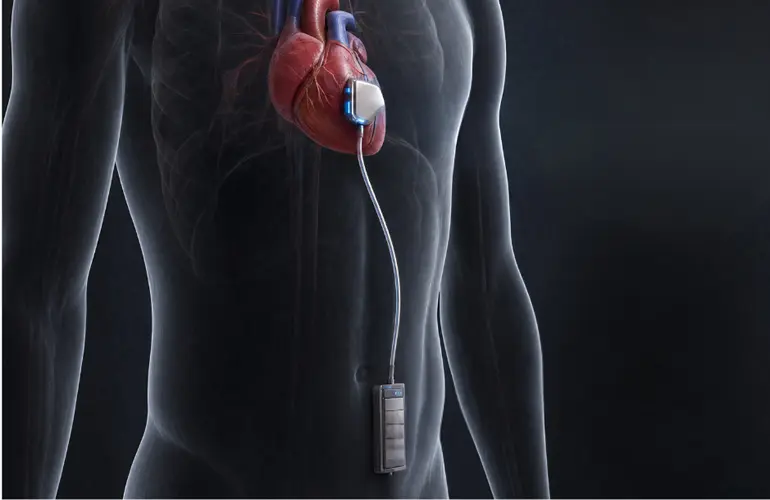
ITEN’s newly unveiled initiative, operating under the project banner SOLIMED, seeks to dismantle these historical barriers. Backed by the prestigious European IPCEI Tech4Cure initiative, SOLIMED will fine-tune ITEN’s cutting-edge, all-ceramic solid-state architecture to meet the exacting, rigorous demands of life-critical internal devices. By targeting high-impact applications—most notably implantable cardiac assist pumps—the company is positioning its technology to redefine what is physically possible in bio-electronic engineering.
If successful, this development program will usher in a new era of medical implants characterized by dramatically smaller form factors, rapid transcutaneous wireless recharging, enhanced patient comfort, and significantly extended operational lifespans that could permanently reduce the frequency of secondary replacement surgeries.
Detailed Chronology and Strategic Evolution
To understand the weight of ITEN’s latest venture into Class III medical technology, it is necessary to examine the strategic evolution that has brought the French DeepTech enterprise to this milestone.
Foundation and Technological Mastery
Headquartered in Dardilly (Lyon), France, ITEN has spent years mastering the intricate science of nanomaterials and high-volume ceramic processing. Unlike conventional battery manufacturers that assemble cells using liquid or gel electrolytes soaked into polymer separators, ITEN focused its engineering trajectory on monolithic, full-ceramic architectures. By leveraging proprietary stacking and overmolding techniques, the company developed Solid-State Cell (SSC) power devices capable of delivering exceptional power and energy densities.
This foundational innovation did not go unnoticed. Over the years, ITEN solidified its reputation as a European DeepTech powerhouse, capturing more than 40 patent families, securing dual victories in the Worldwide Innovation Challenge (2015 and 2017), earning recognition as a French Tech 120 laureate, and claiming a coveted CES 2024 Best of Innovation Award for its ultra-compact 250 µAh SSC Power Device.
Gradual Market Expansion: From Wearables to Class I and II
ITEN’s entry into the medical sector was methodical. Initially scaling its technology for consumer electronics, connected IoT devices, and autonomous sensors, the company gradually expanded its footprint into less intrusive medical applications. Prior to the SOLIMED announcement, ITEN’s footprint in healthcare was largely concentrated on Class I and Class II medical devices—equipment such as external monitors, diagnostic tools, and non-life-sustaining wearable health technology.
While these markets require strict quality controls, they pale in comparison to the existential stakes of Class III implants, which reside permanently inside the human body and perform critical physiological functions. Supplying energy storage for Class III hardware requires an entirely different order of magnitude in reliability, hermetic sealing, chemical stability, and regulatory validation.
The Genesis of SOLIMED and European Sovereignty
The launch of the SOLIMED project marks the decisive pivot from Class II to Class III. Integrated directly into the European Union’s IPCEI Tech4Cure (Important Projects of Common European Interest) framework, SOLIMED is more than just a corporate product launch; it is a strategic pillar for European technological sovereignty in healthcare.
By aligning with the IPCEI framework, ITEN is collaborating within a broader European ecosystem designed to foster breakthrough medical innovations, fortify domestic supply chains, and reduce reliance on non-European manufacturing hubs for critical health infrastructure. Through SOLIMED, ITEN is combining its world-class solid-state engineering with Europe’s rich medical device manufacturing expertise, creating a collaborative pathway from raw material processing to final clinical integration.
Supporting Context & Technical Metrics
The technical hurdles of powering a Class III implant are formidable. A battery deployed within an implantable cardiac pump or a deep-brain neurostimulator must operate flawlessly for years in a warm, saline, highly corrosive biological environment, all without the benefit of active cooling or mechanical ventilation.
Deconstructing the Solid-State Advantage
ITEN’s core innovation lies in the complete elimination of liquid and organic electrolytes. In conventional lithium-ion batteries, liquid electrolytes act as the ionic transport medium but present severe vulnerabilities. Under conditions of overcharging, physical damage, or internal short-circuiting, these organic liquids can decompose, generate gas, and trigger thermal runaway—a catastrophic, self-sustaining fire hazard entirely unacceptable inside a human patient.
ITEN’s all-solid-state architecture replaces the liquid component with a stable, inorganic ceramic material. This fundamental shift yields several profound performance advantages:

- Zero Flammability and Enhanced Safety: The absence of volatile organic solvents entirely eliminates the risk of thermal runaway, making the battery intrinsically safe for in-vivo deployment.
- Minimal Volume Variation: Traditional batteries experience significant volumetric expansion and contraction during charge-discharge cycles. This mechanical stress degrades internal structures over time, limiting operational life. ITEN’s monolithic ceramic architecture drastically curtails volume variation, removing a primary failure mechanism and ensuring long-term structural integrity.
- Chemical Stability: The ceramic matrix prevents dendrite formation—microscopic metallic filaments that pierce separators in liquid batteries to cause short circuits—thereby enhancing overall reliability.
Key Performance Targets for SOLIMED
To prove that solid-state technology is ready for the rigors of Class III devices, ITEN has established rigorous performance benchmarks for the SOLIMED development program:
| Performance Metric | Target Specification | Significance for Medical Implants |
|---|---|---|
| Cell Energy Density | 600 Wh/L | Enables significant miniaturization, allowing powerful battery packs to fit comfortably within restricted anatomical pockets. |
| Cell Capacity | > 2 Ah | Provides sufficient electrical reserves to drive demanding continuous-load devices, such as cardiac assist pumps. |
| Fast-Charging Recovery | 80% capacity in < 20 minutes | Facilitates highly efficient transcutaneous (wireless through-the-skin) recharging, minimizing patient downtime and inconvenience. |
| Operational Lifespan | Multi-year longevity | Significantly reduces the clinical necessity for invasive surgical procedures to replace exhausted battery packs. |
Innovative Biocompatible Packaging
Beyond the internal chemistry of the cell itself, the SOLIMED project is pioneering novel approaches to battery packaging. Historically, implantable batteries have relied heavily on thick, rigid titanium cases to ensure hermetic sealing and biocompatibility.
ITEN’s post-processing capabilities enable the evaluation of alternative, advanced biocompatible overmolding materials for the complete battery subsystem. By exploring advanced polymers and composite encapsulations tailored specifically for solid-state modules, ITEN aims to streamline the overall form factor, reduce device weight, and improve the mechanical interface between the hardware and surrounding biological tissues.
Official Statements and Industry Perspectives
The announcement of the SOLIMED program has drawn significant attention from both the medical technology sector and the European industrial policy community. Vincent Cobée, Chief Executive Officer of ITEN, emphasized the monumental nature of the undertaking in his official remarks:
"Implantable medical devices represent one of the most demanding applications for any energy storage technology. Safety is paramount, but it must be combined with high energy density, fast charging, reliability, and long operating life. This development program is a major milestone for ITEN and a strong validation of our core solid-state technology platform. It opens the way to a new generation of solutions for Class III medical devices, supporting our ambition to become a global leader in advanced solid-state energy storage."
Industry analysts have echoed Cobée’s perspective, noting that the intersection of solid-state chemistry and active implantable devices represents a holy grail in medical engineering. For decades, medical device manufacturers have had to choose between battery longevity and device size. A power source capable of delivering over 2 Ah of capacity at a density of 600 Wh/L while permitting 20-minute fast charging fundamentally alters the design envelope for engineers building the next generation of life-saving machinery.
Furthermore, policy advocates within the European Commission have highlighted ITEN’s project as a prime example of the success of the IPCEI Tech4Cure initiative. By nurturing indigenous DeepTech capabilities, Europe is securing its strategic autonomy in medical technology, ensuring that European citizens have domestic access to the most advanced therapeutic devices available globally.
Future Outlook: Transforming Class III Medical Markets
While the immediate spearhead of the SOLIMED initiative is centered on implantable cardiac assist pumps—where continuous, reliable power is a matter of life and death—the long-term market implications extend far beyond cardiology.
Broadening the Therapeutic Horizon
The technology platform being matured under this program is engineered to address the stringent energy storage requirements across the entire spectrum of active implantable medical devices. Key target areas include:
- Neurostimulators: Devices used to manage chronic pain, Parkinson’s disease, essential tremors, and various psychiatric disorders require compact, long-lasting power sources that can be recharged discreetly and rapidly through the skin.
- Hearing Implants: Cochlear and auditory brainstem implants demand high reliability and miniaturization to fit within the delicate anatomical structures of the head and ear.
- Implantable Drug Delivery Pumps: Automated infusion systems that release precise doses of therapeutics directly into the central nervous system or targeted organs rely on stable, long-life energy reserves to prevent catastrophic dosing interruptions.
A Catalyst for Quality Improvements Across All Sectors
The rigorous validation, testing, and quality assurance protocols mandated for Class III medical devices are notoriously uncompromising. Successfully navigating this regulatory and technical gauntlet will inherently harden ITEN’s manufacturing processes.
Consequently, the reliability and performance gains achieved through the SOLIMED program are expected to cascade downward into ITEN’s broader commercial portfolio. Enhancements in ceramic manufacturing, packaging integrity, and energy density will ultimately benefit the company’s existing offerings in Class I and Class II medical devices, industrial IoT, wearables, and autonomous sensor networks.
Conclusion: A New Standard for Bio-Electronics
As ITEN moves forward with the SOLIMED development program, the company is doing more than simply introducing a new battery; it is laying the structural foundation for a new generation of medical care. By uniting the intrinsic safety of solid-state ceramic architecture with high energy density and rapid wireless rechargeability, ITEN is directly addressing the most profound pain points experienced by both medical device engineers and patients.
For patients, this transition promises fewer surgeries, smaller and more comfortable implants, and greater freedom from the logistical burdens of power management. For the medical technology industry, it represents the removal of an ancient barrier, unlocking a future where life-sustaining devices can be smaller, smarter, and safer than ever before. Through vision, technical mastery, and strategic European collaboration, ITEN is proving that the future of medical energy storage is solid.