












Revolutionary immunotherapies such as Chimeric Antigen Receptor (CAR) T-cell therapy and T-cell engaging bispecific antibodies (BsAbs) have fundamentally altered the therapeutic landscape for haematological malignancies, including myeloma, leukaemia, and lymphoma. Approved by major regulatory bodies like the US Food and Drug Administration (FDA) and the European Medicines Agency (EMA), these interventions offer unprecedented remissions for patients with advanced, refractory cancers. However, their profound clinical efficacy is counterbalanced by complex, highly unique toxicity profiles that impose immense physical, emotional, and logistical burdens on patients and their caregivers.
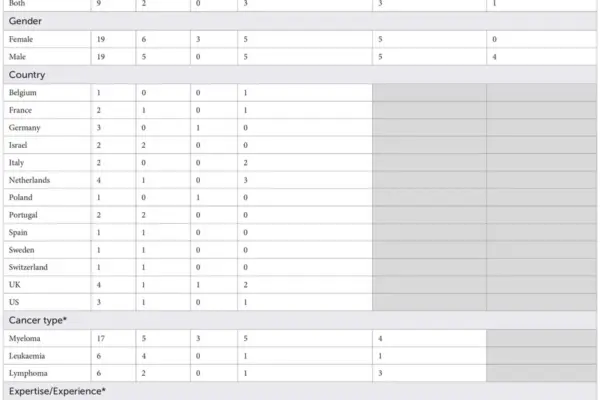
Despite regulatory mandates emphasizing patient-centred outcomes, Patient-Reported Outcome Measures (PROMs)—the gold standard for quantifying quality of life (QoL)—are systematically underutilized or inadequately tailored in contemporary clinical trials. A landmark multi-stakeholder qualitative study involving 38 international participants (including patients, carers, clinical trialists, pharmaceutical representatives, and regulatory/HTA delegates) has exposed severe methodological gaps in how treatment experiences are captured. Standard legacy questionnaires fail to account for the acute post-infusion volatility of CAR-T and the chronic, heterogeneous side-effect loops of BsAbs. To bridge this critical divide, health authorities and clinical trialists must adopt an overhauled framework: a dual-baseline assessment model, mandatory high-frequency acute tracking, the inclusion of under-captured domains like "time toxicity," and extended longitudinal follow-up extending past disease progression.
Detailed Chronology & Insights from the Multi-Stakeholder Study
The research project utilized a rigorous mixed deductive-inductive methodology, collecting qualitative data through online focus groups and semi-structured interviews conducted in early 2024. A total of 38 diverse experts and stakeholders mapped out the profound friction points inherent in current clinical trial designs, identifying four core areas of failure: conceptual tracking challenges, inappropriate baseline anchors, missed acute toxicity windows, and neglected survivorship metrics.
1. Distinctive Clinical Complexities: CAR-T vs. BsAbs
The investigative groups highlighted a stark dichotomy between the delivery mechanisms of CAR-T and BsAbs, each generating distinct burdens on QoL metrics:
- CAR-T Therapies: Characterized as a high-intensity, fixed-duration intervention, CAR-T requires specialized centralized care. Patients frequently travel vast geographical distances, undergoing extensive hospitalizations and bridge therapies. While offering the novel clinical prospect of "treatment-free survival," acute complications such as Cytokine Release Syndrome (CRS) and Immune Effector Cell-Associated Neurotoxicity Syndrome (ICANS) frequently incapacitate patients, rendering them cognitively or physically unable to complete standard PROM instruments. Furthermore, because CAR-T is often positioned as a last-line therapy, desperate patients may intentionally minimize reported toxicities to "stay on treatment at any cost."
- Bispecific Antibodies (BsAbs): Administered as continuous, long-term treatments, BsAbs induce cascading, highly heterogeneous side-effect profiles. Patients grapple with cumulative time toxicity, severe gastrointestinal complications, dysgeusia (loss of taste), and dermatologic toxicities (such as nail loss and severe rashes) that persist long after clinical administration.
2. The Baseline Dilemma and Inflexible Timelines
Standard clinical trial architecture relies on a single baseline assessment captured immediately prior to treatment allocation or lymphodepletion. Researchers and Health Technology Assessment (HTA) representatives noted that this approach is deeply flawed for advanced haematological cancers. Patients are rarely asymptomatic at the time of standard baseline measurement; they are often in severe pain from rapidly progressing disease or recovering from previous toxicities.
Moreover, the multi-week manufacturing window for CAR-T induces severe "waiting anxiety" and anticipatory fear of disease progression before infusion. Consequently, experts advocate for a dual-baseline strategy—capturing initial metrics at the point of initial treatment offer or apheresis, followed by a secondary anchor right before lymphodepletion.
3. Missing the Acute and Long-Term Windows
Current clinical trials overwhelmingly miss the most volatile phases of patient suffering:
- The Acute Post-Infusion Gap: With CRS and ICANS peaking within 1 to 4 weeks post-infusion (and step-up dosing cycles occurring weekly with BsAbs), trial data collection often overlooks this dramatic dip in QoL. Participants stressed the absolute necessity of weekly PROM collection during the first two months.
- The Long-Term Survivorship Void: While pharmaceutical companies and trialists frequently lose track of patients years post-infusion, HTA bodies demand data extending beyond clinical progression. Hematological survivorship involves chronic immunosuppression, social isolation, and financial strain that standard cancer trials fail to register.
Supporting Context & Metrics
A comparative evaluation of standard PROMs currently deployed in haematological trials—specifically the EORTC QLQ-C30, the MDASI-CAR, and the PRO-CTCAE—reveals glaring omissions in addressing patient-prioritised concepts.
| Patient-Identified Domain | EORTC QLQ-C30 | MDASI-CAR | PRO-CTCAE |
|---|---|---|---|
| Emotional Distress (Fear, Uncertainty, Anxiety) | ✓ (Emotional functioning scale) | ✓ (Distress general) | ✓ (Anxiety, sadness) |
| Waiting Anxiety & Anticipatory Fear during Hospitalisation | ✗ | ✗ | ✗ |
| Taste Changes / Dysgeusia | ✗ | ✗ | ✓ (Problems with tasting) |
| Dermatologic Toxicity (Dry skin, rash, nail loss) | ✗ | ✗ | ✓ (Rash, dry skin, nails) |
| Cognitive Changes / ICANS-Related Neurotoxicity | ✓ (Cognitive scale) | ✓ (Memory/attention) | ✓ (Concentration/memory) |
| Time Toxicity (Clinic hours, caregiver burden) | ✗ | ✗ | ✗ |
| Logistical & Financial Burden | ✓ (Financial item only) | ✗ | ✗ |
| Caregiver / Family Burden | ✗ | ✗ | ✗ |
| Treatment-Free Survival Metrics | ✗ | ✗ | ✗ |
As illustrated above, while legacy instruments capture broad physical and emotional functioning scales, they completely fail to quantify modern realities such as time toxicity, caregiver strain, logistical dislocation, and the intense psychological trauma associated with waiting for cellular immunotherapies.
Official Statements & Stakeholder Perspectives
The multi-stakeholder dialogue emphasized that harmonizing PROMs requires balancing the competing demands of regulatory agencies, HTA bodies, industry sponsors, and patients:
- On Regulatory Expectations: Regulatory representatives from agencies such as the FDA and EMA noted a strong institutional push for frequent patient-reported assessments. However, discrepancies remain regarding how these data influence real-world reimbursement: "The FDA has strong recommendations for more frequent capturing of PROs… whereas HTA bodies are requesting long-term or post-disease progression data as well, making it a challenge for companies to align everybody’s focus." (Industry Representative)
- On the Psychological Void: Patient advocates underscored the psychological abandonment experienced during complex hospital protocols: "The doctors and nurses were more interested in physical side effects… My doctor basically told me that we can help you with your body and your cancer, but the mental part you’re gonna have to do by yourself." (Patient Stakeholder)
- On Data Abandonment: Investigators warned against the ethical failure of collecting burdensome data that is never published: "When PROs are not analysed or reported, this implicit agreement between researcher and participant is broken… It is an unethical waste of patients’ time and energy." (Study Investigator)
Future Outlook & Recommendations
To rectify the methodological shortcomings currently plaguing haematological immunotherapy trials, the study outlines a five-point consensus framework for future clinical guideline development:
- Dual-Baseline Implementation: Adopt a two-tiered baseline measurement strategy (pre-apheresis/treatment decision and pre-lymphodepletion) to accurately capture the physical and emotional trajectory of patients during the manufacturing and bridging intervals.
- Mandated Early High-Frequency Assessments: Institute mandatory weekly PROM assessments during the first four to eight weeks post-infusion or during BsAb step-up dosing to capture acute neurotoxicities and cytokine release syndromes.
- Systematic Inclusion of Neglected Domains: Expand standard toolkits to systematically capture hidden burdens, including time toxicity, financial distress, logistical travel hurdles, and the psychological impact on informal caregivers.
- Extended Longitudinal Tracking: Mandate continuous PROM collection past clinical progression and treatment cessation to properly evaluate long-term survivorship, immune reconstitution, and the true parameters of "treatment-free survival."
- Transparent Public Reporting: Treat plain-language summaries and comprehensive reporting of PRO findings as a mandatory ethical obligation to respect patient participation and inform shared decision-making.
By embedding these structural changes into international clinical trial protocols, the oncology community can ensure that the rapid clinical advancements of CAR-T and BsAbs are matched by an equally rigorous commitment to patient-centred quality of life.