










Executive Overview
In a monumental development for the fields of nonlinear optics and laser physics, an international collaboration of researchers has successfully formulated a groundbreaking mathematical framework that decodes the erratic, mesmerizing behavior of so-called "breather" laser pulses. Published in the prestigious journal Physical Review Letters under the title "Unified model for breathing solitons in fiber lasers: Mechanisms across below- and above-threshold regimes," the study marks a paradigm shift in how scientists understand ultrafast optical systems.
At the heart of this breakthrough is the harmonization of two historically divergent laser dynamics. Until now, the physics community had relied on disconnected mathematical models to explain distinct operational regimes within ultrafast fiber lasers. This new study—co-authored by prominent researchers including Dr. Sonia Boscolo from the Aston Institute of Photonic Technologies at Aston University—bridges that long-standing theoretical chasm. By capturing both rapid intra-cavity light evolution and sluggish energy-supply fluctuations within a single, cohesive equation, the team has proven that rapid, high-frequency oscillations and agonizingly slow, multi-thousand-trip modulations are actually expressions of the same underlying physical phenomena.
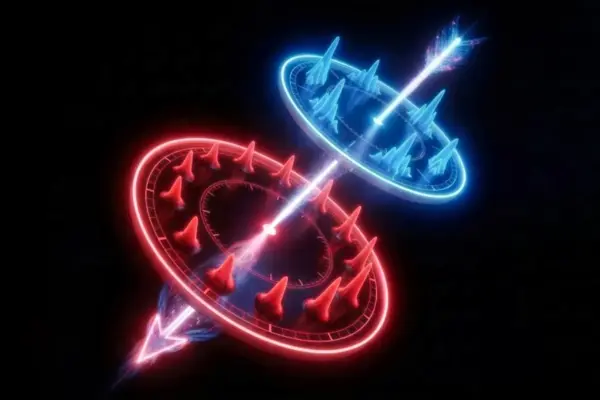
Ultrafast lasers, which emit pulses of light measured in picoseconds (trillionths of a second) or femtoseconds (quadrillionths of a second), are indispensable to modern society. They power critical innovations ranging from delicate corneal eye surgery and advanced biomedical imaging to micromachining, precision materials processing, and high-capacity telecommunications. However, taming these instruments has historically presented enormous technical challenges. Because ultrafast pulses rely on delicate internal balances of dispersion, nonlinearity, and energy gain, they frequently exhibit non-equilibrium states. Among the most complex of these states is "breathing"—a phenomenon where laser pulses rhythmically swell and contract as they circulate through the laser cavity.
By delivering the first unified predictive model for these breathing solitons, this international team has provided engineers and physicists with a vital diagnostic instrument. The discovery eliminates the need for fragmented computational simulations, offering a streamlined roadmap for predicting complex laser instabilities. Consequently, this breakthrough promises to accelerate the design, stabilization, and optimization of next-generation optical technologies, transforming theoretical optics into robust, highly controllable industrial applications.
Detailed Chronology
To fully appreciate the gravity of this recent mathematical milestone, it is necessary to trace the historical trajectory of soliton research and the persistent challenges that have frustrated optical physicists for decades.
The Rise of Solitons and Ultrafast Optics
The journey began decades ago with the theoretical and experimental realization of optical solitons. Unlike conventional light pulses, which inevitably disperse, bleed energy, and widen as they travel through a medium, solitons possess a miraculous self-reinforcing stability. Inside an ultrafast laser—specifically within a closed-loop structure known as a laser cavity—pulses of light are forced to travel repeatedly, bouncing between mirrors or circulating through fiber-optic loops. Under tightly controlled conditions of chromatic dispersion and Kerr nonlinearity, these pulses form stable wave packets that maintain their structural integrity over vast distances and time scales.
For the most part, these circulating solitons behave in a remarkably dependable manner, discharging regular, rhythmic pulses akin to a biological heartbeat. This steady-state emission has served as the bedrock of industrial and medical laser systems for years. Yet, nature is rarely entirely uniform.
The Enigma of the "Breathing" Pulse
As experimental techniques grew more sensitive, researchers began observing anomalies. In certain configurations, the laser output refused to settle into a steady heartbeat. Instead, the pulses continually evolved over time, systematically growing and shrinking during successive roundtrips through the cavity. This rhythmic oscillation—visually and conceptually reminiscent of chest movements during respiration—spawned the term "breathing lasers" or "breathing solitons."
This behavioral state represents a complex non-equilibrium condition. Rather than settling into a static equilibrium or a clean periodic orbit, the laser output is characterized by constant, dynamic internal restructuring. As experimental physics probed deeper into these breather states, two distinct operational regimes emerged, baffling theorists who attempted to map them using classical models.
The Dichotomy of Threshold Regimes
Laboratory experiments ultimately revealed a stark behavioral split governed by the laser’s energy threshold—the minimum power required to sustain continuous pulse emission:
- Above-Threshold Regimes: When the laser operates above this critical power threshold, the solitons undergo rapid, high-frequency oscillations. In this volatile regime, the breathing cycle repeats itself after only a small number of cavity roundtrips. These systems produce distinct, comb-like radiofrequency spectra and higher-order frequency-locked states, marked by characteristic optical sidebands in their spectral output.
- Below-Threshold Regimes: Conversely, when the laser operates below the power threshold, the dynamics slow down dramatically. The physical mechanisms governing the pulse become sluggish, requiring hundreds or even thousands of individual cavity roundtrips to complete a single breathing cycle. The resulting radiofrequency spectra are densely clustered, lacking strict commensurability and devoid of the characteristic optical sidebands seen in their high-power counterparts.
The Theoretical Divide and the Path to Unification
For years, the scientific community was forced to use two entirely separate mathematical frameworks to analyze these two behaviors. Models designed to capture the rapid, nonlinear evolution of above-threshold breathers failed when applied to the sluggish energy fluctuations of below-threshold states, and vice versa. This theoretical fragmentation hindered progress, creating a blind spot in laser design.
The turning point arrived when Dr. Sonia Boscolo and her international colleagues re-examined the fundamental equations governing fiber lasers. By constructing a revised discrete model that merges the rapid mechanics of intra-cavity light propagation with the slow, cumulative dynamics of the laser’s gain medium (the material that supplies energy to the light), the team achieved what many deemed mathematically impossible. Published in Physical Review Letters, their unified framework successfully simulated both ultrafast and ultra-slow breathing cycles within a single, continuous algorithmic architecture, closing a decades-long chapter of theoretical division in nonlinear science.
Supporting Context & Metrics
Understanding the mechanics of this breakthrough requires a deeper look into the physics of laser cavities, the mathematical forces at play, and the quantitative metrics that define ultrafast optics.
The Physics of the Laser Cavity
At its core, a fiber laser consists of a gain medium—such as an optical fiber doped with rare-earth elements like erbium or ytterbium—pumped by external diode lasers to create a population inversion. Mirrors or fiber Bragg gratings form a resonant cavity that forces light to circulate thousands of times per second.
As light pulses traverse this cavity, they are subjected to two competing physical forces:
- Group Velocity Dispersion (GVD): The tendency of different optical frequencies (colors) within a pulse to travel at different speeds, which normally causes a pulse to spread out in time.
- Kerr Nonlinearity: An effect where the refractive index of the optical fiber changes in response to the intensity of the light itself, causing high-intensity peaks to experience phase shifts.
When balanced precisely, dispersion and nonlinearity cancel each other out, giving birth to stable solitons. However, when energy fluctuations from the gain medium disturb this delicate equilibrium, the balance tilts, forcing the pulse into a breathing cycle.
| Laser Regime | Primary Driving Mechanisms | Oscillation Speed | Spectral Characteristics |
|---|---|---|---|
| Above-Threshold Breathers | Kerr nonlinearity & chromatic dispersion | Rapid (few roundtrips) | Comb-like RF spectra, optical sidebands |
| Below-Threshold Breathers | Q-switching dynamics & soliton shaping | Slow (hundreds/thousands of roundtrips) | Densely clustered RF spectra, no sidebands |
Unraveling the Underlying Mechanisms
The new mathematical model does more than simply output accurate predictions; it explicitly illuminates why these behaviors occur. The research team demonstrated that below-threshold breathing is fundamentally driven by Q-switching instabilities—periodic fluctuations in the cavity’s quality factor tied to energy storage in the gain medium—combined with ongoing soliton shaping. Conversely, above-threshold breathers are dominated by the interplay of Kerr nonlinearity and dispersion, where the sheer intensity of the light forces rapid, localized structural oscillations.
By capturing both of these domains within one equation, the framework eliminates the computational friction that has long plagued optical engineers. Rather than stitching together disparate simulations or relying on empirical approximations, researchers can now model the complete lifecycle of a laser pulse from initialization to steady-state or breathing evolution.
Official Statements
The significance of this international collaboration has been underscored by statements from the researchers involved, highlighting both the theoretical elegance of the model and its far-reaching practical implications.
Dr. Sonia Boscolo, representing the Aston Institute of Photonic Technologies, emphasized the profound nature of the discovery:
"Above- and below-threshold breathing solitons show markedly different behaviors. Above-threshold breathers oscillate rapidly and can lock to the cavity, producing comb-like radiofrequency spectra and higher-order frequency-locked states, with characteristic sidebands in their optical spectrum. Below-threshold breathers evolve much more slowly, producing densely clustered radiofrequency spectra without strict commensurability, and without optical sidebands.
Our new simulation accurately predicts both the fast and slow cycles in one go, something that was previously thought to be impossible with a single model. Our work introduces a revised discrete model that incorporates the slow dynamics of the laser gain medium while retaining the detailed cavity description. This unified framework accurately reproduces all experimentally observed behaviors in both regimes and reveals their underlying mechanisms: below-threshold breathing arises from Q-switching combined with soliton shaping, while above-threshold breathers are dominated by Kerr nonlinearity and dispersion.
This discovery closes a long-standing gap in laser science and provides a vital tool for designing the next generation of light-based technologies."
Industry analysts and academic peers have similarly praised the work for its methodological rigor. By bridging the gap between discrete cavity roundtrip maps and continuous medium-gain evolution equations, the Aston University-led team has established a new benchmark for theoretical modeling in applied physics.
Future Outlook
As the dust settles on this theoretical achievement, the scientific and industrial communities are already looking toward the horizon to gauge its practical applications. The transition from a fragmented theoretical landscape to a unified framework opens up vast new avenues for engineering photonics systems.
Transforming Industrial and Medical Engineering
Ultrafast lasers are foundational to some of the most exacting applications in modern technology:
- Medicine & Surgery: Procedures such as LASIK eye surgery and delicate neurosurgeries rely heavily on femtosecond pulses to ablate tissue with zero thermal collateral damage. Understanding and controlling breather dynamics will allow manufacturers to build medical lasers with unprecedented stability, minimizing the risk of erratic power fluctuations during critical operations.
- Advanced Manufacturing: Micro-machining of semiconductors, smartphone displays, and aerospace components demands extreme precision. Reliable laser sources that avoid chaotic breathing states will yield cleaner cuts, reduced material waste, and higher manufacturing yields.
- Biomedical Imaging: Multiphoton microscopy and optical coherence tomography (OCT) depend on stable, ultra-short pulses to peer deep into biological tissue. Enhanced laser predictability directly translates to sharper, higher-resolution diagnostic imagery.
Streamlining Research and Development
For engineers and research laboratories, the new model offers an immediate pragmatic advantage. Designing a custom ultrafast laser has traditionally been an expensive, iterative process of trial and error, requiring extensive prototyping and multiple computational models to account for different operational regimes.
With the new unified framework, developers can simulate entire operational spectra—predicting how a laser will transition from steady-state soliton emission to fast above-threshold breathing or slow below-threshold modulation—using a single software tool. This efficiency is expected to drastically shorten R&D cycles, lowering the financial barriers to commercializing advanced optical systems.
Conclusion
The unification of laser breathing regimes achieved by Dr. Boscolo and her international colleagues represents a triumph of mathematical physics. By solving a problem that has persisted across decades of optical research, the team has not only satisfied a deep academic curiosity but has also provided a powerful instrument for industrial innovation. As this framework is adopted by laboratories and manufacturing facilities worldwide, it will undoubtedly serve as the intellectual blueprint for the next generation of light-based technologies, illuminating a path toward faster, more stable, and more intelligent optical systems.