






Executive Overview
For generations, the prevailing dogma surrounding the monarch of the honeybee colony rested on a deceptively simple premise: the royal diet. Science taught that the pathway to becoming a queen honeybee—an individual vastly larger, longer-lived, and uniquely fertile compared to her sterile sisters—was governed by a single, luxurious menu item: royal jelly. According to this long-standing biological textbook narrative, any female larva could theoretically be crowned if worker bees flooded her cradle with this nutrient-dense secretion.
However, a landmark study published in the journal Nature has shattered this reductionist view, revealing that the creation of a queen is not merely a matter of culinary indulgence, but an intricate, highly coordinated architectural and physiological masterpiece.
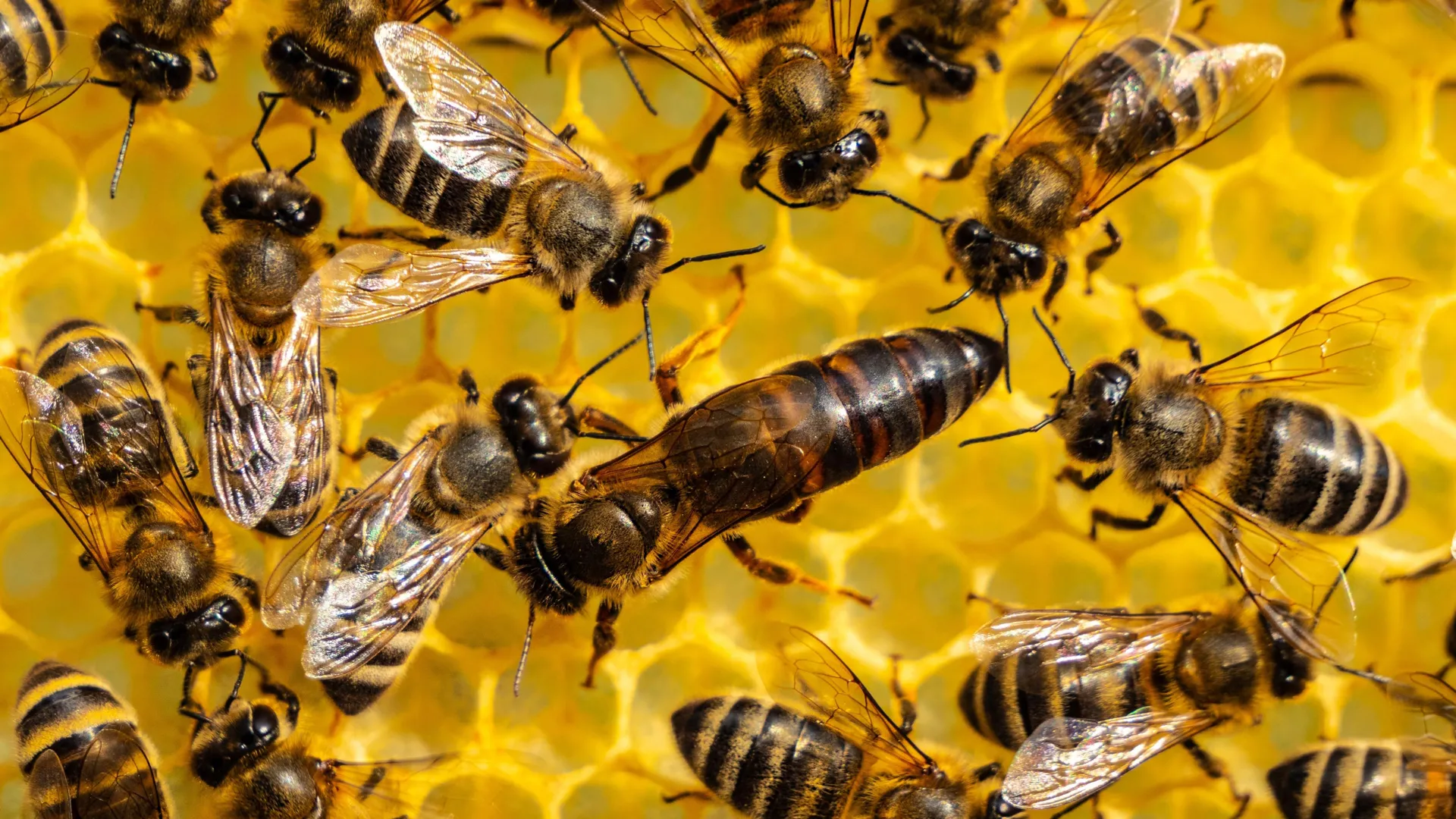
Led by an international team of researchers—including prominent entomologists from the Center for Integrative Bee Research (CIBER) at the University of California, Riverside—the new research demonstrates that future queens are meticulously engineered. They are raised inside specialized, peanut-shaped nursery chambers known as "royal cells" or "royal cribs," constructed from bespoke wax by a newly identified caste of young worker bees dubbed "queen cell builders."
These specialized chambers are far more than mere protective shells. They are carefully managed micro-environments that maintain specific thermal gradients, utilize chemically modified waxes, and provide bespoke tactile and physiological care. When researchers experimentally manipulated these variables—rearing queen larvae in standard worker cells despite a diet of royal jelly—the larvae experienced higher mortality rates and developed into stunted queens.
This multi-disciplinary investigation, which synthesized thermal imaging, behavioral monitoring, materials science, and genomics across both Asian and European honeybee species, redefines our understanding of insect development. It proves that honeybee colonies do not merely react to their environments; they engineer them. Furthermore, these findings carry profound implications for broader biological fields, suggesting that phenotypic development across the animal kingdom relies just as heavily on the physical and social architecture of an organism’s early environment as it does on genetics and nutrition alone.
Detailed Chronology of the Discovery
The journey toward upending decades of entomological consensus began years prior to the publication in Nature, driven by an interdisciplinary team seeking to look beyond the well-documented chemical properties of royal jelly.
Phase I: Unmasking the Limitations of Diet
Historically, researchers focused intensely on the biochemical composition of royal jelly—a whitish, viscous substance secreted from the hypopharyngeal and mandibular glands of worker bees. Because royal jelly is packed with proteins, sugars, lipids, and vitamins, it was easily cast as the singular catalyst behind the polyphenism that separates a short-lived worker bee from a long-lived queen, despite both originating from genetically identical fertilized eggs.
Yet, anomalies persisted in the field. Beekeepers and researchers frequently noted that diet alone occasionally failed to predict developmental success, and the physical architecture of the hive seemed to play a more active role than previously credited. Recognizing that a holistic view was missing, a research team—co-led by former UC Riverside postdoctoral researchers Yu Fang and Yahya Al Naggar—embarked on a multi-faceted investigation combining behavioral ecology, materials science, and advanced chemical profiling.
Phase II: Interrogating the "Royal Cribs"
The team turned their attention to the distinct, vertical, peanut-shaped structures hanging from the combs of the hive, known as queen cells. Utilizing thermal imaging and non-destructive materials science techniques, the researchers analyzed the physical properties of the wax used to build these chambers compared to the standard, horizontal, hexagonal cells designated for worker brood.
The analysis revealed stark contrasts. The wax comprising the queen cells was found to be fundamentally different from ordinary hive wax: it possessed a lower density, greater flexibility, and superior thermal- and moisture-retention capabilities. Chemical profiling further exposed unique signatures in the fatty acids embedded within the queen cell wax, indicating that the chamber itself was biologically active and chemically tailored to the developing occupant.
Phase III: The Isolation Experiment
To rigorously test whether this specialized architecture was truly causative or merely a byproduct of queen-rearing, the researchers designed a controlled substitution experiment. They transferred queen larvae into standard worker cells constructed from ordinary hive wax, while simultaneously controlling for diet by ensuring all larvae received abundant royal jelly.
The results were definitive and startling. Larvae denied the natural queen-cell environment suffered significantly higher mortality rates. Those that did survive emerged as smaller, sub-optimal queens. This empirical evidence confirmed that the physical architecture of the royal nursery is an absolute prerequisite for normal queen development.
Phase IV: Identifying the "Queen Cell Builders"
With the importance of the nursery established, the team shifted their focus to the labor force behind its construction. Through continuous behavioral monitoring and physiological tracking, researchers discovered a dedicated, previously unknown sub-caste of young worker bees, designated as "queen cell builders."
Unlike older foragers or general hive workers, these young bees underwent distinct physiological shifts while tending to the royal chambers. They maintained significantly elevated body temperatures—contributing to the accelerated 16-day maturation timeline of a queen compared to the 21-day timeline of a worker—and activated unique biological pathways associated with wax synthesis and modification.
By introducing trace amounts of graphite into ordinary honeycomb as a marker, the researchers observed that these builders selectively gathered, structurally modified, and chemically enriched wax from across the hive, recycling and transforming it into the specialized material required for the royal cribs. This discovery painted a picture of an insect society operating with industrial precision, comparable to a specialized construction crew operating under strict architectural blueprints.
Supporting Context & Metrics
To fully grasp the magnitude of this discovery, one must examine the biological stakes and quantitative parameters governing honeybee colony dynamics.
| Biological Parameter | Worker Bee | Queen Bee |
|---|---|---|
| Developmental Timeline | ~21 days | ~16 days |
| Lifespan | Weeks to months (active season) | Several years |
| Reproductive Capability | Sterile (typically) | Sole egg-layer of the colony |
| Rearing Chamber | Standard hexagonal cell | Peanut-shaped "royal cell" |
| Environmental Control | Standard hive ambient | Specialized thermal/moisture gradient |
The Mechanics of Accelerated Development
The five-day difference in maturation time between a worker (21 days) and a queen (16 days) is not merely a statistical trivia point; it is a matter of evolutionary life or death for the colony. In scenarios where a ruling queen dies unexpectedly or the colony prepares to swarm, the rapid production of a replacement sovereign is paramount. The "queen cell builders" achieve this accelerated timeline not only through the nutritional supply of royal jelly, but by acting as biological incubators. By maintaining localized, elevated body temperatures directly within the insulated, low-density wax of the queen cells, these worker bees fast-track the metabolic and morphological development of the larva.
Materials Science of the Hive
From a materials science perspective, the wax modifications engineered by queen cell builders represent a marvel of natural engineering. Standard beeswax is optimized for structural integrity and honey storage within the hexagonal grid. In contrast, queen cell wax functions as a dynamic bio-material. Its increased flexibility cushions the rapidly expanding larva, while its tailored porosity and lipid composition maintain an optimal microclimate of humidity and warmth, shielding the developing monarch from internal hive temperature fluctuations.
Official Statements & Expert Analysis
The implications of the study have drawn widespread praise from the scientific community, emphasizing a paradigm shift in how entomologists view eusocial insect colonies.
Dr. Boris Baer, entomologist, professor, and director of the Center for Integrative Bee Research (CIBER) at the University of California, Riverside, whose laboratory played a pivotal role in the research, emphasized the sophistication of the discovery during statements released following the publication:
"The old idea was relatively simple: take an egg, move it into a queen cell, feed it royal jelly, and you get a queen," noted Dr. Baer. "What we found is that there’s an entire machinery behind this process. It’s much more sophisticated than we imagined."
Comparing the micro-society of the hive to human institutions of statecraft, Dr. Baer offered a vivid analogy to illustrate the division of labor orchestrated by the colony:
"You can think of it as something like Buckingham Palace," Dr. Baer explained. "There is a dedicated group of bees focused entirely on raising the queen, and if they don’t get it right, the colony cannot reproduce."
Crucially, the study’s findings are not isolated anomalies confined to a single laboratory strain or geographic region. The research team observed identical structural and behavioral patterns in both Asian (Apis cerana) and European (Apis mellifera) honeybee species. This evolutionary conservation suggests that the "royal nursery" strategy is an ancient adaptation, honed over millions of years of evolution.
Reflecting on the collaborative nature of the project—which bridged the gap between behavioral ecology, material physics, and molecular genomics—Dr. Baer remarked:
"In its collaborative nature, this project reflects the broader CIBER philosophy of bringing different disciplines together to tackle complex biological questions… Honeybee colonies are not simply collections of individuals. They function as integrated biological systems capable of engineering their own environments."
Future Outlook & Broader Implications
As the dust settles on this paradigm-shifting study, the scientific community is already looking toward the horizon to determine how these insights will shape future research in entomology, developmental biology, and beyond.
Redefining Developmental Biology
For decades, textbooks have utilized the honeybee caste system as the premier example of nutritional control over development—the classic nature-versus-nurture textbook case where diet dictates destiny. This new research forces a recalibration of developmental biology frameworks across taxa. It demonstrates that phenotype is frequently the product of a deeply integrated tripartite interaction: genetics, nutrition, and environmental niche construction.
By proving that insects can actively construct physical micro-environments that fundamentally alter developmental trajectories, researchers are prompted to ask whether similar niche-engineering mechanisms exist in other social or solitary species—ranging from ants and termites to vertebrates that build complex nests or burrows.
Practical Applications in Apiculture
Beyond theoretical biology, these discoveries hold significant promise for commercial beekeeping and agriculture. Global honeybee populations continue to face unprecedented pressures from habitat loss, pesticides, pathogens, and climate change. Beekeepers rely heavily on artificial queen-rearing techniques to maintain healthy, productive colonies for crop pollination.
Current commercial queen-rearing practices often rely on standardized plastic or wax cups that mimic royal cells, but they frequently lack the complex chemical and thermal nuance provided by natural "queen cell builders." Understanding the precise wax chemistry, material density, and thermal requirements uncovered by the CIBER team could pave the way for next-generation, bio-mimetic queen-rearing equipment. By improving the quality, vigor, and longevity of commercially produced queens, the apicultural industry can enhance colony resilience against environmental stressors.
Next Steps for CIBER Researchers
Looking forward, the research team aims to map the precise molecular pathways activated within the "queen cell builders" and determine how these worker bees perceive the need to construct royal cribs. Furthermore, investigators plan to isolate the specific lipid and fatty acid compounds found within the queen wax to test their individual impacts on gene expression in developing larvae.
Ultimately, the revelation that a honeybee queen is shaped by a royal court of dedicated attendants—rather than a passive bath of royal jelly—deepens our appreciation for the complexity of insect societies. It serves as a humbling reminder that nature’s most intricate designs are often hidden in plain sight, waiting for multidisciplinary science to uncover the machinery of life.